One End of My Neon Tube Is Brighter Than the Other - Is That Normal?
- 2026-11-02 15:53
- /
- Arraystar LED
You are not imagining it: the feed end of a silicone neon tube always runs a touch brighter and hotter. A faint gradient is normal; a two-step jump that you can see across the room is a driver sizing or injection problem, and I can usually fix it with a voltmeter and one extra feed point.
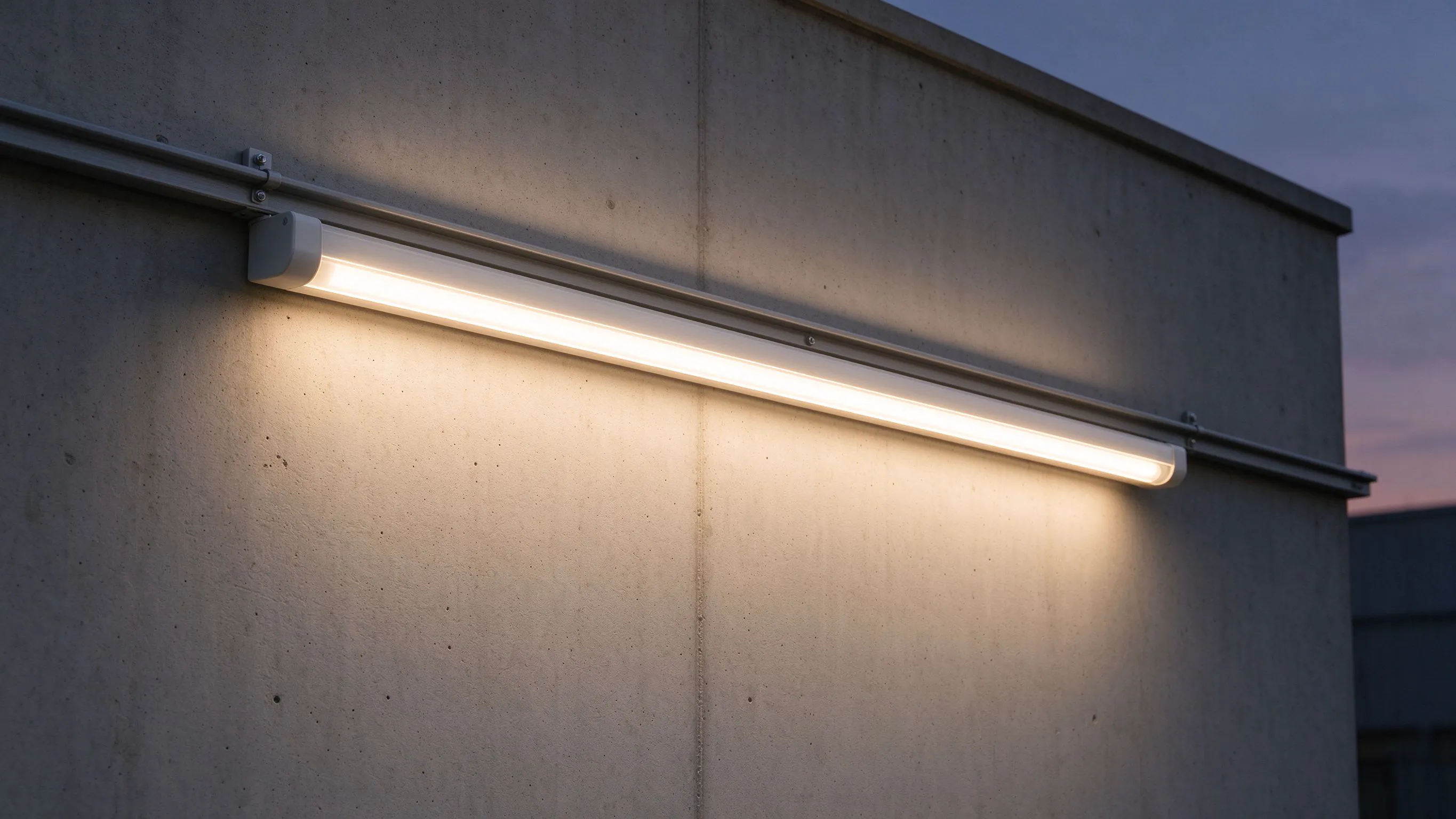
What people describe when they call this a fault
The symptom usually lands the same way: the end nearest the driver glows clean white or crisp blue, and as your eye travels along the lettering the glow sags, ending in a dim, slightly muddy tail. On a single word that is three or four metres long, the difference is obvious in photos and even more obvious in person after ten minutes standing back from the wall.
I had a shop owner ring me convinced the tube was defective because one letter lit brighter than the next. The tube was fine. The driver was 24 V on a six-metre run fed from only one end, and the far end was sitting at 21.8 V. That is a planning fault, not a diode fault.
Why the feed end wins every time
Every metre of copper inside the flex drops a little voltage, and every LED wants a fairly tight window to shine at its rated brightness. On 12 V flex the drop is brutal; on 24 V flex it is half as bad, but a long run still sagging by more than half a volt at the far end will show.
The three things that set the gradient
- The supply voltage: 12 V flex sags about twice as fast as 24 V flex over the same distance.
- The wire gauge in the flex: 22 AWG inner copper on cheap flex bleeds more than 18 AWG.
- Where you inject power: feeding six metres from one end always starves the far pad.
How I measure it before changing anything
I never swap a tube on the strength of a photo. I take a multimeter to the sign on a warm evening, with the sign at full white, and measure the rail voltage at three points: right at the driver output, at the middle of the run, and at the far end pad. Three numbers tell me whether this is voltage drop, overvoltage at the feed, or a single bad segment.
- Set the meter to DC and probe directly on the copper pads, not on the jacket.
- Record all three readings after the sign has run for twenty minutes so the silicone is warm.
- Note which end is brighter; a bright feed end plus a dim far end points to drop, not to a weak driver.
A 0.5 V sag is invisible; a 1.5 V sag across the run shows as a brightness step.
| Reading at far end | What it means | What I do |
|---|---|---|
| 23.5 V or above on 24 V | Feed-end overvoltage | Derate the driver output or add a second injection |
| 22.0 to 23.4 V on 24 V | Mild drop, usually visible up close | Acceptable under 0.5 V sag |
| Below 22.0 V on 24 V | Real voltage drop, visible gradient | Inject power at the midpoint |
What difference is actually acceptable
A well-made 24 V neon flex should hold within roughly five percent of brightness across a five-metre single-feed run. On camera that is a faint warm side to the feed end and nobody notices. Once the sag climbs past about 1.5 V on a 24 V rail, the far diodes step down by a visible notch and the sign looks cheap.

The tail cable from the driver to the first pad matters as much as the flex itself.
| Run length | 24 V single-feed limit | Practical fix |
|---|---|---|
| Up to 4 m | Fine from one end | No extra injection needed |
| 4 to 6 m | Borderline | Inject at the 2 m point if the wall allows |
| Over 6 m | Do not single-feed | Feed both ends or use a thicker tail cable |
A lot of the "bright end" photos I see online come down to the tail cable: a two-metre run of thin 20 AWG from a distant driver drops 0.4 V before the flex even starts.
How I size the next run so this does not come back
Once the numbers point at voltage drop, the fix is almost always mechanical. I add a second feed point rather than upsizing the driver, because a bigger driver pushing harder only overheats the feed-end diodes. Injection at the midpoint splits the sag into two short runs and the gradient disappears.
- Use 18 AWG or thicker for any tail longer than two metres.
- On runs over five metres, inject at the halfway point with a second pair from the same driver.
- Keep the driver within 5 m of the sign; every metre of thin tail cable is sag.

Recommended Products
Frequently Asked Questions
Is it normal for one end of a neon tube to be slightly brighter?
Yes, a faint gradient is normal. The feed end sits at the rail voltage, the far end a fraction below. On a well-installed 24 V run the difference should stay under about five percent, which is what you see as a subtle warmth at the feed end. If you can spot it across the room, it is a fault.
Should I feed a neon tube from both ends?
For runs over five metres on 24 V, yes. Feeding both ends splits the voltage drop into two short halves and kills the visible gradient. Use the same driver output to both tails, or two matched drivers. Never feed both ends from mismatched supplies; the diode strings will fight each other.
Why is the feed end of my tube actually hotter to touch?
Because the feed-end diodes see the full rail voltage and run at full current, while the far-end diodes run a touch lower. On a dark silicone jacket that heat shows up as a 5 to 10 degree warmer jacket within the first 500 mm. It is normal up to about 55 degrees on the jacket; hotter means the driver is overvolting the run.
Does a bigger driver fix a dim far end?
Usually no. A bigger driver pushes more volts into a run that is already sagging because of thin wire or long distance, and the feed end just gets hotter while the far end barely improves. The fix is a second injection point or a thicker tail cable. Upsizing the driver only helps if the existing one is actually current-starved at full load.
How far can I run 24 V neon flex from one feed point?
I treat five metres as the practical limit for a single feed on standard-density 24 V flex. Beyond that, the sag past about 1.5 V starts to show. For eight or ten metre runs I split the feed at the midpoint, or I raise the tail cable to 16 AWG and keep the driver within three metres of the sign. Never single-feed 12 V flex beyond three metres.
Need help with your LED project?
Get factory-direct pricing, free samples and engineering support within 24 hours.
Email: info@arraystarled.com | Phone: +86-0755-2103-6746 | WhatsApp: 0086 1581 8514 077
Need to size your power supply? Use our LED Strip Power Calculator to find the right driver in seconds.