
LED Neon Tube vs Neon Flex vs Rope Light: Which Linear Neon Product to Spec
- 2026-09-30 17:38
- /
- Arraystar LED
People buy 'neon' and end up with three very different products that look similar in a listing and perform nothing alike on the wall. Glass neon is a hand-bent gas tube with unmatched classic glow but fragility and cost; LED neon flex is a solid silicone linear light built for signage runs and outlines; and round neon rope is a 360-degree glowing cable for suspended and sculptural use. Pick by how the light is viewed, the bend radius and whether it's a flat sign or a hanging form - get that distinction right and you stop overpaying or under-specifying.
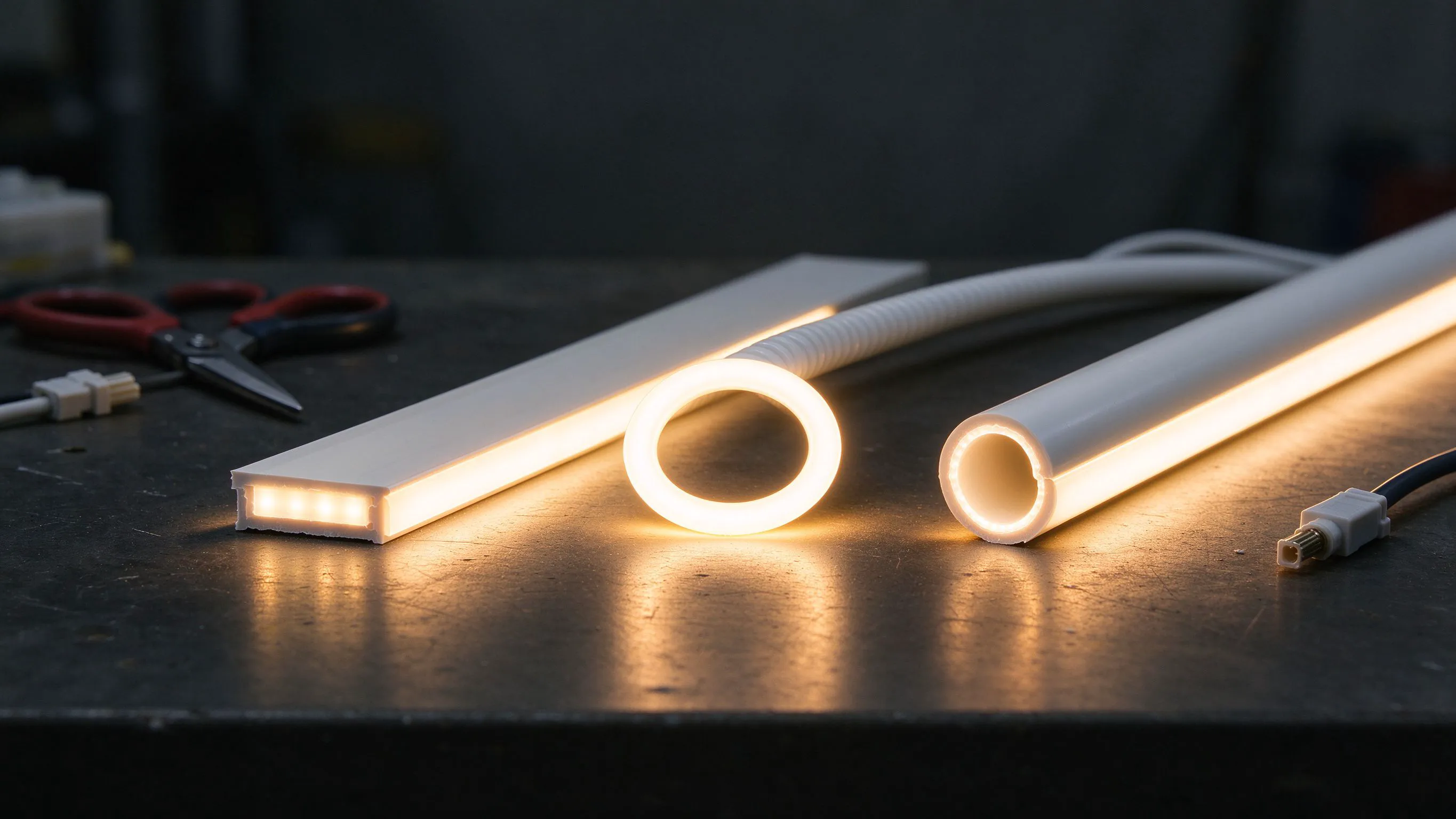
'Neon' Now Means Three Different Products
Search 'neon light' and you'll get glass gas tubes, flat silicone LED neon flex, and round 360-degree LED neon rope all mixed together, often with photos that make them look interchangeable. They aren't. Each is a different physical product with a different viewing angle, bending behavior, mounting method and price, and choosing the wrong one is the most common reason a neon project disappoints.
I've had customers order flat flex for a suspended hanging sculpture (it only glows on one face and looked dead from the side) and order round rope for a flat wall sign (it doesn't sit flush and glares). The decision starts with three questions: viewed from one side or all around? Bent into tight flat shapes or gentle 3D curves? Permanent signage or a flexible installation?
Glass Neon Tubes: the Original, With Real Limits
Traditional glass neon is hollow glass tubing bent by hand around a pattern, filled with gas and electrified at high voltage by a transformer. Nothing else quite matches its luminous, slightly soft, authentic glow, and for heritage signage or premium art it remains the reference.
But glass neon is fragile, heavy, needs skilled glass-bending labor, runs on high-voltage transformers, generates heat, and can't be field-cut or re-shaped. A broken tube means a specialist repair. For most commercial signage today it's been replaced by LED products that approximate the look at a fraction of the cost, weight and risk.
- Best for: heritage signage, premium art, authentic one-off pieces.
- Glow: unmatched classic soft luminosity.
- Limits: fragile, heavy, hot, high-voltage, hand-made, not field-cuttable.
LED Neon Flex: the Flat Signage Workhorse
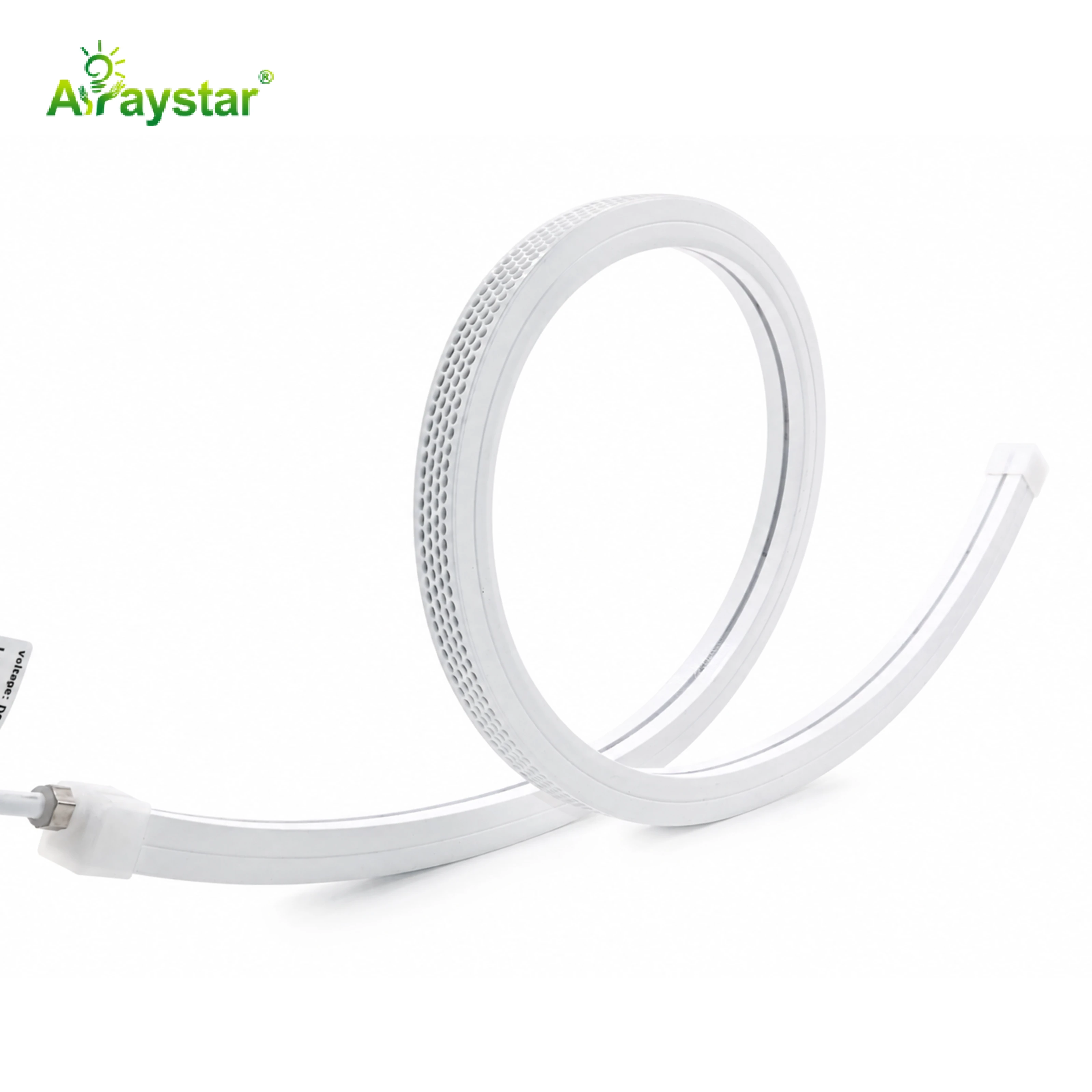
LED neon flex sandwiches an LED strip inside a solid or sleeved silicone body, typically flat on the base with a glowing top face. It's the product behind most modern neon signs, building outlines, bar fronts and channel-letter effects - low voltage, cool-running, cuttable, dimmable and bendable around flat patterns.
The ART-2020 is a representative flat neon flex built for signage outlines and decorative runs, and for installations where glare control matters an anti-glare 16x16 white neon flex uses a diffused/lensed body to soften the output. Flex bends in one plane (top-bend or side-bend versions), mounts with clips or channels on a flat backing, and is the correct choice whenever the piece is viewed primarily from the front against a wall or fascia.
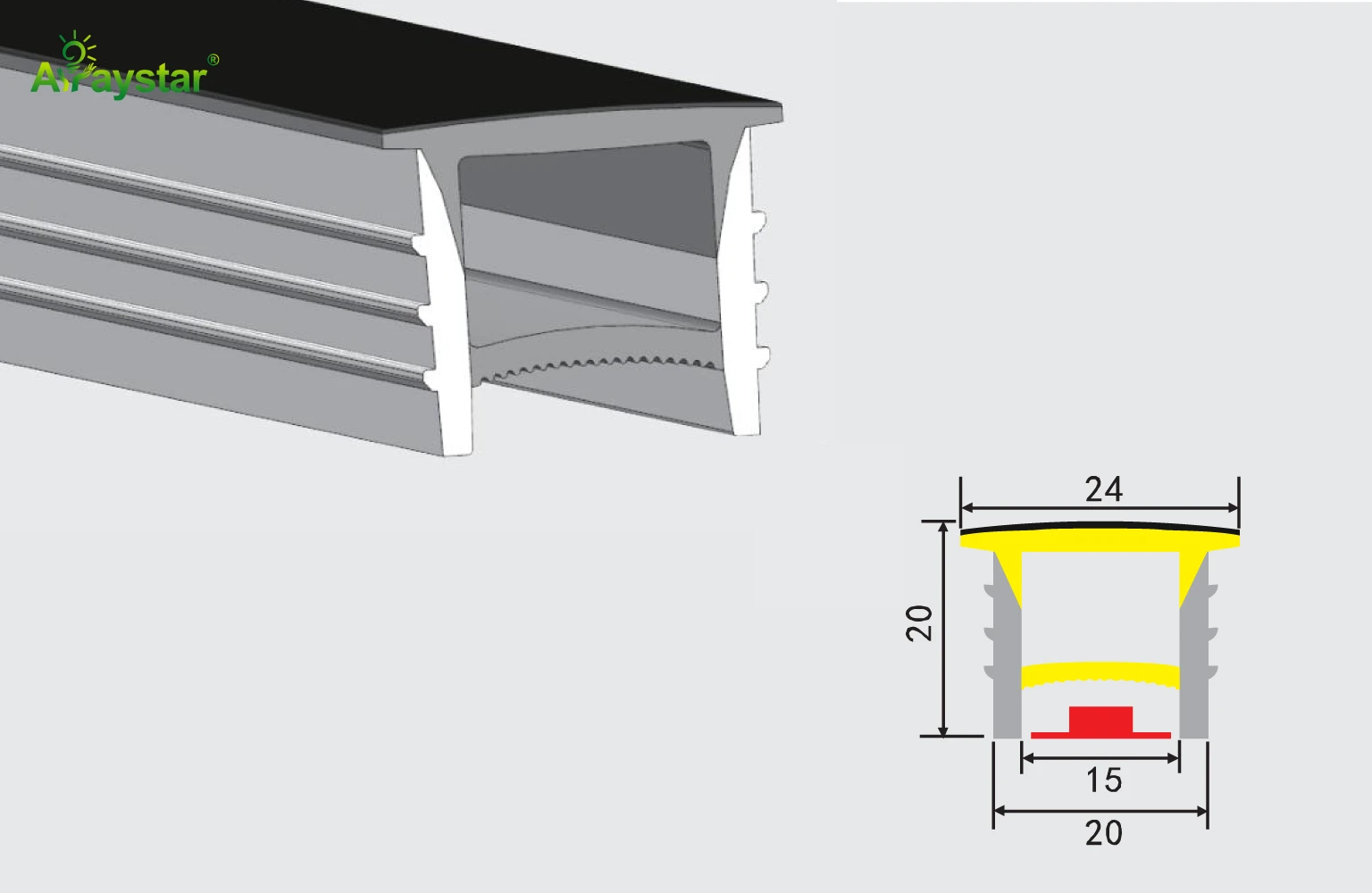
Where flex wins
Flex wins on anything flat and front-facing: logo outlines, word signs, cove and building outlines, mirror and wall art. It's field-cuttable at marked intervals, runs on safe low voltage, and survives transport and weather far better than glass. Its one limitation is geometric - it glows from one face and bends in a plane, not into free 3D shapes.
360-Degree Neon Rope: for Hanging and Sculptural Forms
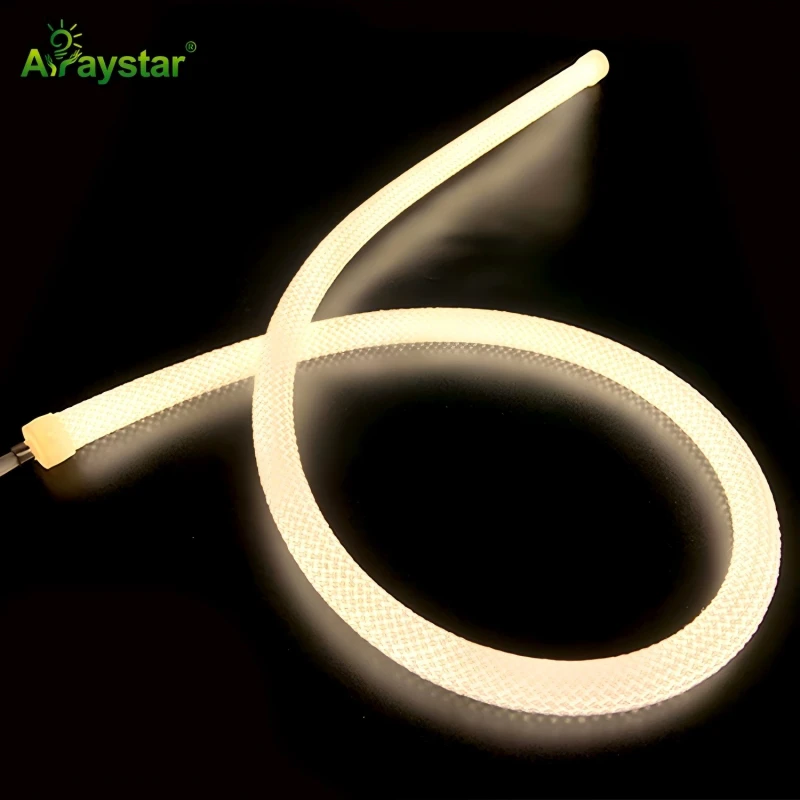
Round neon rope is a cylindrical glowing cable that emits light in all directions. It's a fundamentally different form factor: where flat flex wants to be clipped to a board, round rope is designed to hang, suspend, wrap and form 3D shapes that need to glow from every viewing angle.
The 360-degree neon rope (NSD22-Rope type) is the right product for suspended installations, ceiling-hung sculptures, railings and handrails, free-standing 3D lettering and anything seen from the side as well as the front. It bends gently in multiple planes and reads as a glowing line in space rather than a flat face on a backing - which is exactly why it fails if you lay it flat on a wall.
Side-by-Side and How to Actually Choose
Choosing between the three neon product families.
| Attribute | Glass neon | LED neon flex (flat) | 360 neon rope |
|---|---|---|---|
| Viewing angle | Front, tubular glow | One glowing face | All directions |
| Bending | Hand-bent glass, tight | Flat-plane, marked cuts | Gentle multi-plane 3D |
| Mounting | Mounted tubes + transformer | Clips/channel on flat backing | Hang, suspend, wrap |
| Voltage | High voltage | Low voltage (12/24V) | Low voltage |
| Field cutting | No | Yes at cut marks | Limited, by product |
| Best use | Heritage/premium art | Flat signs and outlines | Hanging/3D/railing forms |
Decision shortcut: flat wall sign or outline viewed from the front = neon flex; hanging, suspended or sculptural piece seen from multiple angles = 360 rope; authentic heritage feature with budget for craftsmanship = glass. Start there and the rest of the spec - bend radius, clips, power - follows naturally.
Recommended Products
Frequently Asked Questions
What is the difference between glass neon, LED neon flex and neon rope?
Glass neon is hand-bent gas-filled tubing with an authentic glow but fragility and high voltage. LED neon flex is flat, low-voltage silicone strip glowing from one face, for wall signs and outlines. 360 neon rope is a cylindrical glowing cable emitting in all directions, for hanging, suspended and 3D forms. They look similar but mount and bend differently.
Should I use flat neon flex or round 360 neon rope?
Use flat flex for anything mounted flat and viewed from the front - logo outlines, word signs, wall art and coves. Use round 360 rope for suspended, hanging, wrapped or sculptural installations seen from the side as well as front, like hanging sculptures and handrails. Laying round rope flat on a wall wastes its 360 glow.
Is LED neon flex better than real glass neon?
For most commercial signs, LED flex is the practical choice - it's low-voltage, cool, cuttable, lighter, cheaper, weather-resistant and repairable, while closely approximating the neon look. Real glass neon still wins for heritage signage and premium art where the authentic gas-tube glow and hand-crafted character justify the cost, weight and fragility.
Can LED neon flex be cut and bent on site?
Yes - flat neon flex cuts at marked intervals and bends in its designed plane (choose top-bend or side-bend to match your pattern), then mounts with clips or channels. It can't be re-bent into free 3D shapes the way round rope can, and tight radii below the rated minimum will damage it, so match bend type and radius to the design first.
What is anti-glare neon flex and when do I need it?
Anti-glare neon flex (such as a 16x16 white body) uses a diffused or lensed silicone body to soften and control the output, reducing the harsh hot-spotting and reflections of clear-bodied flex. Use it where the sign is viewed close up, against glossy surfaces, or in environments where uncontrolled glare would be a problem.
Need help with your LED project?
Get factory-direct pricing, free samples and engineering support within 24 hours.
Email: info@arraystarled.com | Phone: +86-0755-2103-6746 | WhatsApp: 0086 1581 8514 077
Need to size your power supply? Use our LED Strip Power Calculator to find the right driver in seconds.







