
Optical Store & Eyewear Display LED Lighting: Glare-Free Strips That Make Frames Premium
- 2026-09-30 17:37
- /
- Arraystar LED
Eyewear is the hardest product in retail to light: frames are tiny, lenses are curved mirrors, and the slightest overhead hotspot reflects straight into a customer's eyes as they try glasses on. The answer is controlled, low-glare high-CRI linear light rather than bright downlights - dense COB for an even sheen across frame rows, diffused deep profiles over glass shelving to kill lens reflections, and a rotary dimmer to switch between bright browsing and soft fitting at the mirror. Get the glare off the lenses and the frames suddenly look premium.
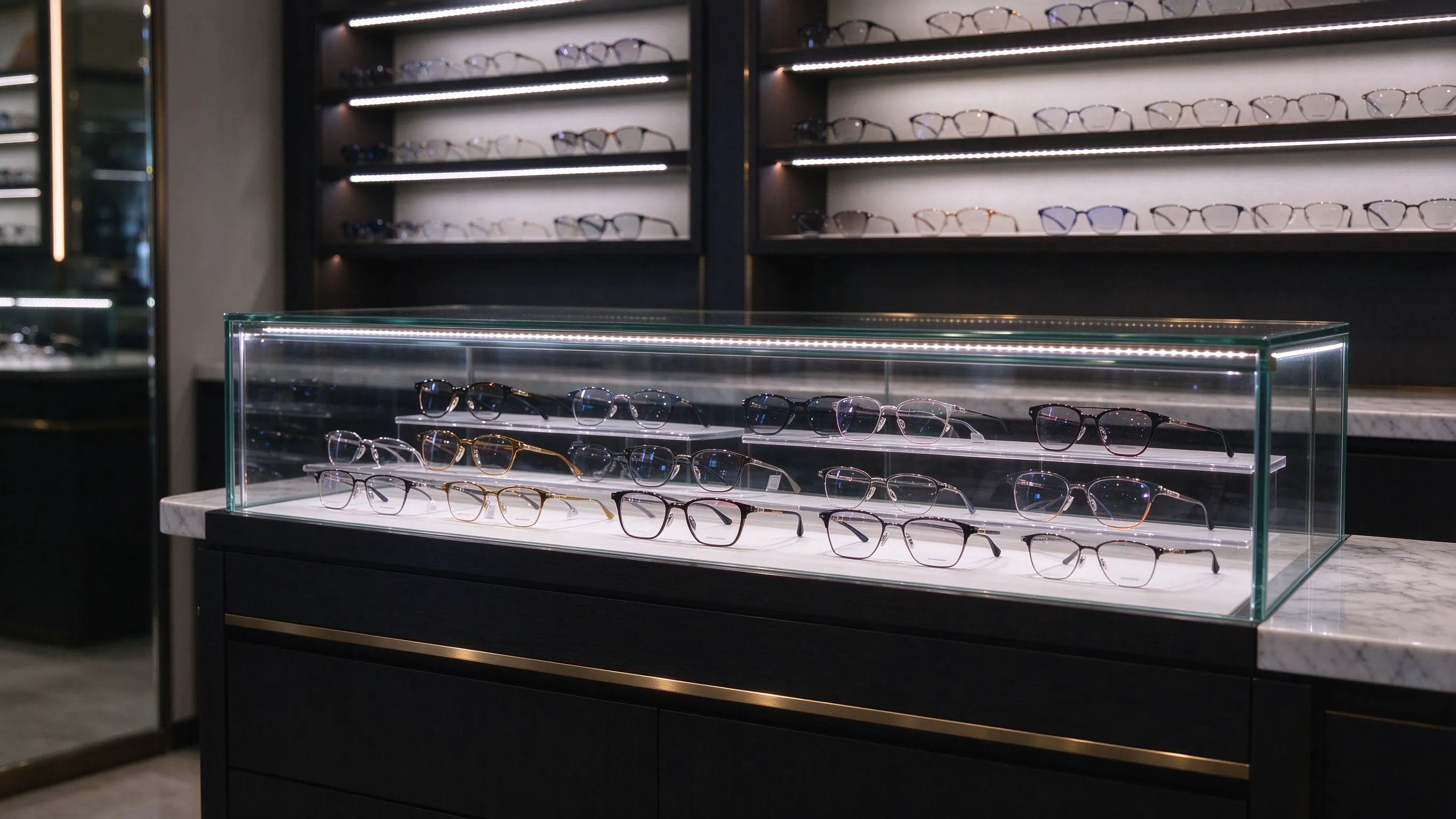
Why Eyewear Fights Ordinary Retail Lighting
Walk into a poorly lit optician and the first thing you notice isn't the frames - it's the white blobs of ceiling light reflected in every lens. Eyewear combines three lighting nightmares: small dark products, highly reflective lens surfaces, and a customer who holds a mirror up to their face and needs to look their best.
Bright downlights make all three worse. They punch hot spots onto glass shelves, mirror themselves in the lenses, and cast eye-socket shadows on the customer's face at the fitting mirror. What works instead is soft, even, linear light delivered from the front and sides at controlled brightness - exactly what dense strip in diffused profiles is good at.
Lighting the Frame Wall and Glass Displays
Frames are usually merchandised on back-lit or rail-mounted displays, sometimes behind glass. You want an even sheen across the whole row so acetate colors, tortoiseshell, metal finishes and crystal detailing all read, with no bright band across the top frames and dark bottom row.
A 528 LEDs/m 10mm COB strip is ideal here - the extremely high LED density produces a perfectly continuous, dot-free line that diffuses to a uniform sheen, which is essential when the light is reflecting off dozens of small glossy frames in a row. Run it along the top and, for tall displays, the front edge of each shelf tier, angled onto the frames rather than onto the glass.
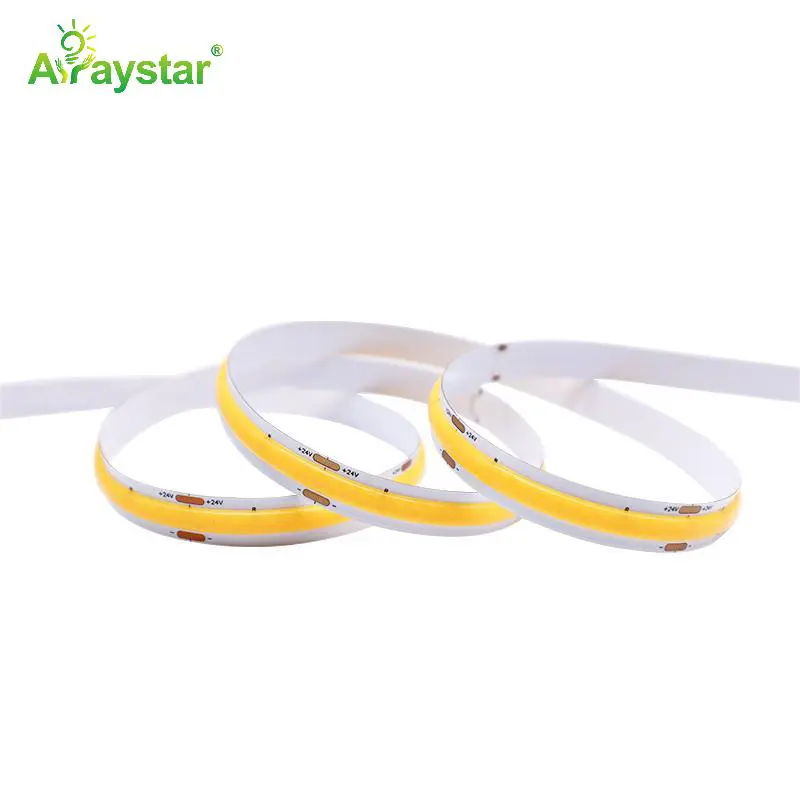
- Angle shelf light onto the frames, never straight down onto a glass shelf surface.
- Keep brightness uniform top to bottom - dark lower rows don't sell premium frames.
- Use warm-neutral 3000-3500K, CRI 90+ so frame colors and skin flatter at the mirror.
- Diffuse everything; a visible dot reflects as a row of bright specks in each lens.
Killing Lens Glare With the Right Profile
The profile is doing as much work as the strip in an optical store. A shallow, clear channel over glass shelving just protects the tape while letting the LEDs glare. You want a reasonably deep channel with a frosted or opal diffuser that turns the strip into a soft luminous bar, positioned so the luminous surface isn't geometrically reflected into the customer's sightline.
The 2411 profile with a diffused cover is the kind of channel I spec over eyewear glass shelves - deep enough to blend the dots and control the beam, clean enough to look like deliberate architectural lighting rather than taped-on LEDs. Mount it toward the front lip of the shelf so the wash falls across the frames and the source stays hidden from someone standing at the display.
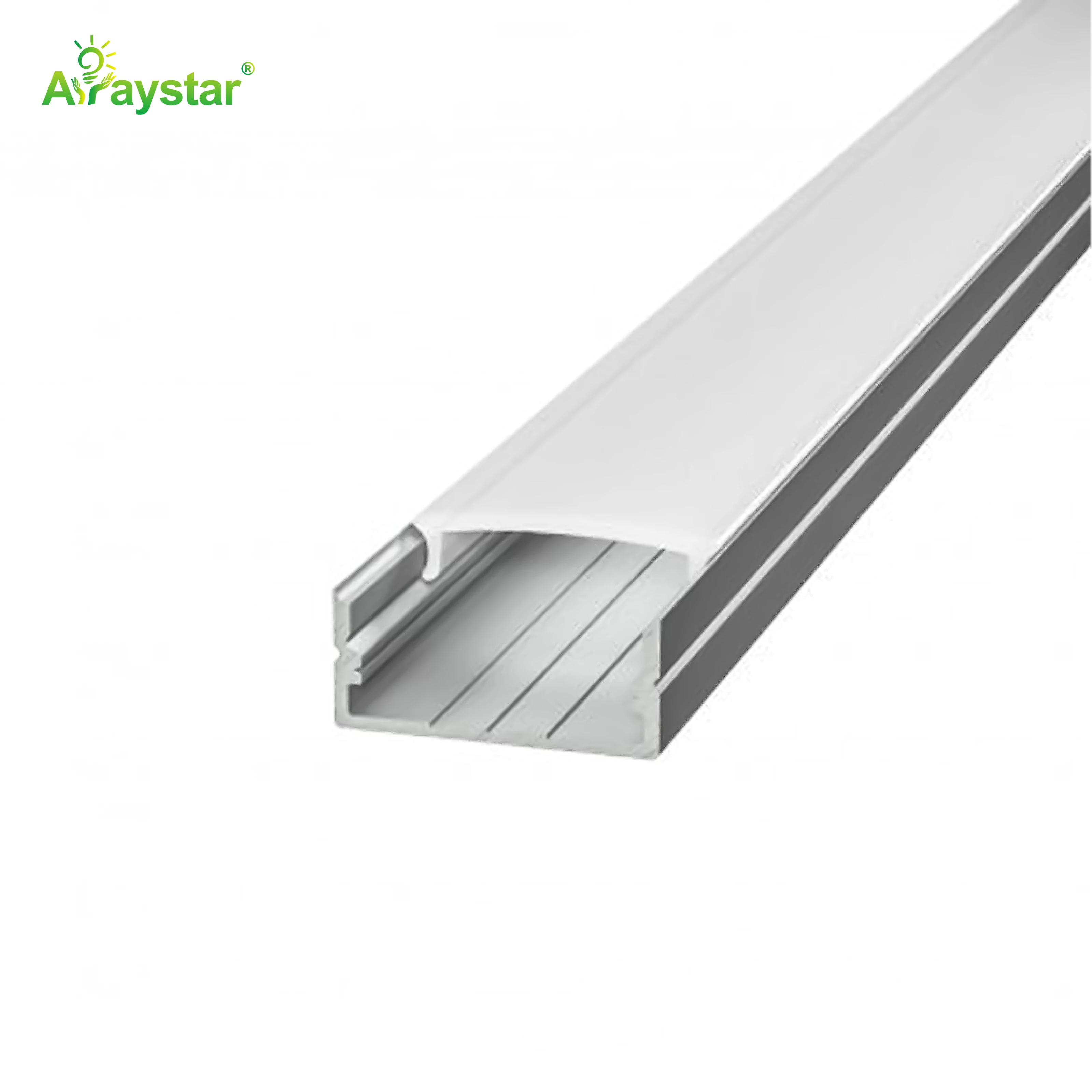
The geometry trick
Glare is geometry. If a customer sees the glowing diffuser reflected in a lens, lower the angle of incidence - move the light further forward and tilt it toward the frames, or add a small baffle/honeycomb louver. Test by standing at the real customer position holding a pair of glasses, not by looking at the shelf from behind the counter.
The Fitting Mirror: Flattering, Accurate, Adjustable
Trying on glasses is an emotional purchase - the customer is judging their whole face. The mirror area needs flattering, shadow-free, high-CRI light on the face (vertical strips both sides of the mirror, like a salon or vanity), at a slightly softer level than the bright frame-browsing displays so the experience feels personal rather than clinical.
This is why I put the displays and the fitting mirrors on separate dimming. A 2.4G rotary dimmer lets staff dial the frame wall up bright for browsing and selection, then roll it down to a softer, flattering level when a customer sits or stands at the mirror to decide. Smooth dimming also handles the transition from a bright daytime store to evening trading.
Counter, Window and the Premium Cue
The dispensing counter and the street window complete the picture. Keep the counter softly lit and glare-free since customers sit there for fittings and adjustments. The window display should be the brightest, most controlled scene after dark - a single hero frame or collection lit with a clean, shadow-free wash that signals premium, not a wall of competing reflections.
- Hold one consistent warm-neutral CCT throughout; mixed temperatures look cheap.
- Specify flicker-free drivers - customers photograph themselves trying frames.
- Clean diffusers weekly; dust and fingerprints on optical displays are glaringly obvious.
- Avoid spotlighting glass directly - light the frames, the signage and the customer, never the glass.
Recommended Products
Frequently Asked Questions
How do you stop LED lights reflecting in eyeglass lenses?
Use diffused linear strips in deep frosted profiles rather than bright downlights, mounted toward the front lip of the shelf and angled onto the frames instead of straight down at the glass. Check the geometry from the customer's position holding a pair of glasses, and add a baffle or louver if the glowing diffuser still reflects in the lenses.
What is the best lighting for an optical or eyewear store?
Soft, even, high-CRI (90+) warm-neutral linear light around 3000-3500K: dense COB strip for a dot-free sheen across frame rows, deep diffused profiles over glass shelves to suppress lens glare, and flattering vertical light at the fitting mirrors, with separate dimming for browsing versus fitting.
What color temperature makes eyewear look best?
Warm-neutral 3000-3500K at CRI 90+. It flatters skin at the fitting mirror while still rendering acetate colors, tortoiseshell and metal finishes accurately. Avoid cold 5000K+ light, which feels clinical and creates harsh reflections, and keep one consistent CCT across the whole store.
Why do my glass eyewear shelves have bright light spots?
Because bare or shallow-channel LEDs mounted directly above a glass shelf reflect off the glass surface. Use a dense dot-free COB strip in a deep opal-diffused profile mounted at the front lip and angled toward the frames, so the light lands on product rather than mirroring off the shelf glass.
Should eyewear display lighting be dimmable?
Yes. Run the frame wall bright for browsing and selection, then dim to a softer flattering level when a customer tries glasses at the mirror. A 2.4G rotary dimmer per zone makes this effortless for staff and handles the change from bright daytime to evening trading.
Need help with your LED project?
Get factory-direct pricing, free samples and engineering support within 24 hours.
Email: info@arraystarled.com | Phone: +86-0755-2103-6746 | WhatsApp: 0086 1581 8514 077
Need to size your power supply? Use our LED Strip Power Calculator to find the right driver in seconds.







