Residential LED Strip Lighting Levels: Complete Guide (Lux, Lumens, and Room-by-Room Recommendations)
- 2026-09-09 16:25
- /
- Arraystar
Quick Answer
Proper residential lighting follows standards from IES, CIBSE, and CSA. General recommendations: bedrooms 200-500 lux, living rooms 100-300 lux, dining rooms 150-300 lux, kitchens 300-500 lux general + 500-1000 lux task, bathrooms 200-500 lux, hallways 100 lux, garages 200-800 lux. Calculate required lumens = room area (m²) × desired lux. Use dimmers for flexibility, layer ambient/task/accent lighting, and choose 2700K-4000K color temperature based on room purpose. LED strips provide flexible, energy-efficient, and dimmable solutions for all residential lighting needs.
Understanding Lighting Measurement Units
Before diving into recommendations, understand the key units: Lumens (lm) measure the total amount of visible light emitted by a source—higher lumens = brighter light. Lux (lx) measures light intensity falling on a surface—1 lux = 1 lumen per square meter. Task areas need ~500 lux, while relaxation areas need only 100-150 lux. Foot-candles (fc) are the imperial equivalent, used primarily in the US—1 foot-candle = 1 lumen per square foot = 10.764 lux. Understanding these units helps you correctly interpret and apply lighting standards from organizations like IES, CIBSE, and CSA.
Why Follow Recommended Lighting Levels?
Following established lighting standards provides multiple benefits: Maximizes visibility while minimizing energy consumption—you use exactly the right amount of light for each activity. Ensures spaces are adequately lit for safety and comfort. Makes navigation throughout the home easier and safer. Reduces the probability of accidents caused by poor lighting (trips, falls, cuts during food prep). Prevents eye strain and fatigue from insufficient or excessive lighting. Creates a comfortable, visually appealing environment that supports different activities and moods. Increases property value and perceived quality of the home. Following standards takes the guesswork out of lighting design—you get proven, science-based recommendations rather than guessing.
🎥 Lumens and FootCandles Explained
General Residential Lighting Recommendations (Lux)
Here are general lighting level recommendations for common residential areas, based on IES and CIBSE guidelines: Bedrooms: 200-500 lux (general), 400-500 lux (reading/bedside task). Living rooms: 100-300 lux (general/ambient), 300-500 lux (reading/task areas). Dining rooms: 150-300 lux (general), 150-200 lux (table surface, CRI 90+). Kitchens: 300-500 lux (general), 500-1000 lux (food prep/cooking task areas). Home offices/studies: 500-1000 lux (task lighting at desk). Bathrooms: 200-500 lux (general), 500-1000 lux (vanity/mirror task lighting). Hallways and stairs: 100-200 lux (safety lighting). Garages: 200-800 lux (general), 500-1000 lux (workbench/task). Basements: 200-1000 lux (depends on use—laundry 200, workshop 500-1000). Laundry rooms: 200-300 lux. Entryways/foyers: 100-200 lux. These are general guidelines—adjust based on specific needs, occupant age (older adults need more light), and room conditions.
IES Lighting Standards for Homes
The Illuminating Engineering Society (IES) is the leading educational and technical authority on lighting worldwide, founded in 1906. IES standards are ANSI-approved and widely used in North America. IES residential recommendations (in foot-candles): Bedrooms: 20-50 fc (general), 50 fc (reading). Living rooms: 10-20 fc (general), 30-50 fc (reading/task). Dining rooms: 10-20 fc (general), 30 fc (table). Kitchens: 20-50 fc (general), 50-100 fc (prep/cooking). Home offices: 50-100 fc (reading/writing tasks). Bathrooms: 20-50 fc (general), 50-100 fc (vanity/grooming). Entryways: 5-10 fc. Garages/workshops: 20-75 fc. Basements: 30 fc (exercise/recreation), 20-100 fc (laundry). IES also provides recommendations for specific tasks and considers factors like occupant age, task difficulty, and surface reflectance. For detailed residential lighting design, refer to the IES Lighting Handbook or RP-1-16 (Recommended Practice for Lighting Residential Interiors).
CIBSE Lighting Standards for Homes
The Chartered Institution of Building Services Engineers (CIBSE) is a London-based professional body that develops guidelines for the building services industry. CIBSE standards are widely used in the UK, Europe, and Commonwealth countries. CIBSE residential recommendations (in lux, with glare index and minimum CRI): Lounge/Living room: 100-300 lux, glare index 19, minimum CRI 80. Kitchen: 150-300 lux (general), minimum CRI 80; 500 lux (food prep task areas). Bedrooms: 150 lux (general), minimum CRI 80; 300-500 lux (wardrobe/dressing areas). Bathrooms/Toilets: 100 lux (general), minimum CRI 80; 500 lux (mirror/vanity task). Dining: 150-300 lux (table), minimum CRI 80. Circulation (hallways, stairs): 100 lux. CIBSE also specifies maintenance factors (typically 0.8 for residential) to account for lumen depreciation and dirt accumulation over time. This means you should install 20-25% more light than the target level to maintain adequate illumination throughout the product's lifespan. CIBSE LG10 (Lighting for Dwellings) provides detailed guidance for residential lighting design.
CSA Residential Lighting Requirements
The Canadian Standards Association (CSA) establishes requirements for residential lighting, including specific provisions for basements, entrances, and garages. CSA requirements include: Residential entrances must have an outdoor lighting receptacle with a wall switch located inside the dwelling. Unfinished basements must have at least one lighting outlet and luminaire per 30 square meters (323 square feet) of floor area. Switches for stairway lighting must be located at the top of the stairs (three-way switching at both top and bottom is recommended). Storage rooms and garages must have lighting located near the entry door. Garages must have at least one lighting outlet controlled by a wall switch, with additional outlets for work areas. CSA also requires that all lighting in residential garages and basements be suitable for the location (moisture-resistant if needed) and properly installed per electrical codes. These requirements ensure basic safety and functionality, but for optimal lighting comfort and performance, follow IES/CIBSE recommended levels in addition to CSA minimum requirements.
Lighting Types: Ambient, Task, and Accent
Effective residential lighting uses three layers: 1) Ambient (general) lighting: The base illumination for the entire room, providing overall visibility. Sources include LED strips in coves, ceiling fixtures, recessed lights, and wall washers. Should match the room's general lux recommendation. Use dimmers for flexibility. 2) Task lighting: Focused, brighter lighting for specific activities—cooking, reading, grooming, working. Sources include under-cabinet LED strips, desk lamps, vanity lights, and pendant lights. Task areas need 2-3x higher lux than ambient (e.g., kitchen counter 500-1000 lux vs general 300-500 lux). Use high CRI (90+) for accurate color rendering. 3) Accent lighting: Highlights architectural features, artwork, collections, or decorative elements. Sources include LED strip behind shelves, picture lights, spotlights, and wall grazing. Typically 3-5x brighter than surrounding ambient light to create visual focus. Use adjustable fixtures to direct light precisely. Layering all three types creates a visually rich, functional, and flexible lighting design that meets all needs in a space. LED strips are particularly versatile for all three layers—cove strips for ambient, under-cabinet strips for task, and shelf/backlight strips for accent.
Room-by-Room Lighting Guide
Living Room: Create a relaxing atmosphere with 100-300 lux ambient. Use cove LED strips (2700K-3000K) for soft ambient glow. Add table/floor lamps for reading areas (300-500 lux). Use accent lighting for artwork and shelves. Dimmers essential for movie/relaxation modes. Dining Room: Use cove LED strips for background ambient (150 lux). Pendant or linear fixture over table (150-200 lux at table surface). CRI 90+ for food appearance. 2700K-3000K warm white for intimate dining. Dimmer for adjusting from bright (meals) to dim (entertaining). Bedroom: Indirect cove LED strips (2700K) for ambient (50-150 lux). Bedside reading lights (400-500 lux) with separate switches. CRI 90+ minimum. Dimmers for adjustable brightness—bright for getting ready, dim for relaxation. Warm color temperature (2700K) promotes melatonin production and better sleep. Home Office: Cove or indirect background (300-500 lux). Desk task lighting (500-1000 lux) with CRI 90+. 4000K-5000K neutral/cool for alertness and focus. Position task light to avoid screen glare. Consider tunable white for circadian support. Kitchen: General ambient (300-500 lux) via ceiling or cove. Under-cabinet LED strips for counter task (500-1000 lux)—most important kitchen lighting. Over-sink lighting. 2700K-4000K (warmer for ambiance, cooler for task). CRI 90+ for food prep. Dimmers for flexibility. Bathroom: General ambient (200-300 lux). Vanity/mirror side lighting (500-1000 lux)—install on both sides at eye level, not overhead. IP44+ rated fixtures. 3000K-4000K, CRI 90+ for grooming. Exhaust fan for humidity control. Hallways/Stairs: 100-200 lux for safe navigation. Motion sensors or three-way switches. 3000K warm for inviting atmosphere. Ensure even illumination, no dark spots. Stair lighting under nosings for safety and style. Garage: 200-500 lux general, 500-1000 lux workbench. 4000K-5000K for detail work. IP44+ for dust/moisture. Motion sensors for convenience. Overhead + task lighting layers.
🎥 How Many Lumens Do You Need for Room Lighting
How to Calculate Required Lumens
The formula: Required lumens = Room area (m²) × Desired lux (lm/m²). Or imperial: Required lumens = Room area (ft²) × Desired foot-candles (lm/ft²). Step 1: Calculate room area = length × width. Step 2: Determine desired lux level from recommendations (consider room use, occupant age, surface colors). Step 3: Multiply area × lux = total lumens needed. Step 4: Add 20-25% maintenance factor to account for lumen depreciation and dirt. Step 5: Divide total lumens by the lumens per meter of your chosen LED strip to get required length. Example 1 - Bedroom: 4m × 5m = 20 m². Desired: 200 lux (general). Required: 20 × 200 = 4,000 lumens. With maintenance factor (1.2): 4,800 lumens. Using a 1000 lm/m COB strip: 4,800 ÷ 1,000 = 4.8m of strip. Example 2 - Kitchen: 3m × 4m = 12 m². General: 400 lux = 12 × 400 = 4,800 lumens. Task (counter area 2m × 0.6m = 1.2 m²): 750 lux = 1.2 × 750 = 900 lumens. Total: 4,800 + 900 = 5,700 lumens × 1.2 = 6,840 lumens. Example 3 - Bathroom: 2m × 2.5m = 5 m². General: 300 lux = 5 × 300 = 1,500 lumens. Vanity task (mirror area): 750 lux = additional 1,000 lumens. Total: 2,500 × 1.2 = 3,000 lumens. Always round up—you can dim bright strips, but can't brighten dim strips.
Factors Affecting Lumen Requirements
1) Ceiling height: Recommendations assume standard 2.4-2.7m (8-9ft) ceilings. Higher ceilings require proportionally more lumens—add 10-20% per 30cm above 2.7m. Vaulted/cathedral ceilings need higher lumen output and narrower beam angles. 2) Wall color: Light-colored walls (white, cream, light gray) reflect 70-85% of light, making rooms appear brighter—you may need 10-20% fewer lumens. Dark-colored walls (dark gray, navy, brown, black) absorb 50-80% of light—you need 30-100% more lumens to achieve the same effective illumination. 3) Wall finish: Matte/flat finishes absorb more light—increase lumens by 10-20%. Glossy/satin finishes reflect more light—may need fewer lumens. Textured surfaces scatter light, reducing effective reflection. 4) Furniture and decor: Dark furniture, heavy curtains, and large area rugs absorb light. Rooms filled with dark, absorbent materials need more lumens. Light-colored, reflective furniture helps distribute light. 5) Room orientation and natural light: North-facing rooms receive less natural light and may need more artificial lighting. South-facing rooms receive abundant daylight—you may need less artificial light during the day, but still need adequate evening lighting. Rooms with few or small windows need more artificial light. 6) Occupant age: Older adults (65+) need 2-3x more light than young adults for the same tasks, due to age-related changes in vision (smaller pupils, reduced light transmission, increased glare sensitivity). If older adults live in or frequently use the space, increase lux levels accordingly. 7) Task difficulty: Detailed tasks (reading small print, precision assembly, intricate cooking) need higher lux than simple tasks (watching TV, casual conversation). Match lighting level to the most demanding task performed in that space.
Tips to Achieve Recommended Lighting Levels
1) Measure actual lux: Use a lux meter (or smartphone app for approximate readings) to measure light levels at key surfaces (desk, kitchen counter, dining table, bathroom vanity). Compare to recommendations and adjust as needed. 2) Meet minimum standards first: Ensure your lighting system meets at least the minimum recommended lumens for general lighting. Then add task and accent lighting layers. 3) Use dimmers: Always install dimmers for high-output lighting. This allows you to adjust brightness for different activities and moods—bright for tasks, dim for relaxation. Dimmers also extend LED lifespan and save energy. 4) Avoid over-lighting and under-lighting: Over-lighting causes glare, discomfort, and energy waste. Use diffusers, lower-output strips, and dimmers. Under-lighting causes shadows, eye strain, and safety hazards. Add task lighting to eliminate dark spots, and reposition fixtures for better coverage. 5) Leverage natural light: Combine natural daylight with artificial lighting. Use light-colored window treatments that diffuse light rather than block it. Consider skylights or light tubes for dark rooms. Use daylight sensors to automatically dim artificial lights when natural light is sufficient. 6) Choose energy-efficient LED sources: LED strips and fixtures use 50-80% less energy than traditional lighting, saving on electricity bills while providing excellent light quality. Look for high efficacy (lm/W) products. 7) Use layered lighting: Combine ambient, task, and accent lighting for a balanced, functional, and visually appealing design. Layered lighting ensures even distribution and meets all lighting needs in a space. 8) Maintain your lighting: Clean fixtures and strips regularly (dust reduces light output by 10-30%). Replace degraded strips or drivers. Check that diffusers are clean and properly seated. Consider relamping/replacing strips every 5-7 years to maintain optimal light output.
LED Strip Solutions for Every Room
| Factor | Option A | Option B |
|---|---|---|
| Brightness | Medium-High | High |
| Efficiency | Good | Excellent |
| Cost | Lower | Higher |
| Best For | General applications | Premium installations |
Recommended Products
ART-NTC22-01
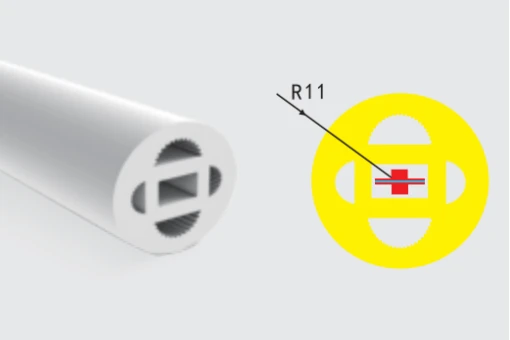
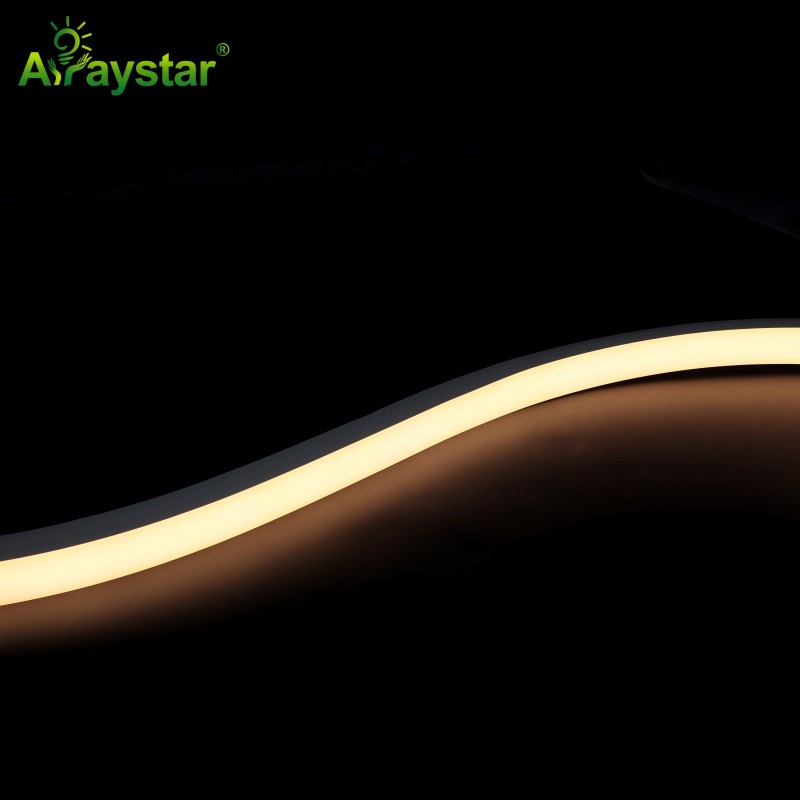
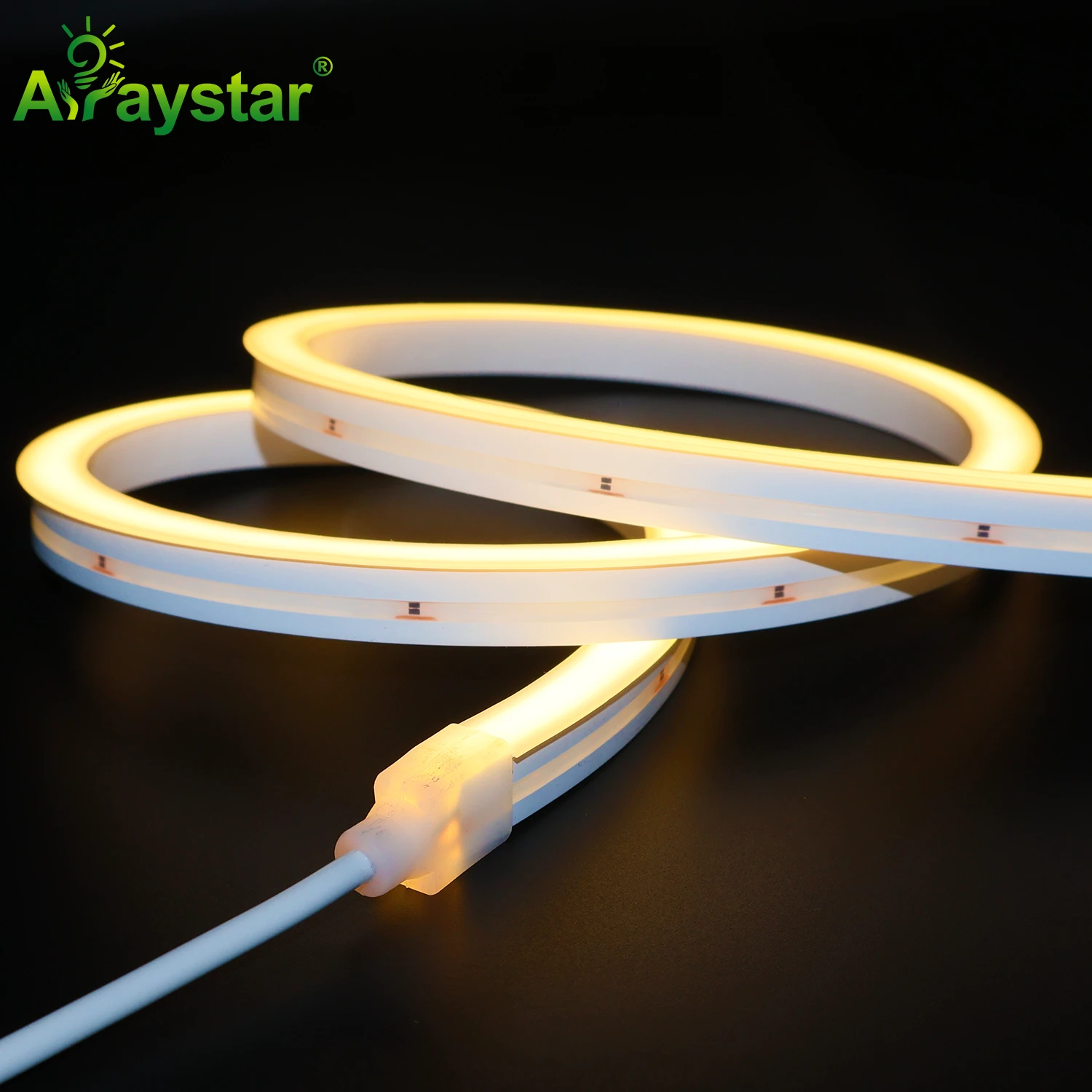
Professional 180°270°360° emitting neon tube from Arraystar LED, manufactured with premium quality components and backed by our 3-year warranty.
3D LED Neon Strip ART-NS2020 3D
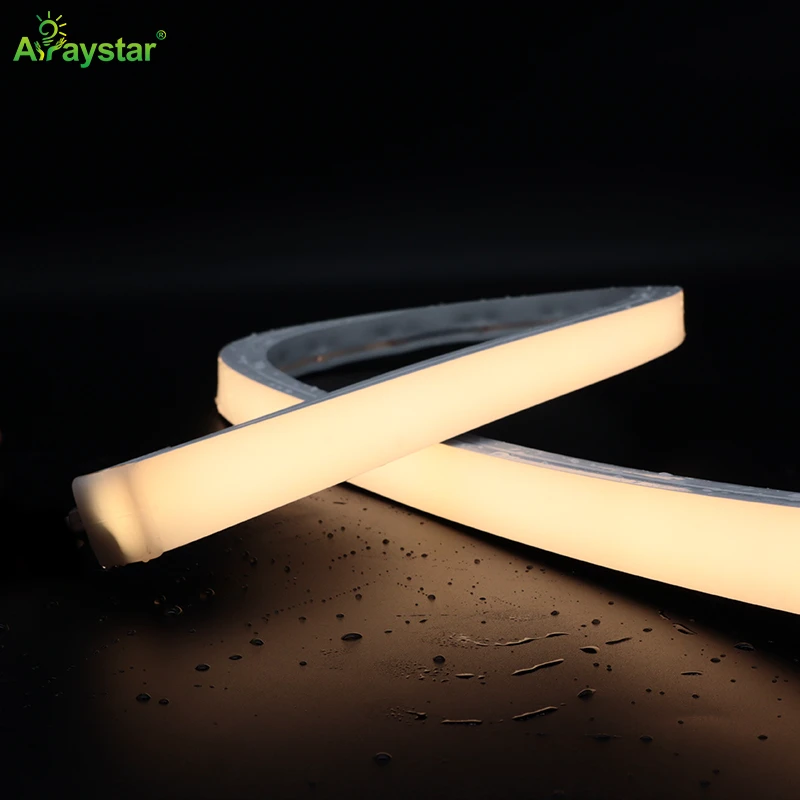
2020 3D Bend Neon Strip CCT Voltage Power(W/M) LED Type LED Qty/m Cut Size Pixels/M IP Rating CRI Lumen(lm/M) ART-3D2020-X 1800K, 2700K, 3000K, 4000K, 6000K 12V DC 15W/m 2835 168LEDs/m 3LED/ 17.85mm
Frequently Asked Questions
Q: What should I consider before buying 180°270°360° emitting neon tube?
A: Key factors include: required brightness (lumens/m), color temperature, voltage (12V/24V/48V), IP rating for environment, LED density, CRI requirement, dimming compatibility, and total run length. Calculate total wattage to size your power supply correctly.
Q: How do I calculate the power supply size for 180°270°360° emitting neon tube?
A: Multiply the strip's wattage per meter by total length, then add 20% headroom. For example: 5m × 14.4W/m = 72W + 20% = 86.4W, so choose a 100W power supply. Always use a power supply rated for LED applications.
Q: What is the maximum run length for 180°270°360° emitting neon tube?
A: This depends on voltage and copper weight. 12V strips typically max 5m, 24V up to 10m, 48V up to 20m. For longer runs, use power injection at both ends or intermediate points to prevent voltage drop and color shift.
Q: How do I dim 180°270°360° emitting neon tube?
A: Multiple dimming options available: 0-10V, PWM, TRIAC, DALI, DMX512, and wireless (WiFi/Zigbee/Bluetooth). Ensure your dimmer is compatible with the strip's voltage and current. COB strips dim especially smoothly due to uniform light output.
Q: Can 180°270°360° emitting neon tube be used outdoors?
A: Only IP65 or higher rated strips are suitable for outdoor use. IP65 for covered/splash areas, IP67 for exposed outdoor, IP68 for underwater/submersion. Always use waterproof connectors and properly seal all connections for outdoor installations.
Conclusion
Proper residential lighting follows standards from IES, CIBSE, and CSA. General recommendations: bedrooms 200-500 lux, living rooms 100-300 lux, dining rooms 150-300 lux, kitchens 300-500 lux general + 500-1000 lux task, bathrooms 200-500 lux, hallways 100 lux, garages 200-800 lux. Calculate required lumens = room area (m²) × desired lux. Use dimmers for flexibility, layer ambient/task/accent lighting, and choose 2700K-4000K color temperature based on room purpose. LED strips provide flexible, energy-efficient, and dimmable solutions for all residential lighting needs. Arraystar LED offers 15+ years of LED strip manufacturing experience with full OEM/ODM capabilities, CE/RoHS/ERP certification, and 3-year warranty. Contact our team for a free consultation and custom quote for your project.
Ready to start your project? Contact us today for expert guidance and competitive pricing.
About the Manufacturer
ArrayStar LED is a professional LED strip manufacturer in Shenzhen, China since 2010, serving 80+ countries. We support custom OEM/ODM projects (custom CCT, CRI, PCB, logo, packaging) and wholesale supply for distributors and contractors worldwide.