
Silicone Extrusion vs Silicone Tube LED Strips: IP65 vs IP67 Construction Compared
- 2026-09-30 17:38
- /
- Arraystar LED
'Waterproof LED strip' covers two genuinely different sealing technologies that get bought interchangeably but perform very differently over time: solid silicone extrusion, where the PCB is fully encapsulated in a solid body, and hollow silicone tube/sleeve, where the strip slides into a hollow jacket. Solid extrusion gives true IP67/IP68 immersion resistance and better heat transfer; hollow sleeves are cheaper and repairable but vulnerable to water ingress at cut ends and trapped moisture. Choosing between them is really a decision about how wet the product gets and for how long.
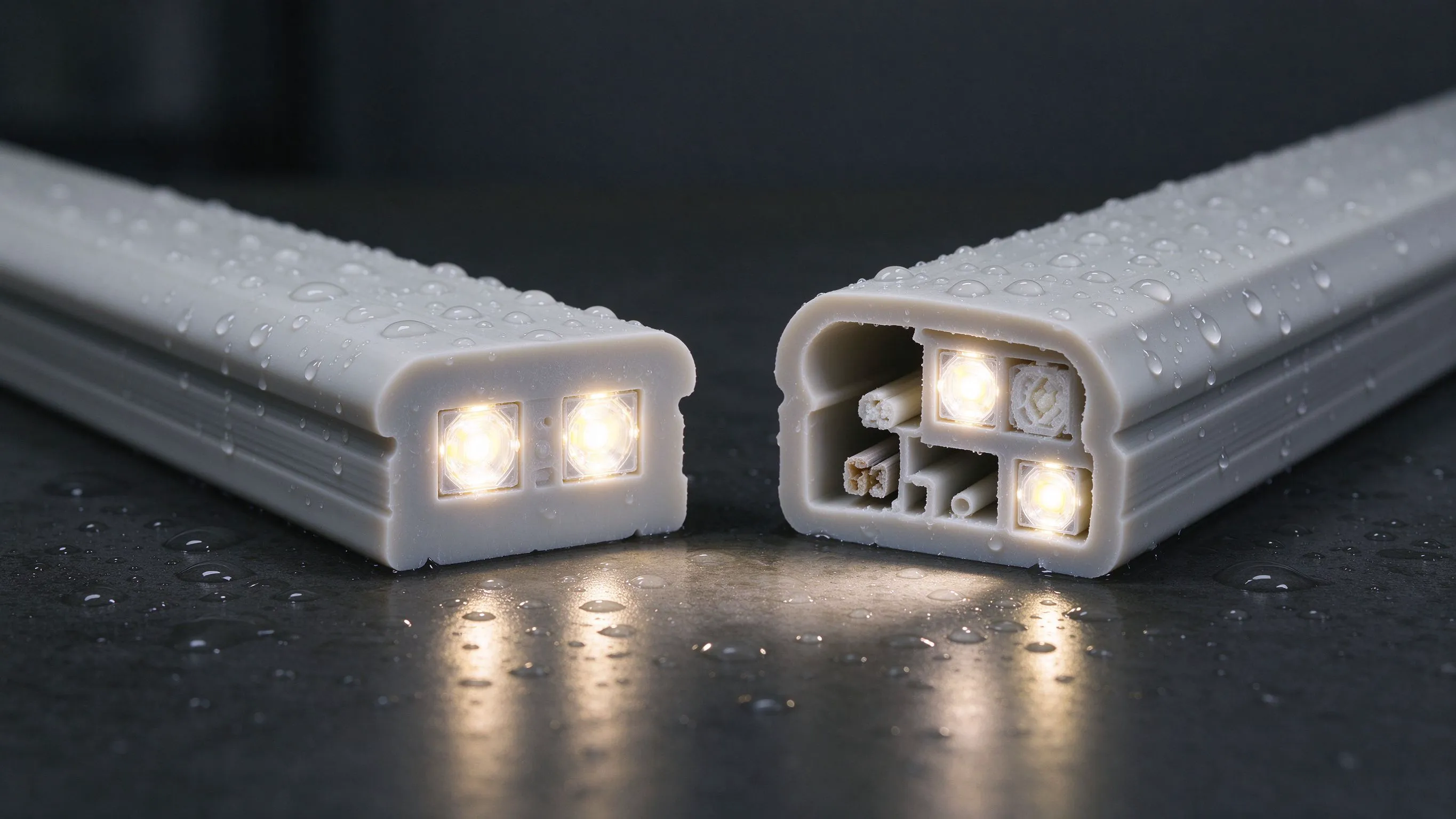
Two Ways to Wrap a Strip in Silicone
When you shop waterproof LED strip you'll see IP65, IP67 and IP68 ratings on products that look almost identical, but the construction behind those ratings falls into two main families: solid silicone extrusion (the strip is co-extruded inside a continuous solid silicone body) and silicone tube or sleeve (a finished strip is threaded into a hollow silicone jacket, usually sealed at the ends with glue and caps).
They're not equivalent in service. Solid encapsulation and hollow jacketing handle water, heat, cutting and aging differently. Understanding the construction tells you whether a product rated 'IP67' will actually survive a wet outdoor or submerged-adjacent application, or just survive a splash test on the day it left the factory.
Solid Silicone Extrusion: True Long-Term Sealing
In solid extrusion, molten silicone is formed around the PCB as a single solid body, so there is no air gap or hollow channel around the LEDs. Water has no path to wick along the strip, heat conducts out through the solid body more effectively, and the product achieves genuine IP67 (and often IP68) performance that holds up over years of wet and humid service.
The IP67 solid silicone extrusion SOB strip is the construction to specify for demanding wet applications - outdoor facade and landscape runs, marine-adjacent and wash-down environments, saunas and hot-tub surrounds. The trade-off is that solid-extruded strip is less repairable (you can't slide the PCB out) and cut ends must be properly capped, but for reliability in sustained moisture it's the superior technology.
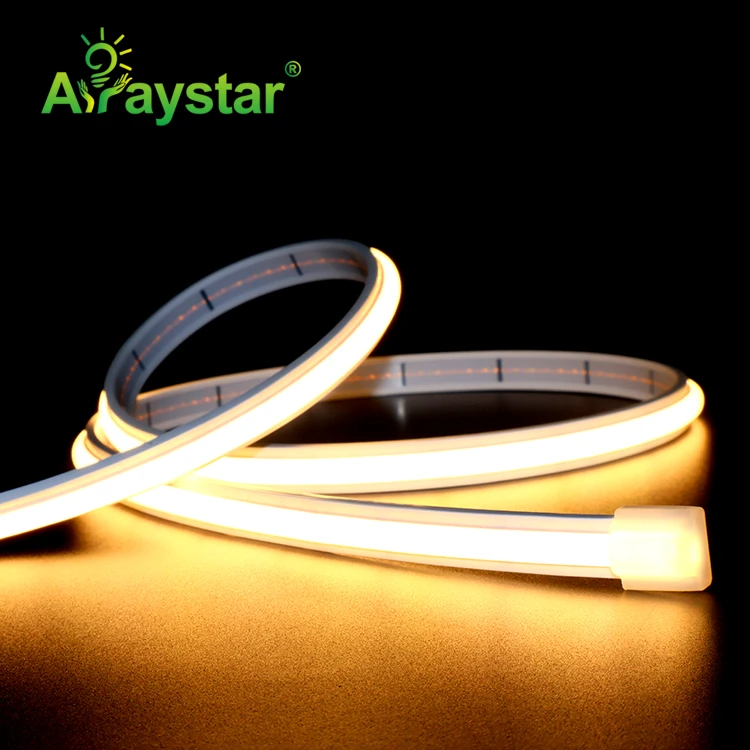
- No hollow channel = no path for water to wick along the strip.
- Solid body conducts heat away better, extending LED life.
- Achieves durable IP67/IP68 performance, not just a passing lab test.
- Best for sustained wet: outdoors, marine, saunas, wash-down areas.
- Cut ends still need proper sealed end caps after trimming.
Milky Extrusion for Diffused Glow in Wet Spots
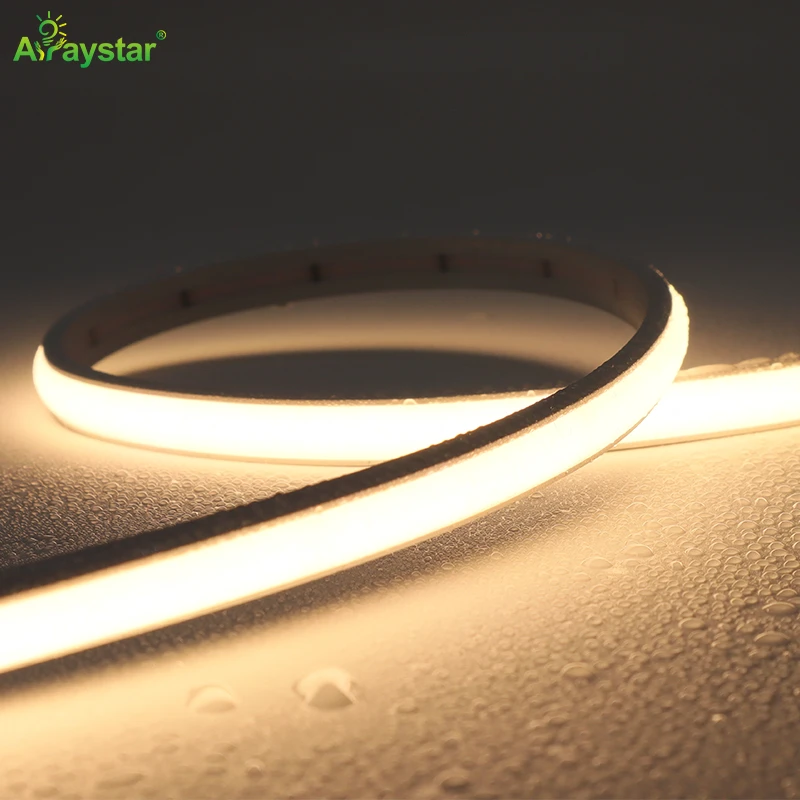
Solid extrusion also comes in milky/diffused versions where the silicone body itself acts as the diffuser, combining full encapsulation with a smooth dot-free glow - useful when you want the waterproofing of extrusion and the seamless appearance of a neon-style or COB light without a separate channel.
A waterproof milky silicone-extrusion strip gives soft, even light in wet coves, bathroom and spa details, outdoor handrails and sign contours where visible LED dots would look harsh, while retaining the solid-body moisture protection. It's the best of both for exposed linear glow that needs to look as good as it survives.
Hollow Silicone Tube: Cheaper, Repairable, More Vulnerable
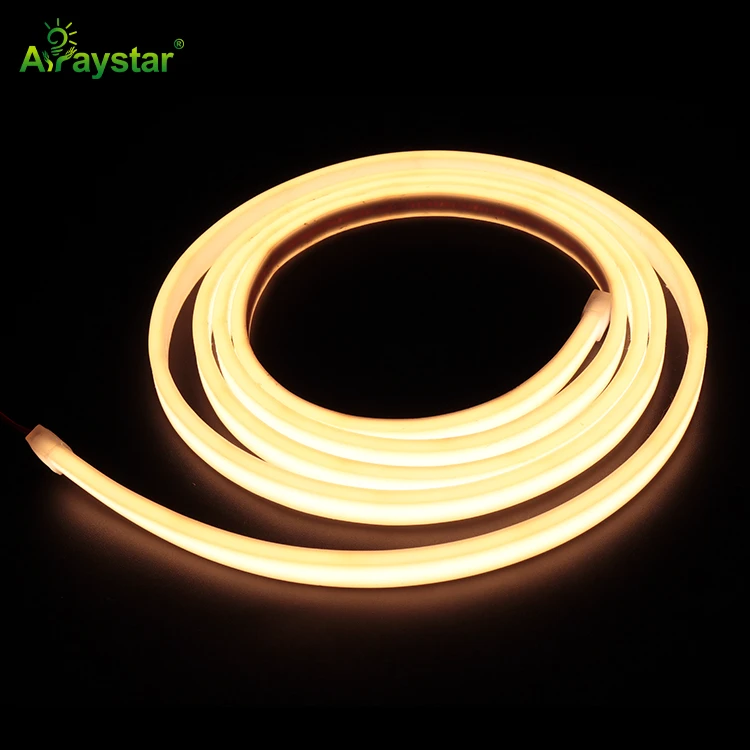
Silicone tube (sleeve) construction threads a standard strip into a hollow silicone jacket and seals the ends. It's cheaper to produce, lets you re-open or replace the inner strip, and is widely sold at IP65/IP67 ratings. The weakness is inherent: the hollow interior is a potential path for moisture, and the end seals are only as good as the glue and caps applied at each termination.
An IP65 silicone-tube COB strip (480 LED type) is a solid choice for splash and occasional moisture - covered coves, bathrooms with indirect exposure, protected outdoor under-eave runs - where the jacket mainly sheds incidental water. But if an end seal fails, water can enter and travel inside the hollow tube, and condensation can be trapped against the PCB. It should not be treated as immersion-grade over the long term.
Choosing by How Wet It Actually Gets
Matching silicone construction to real moisture exposure.
| Exposure | Recommended construction | Why |
|---|---|---|
| Indoor / dry | Bare or coated strip (IP20) | No moisture threat; best value/heat |
| Damp / occasional splash | IP65 hollow tube COB | Jacket sheds incidental water |
| Direct rain / outdoors | IP67 solid extrusion | No wicking path, durable sealing |
| Immersion-adjacent / marine / sauna | IP68 solid extrusion | Withstands sustained wet and heat |
| Wet + dot-free glow | Milky solid extrusion | Encapsulation plus built-in diffusion |
The honest rule: match the sealing technology to sustained exposure, not the worst single event. A tube product can pass an IP splash test yet still wick water over months outdoors, while solid extrusion is engineered for exactly that long-term wet. Buy once for the wettest condition the strip will live in, not the driest day of installation.
Recommended Products
Frequently Asked Questions
What is the difference between silicone extrusion and silicone tube LED strip?
Solid extrusion co-forms a continuous solid silicone body around the PCB with no air gap, giving durable IP67/IP68 sealing and better heat transfer. Hollow tube/sleeve threads strip into a hollow jacket sealed at the ends with glue and caps - cheaper and repairable, but moisture can wick inside if an end seal fails.
Which is more waterproof, IP67 extrusion or IP65 tube strip?
For sustained wet conditions, solid IP67/IP68 extrusion is more reliable because there's no hollow channel for water to travel and no glue-only end seals inside the run. An IP65 hollow tube handles splash and incidental moisture well but shouldn't be treated as immersion-grade long-term, since a failed end cap lets water inside the sleeve.
Where should I use solid silicone-extruded LED strip?
Anywhere exposed to sustained moisture or heat: outdoor facade and landscape runs, marine and dock-adjacent lighting, saunas and hot-tub surrounds, wash-down commercial areas and wet coves. Milky extrusion adds a built-in diffuser for dot-free glow in those same wet locations. Always cap cut ends properly.
Is hollow silicone tube strip any good?
Yes for the right exposure - it's a cost-effective, repairable option for damp rooms, covered coves and protected under-eave outdoor runs where it only sees incidental splash. Its weakness is the hollow interior and glue-sealed ends, so inspect/re-seal terminations and don't rely on it for direct long-term rain or immersion.
Do I still need to seal cut ends on waterproof strip?
Yes - cutting breaks whatever sealing the strip had. On solid extrusion, fit the matching end cap and bond it with silicone glue; on hollow tube, the end cap and glue seal is the primary barrier against water entering the jacket. Use waterproof connectors at joins and never leave a freshly cut end exposed, especially outdoors or in wet locations.
Need help with your LED project?
Get factory-direct pricing, free samples and engineering support within 24 hours.
Email: info@arraystarled.com | Phone: +86-0755-2103-6746 | WhatsApp: 0086 1581 8514 077
Need to size your power supply? Use our LED Strip Power Calculator to find the right driver in seconds.







