UGR & Glare Control: Anti-Glare Neon LED Strips Explained
- 2026-09-18 19:08
- /
- Arraystar
Quick Answer
UGR (Unified Glare Rating) scores how uncomfortable a light is to look at — lower is better (under 19 is fine for most offices, under 16 for sensitive spaces). Bare LED chips and transparent neon tubes shine directly into the eye and cause glare. Anti-glare (diffused / frosted) neon strips scatter the light through a milky cover, lowering surface brightness and glare so they can be used in offices, galleries, classrooms and corridors without discomfort.
📑 Table of Contents
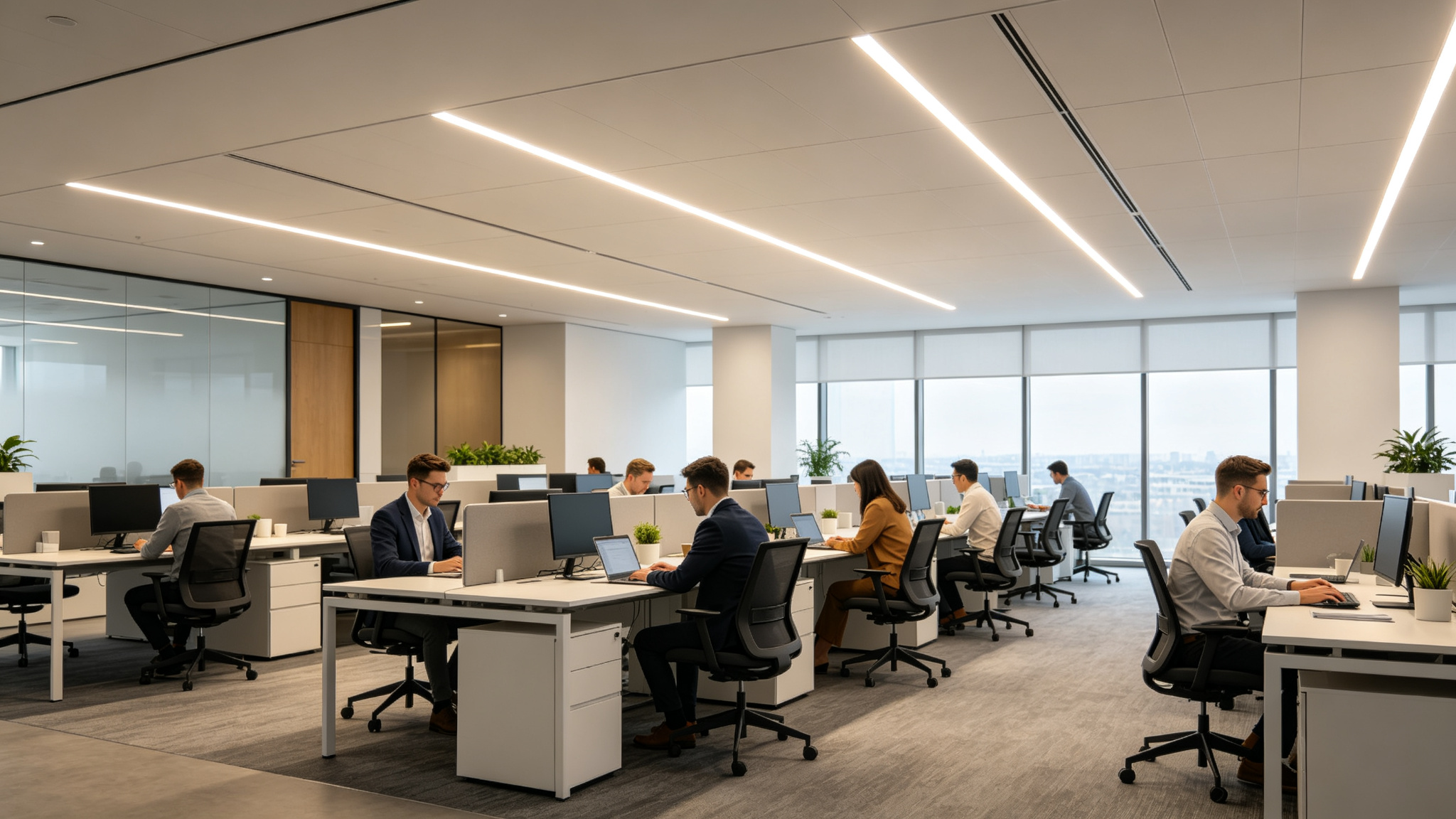
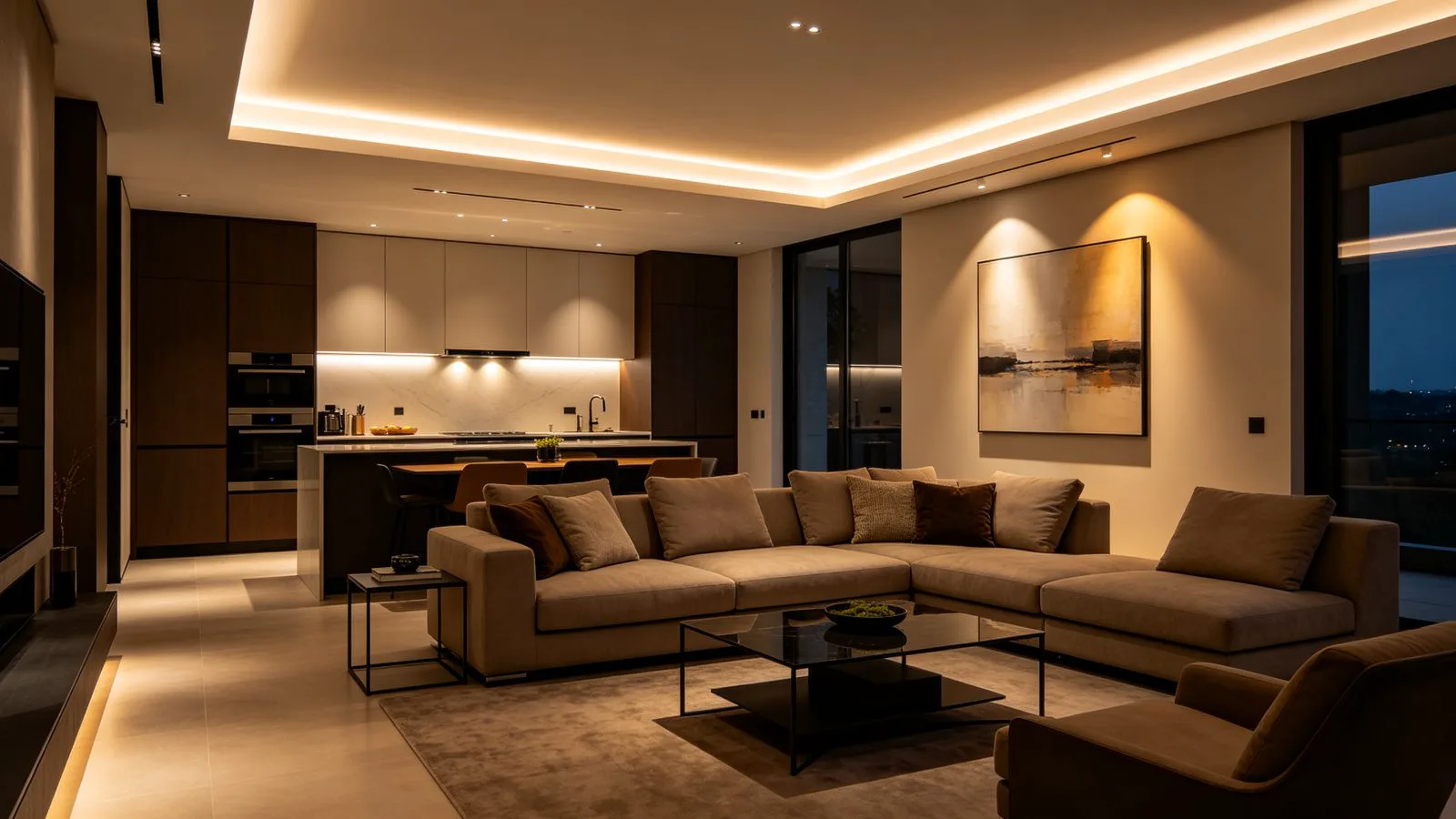
Comfortable low-glare lighting lets people work long hours without squinting or screen reflections.
What UGR Actually Measures
UGR (Unified Glare Rating) is a standard index (CIE) estimating how much discomfort a lit space causes from bright sources in the field of view. It combines source size, brightness, position and room reflectance. The scale runs roughly 10 (imperceptible) to 30 (intolerable). In architectural lighting, UGR ≤ 19 is typical for offices, ≤ 16 for classrooms and sensitive tasks, and below 13 for the most demanding spaces.
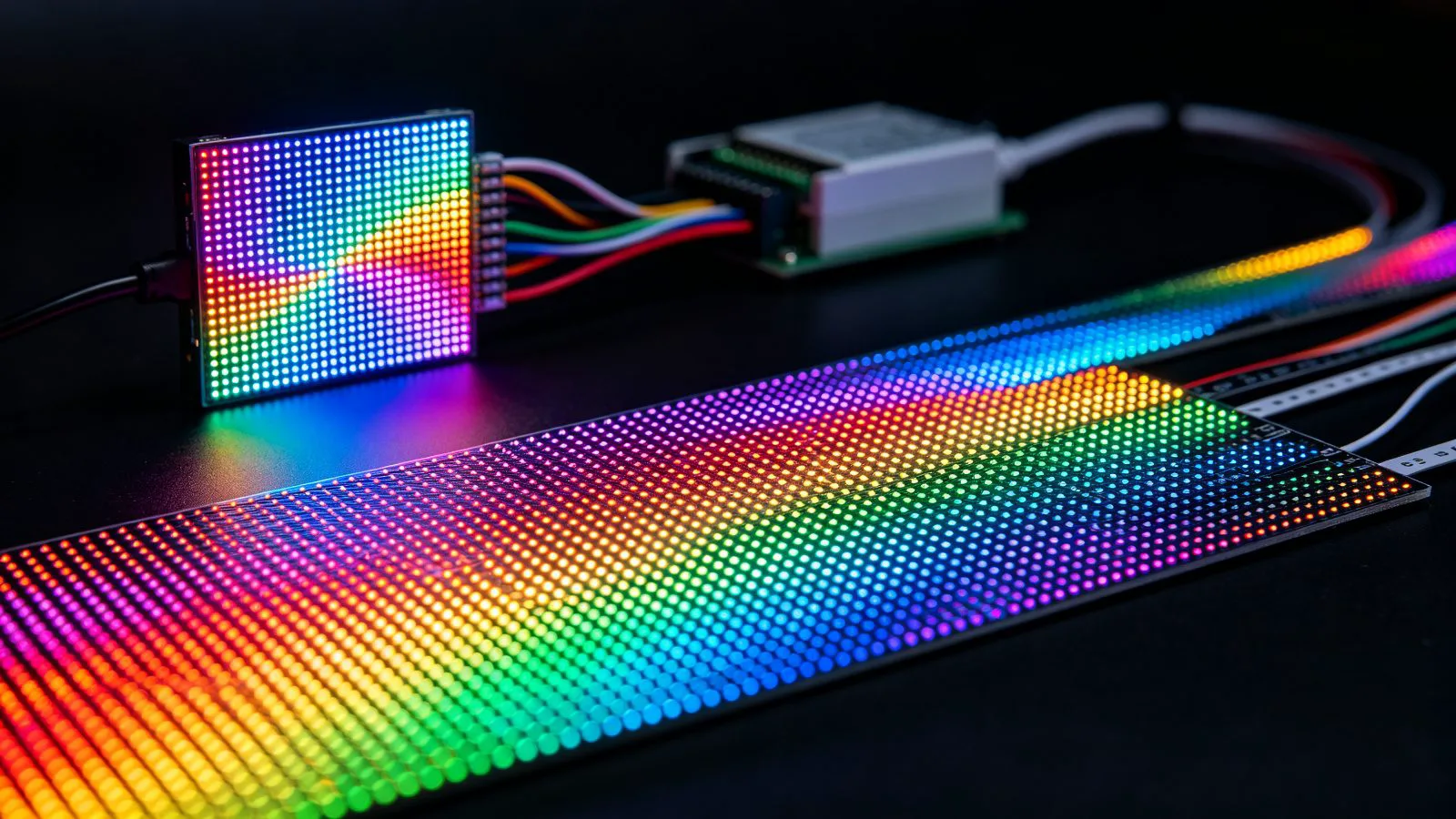
LED strips are excellent for hidden coves, but a bare chip or a transparent neon tube is a small, bright point right in the eye — a classic glare source. Diffusing it is the fix. Our beam angle guide explains how optics and covers shape that bright source.
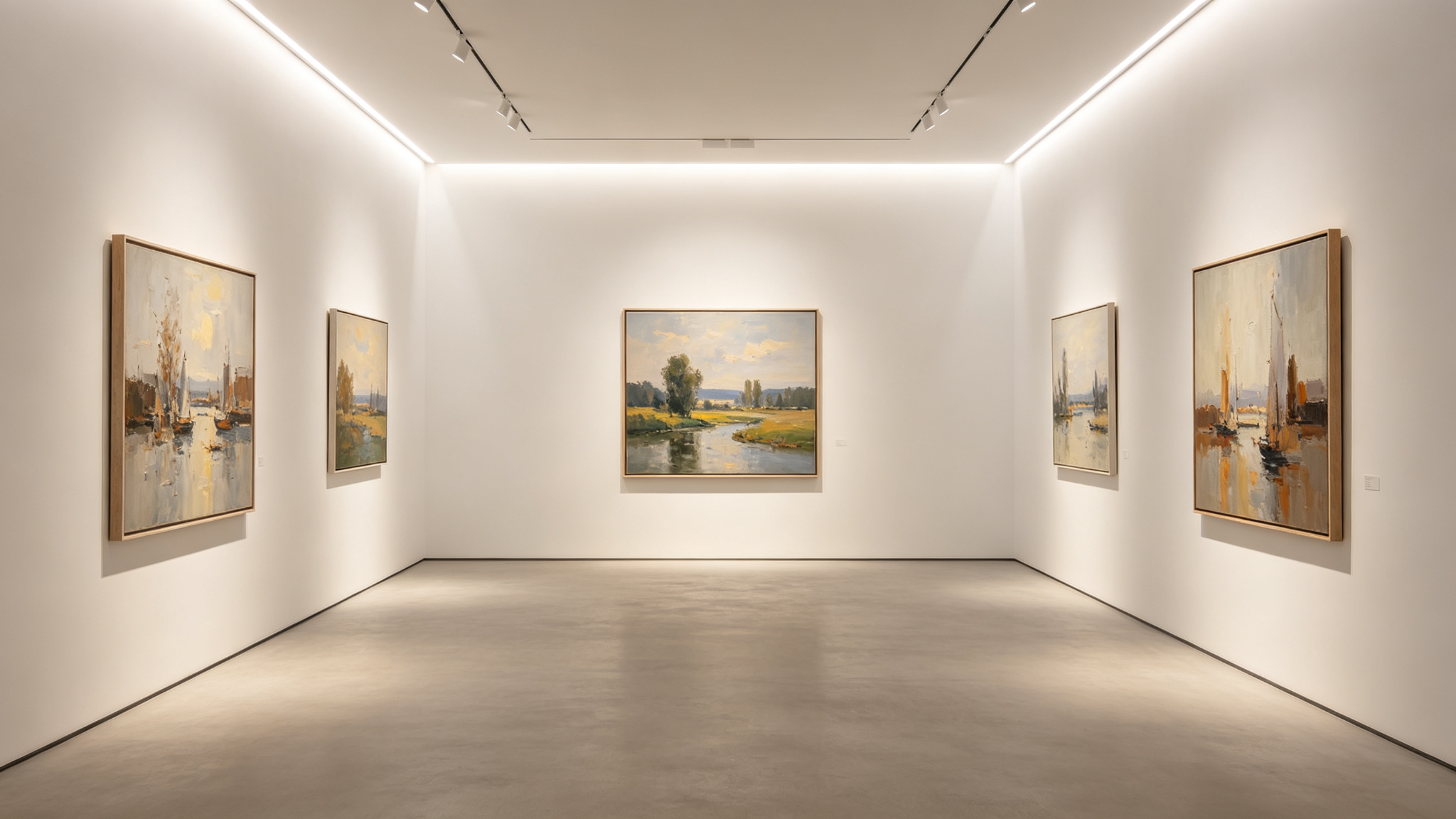
Galleries need low UGR: even wall-wash with no glare or reflections on artwork.
Why Bare LEDs Cause Glare
- Small bright source: a single chip is tiny and intense, so its surface luminance is high.
- Direct line of sight: if the strip is on the ceiling or a wall at eye level, you look straight into it.
- Reflections on screens: bare LED reflections wash out monitors in offices.
- Transparent vs frosted: a clear neon cover shows the chips; a frosted (opal) cover scatters them.
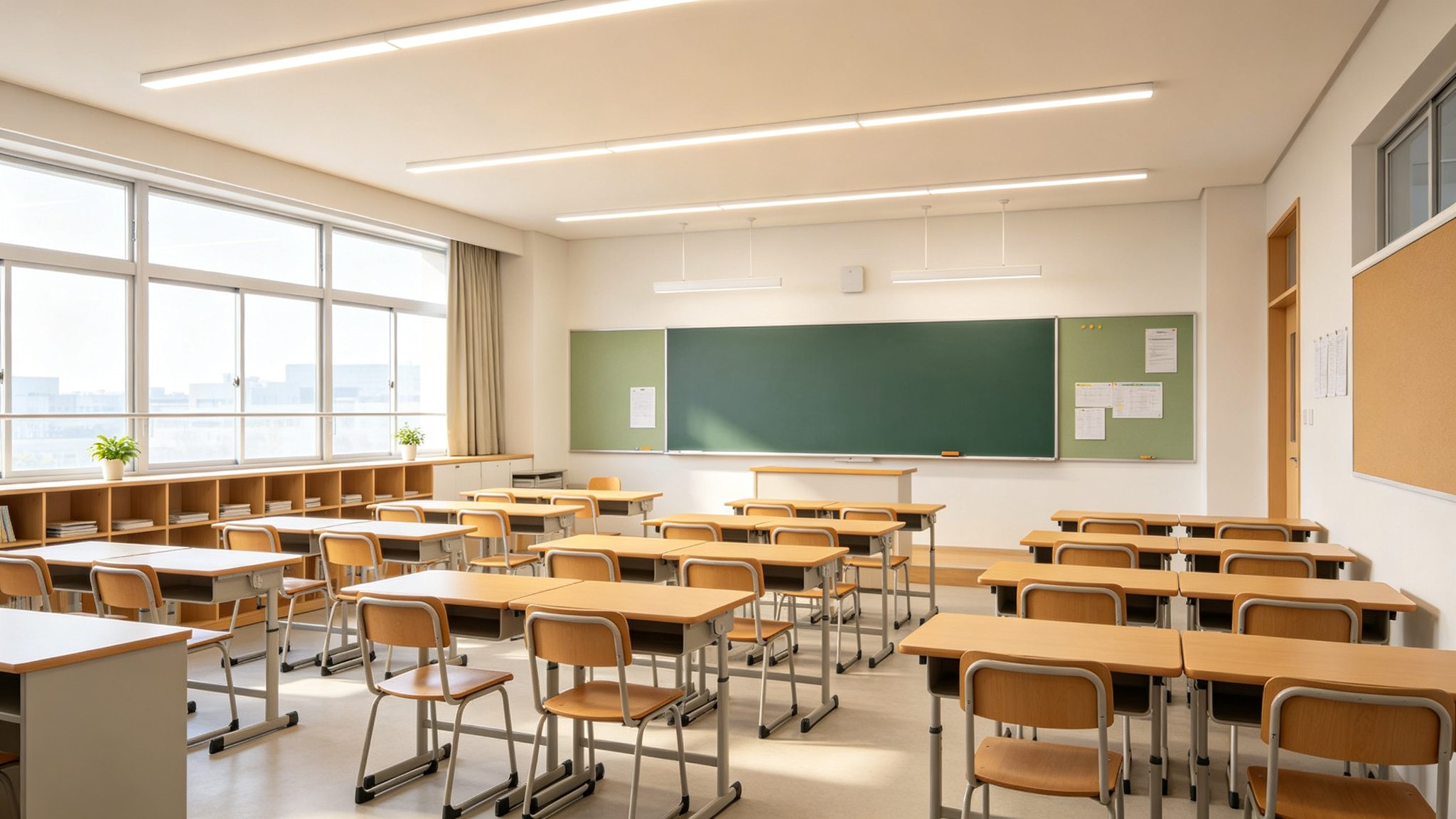
Classrooms need low UGR so children do not glare or get screen/board reflections.
UGR Levels and Applications: Table
| UGR Range | Perception | Typical Application |
|---|---|---|
| ≤ 13 | Imperceptible | Museums, precision tasks |
| 13–16 | Just perceptible | Classrooms, detailed offices |
| 16–19 | Acceptable | General offices, corridors |
| 19–22 | Noticeable glare | Storage, circulation only |
| > 22 | Uncomfortable | Not for occupied spaces |
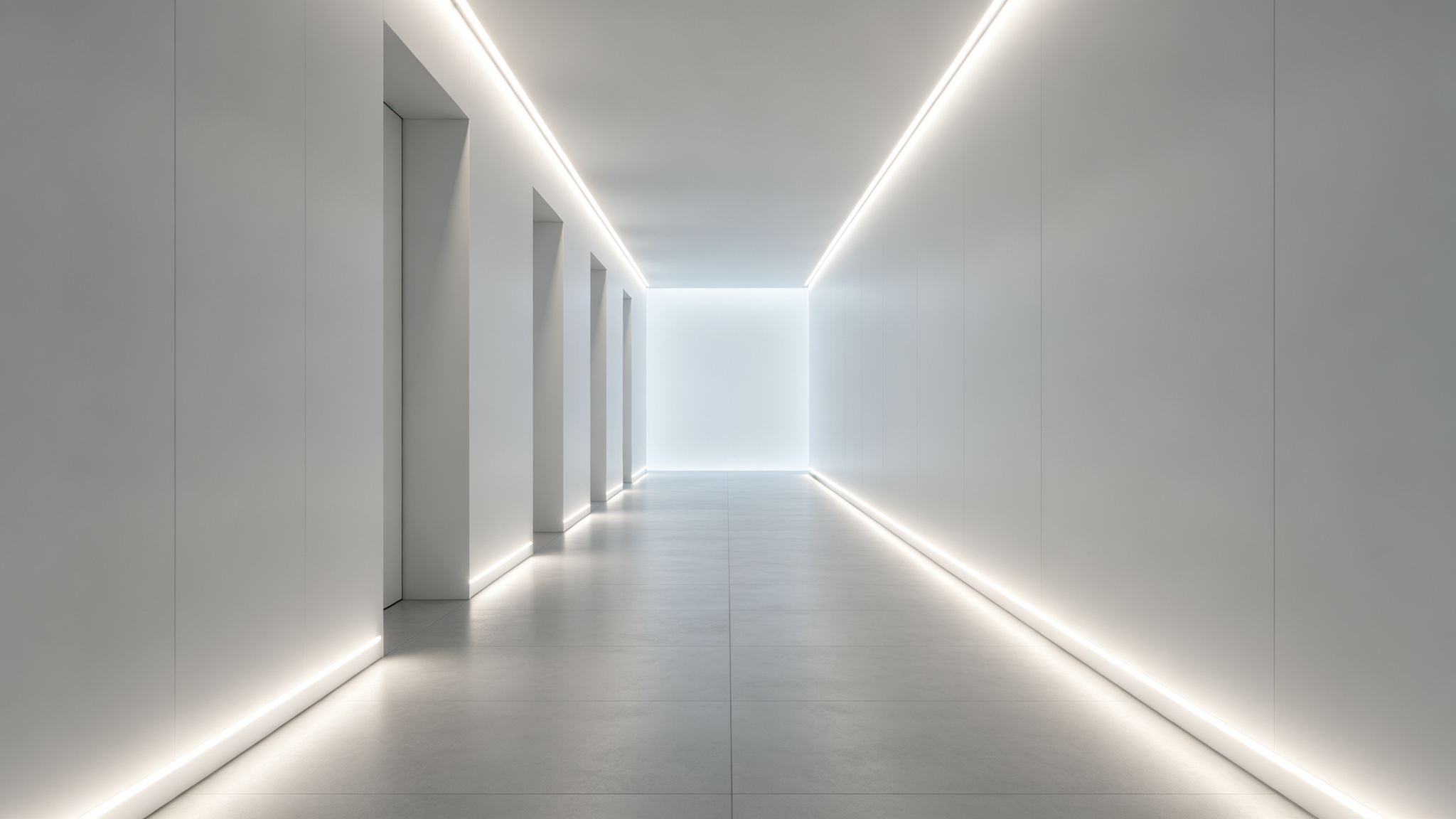
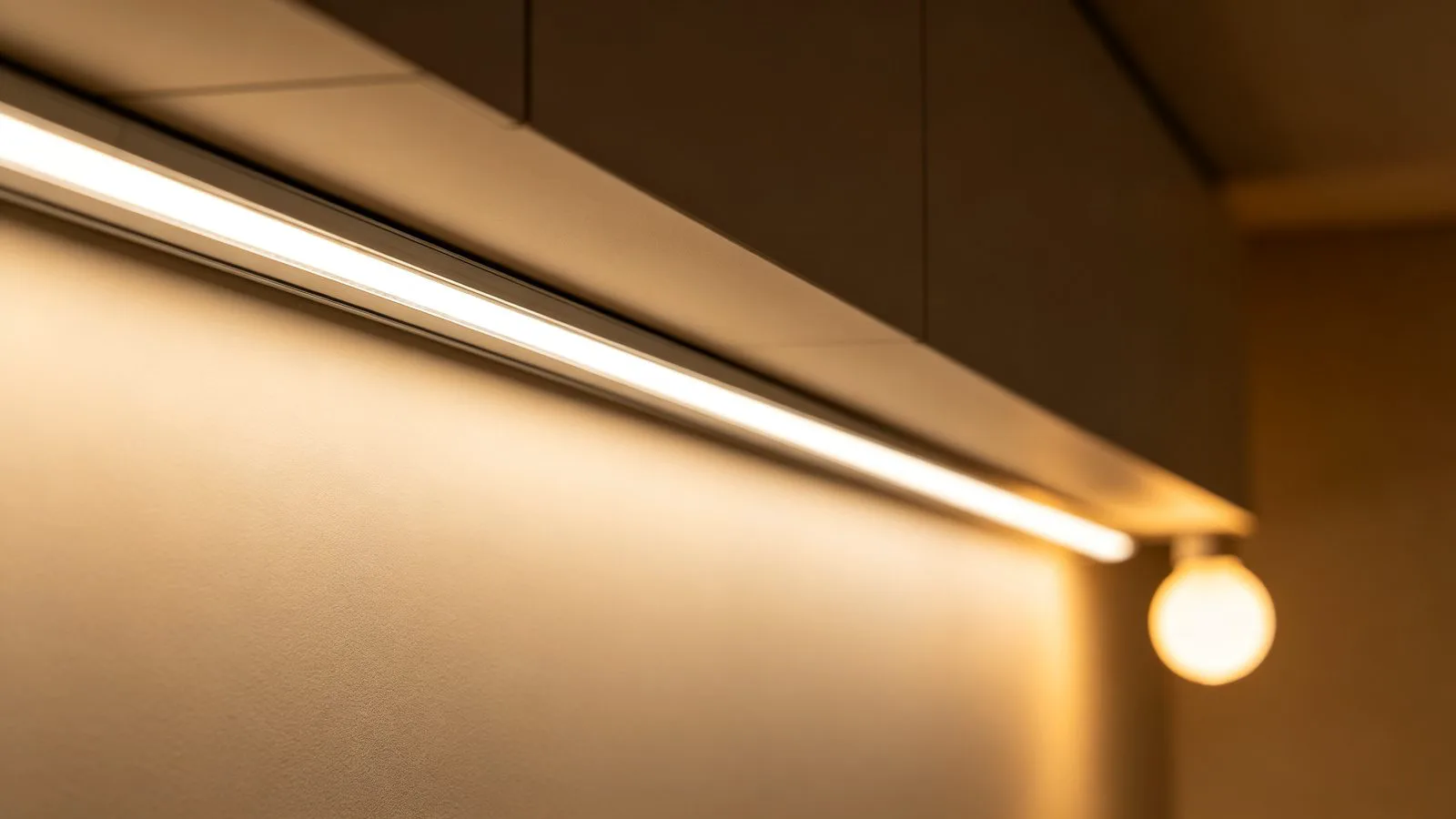
A soft diffused line brightens a corridor without becoming a glaring point in the eye.
How Anti-Glare Neon Strips Reduce Glare
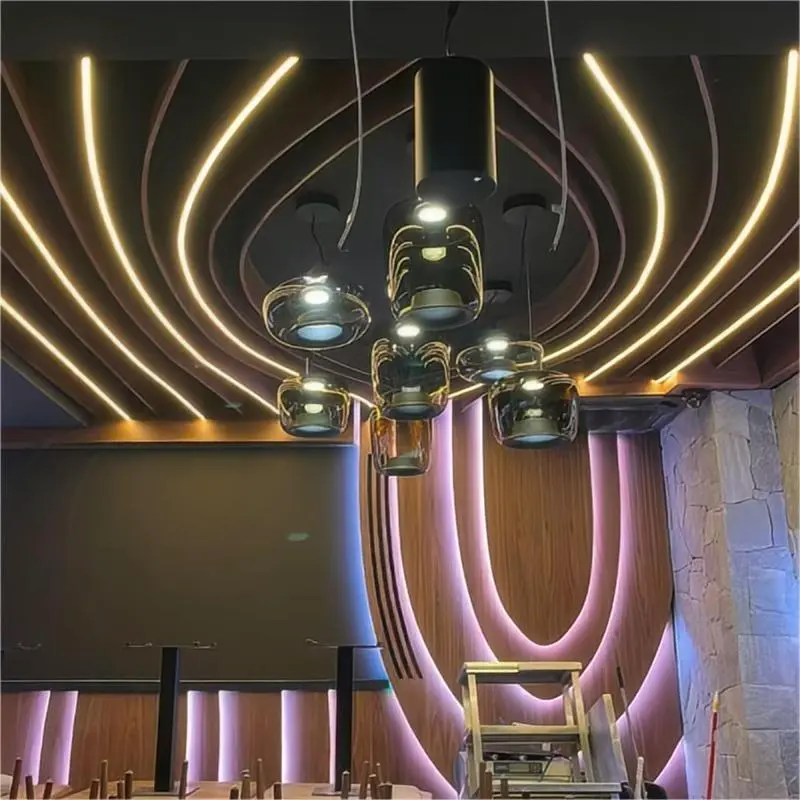
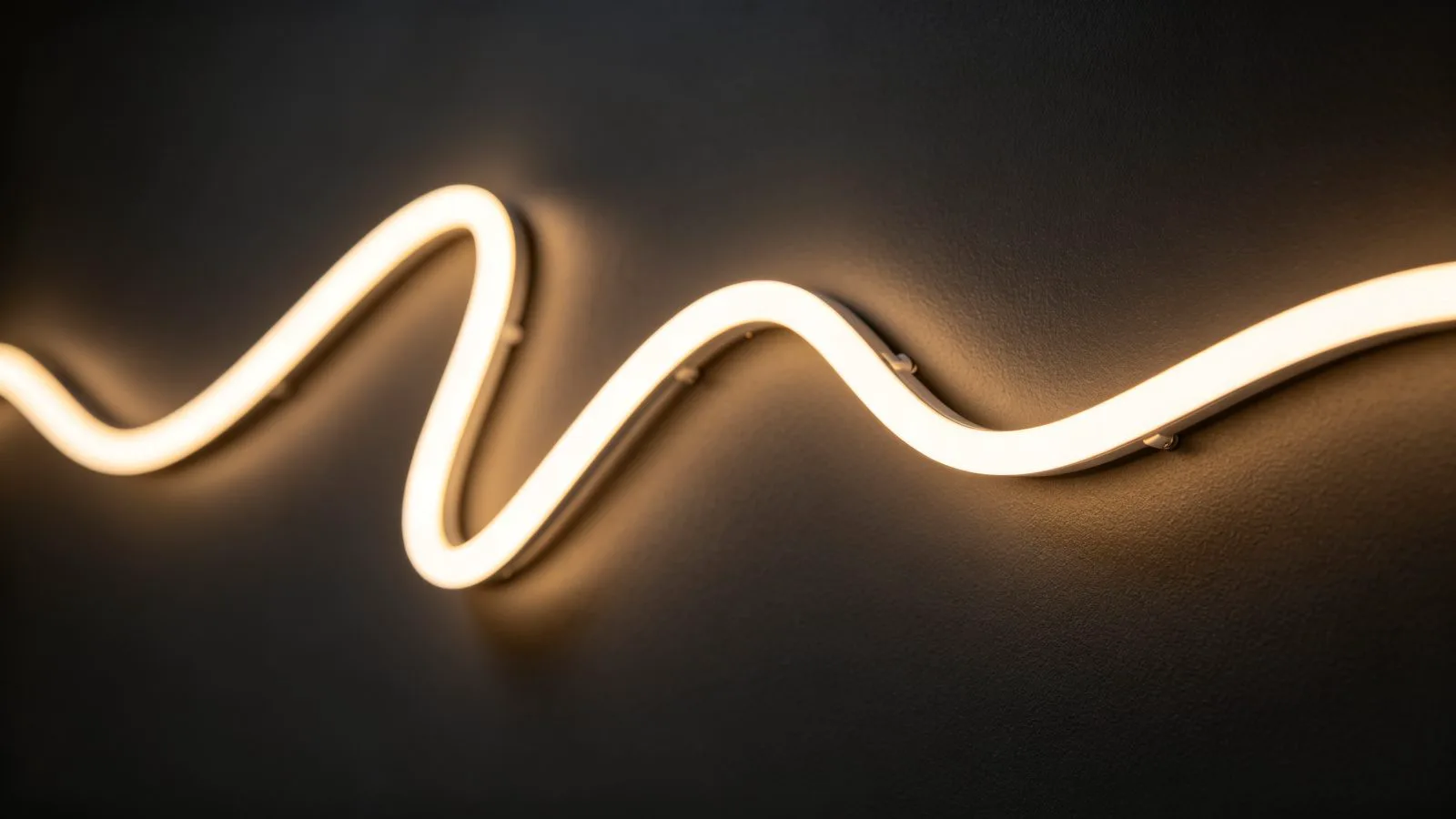
Anti-glare (also called anti-glare or diffused) neon flex uses a frosted / opal silicone cover that spreads the chip light over a much larger visible surface. Surface brightness drops dramatically, so the same luminous flux feels softer. Many also use a wider viewing angle (e.g. 160°) and a matte inner reflector. The result: a glowing line you can look at comfortably, rather than a row of blinding dots.
Rule of thumb: if a strip will be visible at or below eye level in an occupied space — office ceiling, corridor wall, gallery — specify a frosted/diffused anti-glare neon strip or an aluminium channel with an opal diffuser. Bare chips belong hidden in deep coves.
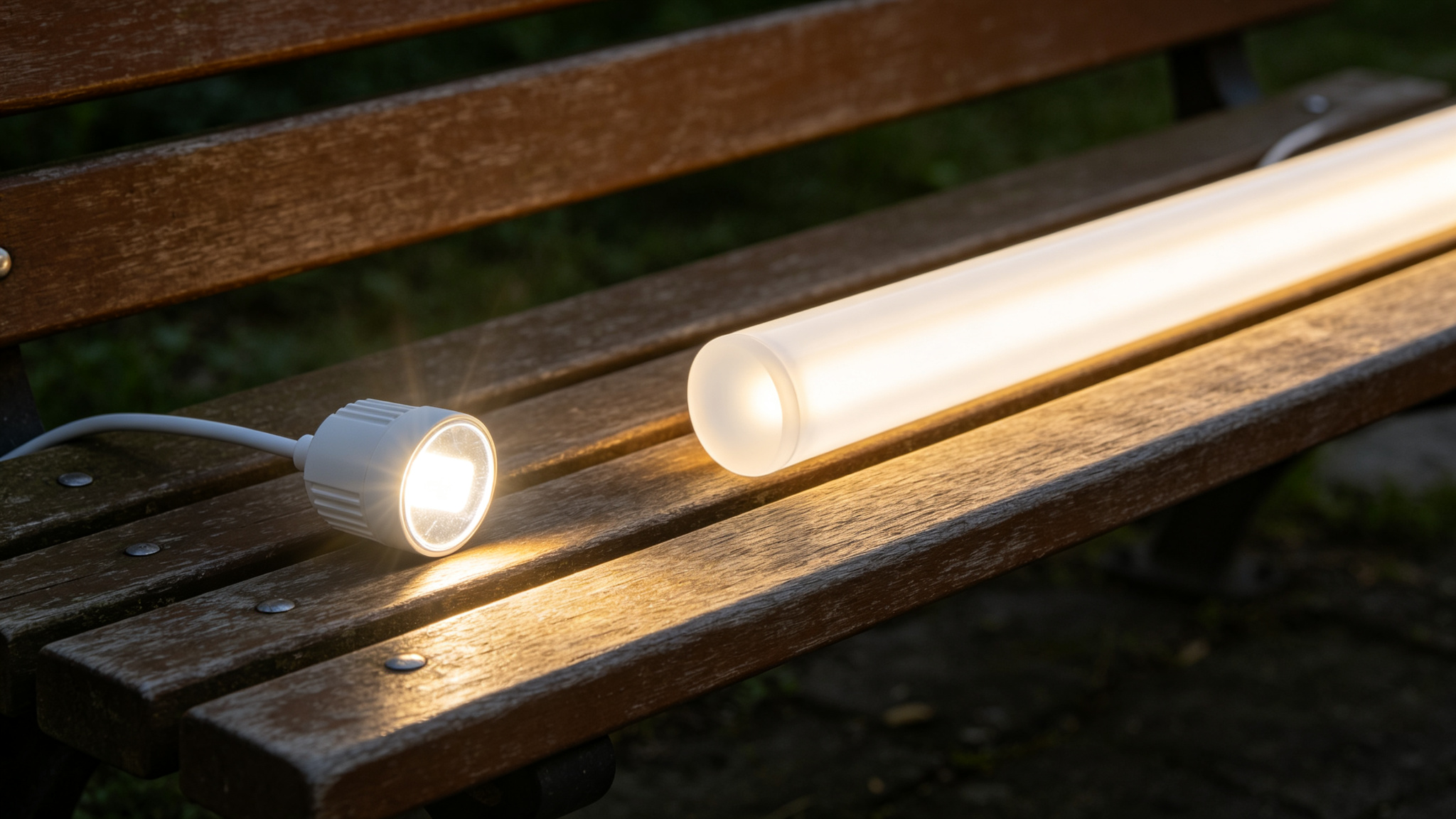
Left: a small glaring point. Right: a large soft glowing surface — the anti-glare difference.
Where Anti-Glare Lighting Matters Most
- Offices: UGR ≤ 19, no screen reflections — use diffused linear lighting or anti-glare neon.
- Classrooms and training rooms: UGR ≤ 16, board and eye comfort.
- Galleries and museums: even wall-wash, no glare on paintings (see our hospitality lighting guide for display principles).
- Corridors and stairways: soft lines that guide without glaring (our stair lighting guide).
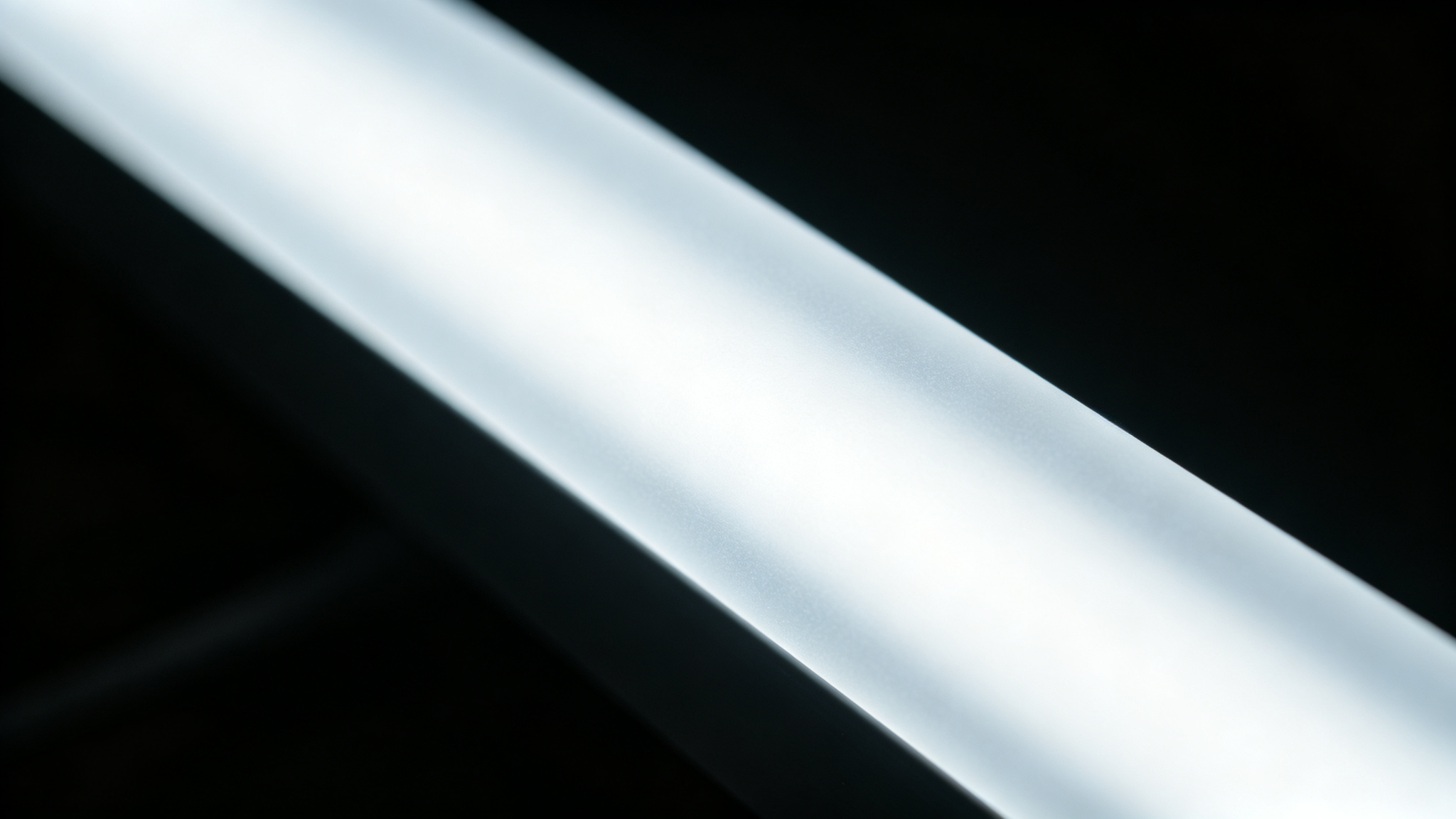
The milky cover hides the chips and spreads the light — the core of anti-glare design.
The 30-second decision
Strip hidden deep where nobody looks at it → any strip. Visible at eye level in an office, gallery, classroom or corridor → frosted anti-glare neon or opal-channel diffuser, target UGR ≤ 19 (16 for classrooms).
Recommended Products
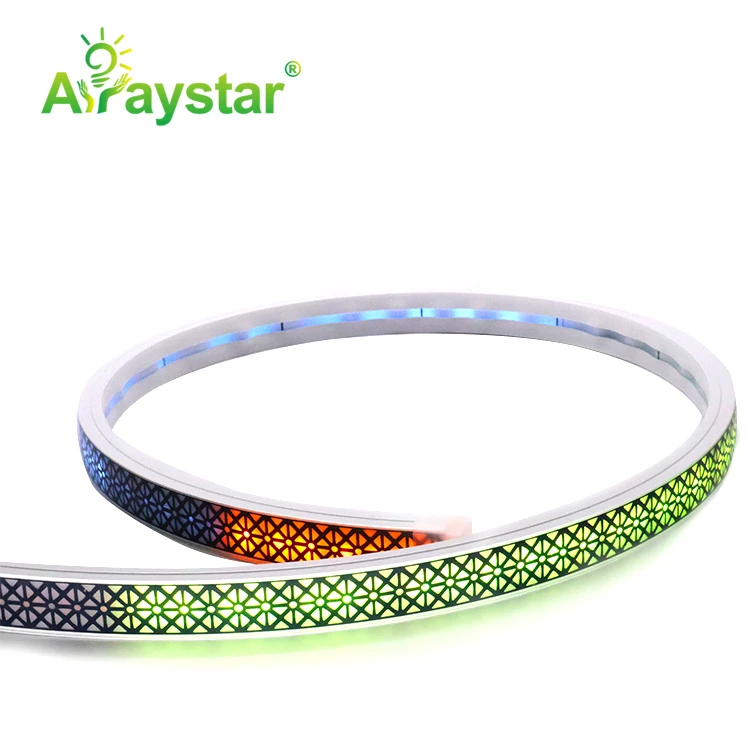
Vertical Bending Anti-glare Neon Flex ART-NS2010
Frosted anti-glare neon flex for comfortable visible lines in offices, corridors and feature walls.
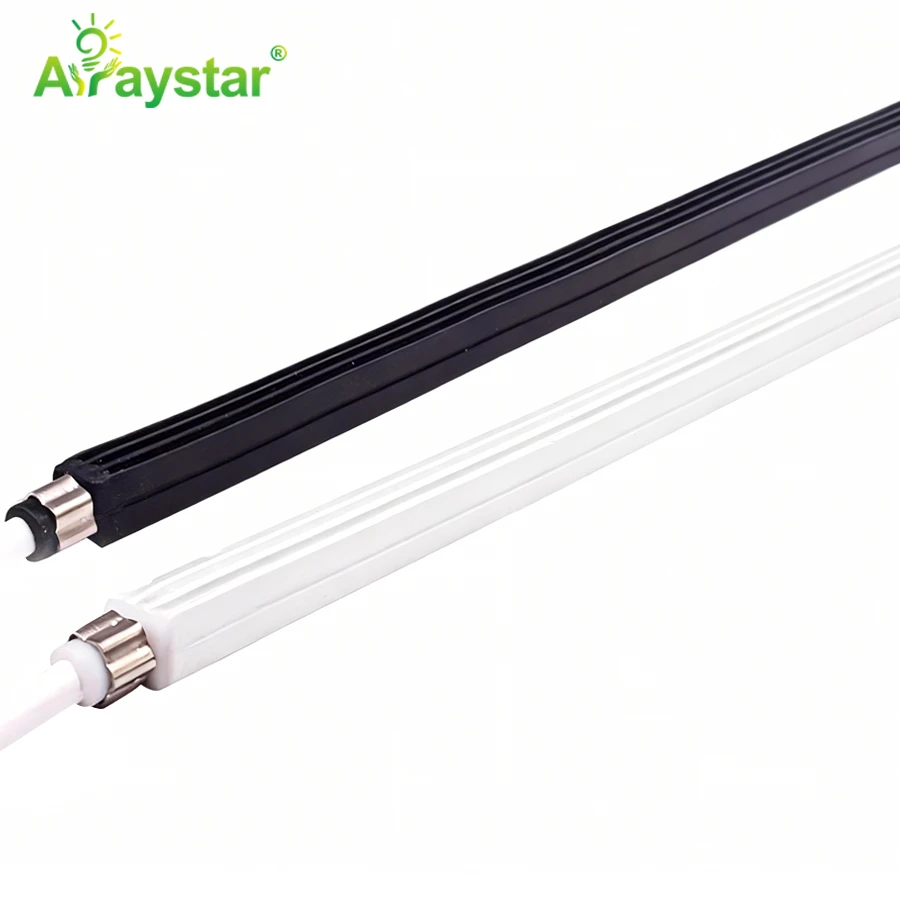
Anti-glare 10×10 mm LED Neon Flex
Compact square anti-glare neon with a diffused cover — soft glow for coves and architectural details.
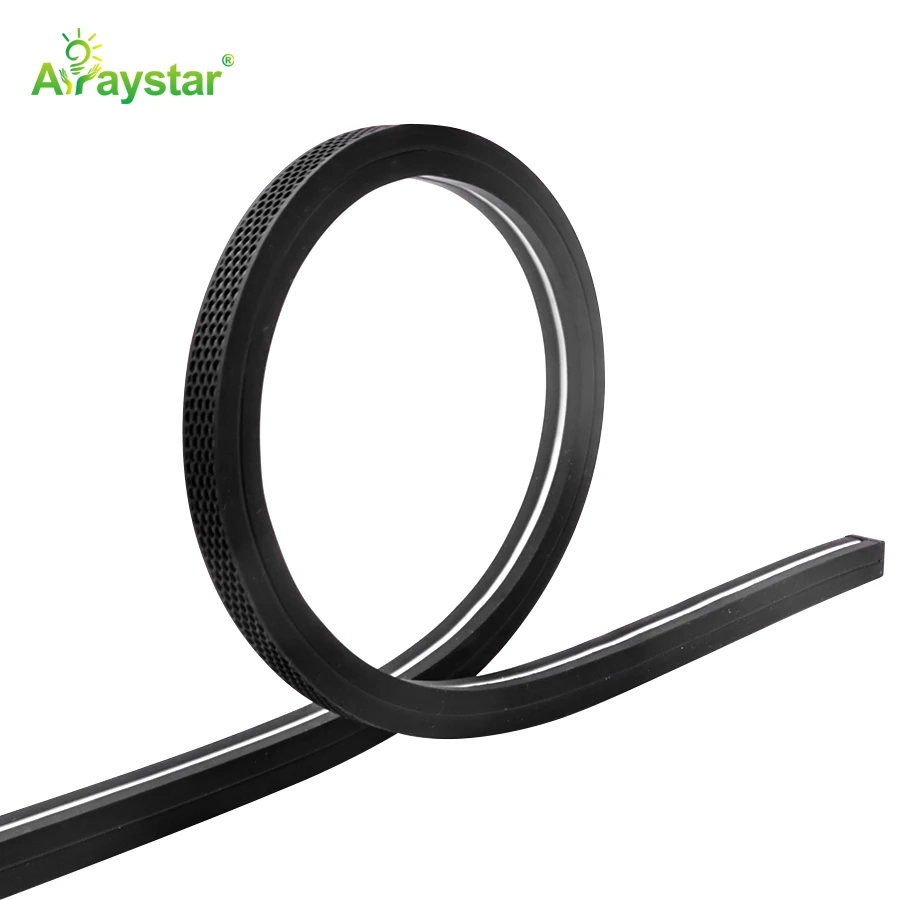
Anti-glare 16×16 mm LED Neon Flex
Larger opal-diffused neon tube for high-output yet comfortable lines in commercial interiors.
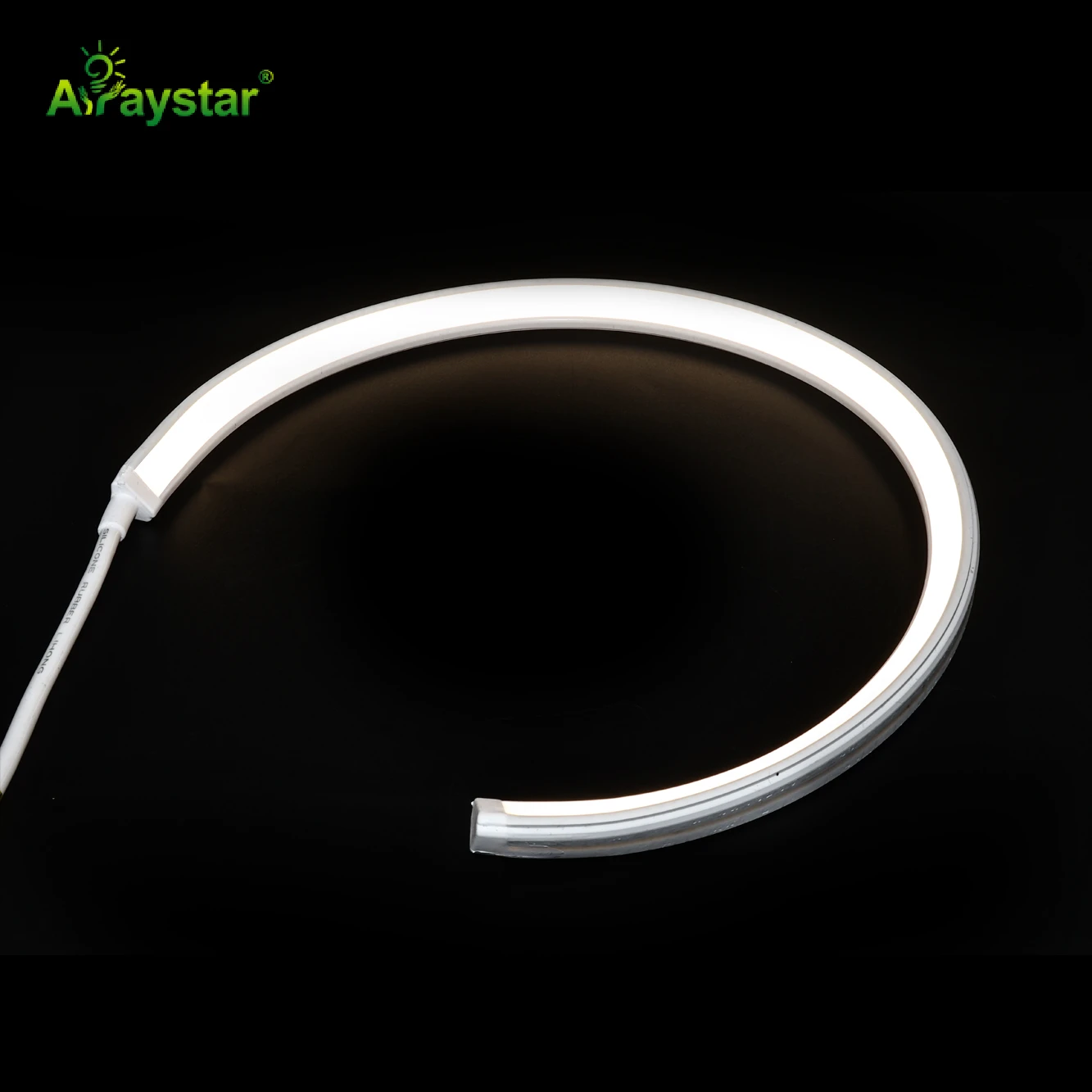
1213 LED Neon Flex, 160° Beam Angle
Wide-beam diffused neon that spreads light broadly and softly, reducing direct glare on walls and ceilings.
Frequently Asked Questions
What is a good UGR value for an office?
Most office lighting should stay at UGR 19 or below. Classrooms, detailed work and computer-intensive spaces target UGR 16 or below. Values above 22 cause noticeable discomfort and are not suitable for regularly occupied spaces.
What is an anti-glare LED neon strip?
It is a neon flex with a frosted or opal silicone cover that spreads the chip light over a larger surface, lowering the bright point luminance. The strip glows softly rather than showing blinding individual chips, making it comfortable to look at in offices, galleries and corridors.
Do LED strips need anti-glare if they are in a cove?
If the strip is hidden deep behind a lip so you never see the LEDs directly, standard strips are fine. If the cove is shallow, the strip is on a wall, or it sits near eye level, use a frosted anti-glare neon or an aluminium channel with an opal diffuser to control glare.
Does diffusing light reduce brightness too much?
A quality opal diffuser loses some output but spreads it evenly. For occupied spaces, comfortable even light is more valuable than raw brightness, and you can compensate by choosing a slightly higher-output strip or efficient driver. Aim for UGR 16-19, not maximum lumens.
Need high-CRI, color-consistent LED strips for your project?
Get factory-direct pricing, free samples and a tailored quote within 24 hours.
Get a Quote