LED Strip Condensation & Humidity: Outdoor Protection
- 2026-09-18 15:32
- /
- Arraystar
Quick Answer
Condensation — not rain — is the silent failure behind many “waterproof” LED installs. Warm air meets a cold channel and dew forms inside the sealed housing, fogging the cover and corroding the board. Fight it on three fronts: fully seal the strip and joints (IP67/68), use a waterproof driver in a sealed, drained box, and choose channels with a breather / drainage detail so pressure equalizes and water cannot collect. Bathroom, poolside and coastal installs need all three.
📑 Table of Contents
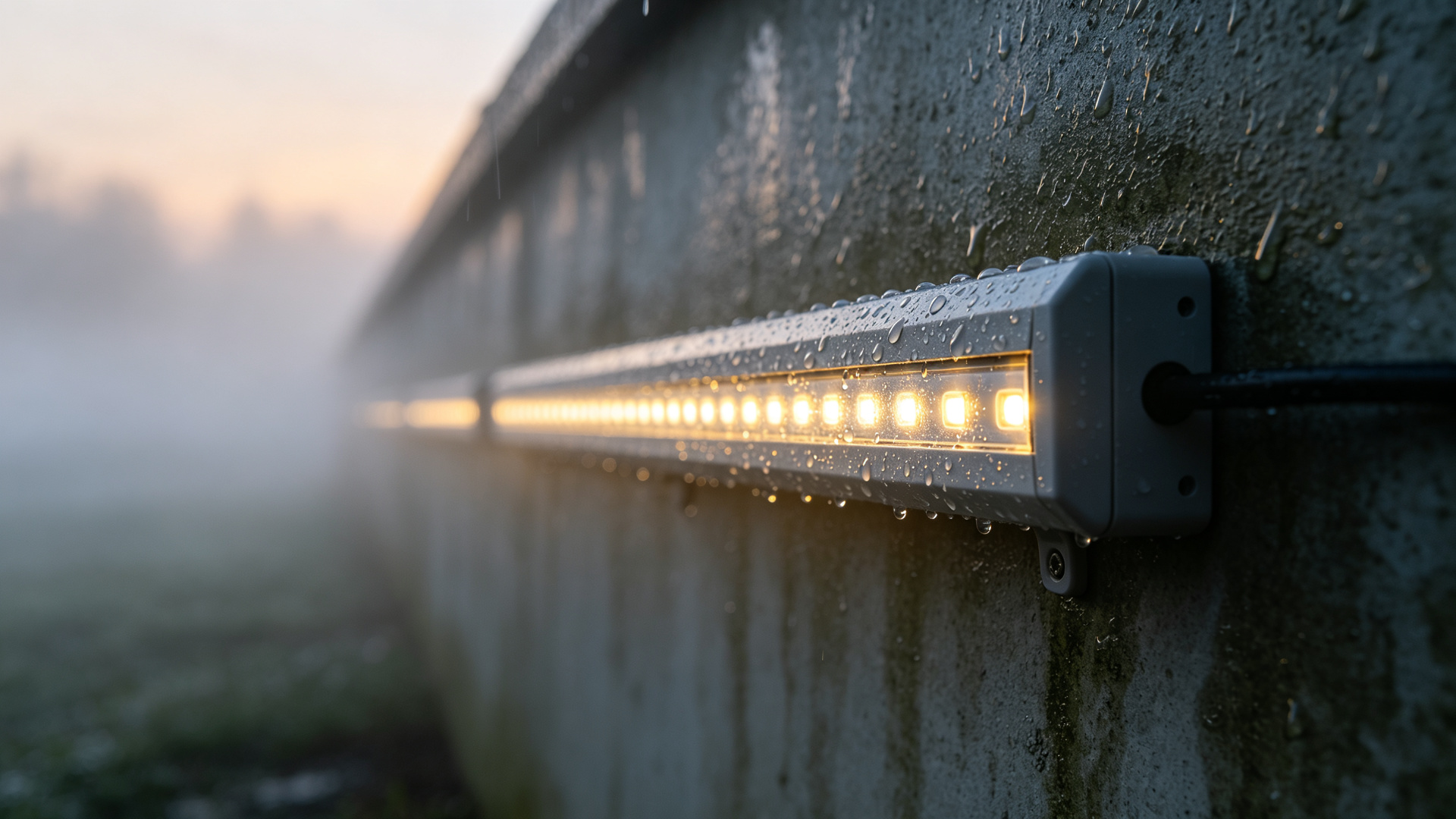
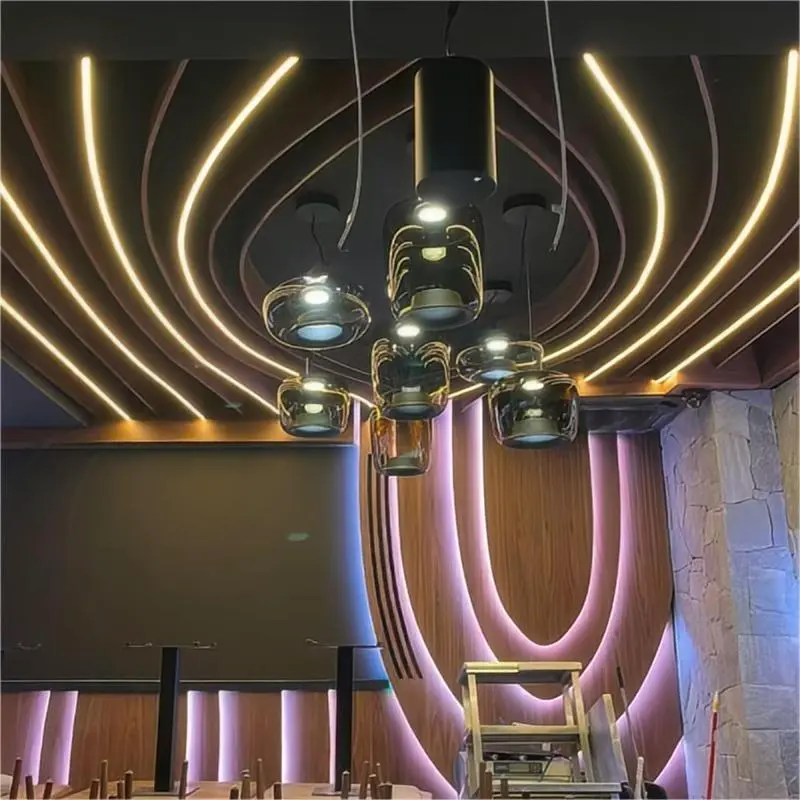
Condensation on the housing — normal, but it must never reach the electronics.
Condensation: The Failure Rain Does Not Cause
A strip can survive a monsoon yet still fail indoors on a humid morning. The enemy is condensation: warm, moist air gets inside a sealed housing, meets a cold surface, and dew forms on the PCB and diffuser. The result is fogged covers, creeping corrosion, and — where moisture bridges contacts — premature failure. It happens in bathrooms, pool halls, coastal climates and anywhere the temperature swings day to night.
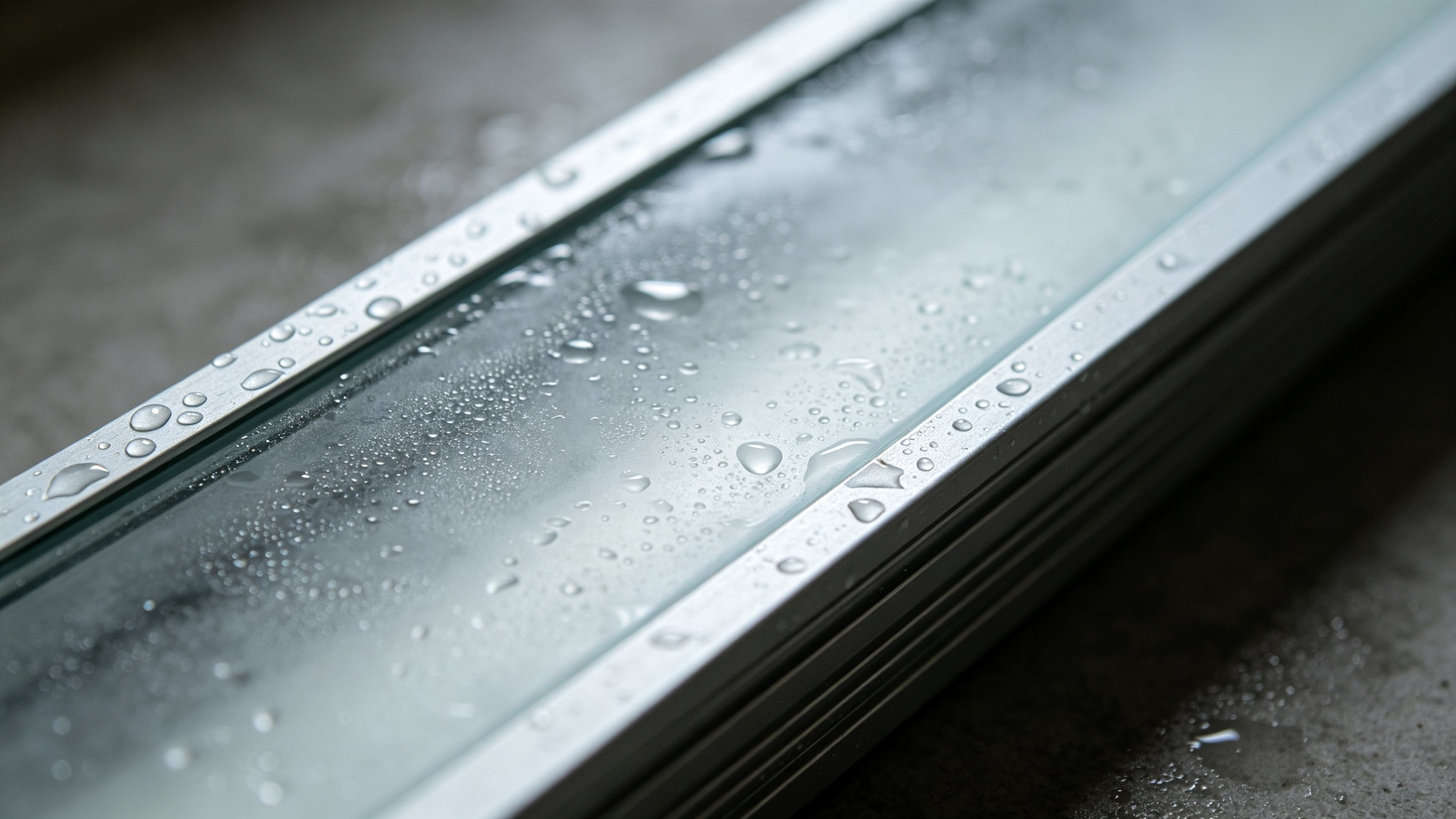
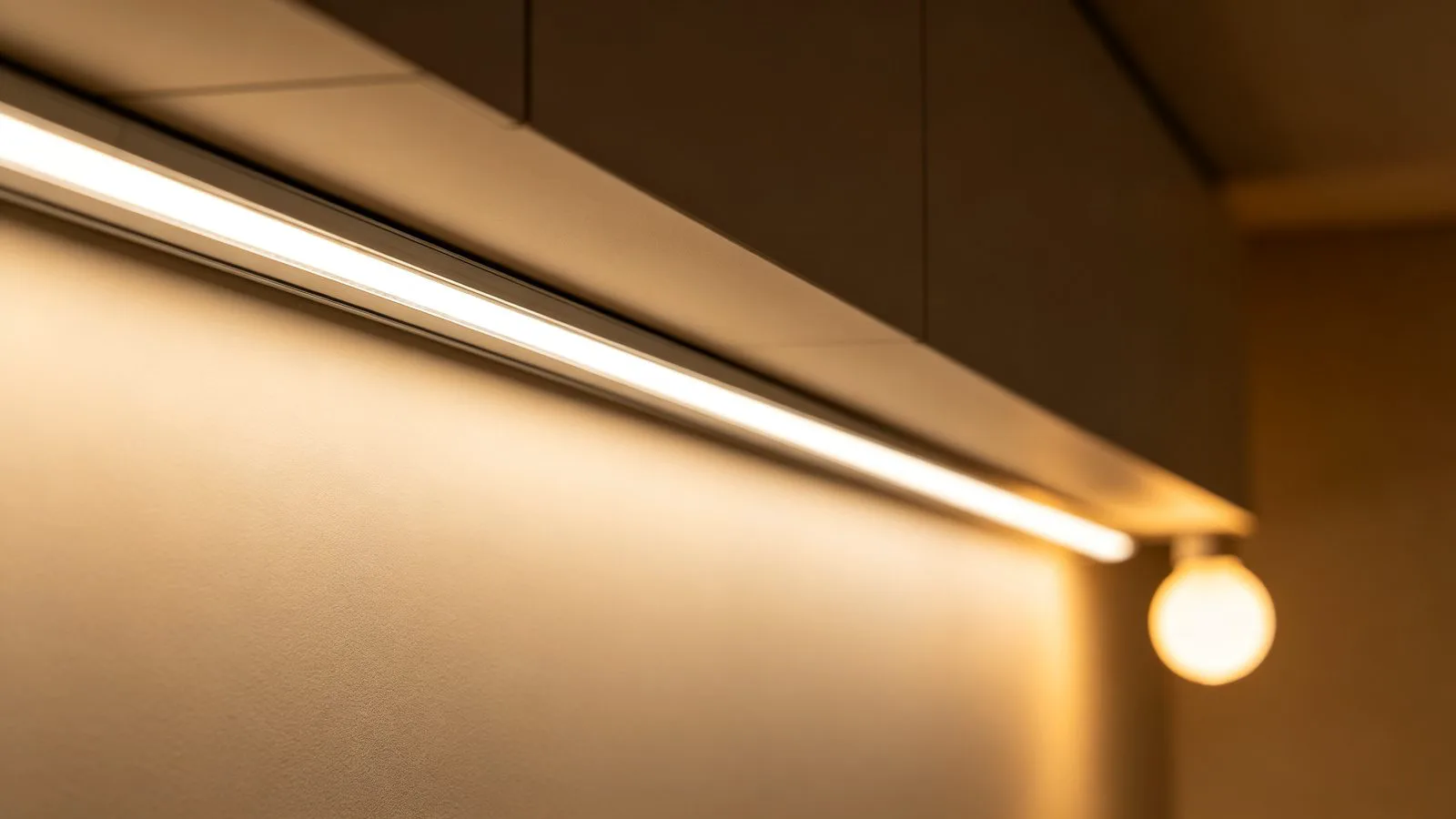
Dew inside the diffuser is the classic sign of a condensation problem — fixable.
How Dew Forms Inside a Sealed Housing
A sealed channel is not a perfect vacuum. It traps a pocket of air when installed. At night the housing cools below the dew point of that trapped air, and water condenses on the coolest surfaces — usually the diffuser and the PCB. The cycle repeats daily. Worse, a fully sealed box that heats up during the day can suck in moist air through the only weak point (a poor connector) when it cools. The fix is twofold: keep water out, and let pressure equalize through a breathable membrane so moist air is not drawn in.
Sealing: Strip, Ends and Connectors
Start with the strip itself. For humid, splash-prone or outdoor use specify IP67 (silicone extrusion) or, for immersion, IP68. Crucially, the strip’s rating is only as good as its weakest joint: a cut end left open, or a cheap un-sealed connector, becomes the entry point. Use matching end caps and adhesive, sealed IP67+ connectors, and route cable entries through waterproof glands. The IP ladder is explained in the IP rating guide.
| Part | Humid environment requirement |
|---|---|
| Strip | IP67 silicone extrusion (IP68 if near/under water) |
| Cut ends | Sealed end cap + adhesive, never open |
| Connectors | IP67/68 sealed, matching brand |
| Cable entry | Waterproof gland, strain relief |
| Driver | IP67 waterproof, in a sealed drained box |
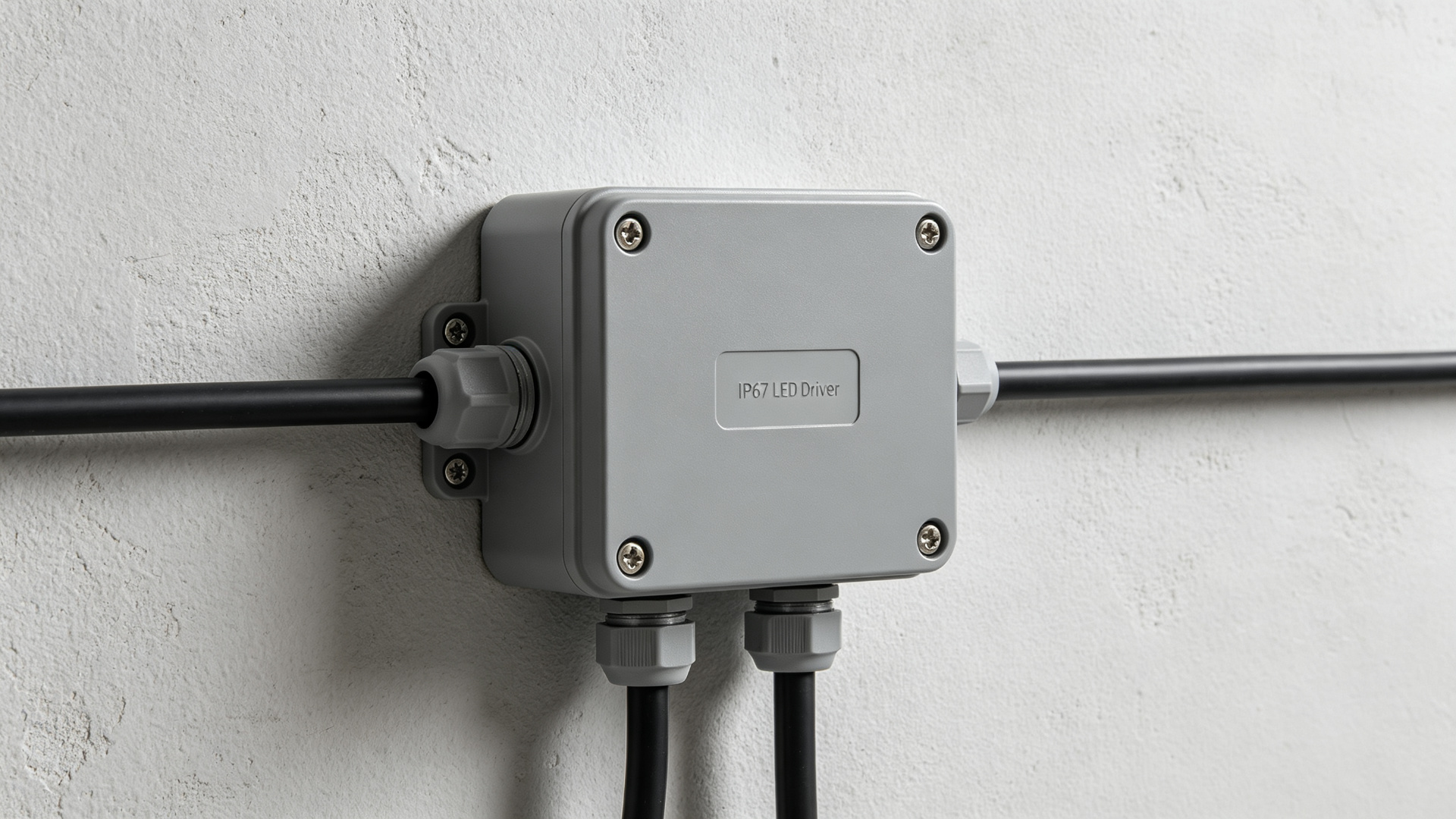
The driver lives in a sealed, wall-mounted, drainable box — never in a damp cavity.
The Driver and Junction Box: Drain and Breathe
Drivers are electronics and hate moisture even more than strips. Use an IP67 waterproof driver mounted in a weatherproof junction box, positioned so any incidental water runs down and out — enter high, exit low, with a slight downward slope on the conduit. Avoid mounting the box flat against a cold wall where it acts as a condenser; leave an air gap. Where pressure cycling is severe, use a vented breather valve (Gore-style membrane) that equalizes pressure without letting liquid in. Size the driver generously so it runs cool; a hot driver in a sealed box pumps out moisture from its own capacitors.
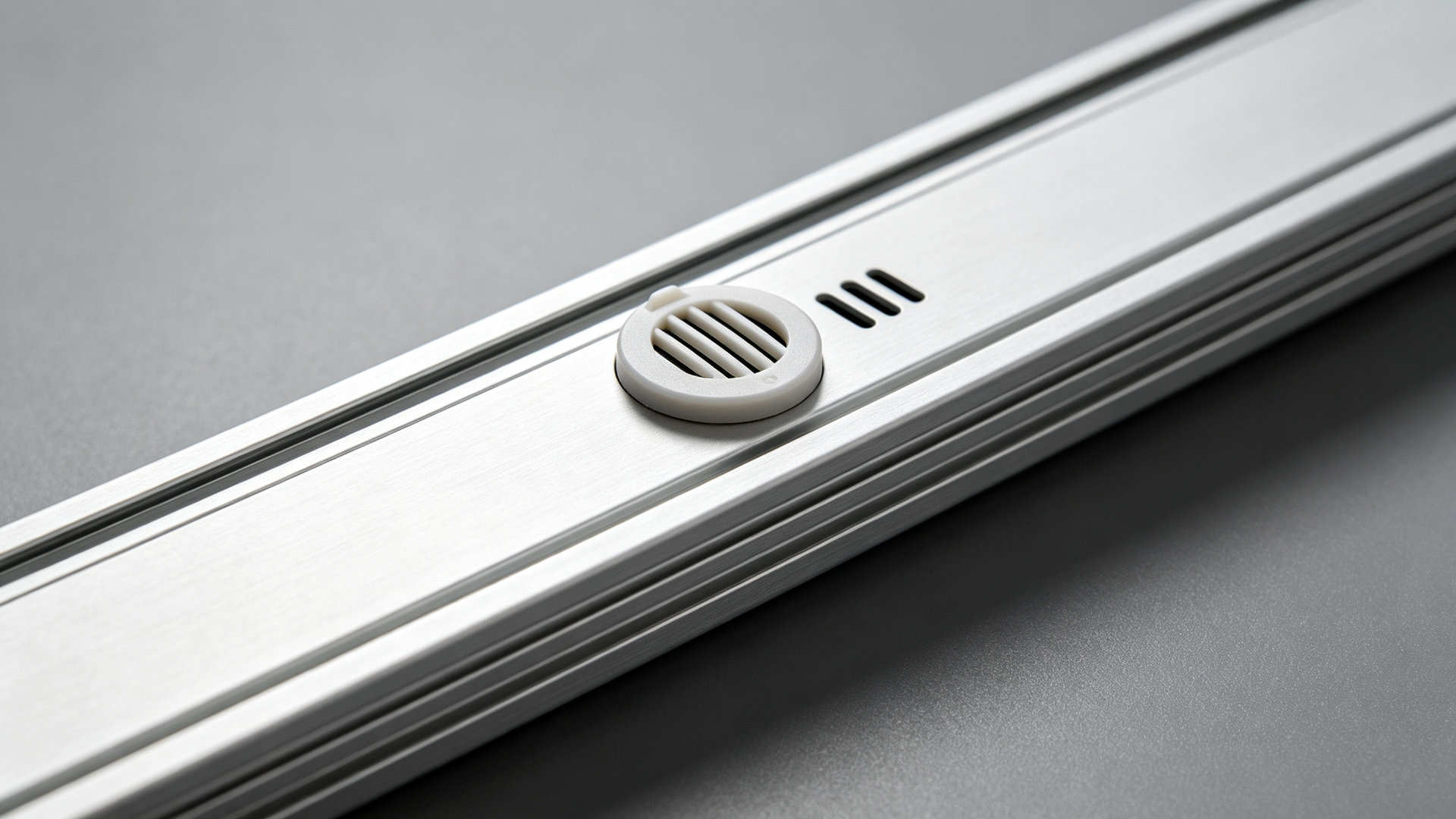
A breather membrane equalizes pressure so moist air is not sucked in at night.
Seal the strip perfectly, but do not let the box become an airtight cold trap. A waterproof box plus a breather valve (and proper drainage) beats either extreme.
Channels, Vents and Installation Best Practice
When housing strips in aluminum channels outdoors, choose profiles with a designed drain or breather detail, mount them with a slight downward fall so any condensation runs to a low drain point, and never fully seal the far end where water could pool. For bathrooms and wet rooms, the strip itself must be IP67 and run from a SELV driver; the mirror light zone still needs RCD protection. Keep junctions out of the wettest corner. See the bathroom wet-area guide.
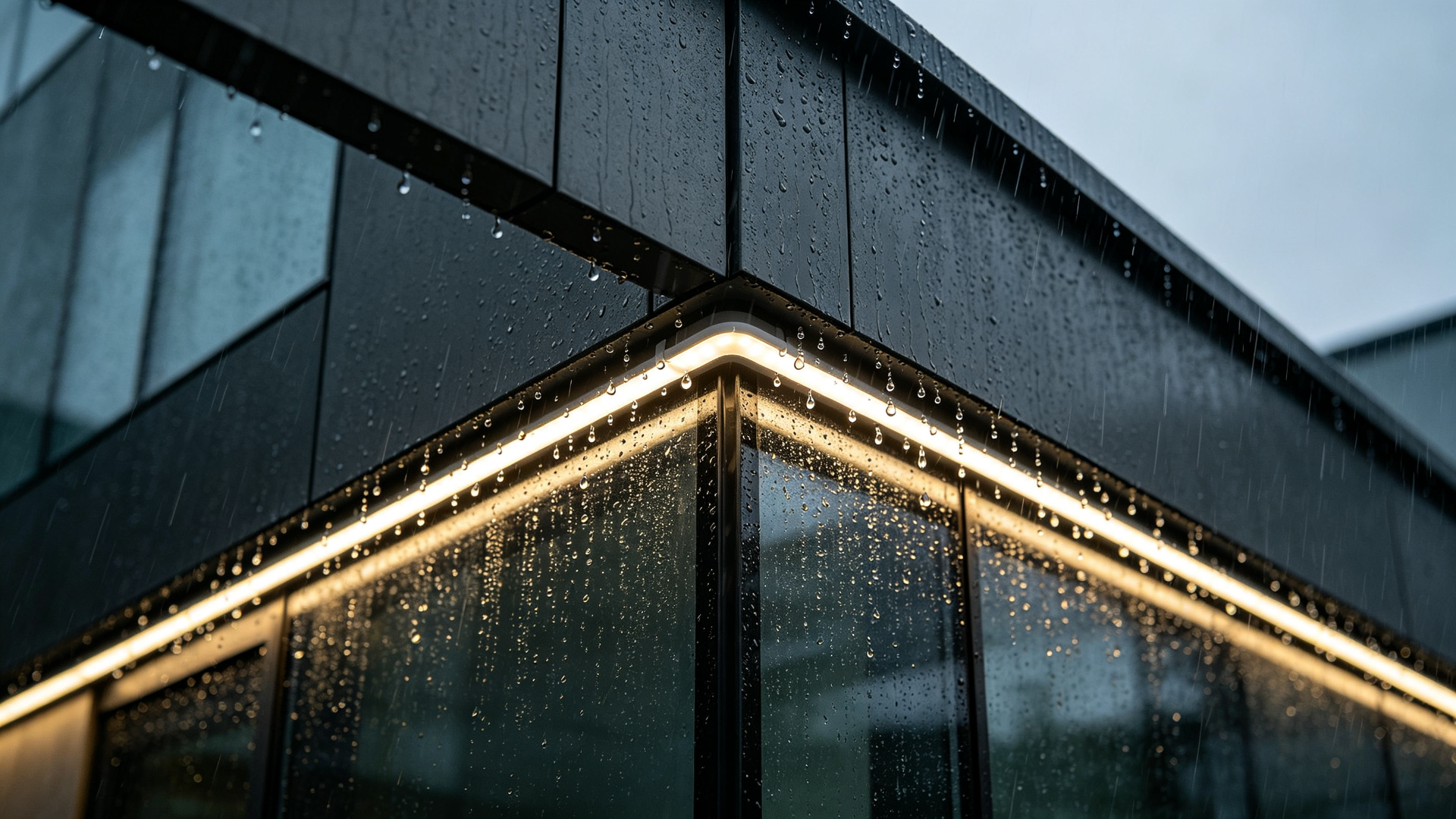
Water beading on the outside is fine — as long as the inside stays dry.
Spec Comparison: Humid-Environment Options
| Environment | Strip | Driver | Special detail |
|---|---|---|---|
| Bathroom / wet room | IP67 SELV | IP67, RCD-protected | Mirror zone; SELV only |
| Poolside / fountain | IP68 | IP67 box, high & dry | Immersion-rated seals |
| Coastal / high humidity | IP67 silicone / TPU | IP67 + breather | Corrosion-resistant fittings |
| Outdoor channel, dewing | IP67 | IP67, drained box | Breather valve, downward fall |
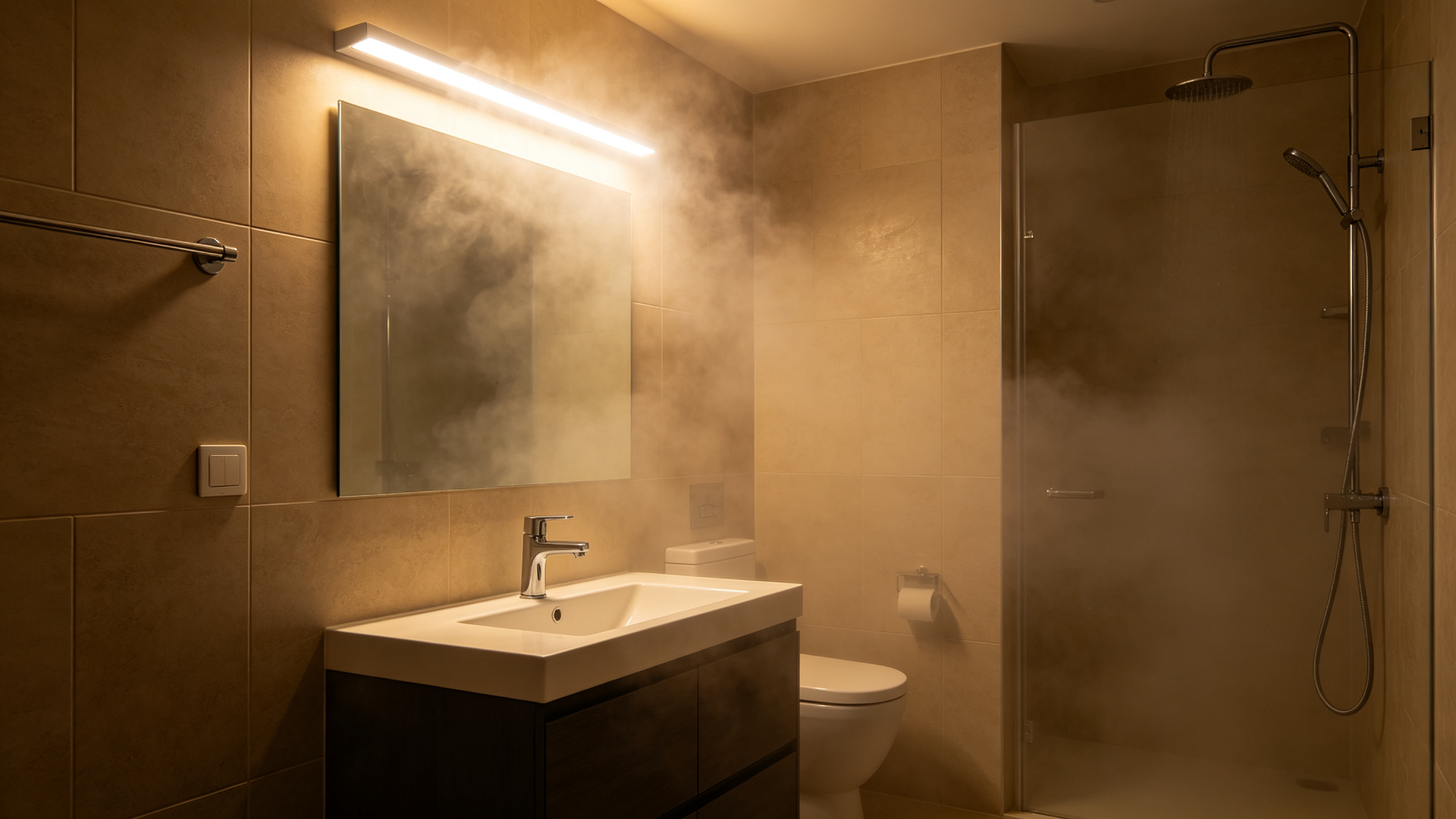
Bathroom steam is pure humidity stress — SELV IP67 only.
Recommended Products
100W LED Waterproof Power Supply
IP67 waterproof driver to feed humid outdoor and bathroom runs from a sealed box.
IP67 Free Cut COB LED Strip ART-FCOBSE-X-528-24
Dot-free IP67 silicone-encapsulated strip for damp, splash-prone installations.
IP68 Full Silicon Extrusion LED Neon Strip ART-NS1616-IP68
Fully sealed IP68 silicone neon for the wettest, most dewing outdoor locations.
Waterproof Silicon Extrusion LED Strip ART-2835SE-120
Sealed silicone extrusion that keeps humidity out of the PCB in damp climates.
Planning an outdoor LED strip project?
Get factory-direct pricing, free layout advice, samples and a custom quote within 24 hours.
Get a QuoteFrequently Asked Questions
Why is there condensation inside my LED strip channel?
The sealed housing trapped moist air during installation. At night the housing cools below that air's dew point and water condenses on the diffuser and PCB. Fix it by improving the seal, mounting the channel with a downward fall to a drain point, and adding a breather valve that equalizes pressure without letting liquid in.
Can condensation damage LED strips?
Yes. Repeated condensation fogs the diffuser, promotes corrosion on the copper traces and solder, and can bridge contacts to cause premature failure. IP67/68 strips, sealed ends and connectors, a waterproof driver in a drained box, and breather details prevent this.
Do I need a waterproof LED driver in a bathroom?
Yes. Use an IP67 waterproof LED driver, mounted in a sealed, drained junction box, on an RCD/GFCI-protected SELV circuit. The driver should not sit in the wettest corner, and all strip wiring should be 12V/24V extra-low voltage.
What is the best LED strip for very humid or coastal locations?
Choose an IP67 solid-silicone or IP68 TPU extrusion, never a cheap clear PVC sleeve, paired with a black PCB. House it in a drained, vented channel, use corrosion-resistant fittings, and mount the waterproof driver in a sheltered, drainable box with a breather valve.