
48V LED Strip Systems Explained: Longer Runs, Thinner Wires, Fewer Power Supplies
- 2026-09-30 17:38
- /
- Arraystar LED
Long linear runs - building coves, warehouse aisles, facade outlines, corridors - are where 12/24V strip falls apart: voltage drop forces frequent power injection and a forest of drivers. 48V strip roughly halves the current of 24V (and quarters 12V) for the same wattage, doubling practical run length between feeds and slashing wire gauge, injection points and driver count. The trade-off is matching 48V-specific strip, supplies and controllers and observing safe extra-low-voltage limits. For genuinely long runs, designing at 48V from the start is simpler, cleaner and cheaper than fighting 24V voltage drop.

Long Runs Expose the Limits of 12/24V
The math is unavoidable: for a given wattage, current equals watts divided by voltage, so raising the voltage lowers the current. A 480W run draws 40A at 12V, 20A at 24V, but only 10A at 48V. Lower current means far less voltage drop over distance, thinner and cheaper cable, fewer power injection points, and fewer drivers to hide and mains-connect.
On long architectural runs, 12V becomes impractical almost immediately and 24V still needs injection every few meters. 48V was adopted specifically to solve this - it extends the distance between feeds dramatically, which is why it's increasingly standard for commercial coves, long corridors, warehouses, retail shelving runs and facade/perimeter outlines.
48V COB for Long, Seamless Interior Runs
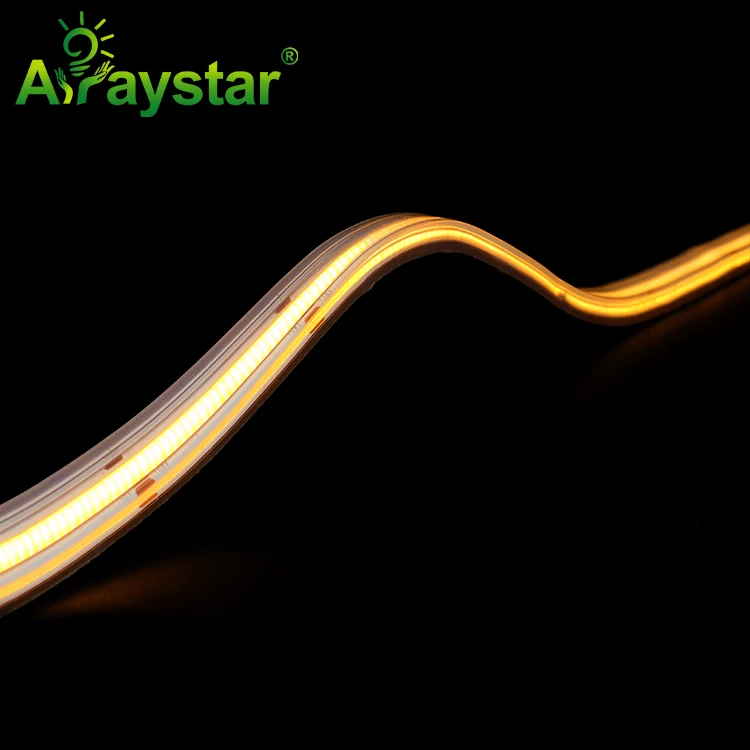
For smooth dot-free linear light over long interior runs, 48V COB strip combines the seamless high-density COB face with the low-current advantage of 48V. The 48V COB 10mm 480 LED strip runs long cove and ceiling lines with even color from one feed, minimal injection and no visible dots, and the 10mm width fits standard slim profiles.
Use 48V COB for long corridors, open-ceiling coves, retail and hospitality linear runs where you want continuous seamless light without the brightness falloff that 24V shows at distance. Because each feed covers more meters, you hide fewer drivers and run fewer mains points - a real saving on commercial projects with hundreds of meters of linear light.
Why higher voltage extends linear runs (same wattage).
| Voltage | Current for 480W | Typical injection interval | Best fit |
|---|---|---|---|
| 12V | 40A | Very frequent (~5m) | Short accent runs |
| 24V | 20A | Every ~5-10m | General cove/room |
| 48V | 10A | Longer (10-20m+) | Long commercial/architectural |
48V Neon for Long Outdoor and Signage Outlines
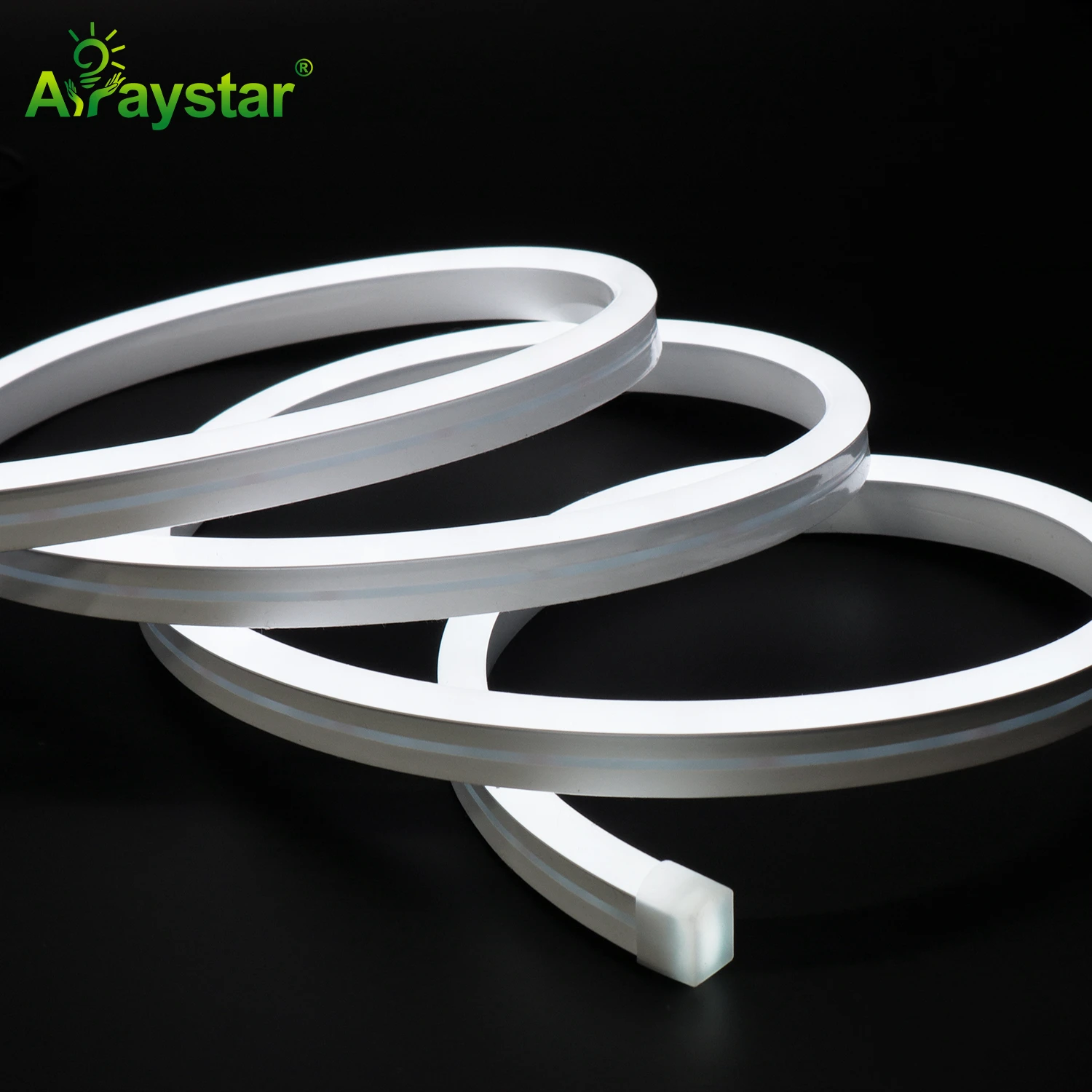
The same advantage applies to neon-style outlines, which often run the full perimeter of a building, bridge or facade - exactly the long-distance case where low voltage struggles. 48V neon flex carries the perimeter glow over much longer distances per feed.
The 48V LED neon strip NS0816-48 traces building and facade outlines with fewer injection points and drivers, keeping the glow even along the full perimeter including the far side of the run. For outdoor perimeter and architectural neon, the reduced current also means thinner feed cable can be routed through the structure, and fewer weatherproof driver locations are needed.
Matching 48V Supplies, Controls and Strip
The critical caveat: 48V strip must be paired with 48V power supplies and 48V-compatible controllers/dimmers - you cannot connect a 48V strip to a 24V driver (it won't reach brightness) or a 24V strip to a 48V driver (overvoltage damage). The whole chain - supply, controller, strip - is voltage-specific, so design the system at 48V end to end.
- Use 48V-rated supplies, dimmers and controllers matched to the strip.
- Never mix 24V and 48V components; overvoltage destroys lower-rated strip.
- 48V is still SELV extra-low voltage in most regions, but verify local limits.
- Plan injection at the longer 48V intervals; don't abandon injection entirely on huge runs.
- Confirm controllers/dimmers carry the lower-current 48V rating correctly.
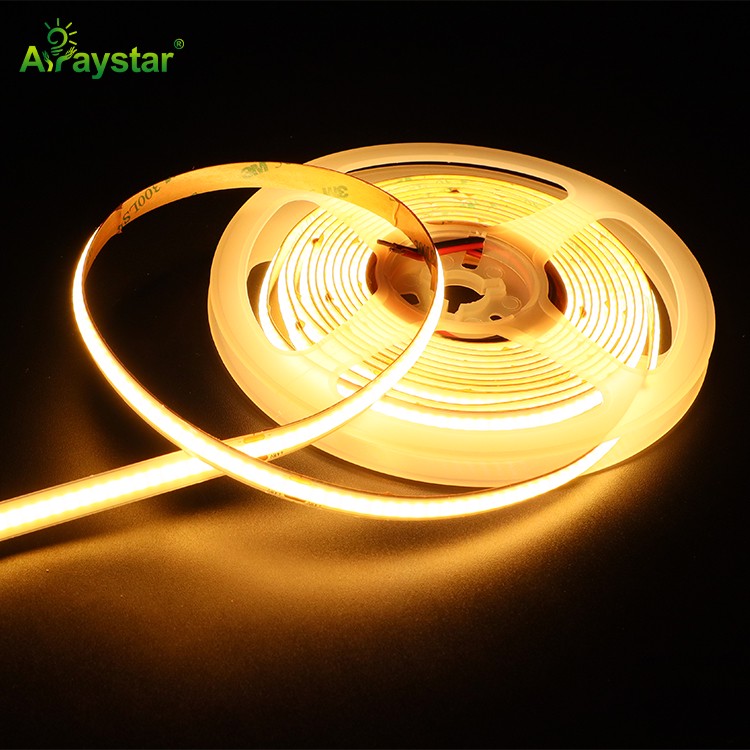
A second 48V COB 10mm 480 variant in the range gives you consistent product across long projects - standardizing on one 48V COB specification throughout a commercial build simplifies procurement, driver selection and spare parts.
When 48V Wins (and When 24V Is Still Fine)
Choose 48V when runs are genuinely long - commercial coves over ~10m between feasible driver points, corridors, warehouses, perimeter outlines, anywhere you'd otherwise inject power repeatedly. The savings in drivers, mains points, cable and labor usually outweigh the slightly higher strip cost.
Stay with 24V for short room coves, under-cabinet and residential runs where a driver sits nearby and injection isn't needed - 24V has the widest product choice and lowest cost for typical short layouts. The decision is driven by distance between power points, not by 48V being universally 'better'.
Recommended Products
Frequently Asked Questions
What is the advantage of 48V LED strip over 24V?
For the same wattage, 48V draws half the current of 24V (and a quarter of 12V), so voltage drop is far lower, runs can be much longer between power feeds, cable can be thinner, and far fewer power injection points and drivers are needed. It's ideal for long commercial coves, corridors, warehouses and facade perimeters.
How far can 48V LED strip run without power injection?
Much farther than 24V - typically in the 10-20m+ range depending on strip wattage, cable gauge and acceptable voltage drop, versus roughly 5-10m for 24V. Calculate from your strip's current and cable size rather than assuming a fixed number, and still inject on very large installations.
Can I use a 24V power supply with 48V LED strip?
No - the whole chain must match. A 24V driver won't bring 48V strip to full brightness, and a 48V driver on 24V strip applies damaging overvoltage. Specify 48V strip, 48V supplies and 48V-compatible controllers/dimmers together from the start; they are not interchangeable with 12/24V components.
Where should I use 48V COB or neon instead of 24V?
Use 48V COB for long seamless interior runs (corridors, open coves, retail/hospitality linear light) and 48V neon for long building/facade perimeter outlines, where 24V would need frequent injection and many drivers. Stay with 24V for short residential coves and under-cabinet work where a driver is already nearby.
Is 48V LED strip safe and does it need special wiring?
48V is generally still safety extra-low voltage (SELV) in most jurisdictions, reducing shock risk, but verify your local regulations. It needs 48V-rated supplies and controllers, and while cable can be thinner thanks to lower current, very large runs still need calculated power injection. Have mains-side driver connections installed by a qualified electrician.
Need help with your LED project?
Get factory-direct pricing, free samples and engineering support within 24 hours.
Email: info@arraystarled.com | Phone: +86-0755-2103-6746 | WhatsApp: 0086 1581 8514 077
Need to size your power supply? Use our LED Strip Power Calculator to find the right driver in seconds.







