
LED Driver Inrush Current: Why Power Supplies Trip Breakers and How to Size Them
- 2026-09-30 17:38
- /
- Arraystar LED
LED drivers and dimmers that are sized to the strip's steady-state wattage alone can still trip, flicker or fail to start - because many LED loads draw a brief inrush current at switch-on that's several times the running current. Ignoring inrush is why 'correctly sized' dimmable supplies nuisance-trip and dimmers refuse to start a run cold. The fix is understanding startup vs steady current, sizing drivers and dimmers with real headroom, and using high-efficiency strip that reduces load overall. It's a five-minute calculation that prevents a whole class of intermittent faults.
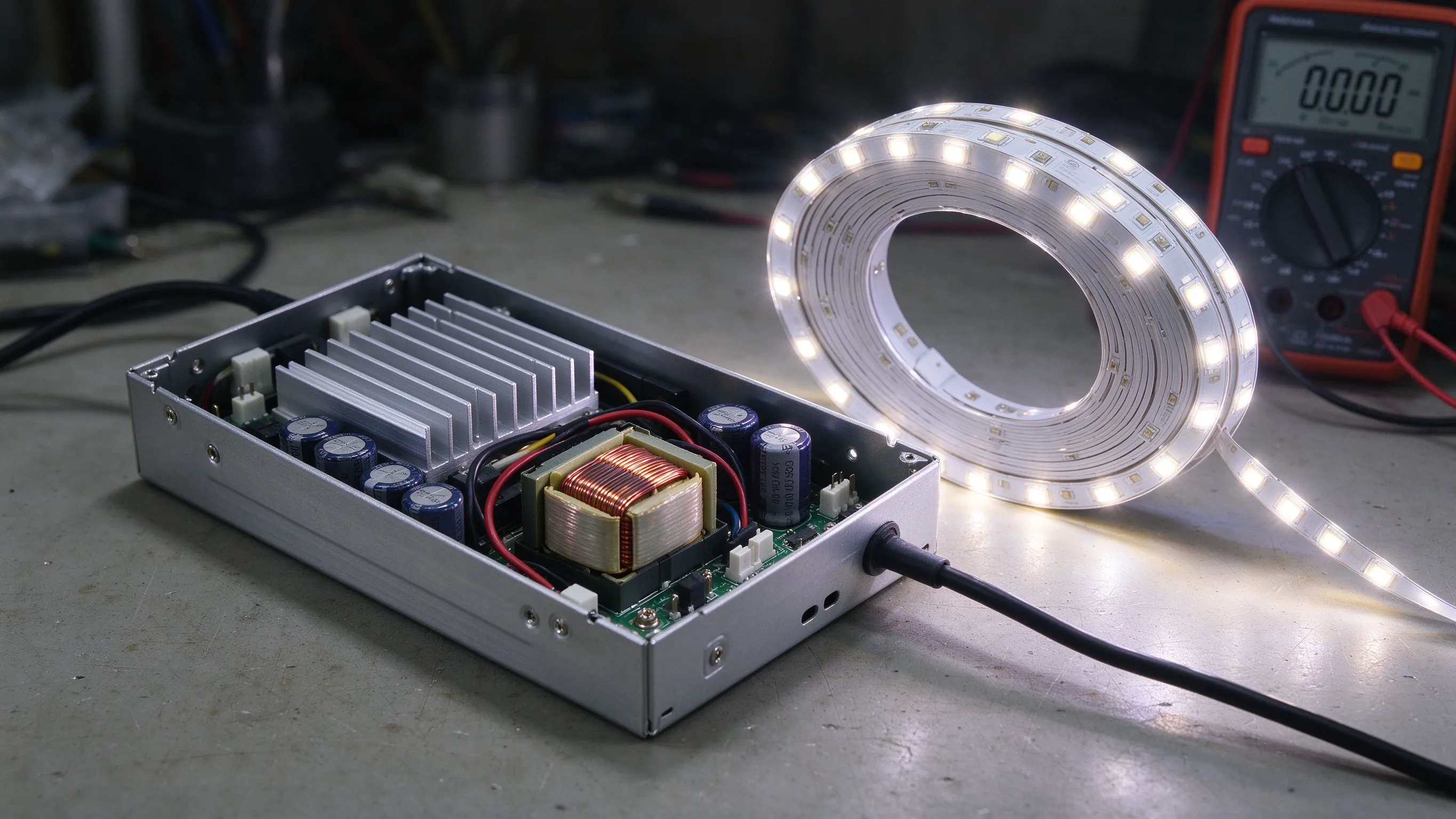
Startup Current Is Not Running Current
An LED strip's datasheet wattage describes its steady-state draw once it's lit. But at the moment power is applied, the driver's capacitors charge and the load presents a brief startup (inrush) current that can be several times the steady value for milliseconds to a second. Dimmers, circuit breakers and the driver's own front end see that spike even though it's short.
If every component is sized only to the steady wattage, the inrush can trip a breaker, shut down a dimmer, cause a slow reluctant start, or repeatedly stress the driver until it fails early. These faults are infuriating because once running, everything looks fine - the problem only appears at switch-on, especially cold switch-on.
Why Inrush Happens and Where It Bites
Two sources contribute: the input capacitors of the LED driver charging from empty (capacitive inrush), and - with multiple drivers on one dimmer - all of them charging simultaneously when the dimmer turns on, stacking their spikes. Dimmable drivers and leading/trailing-edge dimmers are particularly sensitive because they're already controlling the waveform.
- Symptom: breaker or dimmer trips only at switch-on, never while running.
- Symptom: lights hesitate or stutter before coming on from cold.
- Symptom: works with one driver but trips when several drivers share a dimmer.
- Symptom: intermittent driver failures after months of startup stress.
- All point to inrush headroom, not steady-state wattage.
Sizing Drivers and Dimmers With Headroom
The practical rule is to load dimmable drivers and dimmers conservatively rather than at their rated maximum. A common professional target is to keep continuous load around 70-80% of the driver/dimmer rating, which leaves margin for startup spikes and also improves thermal life. A 500W dimmable power supply shouldn't be loaded to 500W of strip if it's also expected to start cleanly and last.
For large dimmable installations, a 500W dimmable supply handles substantial zones with startup headroom; a 300W dimmable supply is the mid-tier for medium zones. When many small drivers must share one dimmer, either distribute them across multiple dimmers, use dimmers rated for capacitive/LED loads with high inrush tolerance, or specify drivers with built-in soft-start that ramp up rather than slamming in.
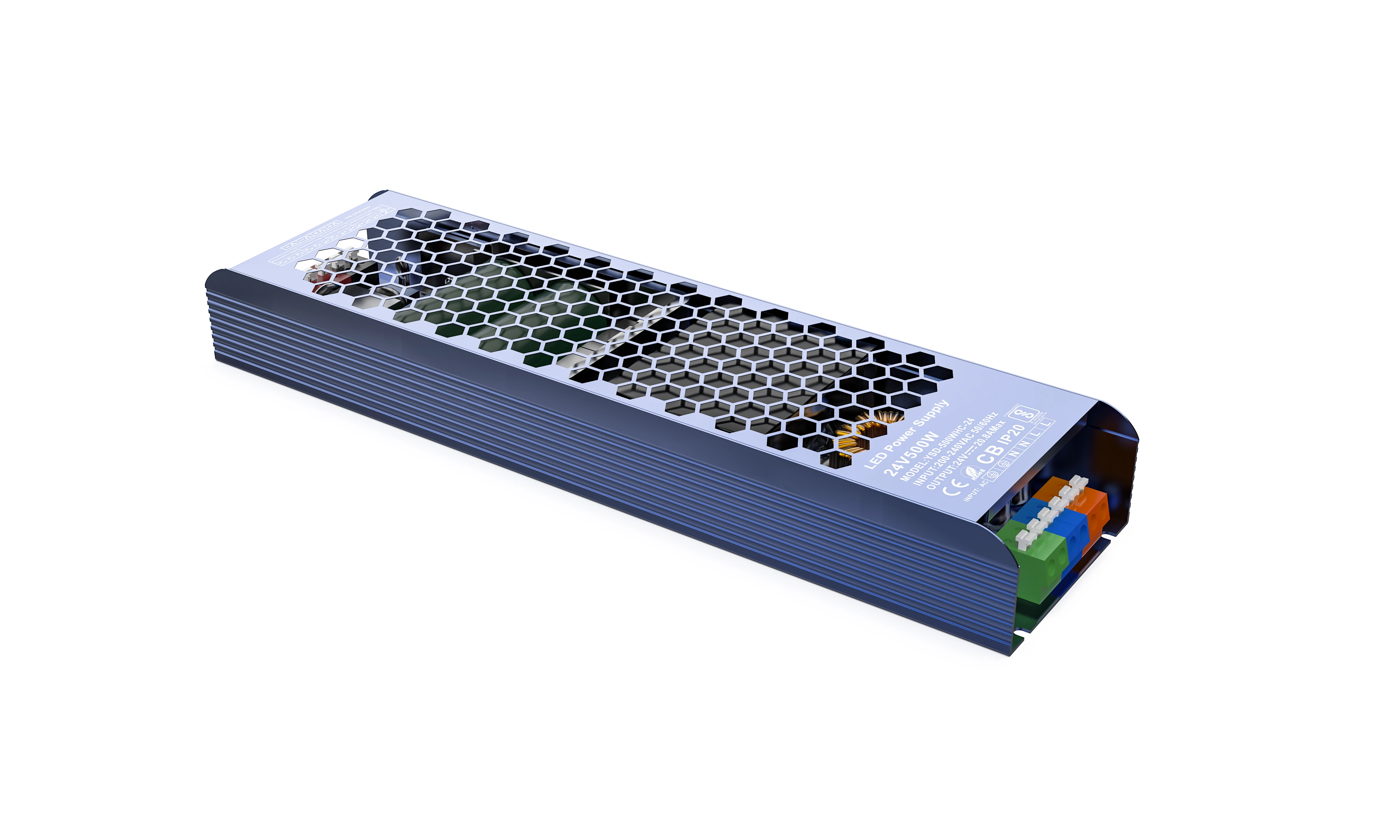
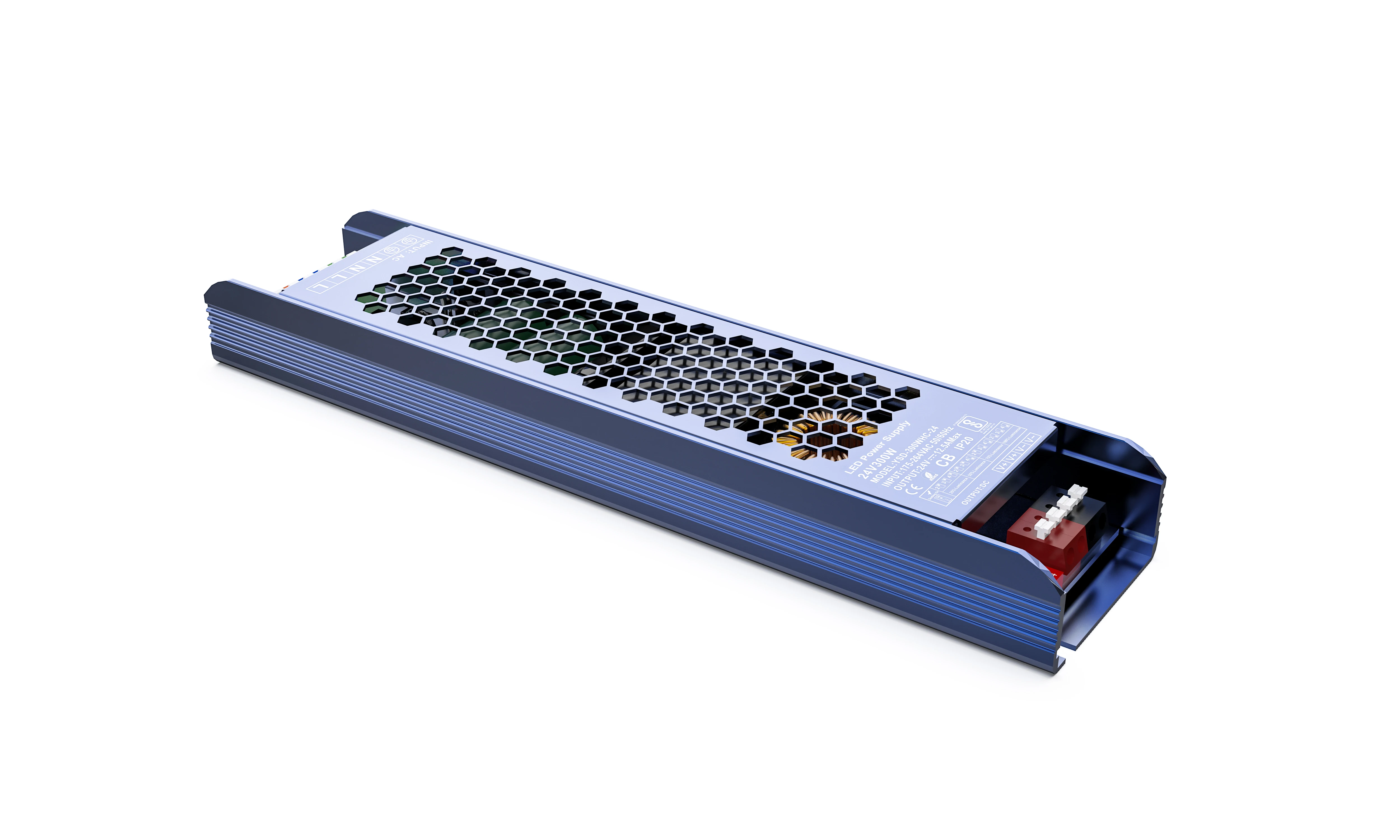
Mitigating inrush in dimmable LED systems.
| Practice | Benefit |
|---|---|
| Load drivers/dimmers to ~70-80% | Room for inrush, cooler operation, longer life |
| Soft-start / dimmable-rated drivers | Ramped startup reduces stacked capacitor spike |
| Spread drivers across dimmers | Avoids simultaneous inrush stacking |
| High inrush / LED-rated dimmers | Correct triac behavior for capacitive loads |
| High-efficiency strip | Lower steady and startup current overall |
Reducing the Load With High-Efficiency Strip
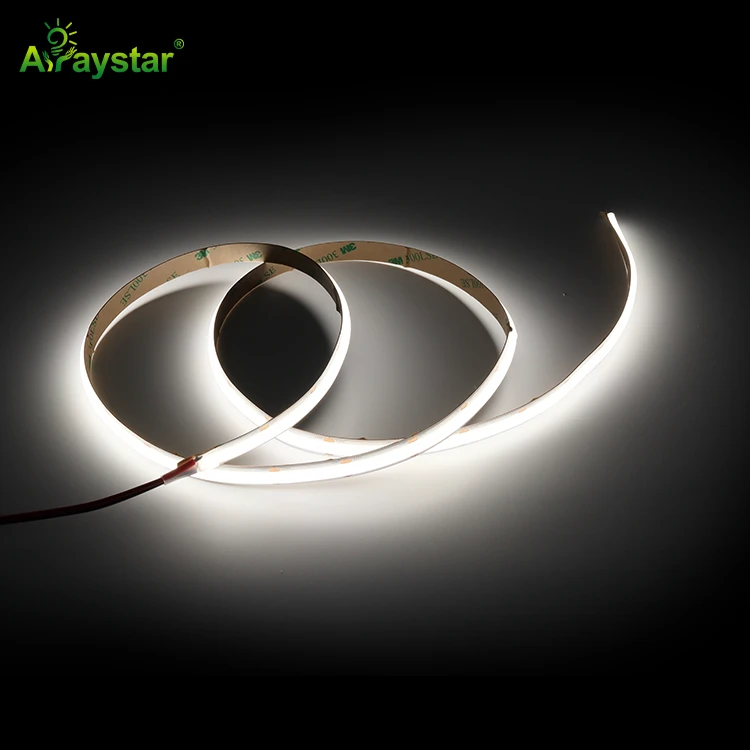
The other side of the equation is the strip itself. High-efficiency LED packages produce more light per watt, so a target brightness is achieved with lower current - which shrinks both steady load and the startup demand on the driver. High-efficiency FCOB strip is a first choice where you want smooth, high-density light without pushing the electrical system to its limits.
Specifying high-efficiency FCOB means a given cove or ceiling run reaches the required lux on fewer watts, so the driver can be smaller (or run cooler with more headroom), the dimmer sees a gentler load, and inrush margins improve automatically. It's the most elegant fix - reduce the current at the source rather than overbuilding everything downstream.
A Practical Sizing Procedure
- Calculate steady-state strip wattage per circuit from real measurements.
- Choose driver/dimmer so steady load is ~70-80% of rating, not 100%.
- Count drivers per dimmer; split if simultaneous startup would stack spikes.
- Prefer soft-start dimmable drivers and LED/capacitive-rated dimmers.
- Use high-efficiency strip to lower the current before upsizing hardware.
- Test cold start repeatedly - inrush faults hide once the system is warm.
When troubleshooting a switch-on trip, don't measure running current and declare the system 'within spec' - that misses the spike entirely. The fix is almost always more headroom, soft-start, or fewer drivers per dimmer. Building that margin in from the start is cheap insurance against the most common intermittent dimming failure I see.
Recommended Products
Frequently Asked Questions
What is LED inrush current and why does it trip my dimmer?
When power is applied, the driver's input capacitors charge briefly, drawing a startup current several times the steady-state value; multiple drivers on one dimmer stack these spikes. If the driver/dimmer is sized only to running wattage, the inrush trips breakers or dimmers at switch-on even though everything is fine once lit.
How much headroom should an LED driver or dimmer have?
Keep continuous strip load around 70-80% of the driver/dimmer rating rather than 100%, leaving margin for startup spikes and improving thermal life. For example don't load a 500W dimmable supply to a full 500W of strip if you want clean cold starts and long life; use a 300W unit for medium zones with the same margin.
Why do my LEDs trip the breaker only when turning on?
Classic inrush: the combined capacitor-charging spike of one or several drivers exceeds the breaker or dimmer threshold at cold switch-on, while steady current stays below it. Fixes include spreading drivers across multiple dimmers, using LED/capacitive-load-rated dimmers, specifying soft-start drivers, and loading components with more headroom.
Does high-efficiency LED strip reduce inrush problems?
Yes, indirectly - high-efficiency packages like high-efficiency FCOB reach the target brightness on fewer watts, lowering both steady current and the startup demand on the driver. That lets the driver run smaller or cooler with more inrush headroom, reducing trips and extending life rather than overbuilding the power hardware.
What is soft-start and when do I need it?
Soft-start ramps driver output up over a fraction of a second instead of applying full voltage instantly, spreading out the capacitor-charging spike so multiple drivers don't slam the dimmer simultaneously. Specify soft-start dimmable drivers whenever several drivers share a dimmer or you've experienced switch-on trips or reluctant cold starts.
Need help with your LED project?
Get factory-direct pricing, free samples and engineering support within 24 hours.
Email: info@arraystarled.com | Phone: +86-0755-2103-6746 | WhatsApp: 0086 1581 8514 077
Need to size your power supply? Use our LED Strip Power Calculator to find the right driver in seconds.







