48V vs 24V LED Neon Flex: Run Length, Voltage Drop & Power Supply Guide
- 2026-10-26 15:47
- /
- Arraystar LED
For architectural lighting, commercial facades, hotels, and large-scale decorative projects, choosing the right LED neon flex is about more than appearance. Installation distance, power distribution, brightness consistency, and maintenance requirements all affect the final result.
When a project requires long, continuous lighting lines, 48V DC LED neon flex can be a useful alternative to conventional 24V systems. Its higher operating voltage can reduce current for the same power load, potentially simplifying power distribution and reducing cable voltage drop.
However, 48V does not automatically guarantee a longer run or zero voltage drop. The actual maximum run length depends on the LED neon design, power consumption, wiring, feeding method, and manufacturer specifications.
In this guide, we compare 48V and 24V LED neon flex and explain how to select a suitable solution for long-run lighting projects.

What Is the Difference Between 24V and 48V LED Neon Flex?
Both 24V and 48V LED neon flex use a flexible LED lighting source enclosed in a protective housing, commonly silicone, to create a smooth linear lighting effect.
The main difference is the operating voltage and how the lighting system distributes electrical power.
For a comparable power load, a 48V system draws less current than a 24V system. Lower current can help reduce voltage drop and resistive cable losses when conductor resistance and power demand are otherwise comparable.
| Comparison | 24V LED Neon Flex | 48V LED Neon Flex |
|---|---|---|
| Operating voltage | 24V DC | 48V DC |
| Current at the same power | Higher | Lower |
| Potential cable voltage drop | More sensitive to current and cable resistance | Can be reduced with lower current |
| Long-run applications | Suitable when supported by the product design and feeding layout | Worth considering when longer continuous runs are required |
| Power supply | Compatible 24V DC supply | Compatible 48V DC supply |
| Maximum run length | Depends on the specific product and installation | Depends on the specific product and installation |
Neither voltage is automatically the best choice for every project. The correct solution depends on the required light output, power consumption, installation layout, available accessories, and verified maximum run length.

How Does Voltage Drop Affect Long LED Neon Runs?
Voltage drop occurs when electrical current passes through resistance in a cable or lighting circuit. Over a long run, the voltage available to the LEDs may decrease, potentially causing uneven brightness or other performance differences.
For LED neon flex installations, it is important to distinguish between two possible sources of voltage drop:
- Supply cable voltage drop: Voltage is lost along the wires connecting the power supply to the lighting product.
- Voltage drop within the lighting system: Voltage can vary along the LED product itself, depending on its electrical design, current distribution, and operating conditions.
These issues are related, but they are not identical. A larger supply cable may reduce cable losses, while the maximum permitted length of the LED neon flex still depends on the product’s own design and specifications.
Why can 48V help?
The relationship between electrical power, voltage, and current is:
Power = Voltage × Current
For the same power demand:
- A 24V system requires more current.
- A 48V system requires approximately half the current.
With the same conductor resistance, lower current can reduce cable voltage drop and resistive losses.
This is why 48V is worth evaluating for projects with long cable routes or continuous linear lighting.
However, this electrical principle does not establish the maximum operating length of a particular LED neon strip. Product-level testing remains necessary.

What Is the Maximum Run Length of 48V LED Neon Flex?
Maximum run length is one of the most important specifications to check before choosing a long-run LED neon product.
Some 48V LED neon products are designed for extended single-end feeding, but the permitted distance varies with the product construction, wattage, internal circuitry, wiring, and specified operating conditions.
Before ordering, confirm the following information with the manufacturer:
| Specification | Why It Matters |
|---|---|
| Maximum single-end feed length | Establishes the permitted continuous length for the specified configuration |
| Power consumption per meter | Determines the total electrical load |
| Supply cable length and gauge | Affects voltage drop between the power supply and the LED neon |
| Feeding configuration | Determines how electrical power enters the lighting system |
| Brightness consistency criteria | Clarifies how performance is evaluated along the run |
| Product test conditions | Helps establish whether the stated maximum length suits the intended installation |
Check the Actual Product Specifications
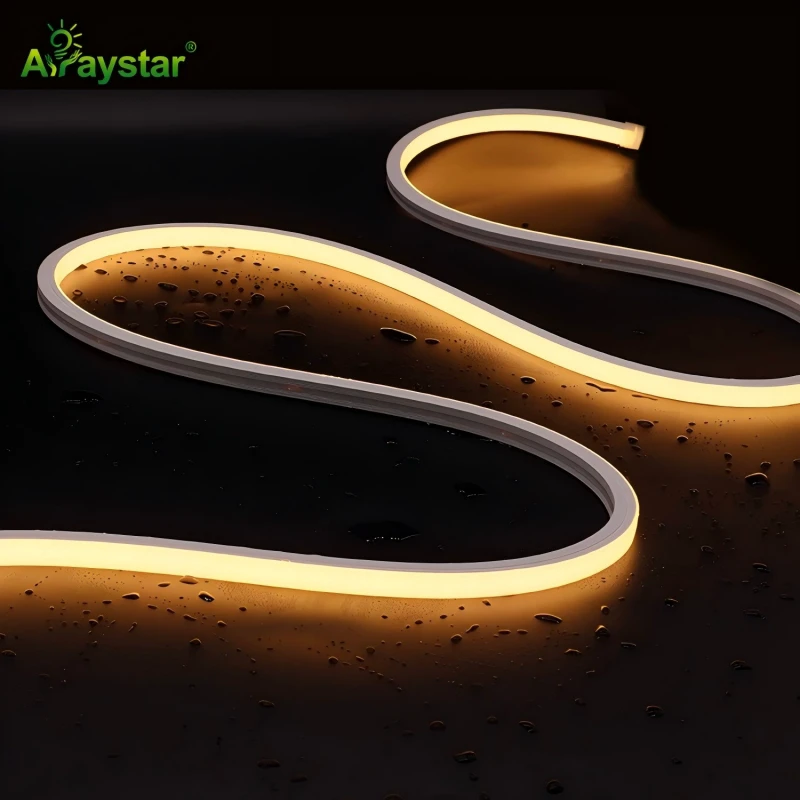
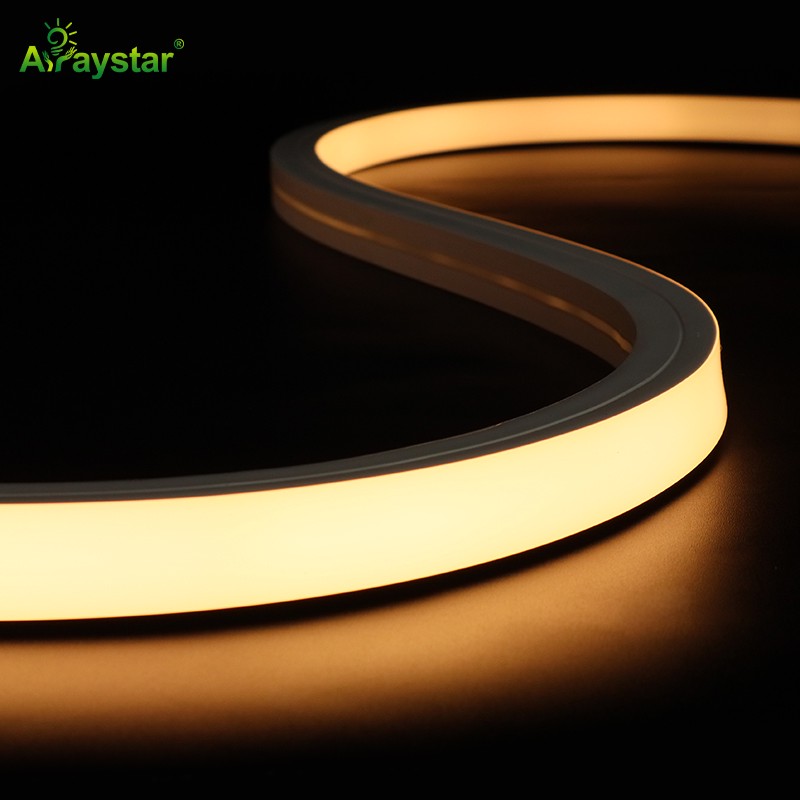
For example, Arraystar’s ART-NS1212-48 48V LED neon strip is listed with the following specifications for its standard single-colour configuration:
- Operating voltage: 48V DC
- Power consumption: 9.6W/m
- LED density: 120 LEDs/m
- Dimensions: 12 × 12 mm
- Colour options: 1800K, 2700K, 3000K, 4000K and 6000K
- CRI: Greater than 90
- Listed protection rating: IP67
Other configurations, including RGB and DMX-controlled options, may have different electrical characteristics. Always check the applicable model datasheet before calculating a project’s load or permitted run length.
For long facade outlines, hotel lighting, or other commercial projects, request written confirmation of the maximum run length for the exact product, wattage, and feeding arrangement.

How to Choose the Right Power Supply for 48V LED Neon Flex
Correct power supply selection is essential for reliable operation. An undersized supply may be overloaded, while unsuitable voltage or incompatible controls can prevent the system from working correctly.
Step 1: Calculate the Total Connected Load
Use this formula:
Total Power (W) = Power per Meter (W/m) × Total Length (m)
For example, consider a project using 20 meters of 48V LED neon flex rated at 9.6W/m.
20 m × 9.6 W/m = 192 W
The calculated LED load is 192W.
Step 2: Select a Compatible Power Supply
Choose a regulated 48V DC power supply whose rated output can support the calculated load under the actual operating conditions.
Do not select a power supply based on wattage alone. Check its output voltage, continuous output capability, operating temperature, enclosure rating, and any applicable derating requirements. A suitable capacity margin should be considered in accordance with the power supply manufacturer’s recommendations.
For further guidance on LED power supply selection and operating conditions, refer to Mean Well’s LED power supply guidance.
Step 3: Check the Wiring
The supply cable must be suitable for the current, cable length, installation environment, and permitted voltage drop.
For longer cable routes, a larger conductor cross-section may be necessary. The final selection should be based on electrical calculations and applicable installation requirements, rather than assuming that a 48V supply eliminates cable losses.
Step 4: Verify Control Compatibility
If the project requires dimming, RGB/RGBW colour control, or DMX512 operation, verify that the power supply, controller, and LED neon configuration are compatible.
Not every 48V LED neon product supports the same control method.
When Should You Choose 48V Instead of 24V?
The right voltage depends on the project, rather than on a simple rule that higher voltage is always better.
Consider 48V LED Neon Flex When:
- The project requires long, continuous lighting lines.
- The design aims to reduce current in the power distribution system.
- Fewer feeding points may be possible with a suitably designed product.
- The available product specifications support the required run length.
- The project benefits from centralized power distribution and simplified wiring layouts.
Consider 24V LED Neon Flex When:
- The existing lighting system is designed around 24V DC.
- Compatible 24V power supplies and controls are already installed.
- The required run length falls within the product’s specifications.
- The selected 24V product better matches the installation geometry, power requirements, or project budget.
Before making the final decision, compare the complete system rather than the LED neon strip alone. Include the cost of power supplies, wiring, connectors, installation labour, control equipment, and ongoing maintenance.
For large projects, a technically suitable 48V product may help simplify power distribution, but the actual savings must be evaluated against the project’s design and installation conditions.
Applications of Long-Run 48V LED Neon Flex
48V LED neon flex is worth evaluating for commercial projects where long, continuous lighting lines and coordinated power distribution are important.
Architectural Facade Lighting
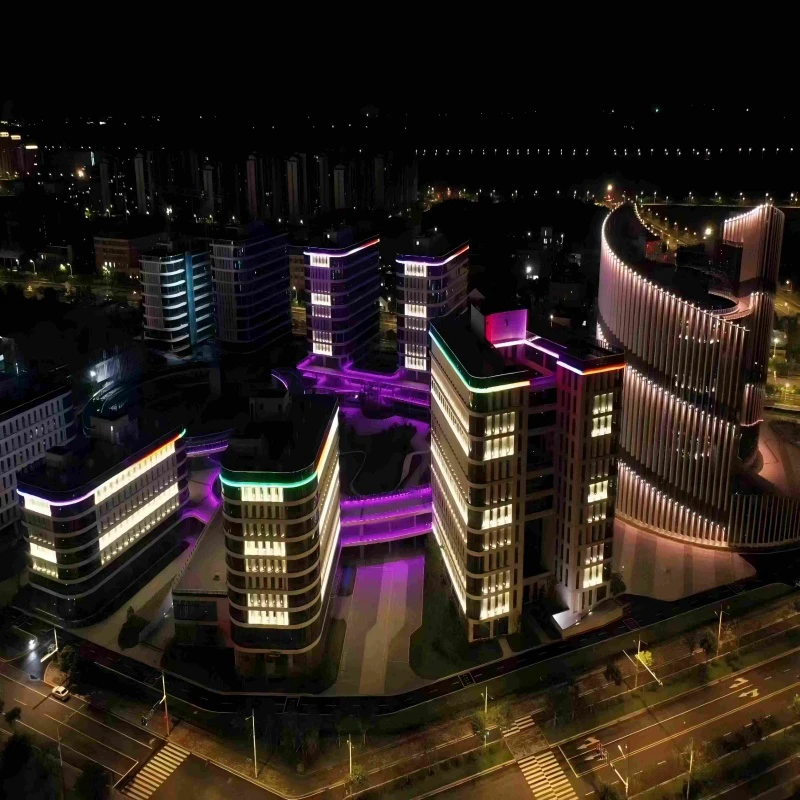
LED neon flex can outline building facades, architectural edges, and exterior decorative features. Long-run configurations may help reduce the number of power feeding locations when supported by the selected product.
For outdoor installations, verify the product’s protection rating, connector sealing, mounting method, and exposure conditions.
Hotels and Commercial Spaces
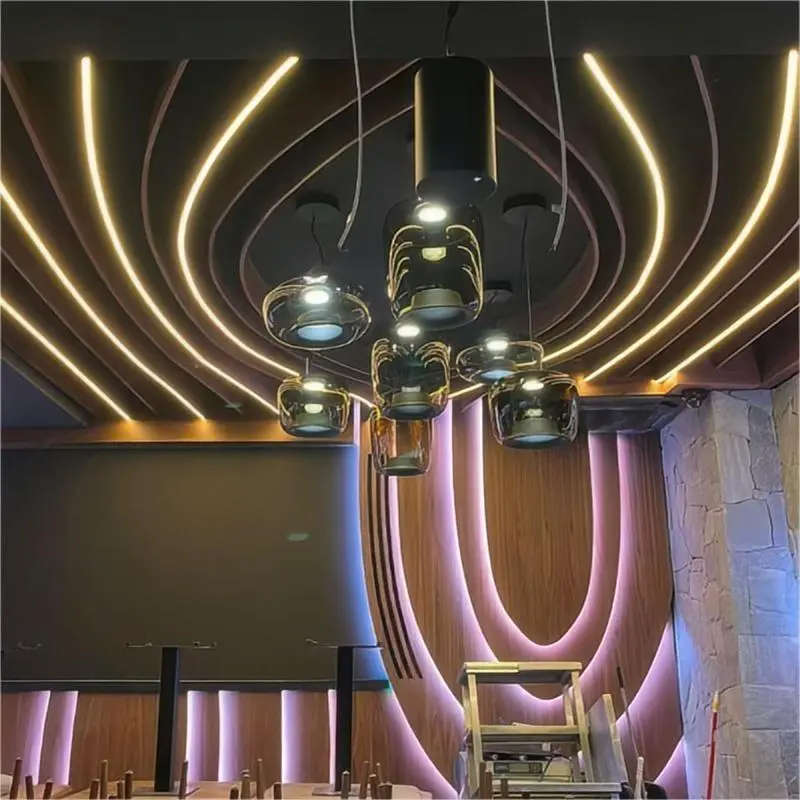
Hotels, restaurants, retail spaces, and commercial buildings often use linear lighting to create consistent visual outlines and decorative effects.
A suitable long-run system can support cleaner installation planning and reduce the complexity of distributing power across long architectural features.
Landscape and Decorative Lighting
Landscape features, pathways, and other decorative applications can benefit from flexible linear lighting. The product’s environmental rating and installation requirements must be appropriate for the site.
For every application, the selected bending direction, minimum bending radius, cut points, mounting accessories, and power configuration should be confirmed before installation.
What Should Wholesale Buyers and Lighting Contractors Check?
For distributors, contractors, and project procurement teams, choosing a supplier involves more than comparing unit prices.
Before placing an order, request the following:
- Product specifications: Voltage, wattage, dimensions, LED density, colour temperature, CRI, and luminous output.
- Run-length confirmation: Maximum length for the exact model and feeding configuration.
- Installation accessories: Compatible cables, connectors, end caps, profiles, and mounting clips.
- Control compatibility: Suitable power supplies, dimmers, and controllers.
- Environmental suitability: Applicable IP rating, installation conditions, and sealing requirements.
- Project support: Custom length, colour, power, packaging, and other available OEM/ODM options.
- Quality documentation: Applicable test reports, certifications, and warranty conditions.
Providing the project length, installation location, desired lighting effect, and control requirements allows the manufacturer to recommend a more suitable configuration.
If you are sourcing products for a commercial project, explore our 48V DC LED neon strips and contact the team for model-specific specifications and project recommendations.
Recommended Products

Frequently Asked Questions
Is 48V LED neon flex better than 24V?
Not in every situation. A 48V system draws less current than a 24V system for the same power load, which can help reduce cable voltage drop and resistive losses. The best option still depends on the product’s electrical design, maximum run length, power requirements, and system compatibility.
How long can 48V LED neon flex run from one end?
There is no universal maximum length for every 48V LED neon product. The permitted run depends on the specific model, wattage, internal circuitry, wiring, feeding arrangement, and manufacturer specifications. Always confirm the rated maximum length before installation.
Does 48V LED neon flex eliminate voltage drop?
No. Higher voltage can reduce current and help lower voltage drop for a comparable power load and cable resistance, but it does not eliminate voltage drop in every part of the system.
How do I calculate the power supply size?
Multiply the product’s rated power per meter by the total connected length to estimate the load. Then select a compatible supply with appropriate capacity and account for the manufacturer’s operating and derating requirements.
Can I use a 24V power supply with 48V LED neon flex?
No. Do not substitute a 24V supply for a product designed for 48V DC. Use a power supply with the correct output voltage and verify compatibility with the LED neon and its control equipment.
Is 48V LED neon flex suitable for outdoor applications?
Some models are designed for outdoor use. Check the specific product’s IP rating, end-cap sealing, connectors, mounting arrangement, and installation conditions before specifying it for an outdoor project.
Conclusion
Choosing between 24V and 48V LED neon flex requires more than comparing supply voltages. For long-run lighting, the key factors are power consumption, current, cable voltage drop, maximum permitted run length, and the compatibility of the complete system.
A well-designed 48V solution may help simplify power distribution for suitable commercial projects, but reliable performance depends on selecting the correct model and following its installation requirements.
For distributors and lighting contractors, the best starting point is a product-specific evaluation supported by accurate specifications and clear project requirements.
Planning a long-run lighting project? Contact Arraystar LED to discuss the required length, lighting colour, installation environment, and power configuration. The team can help you identify a suitable 48V LED neon flex option for your application.
Need help with your long-run LED project?
Get factory-direct pricing, free samples and engineering support within 24 hours.
Email: info@arraystarled.com | Phone: +86-0755-2103-6746 | WhatsApp: 0086 1581 8514 077