Mounting Neon Tubing on an Outdoor Facade: What the Spec Sheet Leaves Out
- 2026-10-28 10:02
- /
- Arraystar LED
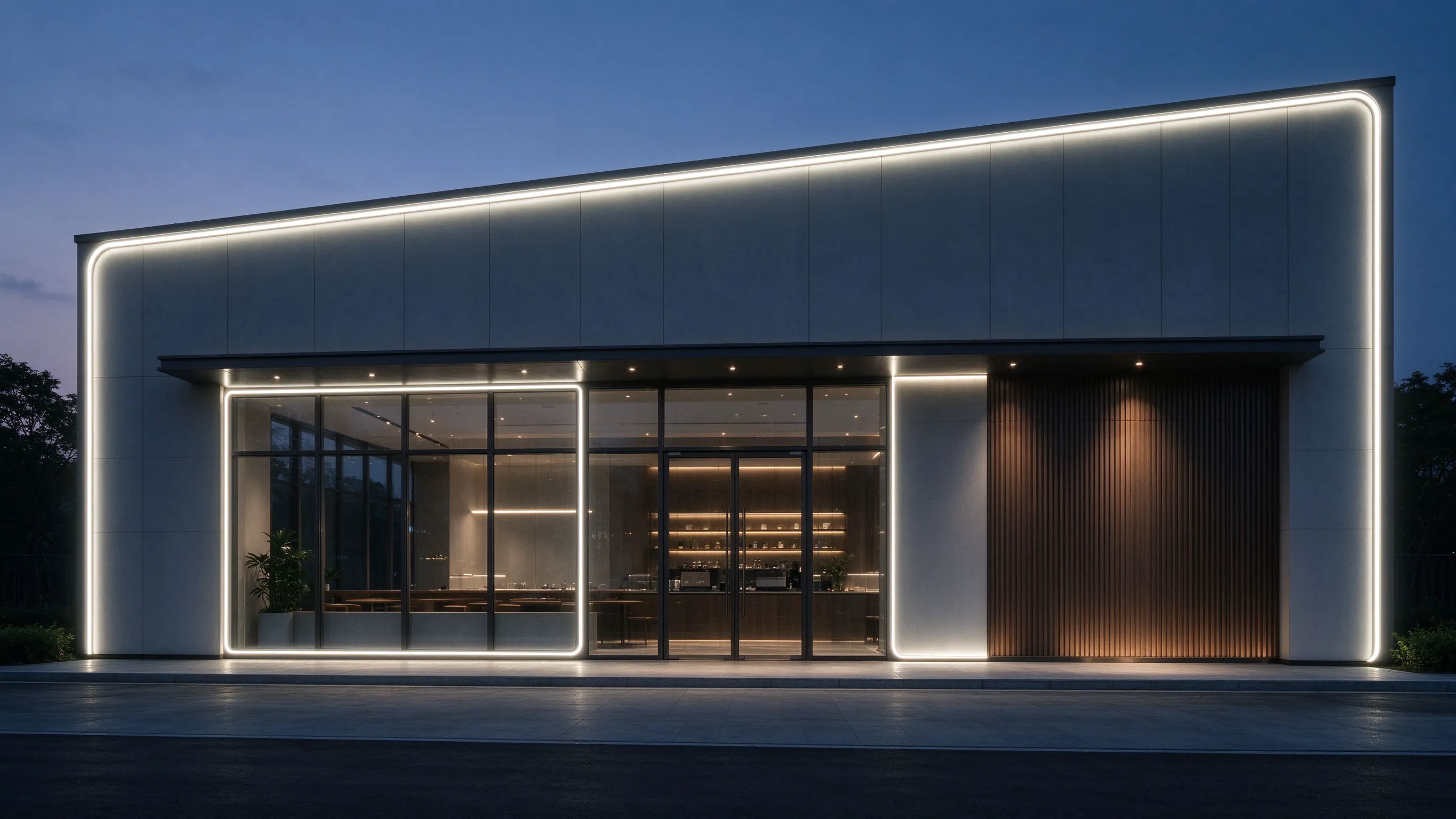
I have hung facade neon on everything from red brick to powder-coated aluminium, and the failures are never random. They cluster around standoff spacing, cable entry points, and the end cap I forgot to leave slack at.
What the spec sheet actually tells you (and what it hides)
The datasheet for a silicone neon tube gives you the LED density, the IP rating, the cut length and a minimum bend radius. It tells you almost nothing about how the tube behaves once you bolt it to a wall that swings thirty-five degrees Celsius between January and July. On a facade, the tube is one small part of a larger thermal and mechanical system, and that system is where signs die.
I started treating facade neon as a fixing problem rather than a product problem after a job on a harbour-front building. The tubes themselves were fine, but the standoff rhythm I had copied from an interior shop drawing let a three-metre run flex in the wind, and the entry cable sheared at the gland inside a year.
The three failure points I look for
- Standoff spacing too wide, letting long runs whip in the wind.
- Cable entry drilled straight through the weatherproofing layer with no gland.
- End caps pulled tight against the wall, leaving no room for thermal contraction.
The standoff spacing I use on facades
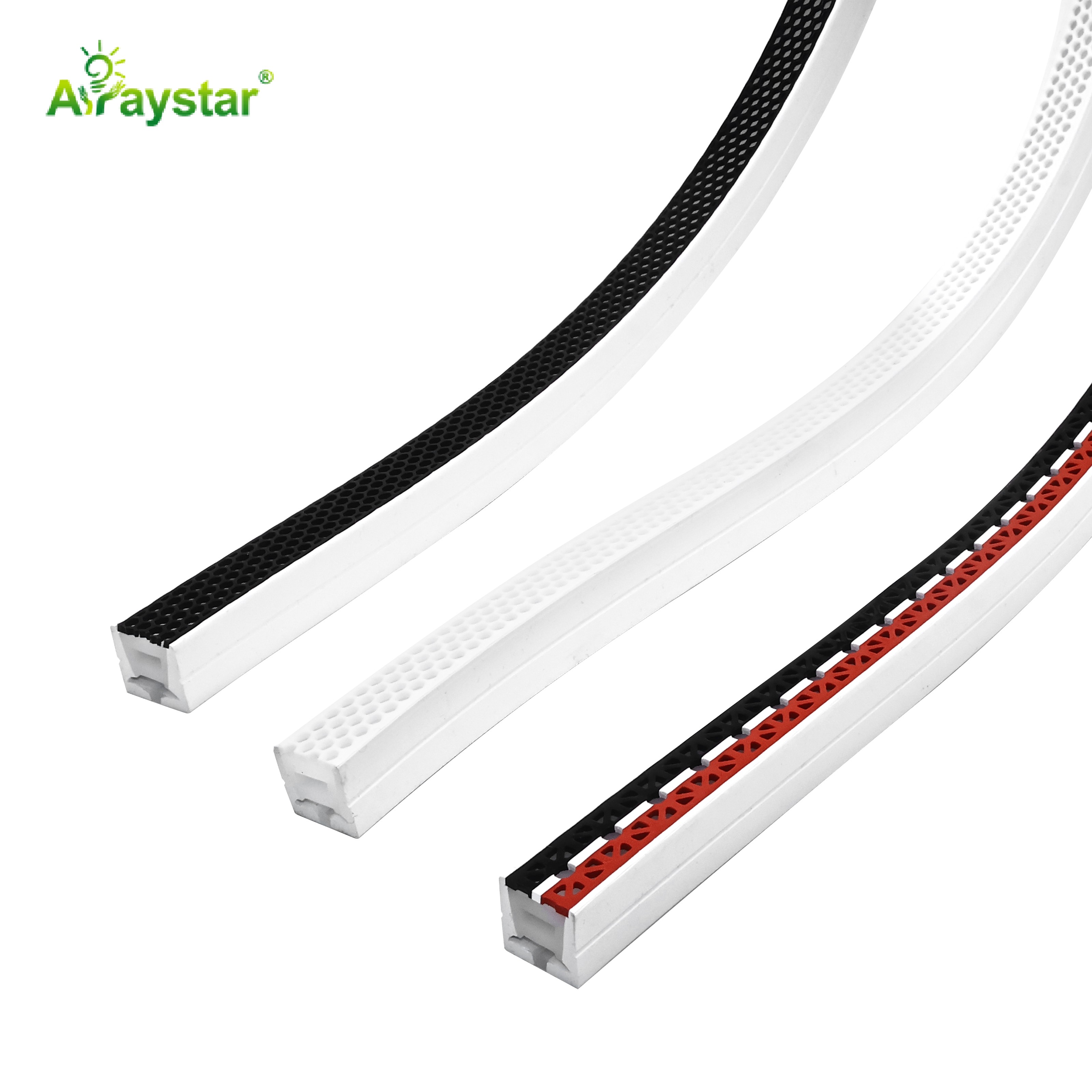
For a typical rectangular silicone tube in the 12 mm to 20 mm cross-section range, I hold standoffs at between 300 mm and 500 mm on centre. Under 300 mm you see the mounting clips as dark breaks along the run, and the wall behind lights up because the tube is too close. Over 500 mm and a straight two-to-four-metre run starts to sway in crosswinds, which fatigues the solder joints at the ends.
Standoff rhythm scales with tube size; bigger sections tolerate wider spacing.
| Tube cross-section | Max standoff spacing (centre-to-centre) | Recommended wall gap |
|---|---|---|
| 10-12 mm | 300-350 mm | 12-15 mm |
| 14-16 mm | 350-450 mm | 15-20 mm |
| 18-25 mm | 450-500 mm | 20-25 mm |
On corners and ninety-degree bends I add an extra standoff within 50 mm of the bend itself. That corner is the highest-stress point in the whole run, and it wants support, not a cantilever.

Cable entry and wall penetration
Every time a wire leaves the tube and enters the building, you have a hole in the weatherproof layer. I drill the cable entry from the outside, fit a UV-resistant PG gland sized to the cable (usually PG9 or PG11 for a twin 20 AWG low-voltage feed), and bed the gland with neutral-cure silicone rather than acetic-cure, which corrodes brass and aluminium over time.
- Slope the drilled hole two to three degrees downward outward so water sheds away from the building.
- Leave a 50 mm drip loop on the outside before the gland.
- Use heat-shrink with adhesive liner on any inline joint inside the conduit, never electrical tape.
On rendered or fibre-cement facades I back the gland with a proper back-box rather than pulling the screw tight into render, which cracks around the hole after the first freeze.
Heat, sun and thermal movement
Silicone expands and contracts roughly 0.15 to 0.20 mm per metre per degree Celsius across a typical operating range of minus twenty to plus fifty. On a five-metre run, that is up to seven millimetres of movement over the year. If both ends are clamped dead tight, that stress has nowhere to go except into the end cap, which is exactly where cracks appear by February.

My rule: clamp one end rigidly, leave the other end free to slide in a slotted standoff. I never glue the tube into a standoff on both sides of a long run. Dark-coloured facades absorb radiant heat and can run the tube ten to fifteen degrees hotter than the air reading, so I derate the run length by about ten percent on south- and west-facing walls in summer climates.
The pre-energising walk-through
Before I hand the sign over, I run through a short checklist on the ladder rather than trusting the wiring diagram.
- Pull gently on every standoff; none should rotate in the wall.
- Check the free end cap has at least 10 mm of play along the run.
- Verify the IP rating on the cable side matches the tube side; a tube rated IP65 mated to an unprotected driver junction is IP54 in practice.
- Run the sign for two hours on a warm day and feel every end cap; the warm ones tell you where resistance is building.
- Photograph the gland and standoff locations for the maintenance record.
Recommended Products
Frequently Asked Questions
How far off the wall should facade neon sit?
I keep the back of the tube 12 to 25 mm from the wall depending on section size. Closer than 10 mm and the wall lights up as a halo; further than 30 mm and the standoffs themselves become visible against the facade. The goal is a clean outline with no wash on the substrate.
Can I mount neon directly onto a painted brick facade?
You can, but you must use a wall plug rated for exterior brick and bed every fixing with a small dab of silicone. On older porous brick, drill slightly oversize, blow out the dust, and set the plug in a little silicone so water cannot wick down the hole into the cavity. Do not rely on the screw alone.
What IP rating do I actually need on a facade?
IP65 on the tube itself is the floor for any horizontal or sloped surface where water can pool; IP67 is worth paying for if the sign is on an overhang where drips run down onto it. The rating is only as good as the weakest gland or connector, so I treat the whole run, not just the tube, as the weatherproofed zone.
How do I stop the cable shearing at the wall entry in wind?
Leave a 50 mm service loop between the last standoff and the wall gland, and strain-relieve the cable inside the junction box rather than at the gland. The loop absorbs the wind movement, and the strain relief means any pull lands on the box, not on the solder joint at the tube end.
Does sun exposure shorten tube life on a south-facing facade?
Yes. Dark silicone on a dark wall in direct sun can run ten to fifteen degrees above ambient, and LED lumen output drops roughly 0.3 to 0.5 percent per additional degree above 25. I derate run length by about ten percent on hot exposures and pick a lighter tube colour or an aluminium channel if the client can accept it.
Need help with your LED project?
Get factory-direct pricing, free samples and engineering support within 24 hours.
Email: info@arraystarled.com | Phone: +86-0755-2103-6746 | WhatsApp: 0086 1581 8514 077
Need to size your power supply? Use our LED Strip Power Calculator to find the right driver in seconds.