5050 RGBW vs RGB: Purer Whites and Pastels from One Strip
- 2026-10-09 18:40
- /
- Arraystar LED
RGB-only 5050 strip makes white by driving red, green and blue together, which wastes power and produces a muddy, tinted white, and it cannot reach soft pastel colours cleanly. A 5050 RGBW strip adds a dedicated white chip to each package, giving neutral white, gentler pastels and better efficiency for white-heavy scenes. It is the small upgrade that fixes the most common complaint about colour strip.
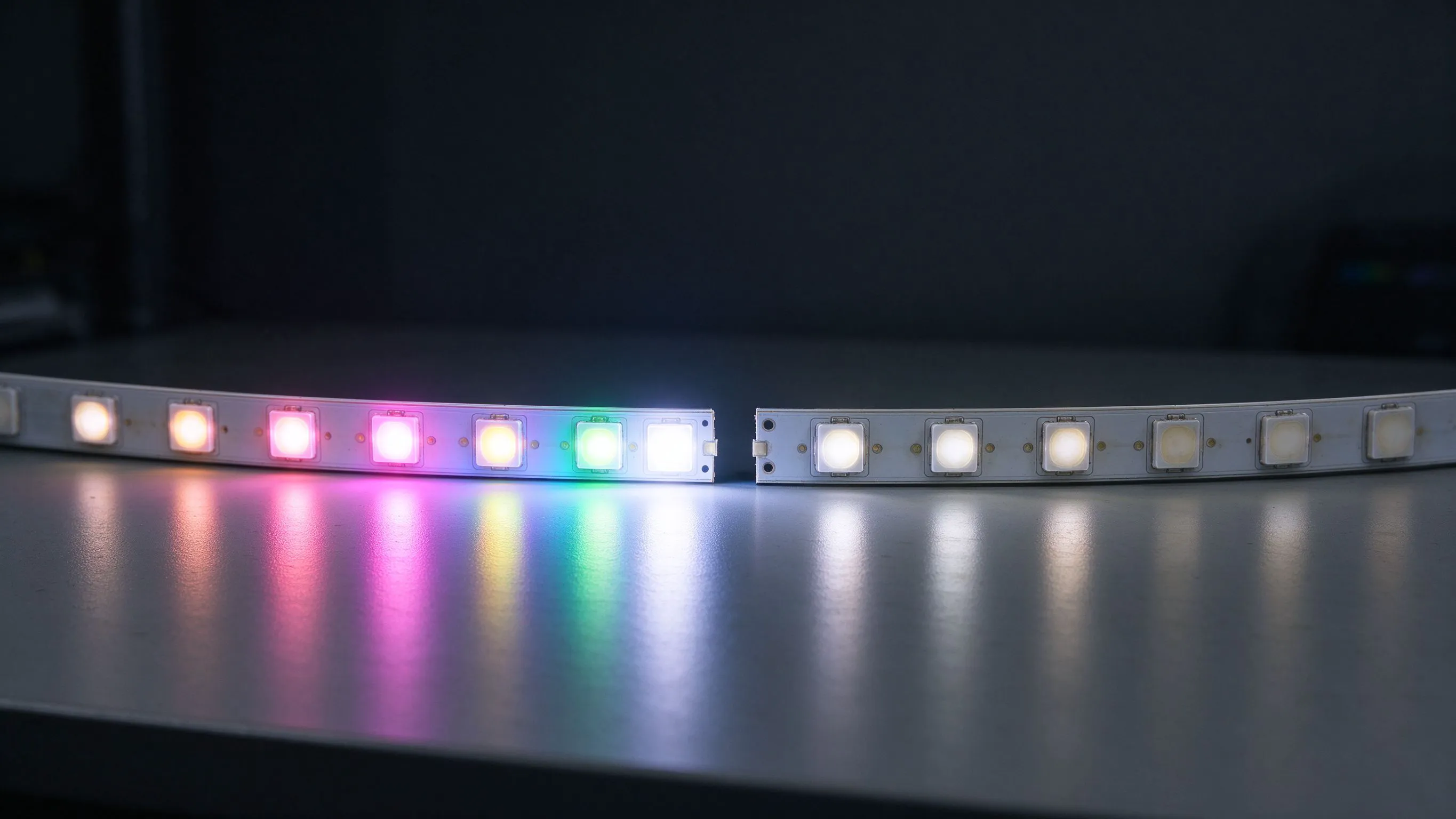
The White Problem on RGB Strip
RGB strip is sold as capable of 'any colour including white', and technically that is true: drive all three channels and the eye receives red, green and blue at once. In practice the result is rarely a pleasing white. It tends to run slightly tinted, often greenish or purplish, it is dimmer than a dedicated white source because the output is split across three colours, and it draws the strip's maximum power to produce a mediocre neutral.
Pastels expose the same weakness: soft pinks, peaches, lilacs and warm whites all need a clean neutral base that mixed RGB struggles to provide, so they look muddy instead of delicate.
What the Extra White Chip Adds
- A dedicated white LED alongside red, green and blue in each 5050 package.
- Neutral, clean white without colour-correcting an RGB mix.
- Soft, accurate pastels built on a true white base.
- Higher efficiency for white than running all three RGB channels.
- Smoother, brighter low-tint scenes in homes and hospitality.
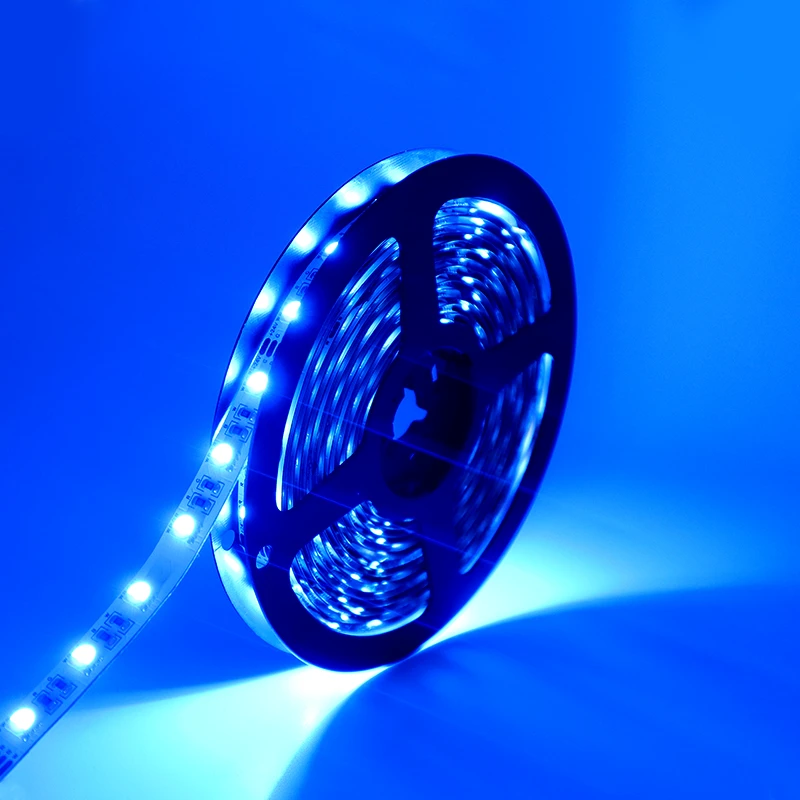
When white and pastel quality matter on a colour project, I use the 5050 RGBW strip. The fourth chip is a small addition that removes a large limitation.
RGB vs RGBW Side by Side
RGBW keeps all RGB colour and fixes white and pastels.
| Output | RGB only | RGBW |
|---|---|---|
| Pure saturated colour | Excellent | Excellent |
| Neutral white | Mixed, tinted, dim | Clean, dedicated, bright |
| Soft pastels | Muddy, hard to tune | Smooth and delicate |
| Power used for white | High (3 channels) | Lower (white chip) |
| Controller channels | 3 | 4 (needs RGBW control) |
Where RGBW Clearly Wins
- Living spaces that mostly run white with occasional colour scenes.
- Hospitality and bedrooms needing soft pastel and warm-white moods.
- Accent coves that must switch between neutral task light and colour.
- Any installation where white is the default and colour is occasional.
- Clients disappointed by the 'grey-white' of cheap RGB kits.
Understanding the White Colour Temperature
An RGBW strip's white chip is built at a fixed colour temperature, commonly a neutral or cool white, so it is important to match that white to the project. It gives a far cleaner neutral than mixing RGB, but it is not tunable warm-to-cool; if a project needs the full warm-to-cool white range plus colour, that is the role of an RGBCCT/RGBCW five-channel strip rather than a four-channel RGBW. I confirm the white chip's CCT at selection so the default white suits the room rather than fighting warm interiors.
You Need an RGBW-Capable Controller
The fourth channel is useless without a controller that drives it. A standard three-channel RGB controller on RGBW strip leaves the white chip dark, silently reducing an RGBW product to an expensive RGB strip and bringing back the muddy mixed white. I specify a genuine four-channel RGBW controller, confirm the remote or app offers white and pastel presets that use the white chip, and verify on a powered sample that selecting white actually lights the dedicated diode rather than mixing RGB.
- Use a 4-channel RGBW controller, not a 3-channel RGB one.
- Confirm white presets engage the dedicated white chip.
- Run the correct conductor count for four channels plus common.
- Size the driver for realistic combined-channel scenes.
Pastel Scenes and Real-World Use
Most residential and hospitality clients spend far more time in white and gentle pastels than in saturated red or blue, which is why the white chip matters more in practice than the saturated colour performance that spec sheets emphasise. A soft blush for a bedroom, a warm peach for a restaurant evening or a clean neutral for daytime all benefit from the dedicated white. I program these usable scenes as the defaults and keep the bold saturated colours available rather than making them the headline.
Specifying an RGBW Project
Send the default white temperature you want, the colour and pastel scenes, run lengths and control preference. I will confirm the 5050 RGBW strip, a matching four-channel controller, driver sizing and whether RGBW is sufficient or a five-channel RGBCCT product is needed for tunable white. We supply the 5050 RGBW and recommend comparing its white against an RGB-only sample on the actual wall; the difference is immediately obvious and settles the upgrade for most clients.
Reading RGBW Specs and Avoiding Cheap Product
- Check the white chip's colour temperature, because RGBW white is a fixed CCT and it must suit the room.
- Confirm it is genuinely four-channel with separate white control, not an RGB package relabelled as RGBW.
- Look at the white brightness and CRI, not just the RGB output, since white is your most-used scene.
- Match the controller to four channels and verify the white preset lights the white chip.
- Beware sets where the white diode is weak, a cost-cutting trick that makes the upgrade pointless.
The most common disappointment I see is an RGBW kit bought on price where the white chip is dim or of low quality, so the 'white' still leans on an RGB mix and the customer cannot understand why their upgraded strip looks no better than a cheap RGB roll. I always evaluate an RGBW product in its white state first, because that is the whole reason to choose it; if the dedicated white is not clearly cleaner and brighter than an RGB mix on the same bench, the product is not worth the premium. I also check colour consistency between reels for large installs, since the white chip binning on budget strip can vary enough that adjacent runs show different neutral points. For clients who mostly live in white and pastels, spending on a quality RGBW set and a genuine four-channel controller is far more satisfying than buying a saturated-colour-focused RGB product and forever correcting its muddy whites. A five-minute side-by-side of RGB white, RGBW white and a true white reference on the actual wall settles the purchasing decision more reliably than any datasheet claim.
Recommended Products
Frequently Asked Questions
What is the difference between RGB and RGBW 5050 strip?
RGB packages contain red, green and blue chips and make white by mixing all three, which is tinted, dim and power-hungry. RGBW adds a fourth dedicated white chip, producing a clean neutral white, smoother soft pastels and more efficient white scenes while keeping the full RGB colour range.
Why does white from RGB strip look grey or tinted?
Because red, green and blue emitters are not perfectly balanced for neutral light, mixing them drifts off-white toward green, purple or pink, and splitting output across three channels makes the result dimmer than a dedicated white source. A separate white chip produces a genuine, brighter neutral directly.
Can RGBW make warm-to-cool tunable white?
Not by itself. A four-channel RGBW strip has one fixed-temperature white chip, giving a clean white at that single CCT plus colour. For a full warm-to-cool adjustable white range together with colour you need a five-channel RGBCCT/RGBCW strip with separate warm and cool white chips.
Do I need a special controller for RGBW strip?
Yes, a four-channel RGBW controller with the correct wiring; a standard three-channel RGB controller leaves the white chip unused and brings back muddy mixed white. Verify on a powered sample that the white preset actually lights the dedicated white chip rather than driving red, green and blue.
Is RGBW worth it if I mostly use white?
Yes, and that is exactly where it pays off. Spaces that run neutral or pastel white most of the time with occasional colour get cleaner, brighter, more efficient white from the dedicated chip while retaining colour on demand. If you never use colour at all, a dedicated white or tunable-white strip is cheaper and better; if colour is the main use and white is rare, plain RGB can suffice.
Need help with your LED project?
Get factory-direct pricing, free samples and engineering support within 24 hours.
Email: info@arraystarled.com | Phone: +86-0755-2103-6746 | WhatsApp: 0086 1581 8514 077
Need to size your power supply? Use our LED Strip Power Calculator to find the right driver in seconds.