
Breakpoint Continuation, Dual-Signal ICs & Amplifiers for Long Addressable LED Runs
- 2026-09-29 12:08
- /
- Arraystar LED
On a long addressable run, one dead pixel or one under-powered section can black out everything downstream. Reliable large installs are built on three things: breakpoint-continuation or dual-signal ICs so a single failure doesn't cascade, power injection and repeaters to keep volts and signal healthy, and a controller architecture (Art-Net/DMX-to-SPI) that fans the show out in manageable universes. Design for failure and the show survives it.
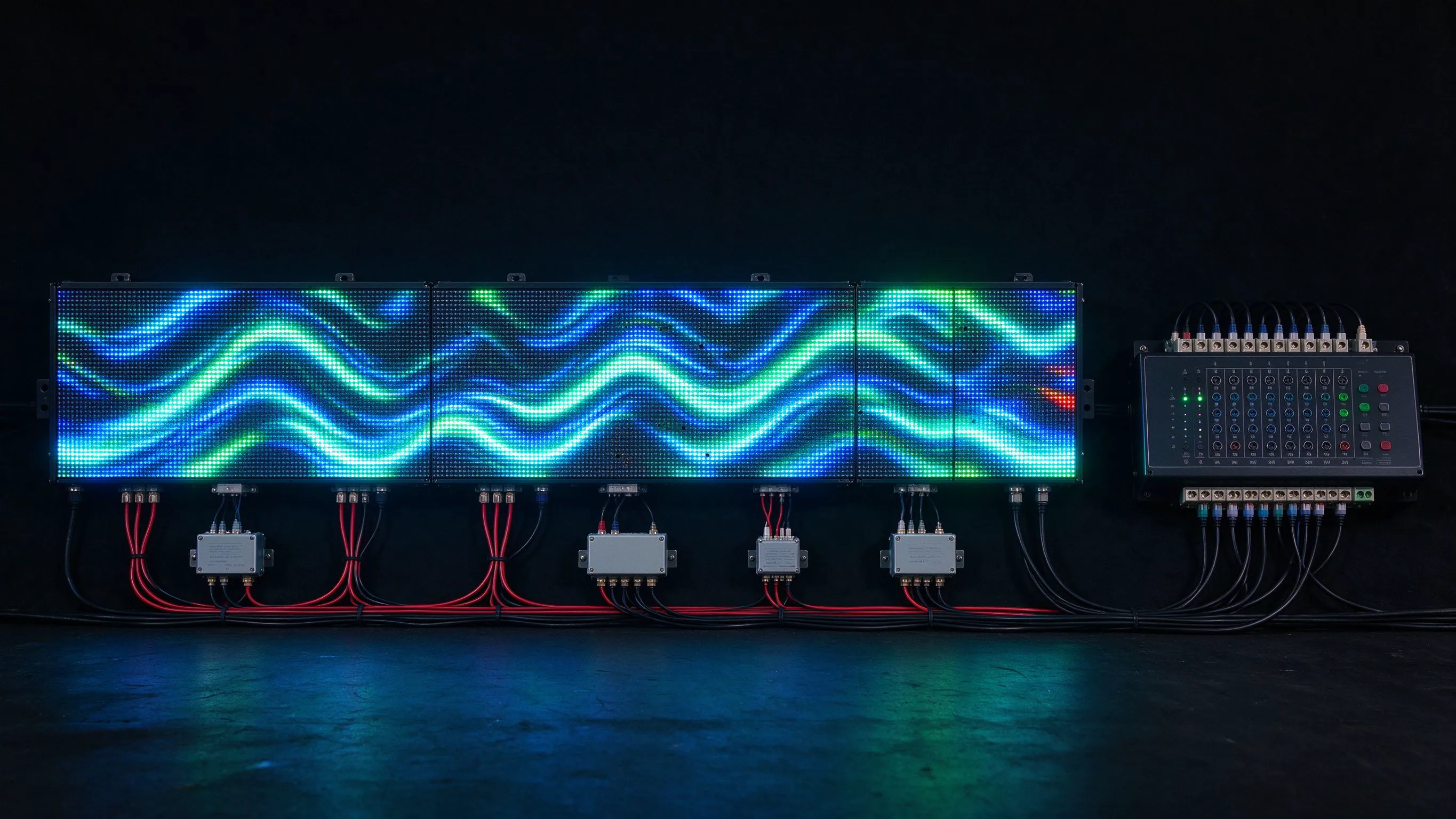
Why One Dead Pixel Can Kill a Whole Sign
Classic single-wire addressable LEDs (the WS2812 family) pass data in a daisy chain: the controller tells pixel one, pixel one relays to pixel two, and so on. If one pixel's data input fails, every pixel after it goes dark - a single bad LED takes out meters of sign. On a small desktop project that's an annoyance; on a 30-meter commercial installation it's a service call with a cherry picker.
The industry solved this two ways: chips that carry a backup data line (dual-signal / breakpoint-continuation), and system design that repeats power and signal so any one weak point stays local. You should specify both on anything bigger than a hobby run.
Breakpoint-Continuation and Dual-Signal ICs
Breakpoint-continuation ICs run a second data line down the strip so that if one pixel fails, the next still receives data and the chain keeps running. WS2815 (12V dual-signal), SK6813 and UCS2904-series (RGBW) are common examples. You pay a little more and wire an extra data line, but a single failed pixel becomes a single dark dot instead of a dead tail - the difference between a non-issue and a warranty claim.
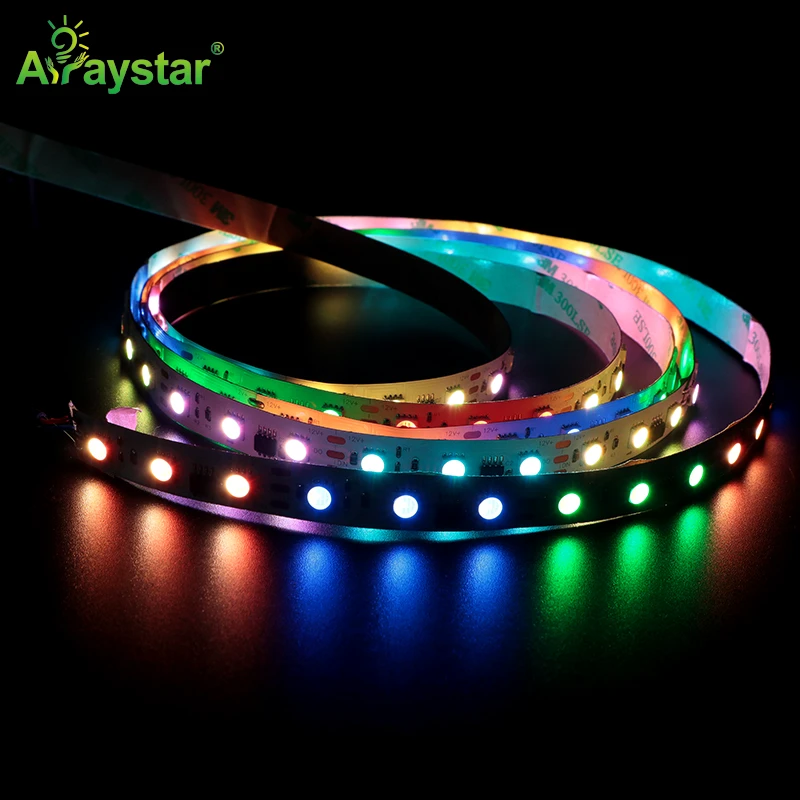
- Specify dual-signal/breakpoint ICs for any long-run or hard-to-service sign.
- 12V WS2815 also reduces voltage drop versus 5V WS2812B on long runs.
- RGBW projects use dual-signal RGBW ICs (e.g. UCS2904) rather than RGB-only.
- Backup data still needs correct wiring - follow the maker's DI/BI data direction.
Power Injection: The Other Half of Reliability
Signal isn't the only thing that runs out. Each meter of pixel strip draws current, and voltage sags along the copper until far pixels turn red, dim or misbehave (brownout causes garbled colors and false data errors that look like signal faults). You inject fresh power at regular intervals - commonly every 5 meters for 5V, longer for 12/24V - by connecting the supply to the strip's power rails at multiple points.
- Inject power at the start, middle and end of long runs; follow the datasheet spacing.
- Prefer 12V/24V pixel strip over 5V for long installs - far fewer injection points.
- Keep all power supplies' common ground connected for clean data reference.
- Size wire and feeds so the far end still reads within the strip's voltage tolerance.
Repeaters and Power/Data Amplifiers
A signal (data) amplifier or power repeater regenerates both the data waveform and the power between sections, letting you extend runs well beyond one strip length while keeping signal crisp and brightness consistent. Constant-voltage power repeaters take a data input plus local power and output a fresh, fully-powered signal to the next section - the workhorse of large pixel installs where one controller output can't physically drive everything.
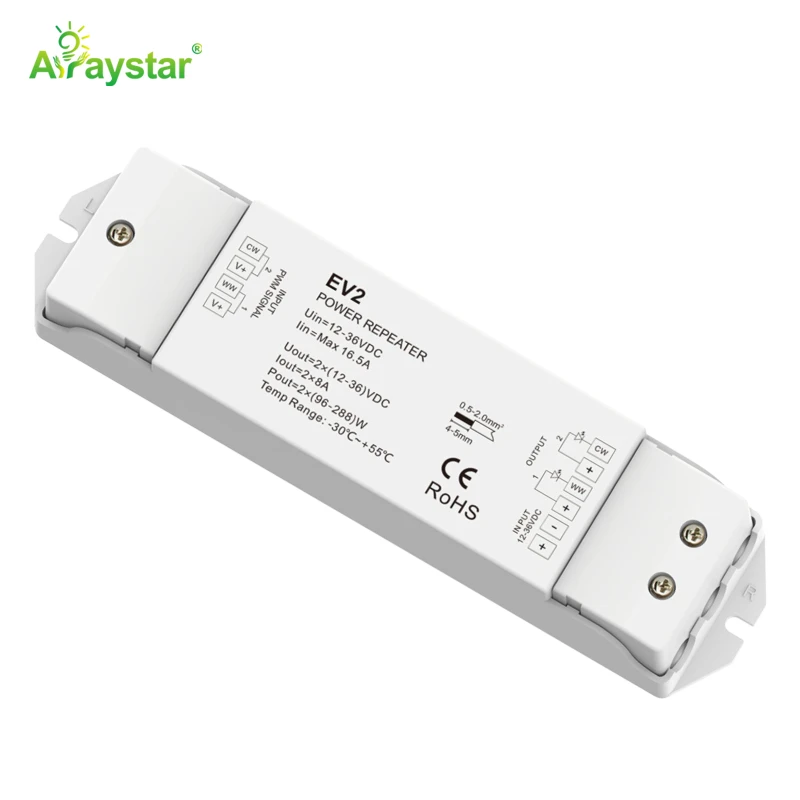
- Use a repeater whenever a section exceeds the controller's pixel or length limit.
- Each repeated section gets its own local power feed - don't daisy-chain power.
- Repeaters clean up degraded data edges that cause flickering and wrong colors.
- Mount repeaters near the sections they drive to keep output wiring short.
Controllers: Art-Net, DMX-to-SPI and Multiple Universes
One cheap USB controller won't run a building. Large shows use a master (PC software, Art-Net/sACN controller, or DMX console) sending universes over Ethernet to distributed DMX-to-SPI decoder nodes placed around the install, each driving a block of pixels. Multi-channel Art-Net/DMX-to-SPI interfaces fan one show across many universes and keep cable runs from controller to strip short.
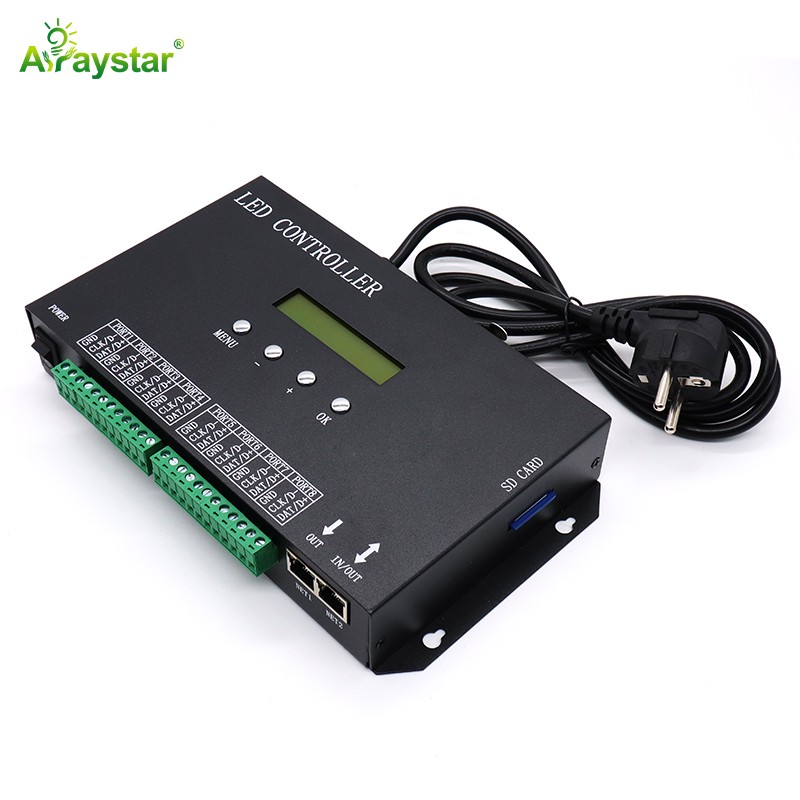
Scaling signal and power together.
| Scale | Signal approach | Power approach |
|---|---|---|
| <500 pixels, short | Single SPI controller | One supply, maybe one injection |
| Several meters / one sign | Dual-signal ICs + repeater | Inject every 5m (5V) / longer (12V) |
| Large multi-section install | Art-Net/sACN to DMX-SPI nodes | Local supply per section via repeaters |
| Building / permanent show | Networked master + fiber/ethernet | Distributed supplies, common ground |
Wiring Discipline and Commissioning
Most 'mysterious' pixel faults trace to wiring: a missed ground, one data line swapped, an over-long first run, or power injected without common ground. Build and test in sections before installing - address each block, confirm it plays the test pattern end to end, then connect sections. Keep data wiring away from mains and motor drives, use the correct data direction, and label every injection and repeater.
- Test each section on the bench with a full-white and chase pattern before mounting.
- Connect common ground across all supplies and the controller.
- Observe DI/DO (and BI/BO on dual-signal strip) direction - reversed data = dead run.
- Add a resistor on the data line and a capacitor at power feeds per common guidance.
- Keep spare dual-signal IC strip and repeaters from the same batch on hand.
Recommended Products
Frequently Asked Questions
What is breakpoint continuation on addressable LED strips?
It's a feature where the IC carries a backup data line (dual-signal), so if one pixel fails, the next pixel still receives data and the rest of the run keeps working - a failure becomes a single dark dot instead of blacking out everything downstream. WS2815, SK6813 and UCS2904-series are common dual-signal chips.
What's the difference between WS2812B, WS2815 and SK6813?
WS2812B is 5V single-data with no breakpoint continuation; WS2815 is 12V dual-signal, so it survives a failed pixel and has far less voltage drop on long runs; SK6813 also carries backup data and is available in RGBW-friendly variants. For large or permanent installs, prefer the dual-signal 12V types.
Do I need an LED signal amplifier or power repeater?
Yes when a run exceeds the controller's pixel/length limit or brightness and data degrade toward the far end. A power repeater regenerates the data signal and attaches a fresh local power feed for the next section, keeping colors correct and brightness consistent on large installs.
How often should I inject power into addressable LED strip?
Roughly every 5 meters on 5V strip and at longer intervals on 12V/24V, always following the datasheet, with the far end measured to stay within voltage tolerance. Inject at the start, middle and end of long runs, and tie all power supplies to a common ground so data stays reliable.
Why do my addressable LEDs flicker or show wrong colors at the far end?
Usually voltage drop from insufficient power injection (far pixels brown out and misread data), sometimes a degraded data edge needing a repeater, or a missing common ground between supplies. Check far-end voltage, add power feeds, use repeaters, and confirm data direction and grounding before blaming the LEDs.
Need help with your LED project?
Get factory-direct pricing, free samples and engineering support within 24 hours.
Email: info@arraystarled.com | Phone: +86-0755-2103-6746 | WhatsApp: 0086 1581 8514 077
Need to size your power supply? Use our LED Strip Power Calculator to find the right driver in seconds.







