
Anti-Glare Neon Tubes for Hotels and Restaurants: Comfort That Sells
- 2026-10-09 18:39
- /
- Arraystar LED
In a hotel corridor or a restaurant, a bare bright neon line is not ambiance; it is a glare source that makes guests squint and shows up as veiling reflections. An anti-glare frosted neon tube widens and softens the emitting surface so the light feels comfortable while still defining the space. The decision is about diffuser geometry and luminance, not raw lumens.
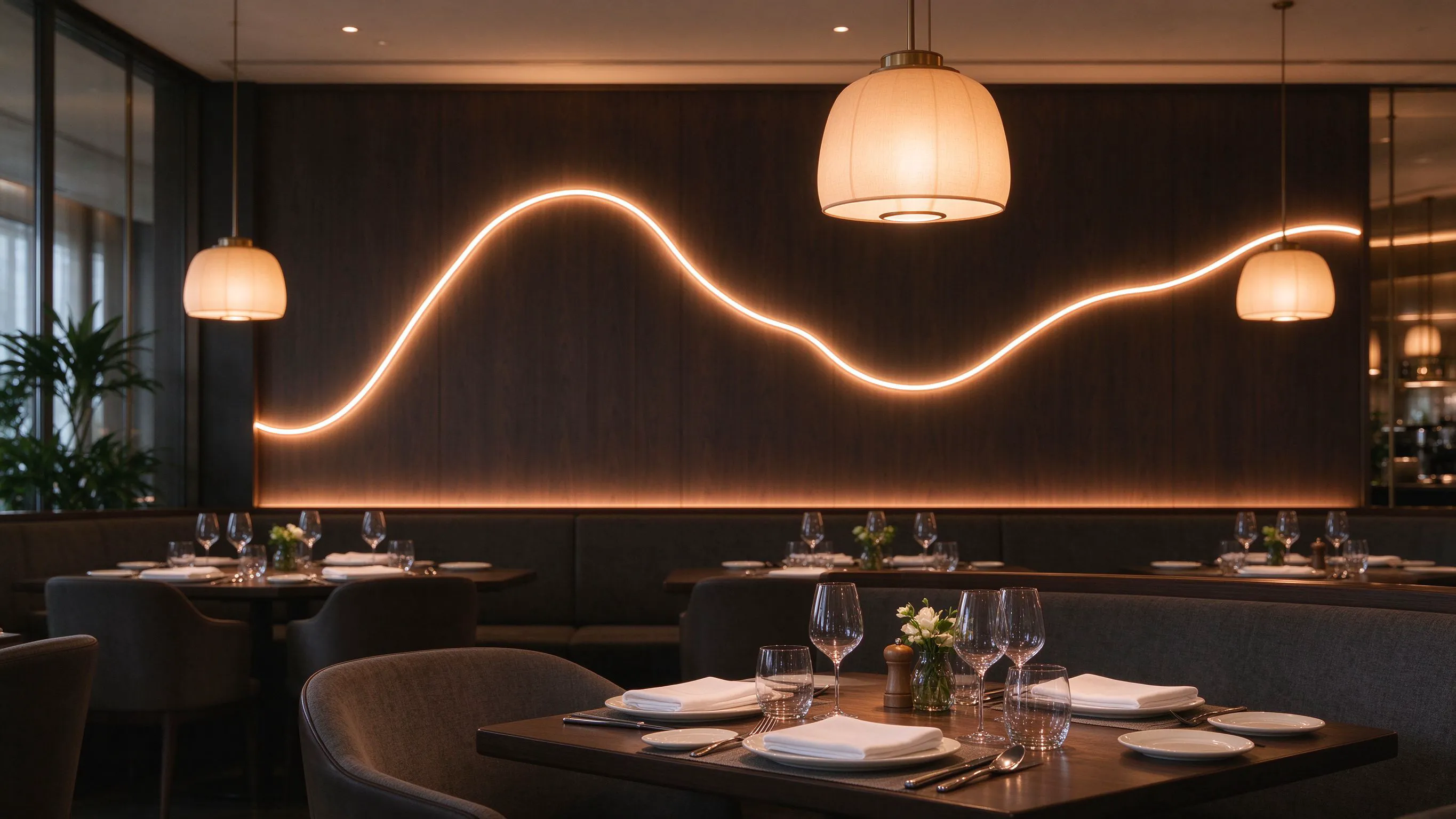
When 'Bright' Becomes 'Uncomfortable'
On a signage facade, high luminance is the goal; you want the line to shout across a street. Put that same line at eye level in a fine-dining room or a hotel corridor and it becomes a problem. Guests do not consciously say 'the glare is bad'; they just find the space cheap or tiring and cannot look at the wall feature for long.
Glare from linear LED is mostly a contrast problem. A small, intensely bright source against a darker surrounding wall forces the eye to constantly adapt. Anti-glare neon attacks that contrast by enlarging and softening the source so the luminance per square centimetre drops while the overall light stays.
How an Anti-Glare Neon Tube Is Different
- Thicker, deeper diffuser. More silicone between chip and surface spreads the light over a wider area before it leaves the tube.
- Frosted or micro-textured face. A controlled surface texture breaks up the specular hot spot instead of presenting a clear window onto the LEDs.
- Wider or shaped emitting window. Profiles such as a 16x16 square body emit from a broader face, lowering peak luminance.
- Optional shielding geometry. Some anti-glare bodies include a small lip or baffle that hides the direct chip view at normal eye angles.
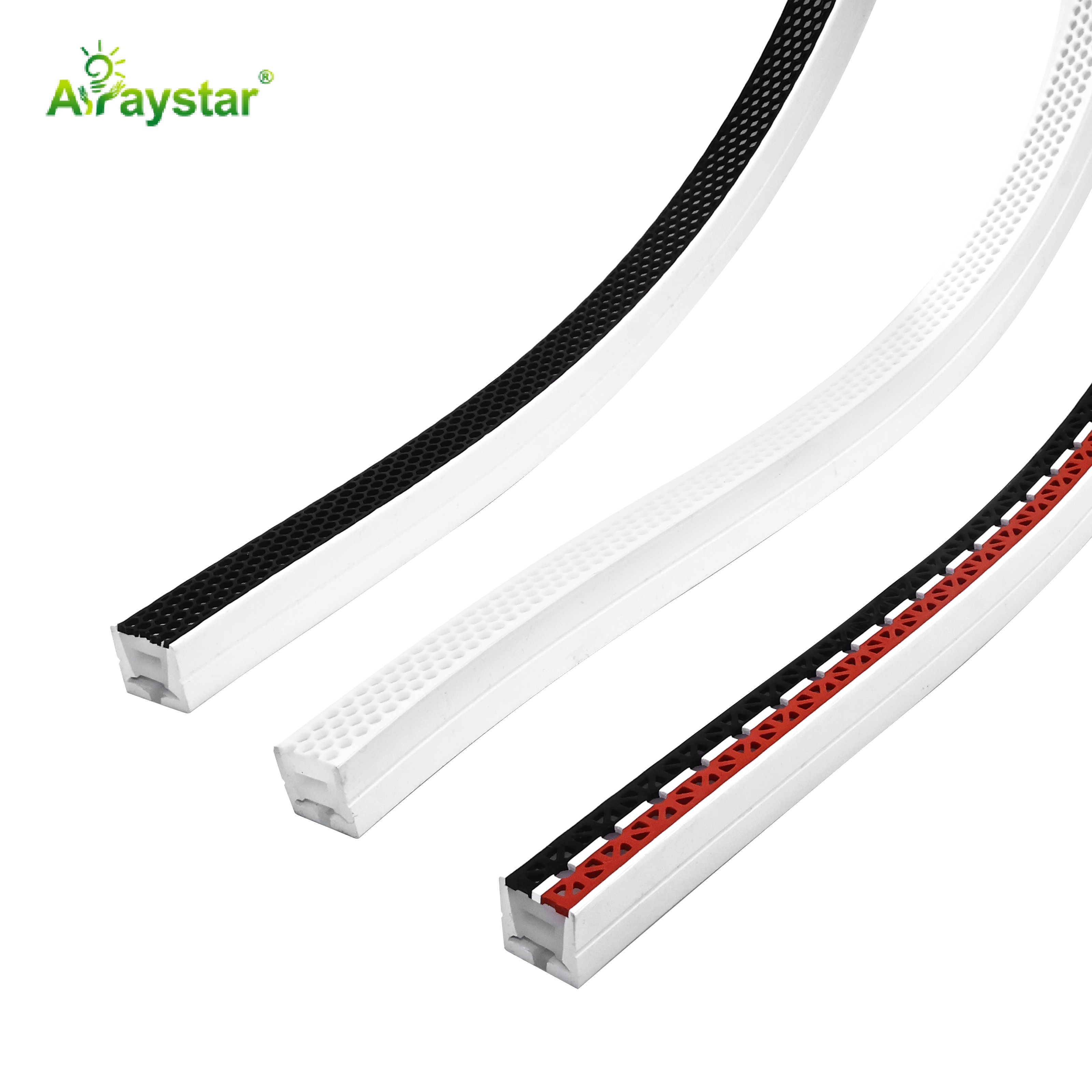
The anti-glare silicone 1616 tube is the profile I lean on for hospitality work. The larger 16x16 body and frosted face push the visible source size up and the peak brightness down, which is exactly the direction you want for spaces where people linger.
The Numbers I Use to Judge Comfort
I do not specify anti-glare neon on feel alone. There are practical metrics that correlate with whether a line feels comfortable.
Exact limits depend on the application and local code; treat these as field guidance, not certified photometry.
| Metric | What it tells you | Comfort target for occupied spaces |
|---|---|---|
| Source luminance | Brightness of the emitting surface (cd/m2) | Lower and more uniform; avoid visible hot spots |
| UGR (Unified Glare Rating) | Glare risk for an interior layout | Generally aim for low values (UGR < 19 for task areas) |
| Diffuser transmission | How much light passes the face | Lower transmission trades lumens for softness |
| Viewing geometry | Angle at which the source is seen | Keep the bright face out of the direct eye line |
For decorative wall and cove lines in restaurants, the practical test is simple: stand at the entrance and at the tables nearest the feature. If you can see individual bright points or the line leaves an after-image when you look away, the diffuser is not doing enough.
Where Anti-Glare Neon Works Hardest in Hospitality
- Hotel corridors and lift lobbies running as soft wall-wash or skirting lines that guide without dazzling.
- Restaurant and bar feature walls where the light should flatter materials and faces rather than shine in eyes.
- Guestroom headboards and mirror surrounds used as low-glare ambient and night lighting.
- Spa, salon and wellness interiors where calm, even light is part of the service.
- Reception desks and shelving bays seen at close range for long periods.
Three Installation Decisions That Reduce Glare Further
1. Set the line above or away from the eye line
A neon line mounted high in a cove or low as a skirting detail is seen obliquely, so the brightest face is never viewed head-on. A line placed at 1.5 to 1.7 metres on a bare wall is the worst-case position for glare.
2. Bounce instead of shine
Where possible, aim the neon at a light-coloured wall or ceiling and let the reflected light fill the space. Indirect light from an anti-glare tube is dramatically softer than a direct view of the source.
3. Dim to the scene
Hospitality scenes change through the day. A dimmable driver set to 30-60 percent in the evening keeps the feature visible while pushing luminance well below glare thresholds. Make sure the driver dims smoothly without flicker at low levels.
Anti-Glare Tube vs Standard Tube: A Quick Decision Table
Choose for the viewer's distance and dwell time.
| Factor | Standard clear/milky neon | Anti-glare frosted neon |
|---|---|---|
| Primary job | Maximum visible brightness | Comfort and softness |
| Best location | Outdoor signs, distant viewing | Occupied interiors, close viewing |
| Peak luminance | Higher, can show dots | Lower, broad and even |
| Raw lumens out | Higher | Slightly lower due to diffusion |
| Typical use | Storefront signage | Hotels, restaurants, spas, rooms |
Specifying It for a Project
On the enquiry I name the body size, the frosted anti-glare face and the intended dimming range, and I ask for a lit sample in the actual colour temperature. Warm 2400K to 3000K is my default for restaurants; hotels often use a tunable-white solution so scenes can shift from a bright daytime corridor to a calm evening mode.
I also confirm the diffuser is part of the extrusion rather than a cheap add-on sleeve, because a loose sleeve can create a bright seam. We supply anti-glare profiles in several body sizes and can arrange a sample box so your designer can judge the softness on the real wall finish before you specify.
A Low-Cost Mock-Up That Saves Revisions
I learned to stop trusting a glowing sample on a white bench. Glare depends on the surrounding surface, viewing angle and ambient light, so a tube that looks soft in a showroom can still feel harsh on dark timber at half a metre. Before I commit a hospitality project I build a 600 mm mock-up on the actual finish material.
- Fix a short length of the proposed anti-glare tube to an offcut of the real wall or joinery finish, not a white board.
- Power it through the same dimmer and driver the project will use, because driver quality changes low-level flicker.
- View it from the real seating and standing positions at both daytime and evening ambient levels.
- Photograph it at a normal exposure rather than a long exposure; the camera catches hot spots the eye adapts to.
- Ask someone who has not seen the mock-up to look at it; they notice glare that you have already tuned out.
On one hotel corridor the mock-up convinced the designer to move the line from eye level up into a shallow cove and to switch to a wider 16x16 anti-glare body. Both changes were cheap on paper and impossible to retrofit after the walls closed. Cleaning matters in a restaurant too: a smooth frosted face wipes down without trapping grease, whereas a deeply textured diffuser can hold it, so confirm the surface is sealed and washable in kitchen-adjacent areas.
Recommended Products
Frequently Asked Questions
Does anti-glare neon give off less light?
It releases slightly fewer raw lumens because the thicker frosted diffuser spreads and absorbs a small amount of light, but the useful, comfortable light in the space is often better. The goal in hospitality is even, low-glare ambiance rather than maximum source brightness.
What is the difference between anti-glare neon and a regular milky tube?
A regular milky tube still presents a relatively small, bright source. Anti-glare neon uses a thicker, deeper and often micro-textured diffuser over a wider emitting face to lower the surface luminance and hide individual LEDs, making it comfortable to view at close range.
Where should anti-glare neon be mounted in a restaurant?
Keep it high in a cove, low as skirting, or aimed at a wall for indirect reflected light, rather than at eye level on a bare surface. Dimming it for evening scenes further reduces glare while keeping the feature visible.
Is UGR something I need to calculate for a neon feature?
UGR is mainly used for task and office lighting layouts, but the principle applies: if a bright source sits in the field of view, glare rises. For decorative neon, the practical approach is to soften the diffuser, move the source out of the eye line and dim to the scene.
Which colour temperature is best for hotel and restaurant neon?
Warm white around 2400K to 3000K flatters skin tones and materials and feels relaxing, so it is my default for dining and guest areas. Tunable-white systems add flexibility for bright daytime and calm evening scenes.
Need help with your LED project?
Get factory-direct pricing, free samples and engineering support within 24 hours.
Email: info@arraystarled.com | Phone: +86-0755-2103-6746 | WhatsApp: 0086 1581 8514 077
Need to size your power supply? Use our LED Strip Power Calculator to find the right driver in seconds.







