
Black Silicone Neon Tubes: Hidden by Day, Glowing at Night
- 2026-10-09 18:39
- /
- Arraystar LED
On a dark facade or black ceiling, a normal milky neon tube reads as an ugly grey line in the daytime. A full-black silicone tube is almost invisible when switched off and still throws a clean, even line at night. The trick is matching the black body to a dark background and accepting that black sleeves lose some raw output compared with clear ones.
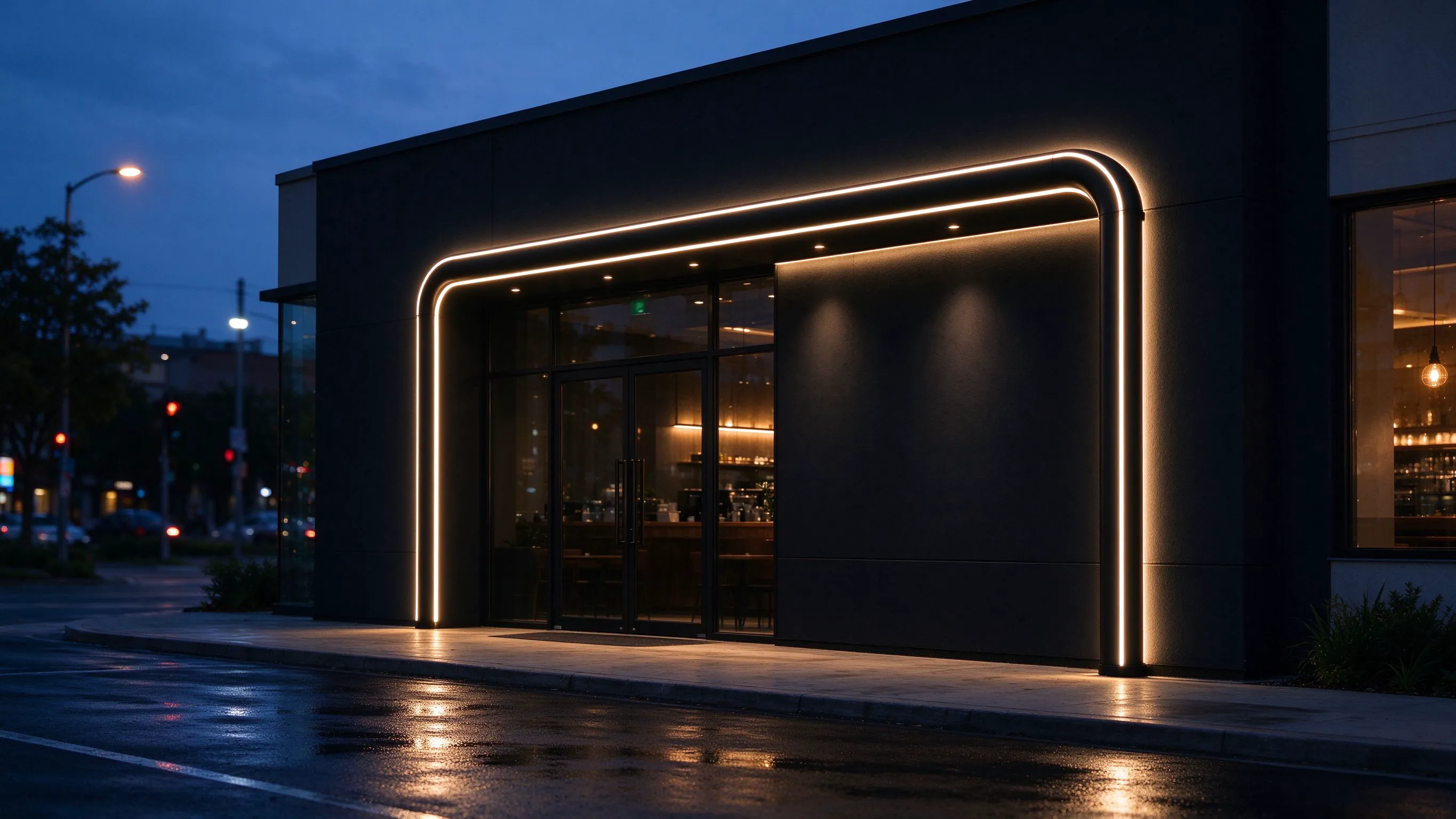
The Grey-Line Problem
A client once rejected an otherwise perfect rooftop outline for a silly reason: in daylight you could see every run of milky-white neon tubing snaking across the black powder-coated fascia. At night it looked great. At noon it looked like loose cabling. The fix was not to redesign the layout; it was to change the sleeve.
A standard neon diffuser is formulated to be white and reflective so it glows efficiently. Mount that against a black or very dark surface and the contrast works against you the moment the light is off. A full-black silicone tube solves the inverted problem: hide the hardware in daylight, reveal only the light after dark.
What 'Full Black' Really Means
There are two different products people call black neon, and ordering the wrong one is a common mistake.
Black PCB alone does not hide a white sleeve.
| Product | Body when off | Emitting surface | Best for |
|---|---|---|---|
| Black PCB + clear/milky tube | Board is dark, sleeve still light | Standard brightness | Hiding the circuit board on open strip |
| Full-black silicone tube | Entire sleeve is black | Black diffuser glows when lit | Hiding the whole run on dark backgrounds |
| Black housing neon strip | Black jacket, often side/top bend | Diffusing strip window | Dark letters and outlines with bend needs |
For the day-invisible effect you want the second option, a tube where the silicone itself is loaded with black pigment. When off it disappears against a matching dark surface. When on, the light shines through the diffusing face as a coloured or white line.
The Brightness Trade-off You Need to Plan For
Black pigment absorbs light. There is no way around the physics: a full-black diffuser lets fewer lumens out than a white or clear one. On the projects where I use it, I compensate rather than pretend it does not matter.
- Step up one LED density or wattage from the white-tube version to recover face brightness.
- Use the black tube where the background contrast is the whole point, not where maximum task light is required.
- For white output, consider a slightly higher colour temperature or a brighter bin so the line still reads cleanly through the dark diffuser.
- Sample and measure at night on the actual background before committing to a full rollout.
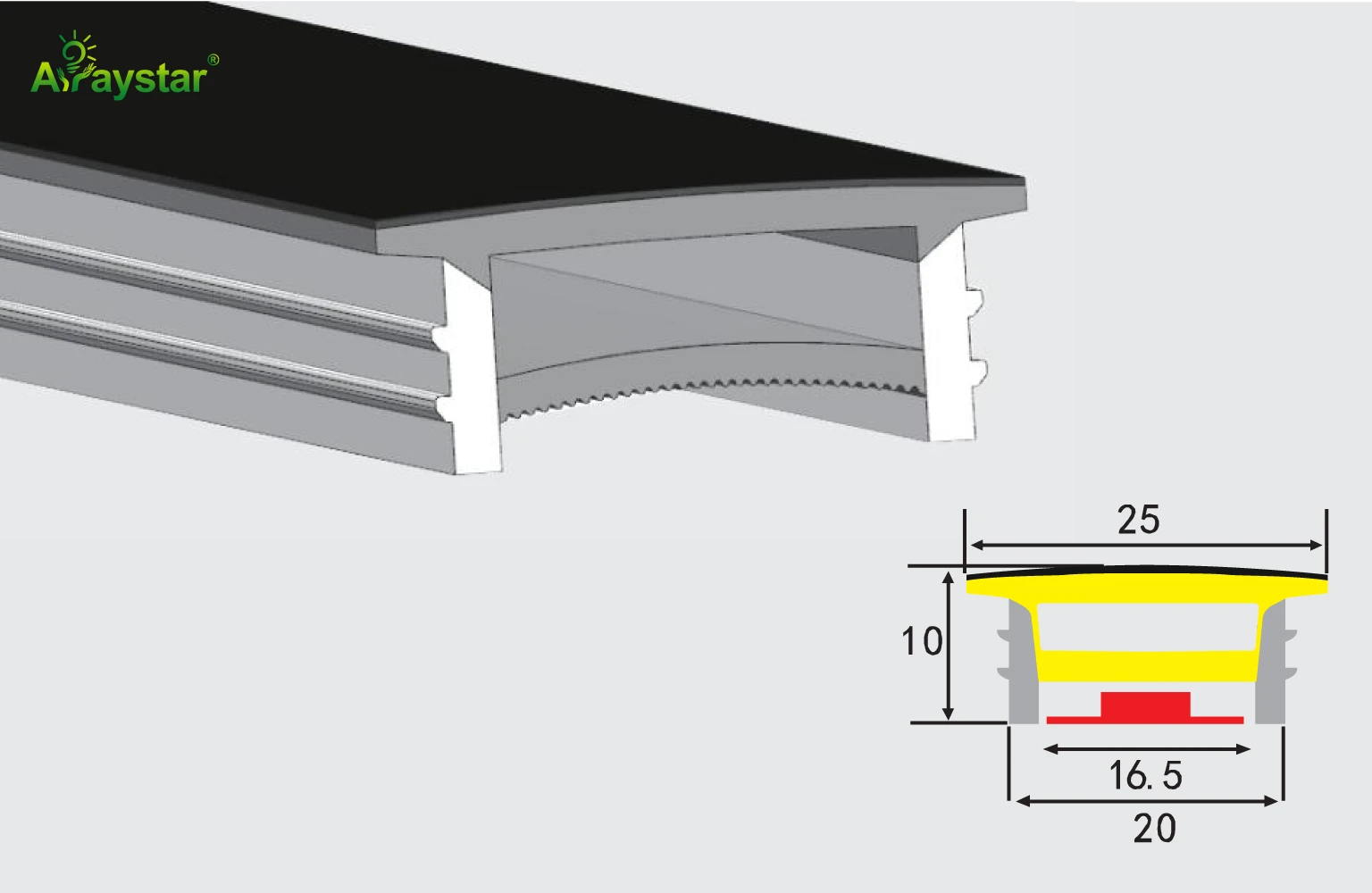
The ART-2020 full-black tube is one I have used on dark storefronts and blacked-out bar interiors precisely because the entire 20x20 body, not just the board, disappears in ambient light. The sample tells you immediately whether the glow is strong enough for the client's target brightness.
Where Black Neon Tubes Earn Their Money
Applications where I specify them
- Black or charcoal facades and soffits where white tubing would break the minimalist daytime look.
- Bars, clubs and home cinemas with dark ceilings; the neon becomes a pure light effect with no visible hardware.
- Black channel letters and dark monument signs that should show only the illuminated stroke.
- Photography and retail displays on black backdrops where the light source must not appear in reflections.
Where I avoid them
- White or light-coloured walls, where a black tube is more visible in the daytime, not less.
- High-brightness task or safety lighting where every lumen matters.
- Budget jobs that cannot absorb the step up in LED density needed to offset the dark diffuser.
Matching the Background, Not Just the Tube
The invisibility trick only works if the black is close to the surface it sits on. A jet-black tube on a medium-grey fascia still shows as a dark line. I either match the powder coat to the tube, paint the mounting channel to match, or recess the neon into a dark track so the body is shadowed.
- Use black mounting clips and channel rather than the standard silver accessories.
- Run wiring in black sleeving; a single grey cable ruins the hidden-in-daytime effect.
- Keep glue lines minimal and use black-compatible adhesive so joints do not shine.
Colour and Temperature Through a Black Diffuser
Black silicone shifts the perceived output. Deep colours such as red and blue punch through well and stay saturated; white can look slightly muted or warm depending on the pigment load. I always verify the exact colour the client wants through the actual tube. For RGB and RGBW work, budget a little extra controller headroom so colours can be driven to full intensity.
Ordering and Sampling Checklist
- Confirm the whole silicone body is black, not just a black PCB inside a clear sleeve.
- Request a lit and unlit photo of the tube on both white and black backgrounds.
- Order a sample of the target colour and density, then test it on the real facade material at night.
- Specify black clips, channels and cable for a complete daytime-hidden finish.
- Confirm outdoor grade and UV stability; black pigment does not automatically mean weatherproof.
We can supply full-black tubes in several cross-sections and will send a free sample so you can judge the off-state camouflage and the on-state brightness on your own surface before ordering.
A Bar Interior That Sold the Switch
The project that convinced one of my regular clients was a basement cocktail bar with a matte-black ceiling and exposed services. The first fit-out used standard milky neon for the back-bar outline and the ceiling perimeter. At the pre-opening walk-through in daylight the owner kept pointing at the white tubes snaking across the black; it looked like unfinished conduit rather than a design feature.
We re-ran the same outlines in full-black tube, stepped the LED density up one notch to recover brightness, and swapped every clip and cable run to black. The second walk-through was a completely different reaction: switch the lights off and the ceiling read as clean and empty; switch the scenes on and only the glowing lines appeared. The labour to change the accessories was more than the tube itself, which is a useful lesson: budget for the black clips, channel and cable from the start rather than retrofitting them.
Two years on the black sleeves are still invisible by day. The only maintenance has been wiping dust off the bar-level runs, and because the diffuser is black it does not show the yellowing that would be obvious on a white tube in the same space.
Recommended Products
Frequently Asked Questions
Will a black neon tube be dimmer than a white one?
Yes. The black pigment in the diffuser absorbs some light, so a full-black tube produces fewer usable lumens than a white tube with the same LED strip. The usual fix is to step up one LED density or wattage and to verify brightness on a night-time sample.
Is black PCB neon the same as full-black neon tube?
No. Black PCB only darkens the circuit board; the silicone sleeve can still be white or clear and remain visible in daylight. For the tube itself to disappear when off, you need a full-black silicone diffuser over the strip.
Can I use full-black neon outdoors?
Yes, provided the specific black tube is rated for outdoor use with the correct IP and UV-stable silicone. The pigment colour does not determine waterproofing, so check the IP rating and sealing details just as you would for any outdoor neon.
Which colours look best through a black diffuser?
Saturated red, blue, green and pink generally punch through black silicone strongly and stay vivid. White can look slightly muted, so it is worth sampling the white colour temperature and, if needed, increasing density to keep the line crisp.
How do I hide the neon's wiring and clips in daylight?
Use black mounting clips, black or powder-coated channel and black cable sleeving, and recess the run where possible. A full-black tube only disappears as part of an all-black assembly; one silver clip or grey wire will give the layout away.
Need help with your LED project?
Get factory-direct pricing, free samples and engineering support within 24 hours.
Email: info@arraystarled.com | Phone: +86-0755-2103-6746 | WhatsApp: 0086 1581 8514 077
Need to size your power supply? Use our LED Strip Power Calculator to find the right driver in seconds.







