
Architectural Facade & Media Facade LED Lighting: Pixels, Linear Runs and Long-Distance Control
- 2026-09-29 12:07
- /
- Arraystar LED
Building facades are big, exposed and run hundreds of meters, so the decisions that make or break a project aren't about color - they're about signal architecture, voltage drop and weather sealing. Pick the right tool: pixel nodes for low-resolution media, linear wall-wash for static texture, and high-voltage neon for long outlines. Then design the control and power distribution before you order a single meter.
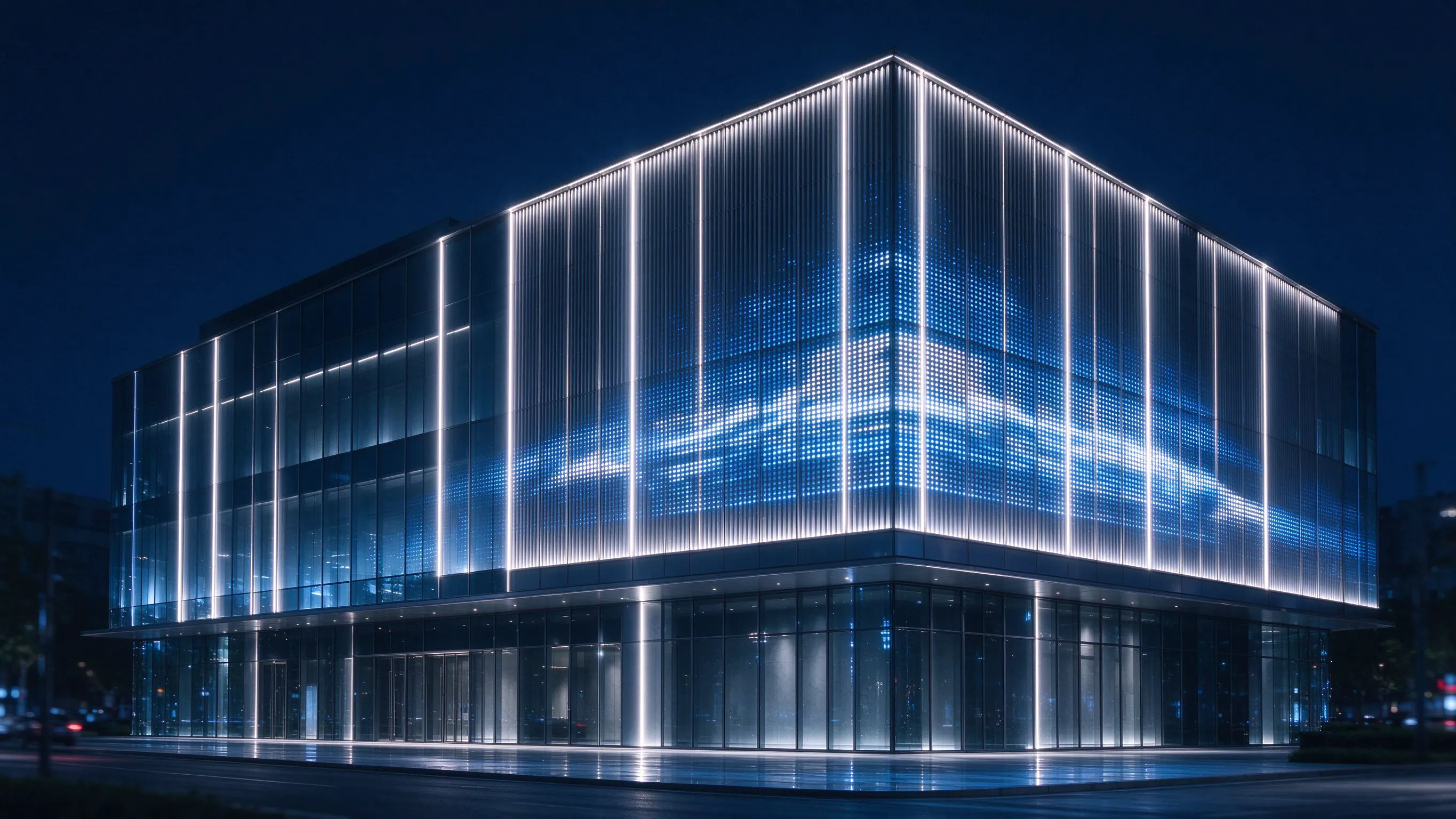
Three Different Products for Three Different Facade Jobs
'Facade lighting' gets used as one phrase, but a building elevation usually needs three distinct things and they use different hardware. Outline and linear runs trace edges and floors. Wall-washing lights the surface itself for texture and brand color. And a media facade - a low-resolution screen that plays graphics - needs individually addressable pixels on a grid.
Matching the light source to the architectural effect.
| Goal | Product | Typical pitch / spacing |
|---|---|---|
| Crisp building outline / floor lines | High-voltage neon flex or rigid linear | Continuous line |
| Wash a wall with color / texture | Flex or rigid wall-washer bar | 0.5-1.5m apart, edge-lit |
| Low-res media / graphics / logos | Addressable point-light nodes | 50-150mm grid (P50-P150) |
| Fine-pitch media (closer viewing) | Dense pixel strip / mesh | 20-50mm grid |
| Contour that survives long runs | 220V/110V AC neon | Single runs 20-100m |
Mixing these up is expensive: spec'ing dense point lights for a 40-story static outline wastes a fortune, while trying to play video on a wall-wash just produces a blur.
Media Facades: Point Lights on a Grid
A media facade is essentially a giant, very low-resolution display. Individual point-light nodes mount on a grid across the facade; the closer the nodes (the 'pixel pitch'), the sharper the image and the more nodes and controllers you need. For a building viewed from across a street or a plaza, P50 to P100 (50-100mm spacing) is common; for a tower viewed from hundreds of meters, P100-P200 still reads clearly.
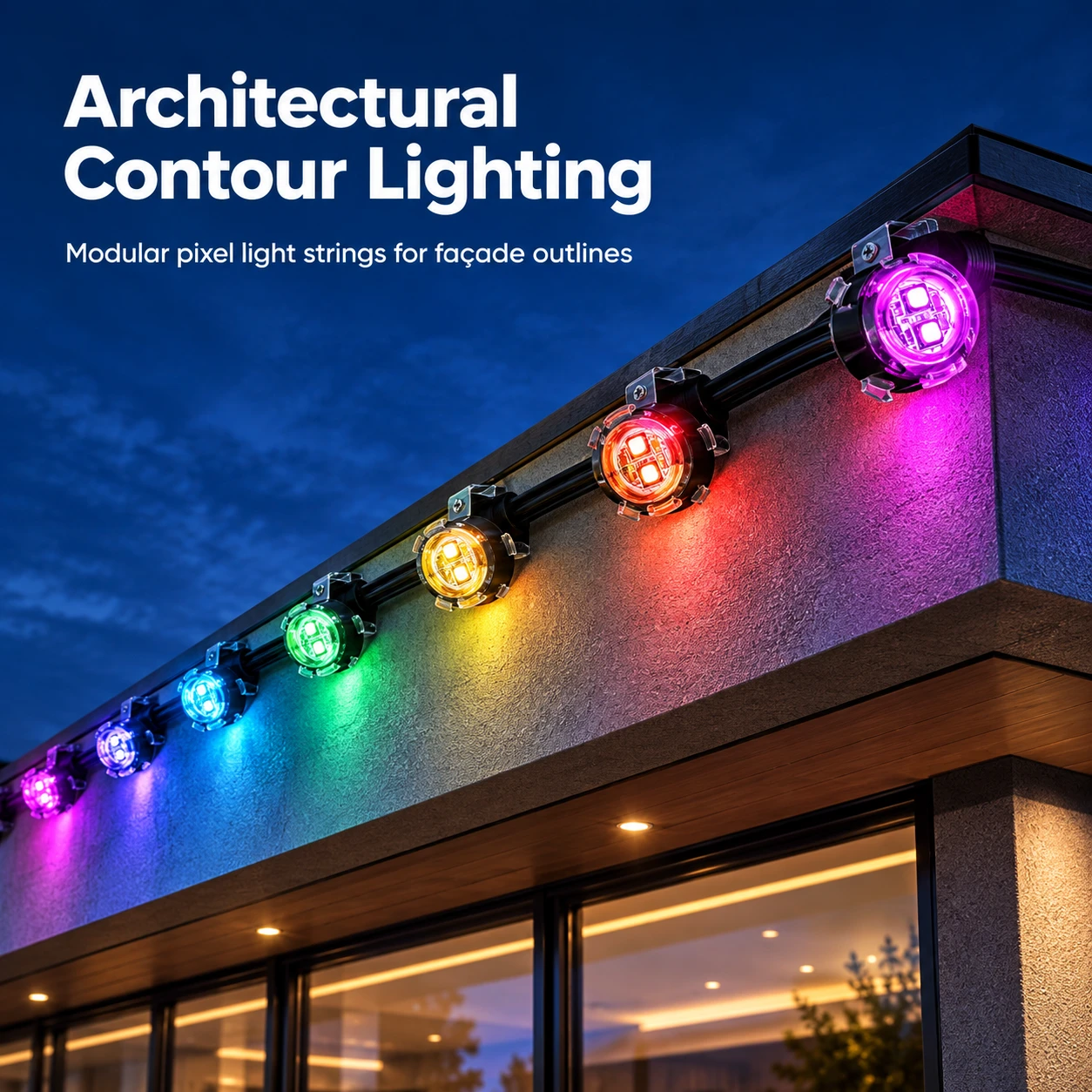
- Estimate pixel count from facade area divided by pitch squared - it climbs fast, so model it before quoting.
- Nodes are wired in strings/rows by signal protocol (DMX512, SPI via Art-Net, or proprietary).
- Each node must be IP67/IP68 and UV-rated; cheap plastic yellows and cracks in two summers.
- Mounting clips or rails must be designed into the cladding - retrofitting means scaffolding twice.
Static Outline: Why High-Voltage Neon Wins on Long Runs
Tracing the edges and floor lines of a tall building with 12/24V strip means a power feed every 5-10 meters - on a 100-meter tower that's dozens of drivers and cable drops. High-voltage (220V/110V) neon flex and linear lights run 20 to 100 meters from a single feed, which is why outline work on large buildings almost always goes high-voltage. Vertical-bend neon handles the corners where floor lines turn.
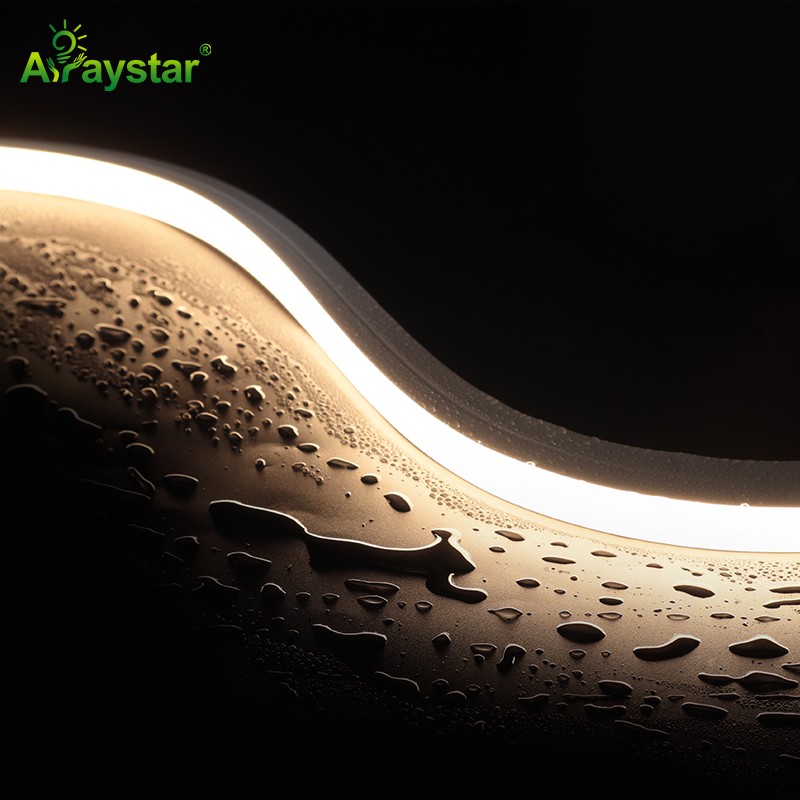
High-voltage products demand correct insulation, strain relief and compliance with local electrical code - this is licensed electrician work, not DIY. The payoff is dramatically simpler power distribution and far fewer failure points up the building.
Washing the Wall: Linear Bars and Flex Wall-Wash
Wall-wash is how you give a facade color and reveal its material - stone, glass fins, perforated metal. Linear wall-washer bars or flexible wall-wash strip mount at the top, bottom or between floors and throw a beam across the surface. Beam angle and distance set the overlap; mount too close with a narrow beam and you get scallops, too far with a wide beam and the color washes out.
- Overlap adjacent beams to avoid hot spots and dark gaps - light the overlap, not the edge.
- Grazing (light close to the wall) exaggerates texture; washing (further away) smooths it.
- RGBW linear bars give usable white as well as brand color.
- For tall walls, stage bars at intermediate floors rather than trying one throw from ground level.
Control Architecture: DMX, Art-Net and Mapping a Building
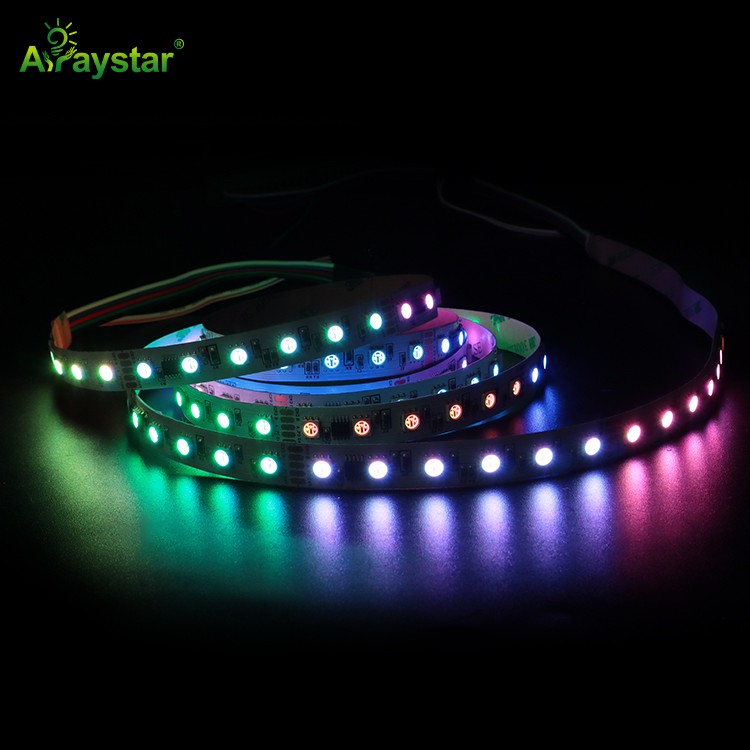
This is where facade projects actually succeed or fail. DMX512 is the lighting-industry standard - each 'universe' carries 512 channels, and a big media facade needs many universes. Art-Net (or sACN) carries those universes over Ethernet from a controller or media server to DMX/SPI decoders distributed around the building. You map every pixel to a channel address in software, which is the 'addressing' labor of the job.
Scaling the control system with facade size.
| Scale | Control approach | Typical hardware |
|---|---|---|
| Small outline / single wall | Standalone RGBW controller | DMX decoder + remote |
| Multi-zone color facade | DMX512 console / scheduler | Decoders per zone, time clock |
| Media facade (graphics) | Art-Net/sACN media server | Ethernet switches + SPI/DMX nodes |
| Multiple buildings | Networked Art-Net over fiber | Master controller + fiber distribution |
Keep controllers and power supplies in weatherproof cabinets or plant rooms, label every run, and design the system so one failed decoder doesn't black out a whole floor. Signal repeaters and Ethernet-to-DMX nodes are placed locally to keep cable runs short.
Weather, Access and the Maintenance Reality
Anything on a facade is exposed to UV, rain, freeze-thaw and wind, and replacing it means rope access or a cherry picker. Spend the money up front on UV-stabilized, IP67/IP68 product, marine-grade stainless fixings, and serviceable connections. Spec gear rated for the local climate - coastal salt air demands 316 stainless and sealed enclosures.
- IP67/IP68 rated light sources and junction boxes; drainage in every housing.
- Surge protection on mains and data - tall buildings get lightning-induced surges.
- Design in accessible service points at each floor rather than sealed-in runs.
- Keep spare pixel nodes and drivers from the same production batch for future repair.
Recommended Products
Frequently Asked Questions
What's the difference between a media facade and regular facade lighting?
Regular facade lighting uses static or color-changing outline and wall-wash to illuminate the building; a media facade is a grid of individually addressable pixel nodes that acts as a giant low-resolution screen capable of graphics, logos and video. Media facades need far more nodes, controllers and channel mapping.
What pixel pitch do I need for a building media facade?
It depends on viewing distance: roughly P50-P100 for buildings viewed across a street or plaza, and P100-P200 for tall towers seen from hundreds of meters away. Closer viewing needs tighter pitch and many more nodes, so model pixel count and cost before specifying.
Why use high-voltage neon instead of 12V strip on a tall building?
Because 12/24V strip needs a power feed every 5-10 meters, which means dozens of drivers and cable drops on a tall outline. 220V/110V neon runs 20-100 meters from one feed, massively simplifying power distribution, though it requires proper high-voltage installation by a licensed electrician.
How are media facade pixels controlled?
Pixels are addressed over DMX512 or SPI, with many DMX 'universes' carried over Ethernet via Art-Net or sACN from a media server to distributed DMX/SPI decoder nodes. Each pixel is mapped to a channel address in software, and repeaters/decoders are placed locally around the building.
How do I make facade LED lighting last outdoors?
Use UV-stabilized IP67/IP68 light sources, marine-grade 316 stainless fixings in coastal areas, sealed and drained junction boxes, surge protection on mains and data, and accessible per-floor service points with spare nodes from the same batch kept for repair.
Need help with your LED project?
Get factory-direct pricing, free samples and engineering support within 24 hours.
Email: info@arraystarled.com | Phone: +86-0755-2103-6746 | WhatsApp: 0086 1581 8514 077
Need to size your power supply? Use our LED Strip Power Calculator to find the right driver in seconds.







