
Home Theater LED Strips & Star Ceilings: Bias, Cove and Starfield Lighting Without the Glare
- 2026-09-29 12:07
- /
- Arraystar LED
In a dark home theater, light placement is everything - bright or bare LEDs will reflect off the screen and wreck contrast. The winning build uses low-level indirect layers: bias light behind the screen or display wall, dim cove light around the ceiling, optional step/aisle lights, and an addressable starfield if you want the 'wow'. Everything must be RGBW (so your white is actually white) and dimmable to near-off.
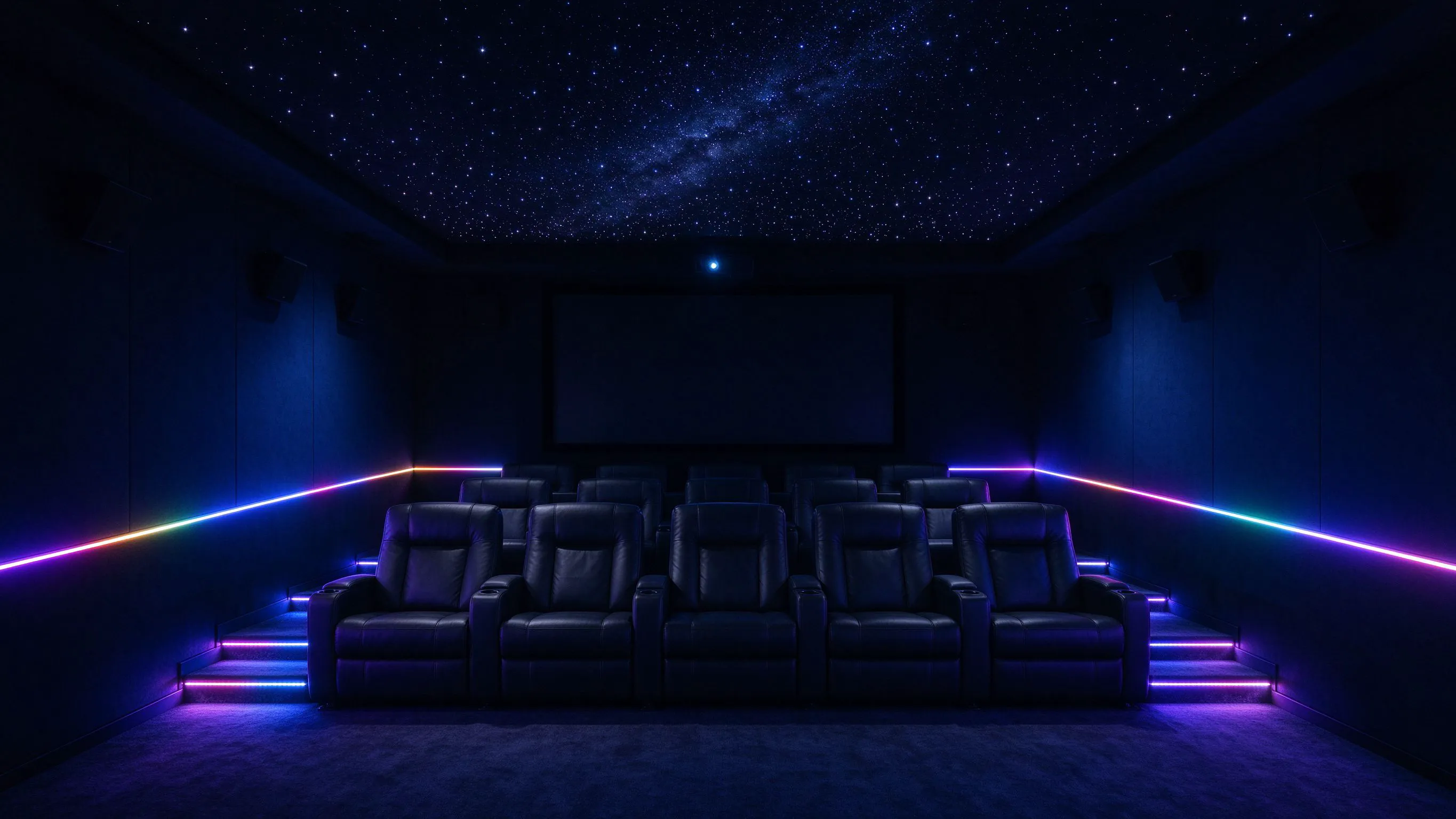
The Golden Rule: Never Fight the Screen
A projector or big TV in a dark room is the brightest thing around, and your eyes adapt to it. Add bright room light and two things happen: black levels wash out, and light reflects off the screen surface, killing contrast. Theater lighting therefore lives at low levels, points away from the screen, and is almost always indirect.
The goal isn't to light the room like a living room - it's to define the space, reduce eye strain during long films, and let people navigate, without touching the image. Plan every fixture so no direct light or glossy reflection can land on the screen from the main seating positions.
Layer One: Bias Light Behind the Screen
Bias lighting - a soft glow immediately behind the display - raises perceived contrast and reduces eye fatigue by making the bright screen less harsh against a black wall. Keep it dim (roughly 5-10% of the screen's peak brightness is the common guidance) and, for film, use a neutral D65-ish white around 6500K rather than saturated color, which skews your color perception.
- For a TV, run strip along the back edges or use a bias bar; match it to the wall color behind.
- For a projector screen wall, wash the wall around the screen frame, never onto the screen material.
- RGBW strip is strongly preferred - pure-RGB 'white' looks tinted and fatigues the eyes.
- Optional: an HDMI sync box makes bias color follow the picture, but static bias is better for critical watching.
Layer Two: Ceiling Cove and Soffit Glow
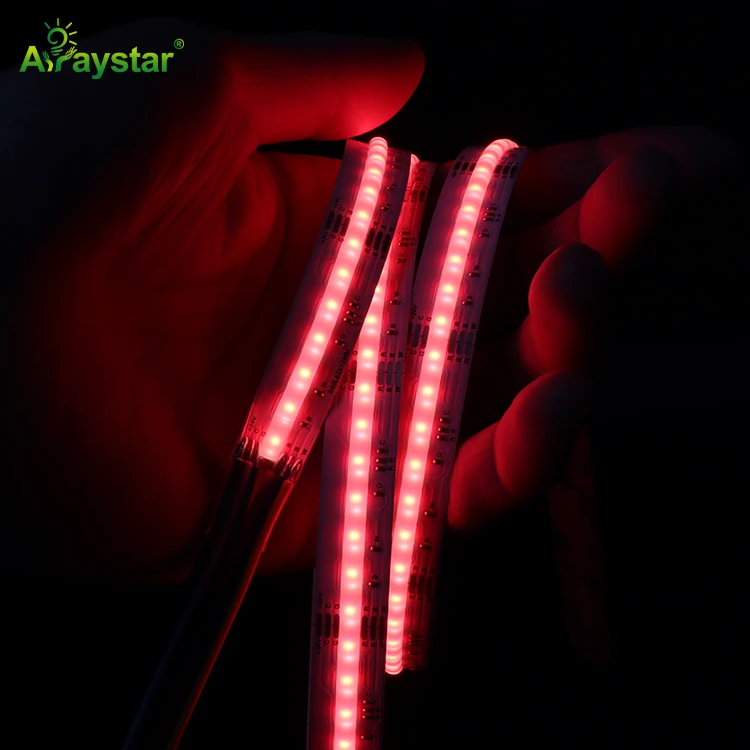
A continuous dim cove around the ceiling or a tray soffit gives the room a cinematic frame and enough ambient to find the popcorn. Run dot-free RGBW COB in a trimless recessed profile so you see only a soft line of light. During films keep it at a whisper of warm or neutral white; use color only for intermission or gaming.
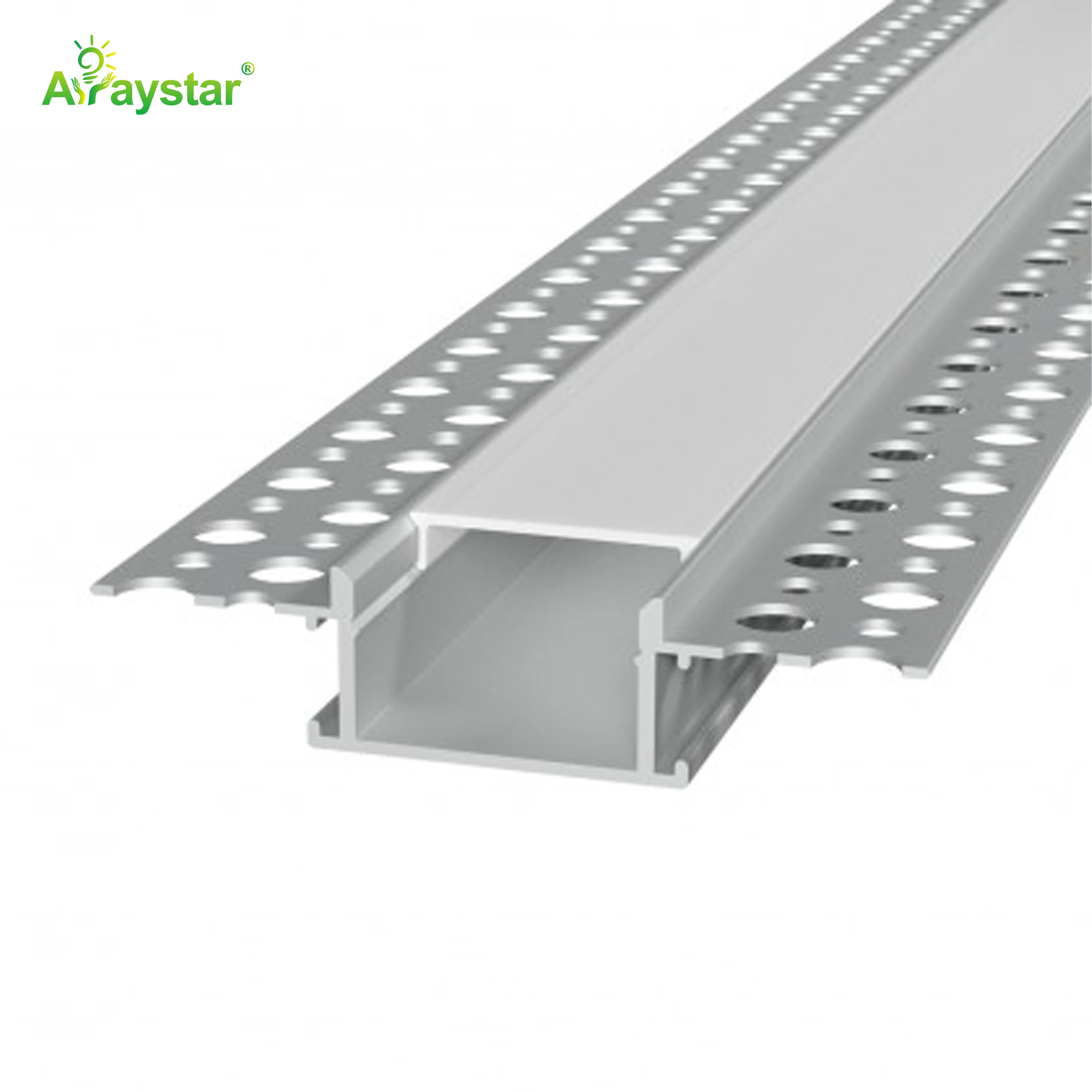
Plaster-in trimless channels are worth the effort in a dedicated theater - they vanish into the ceiling and avoid the visible aluminum that reads as 'LED tape installed after the fact'.
Layer Three: Step, Aisle and Riser Lights
In a riser-seated or tiered theater, low-level step lights are a safety requirement, not decoration. Tiny warm strips recessed under each stair nosing or along the aisle edge, aimed at the floor, mark the route without spilling light upward. Keep them very dim and warm (2200-2700K) so they don't draw the eye off-screen.
- Aim all step light straight down at treads; shield it from seated eye height.
- Use a separate low-brightness circuit so steps can stay on while cove is off during films.
- Honeycomb or louvered channels prevent upward spill.
- A single warm color is best - colored aisle lights look like an arcade.
The Star Ceiling: When You Want the Showpiece
A fiber-optic starfield is the classic theater showpiece, but addressable LED strips and pixel modules give you a more flexible - and cheaper - version: a twinkling RGB or white starfield, optional shooting-star trails, and color scenes for music and gaming. Drive it with an addressable controller and keep brightness low; a subtle twinkle beats a bright light show during movies.
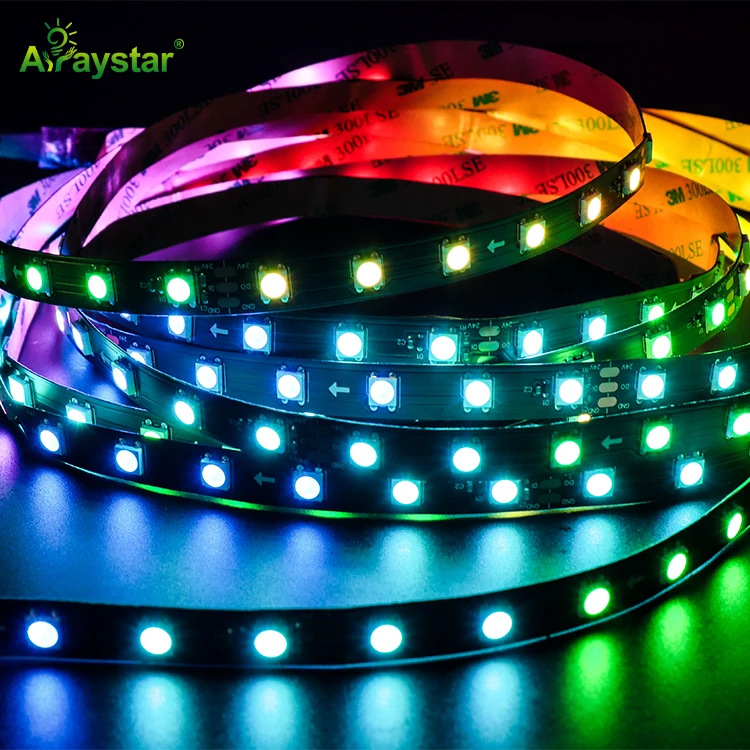
- Use warm-white or dim RGB pixels; pure blue/red ceilings feel themed rather than premium.
- Separate the starfield onto its own control zone and scene ('Movie' = near-off faint stars, 'Demo' = animated).
- Dot-free RGBW COB is the better choice for cove/bias; reserve addressable pixels for the starfield and effects.
- Plan cable routes and controller access above the ceiling before drywall goes up.
RGBW vs RGB, Control and Black-Level Detail
This is the room where RGBW (or RGBCCT) earns its price. Pure RGB strips make white by mixing red, green and blue, and the result is a tinted, lower-CRI glow that looks cheap for bias and cove white. RGBW adds a dedicated white LED; 5-in-1 RGBCCT adds warm and cool white channels, giving accurate neutral bias light plus full color for effects.
Matching strip type to each theater layer.
| Need | Recommended strip | Why |
|---|---|---|
| Neutral bias / accurate white | RGBW or RGBCCT COB | True white, better CRI, less fatigue |
| Cove ambient | RGBW COB in trimless profile | Seamless, dim, color + white |
| Starfield / effects | Addressable SK6812/WS281x pixels | Per-LED animation, twinkle, trails |
| Step / aisle | Single-color warm SMD/COB | Low glare, safety-focused |
| Control | Multi-zone RGBW controller + remote/app | Independent scenes per layer |
Give every layer its own zone so you can run 'Movie' (bias faint, steps dim, cove off), 'Intermission' (cove up, color), and 'Cleaning' (full white). A single zone that forces everything on together ruins the effect.
Recommended Products
Frequently Asked Questions
What color should TV bias lighting be?
For serious movie watching use a dim neutral white around 6500K (D65) at roughly 5-10% of screen brightness, which reduces eye strain without skewing colors. Colored bias is fine for gaming or casual viewing but distorts perceived color during films.
RGB or RGBW strips for a home theater?
RGBW, ideally RGBCCT. Pure RGB produces a tinted, low-CRI white that looks off for bias and cove lighting and fatigues the eyes; a dedicated white channel gives clean neutral light while keeping full color for effects and intermission.
How bright should home theater LED lighting be?
Very dim during films - bias at about 5-10% of screen brightness, cove at a faint glow, and step lights just bright enough to navigate. The lighting should define the room and aid safety without raising the ambient enough to wash out the image.
How do I make a DIY LED star ceiling?
Run addressable SK6812/WS281x pixel strip or modules above a perforated or fabric ceiling panel, driven by a pixel controller, with a separate dim 'Movie' scene showing faint warm-white twinkle and an animated 'Demo' scene. Keep it subtle and on its own zone so it can be near-off during films.
Where do step lights go in a tiered home theater?
Recess small warm (2200-2700K) strips under stair nosings or along aisle edges, aimed straight down at the treads and shielded from seated eye height, on a separate low-brightness circuit that can stay on during movies.
Need help with your LED project?
Get factory-direct pricing, free samples and engineering support within 24 hours.
Email: info@arraystarled.com | Phone: +86-0755-2103-6746 | WhatsApp: 0086 1581 8514 077
Need to size your power supply? Use our LED Strip Power Calculator to find the right driver in seconds.







