
ArtNet-DMX512 EN-508 Controllers for Media Facades
- 2026-10-09 18:41
- /
- Arraystar LED
Permanent media facades and large architectural pixel arrays cannot rely on WiFi app controllers; they need engineered Ethernet hardware that converts ArtNet/DMX512 universes from a control room into stable output for thousands of pixels. The EN-508 ArtNet-DMX512 controller is that professional conversion layer for building-scale, permanently installed media facades.
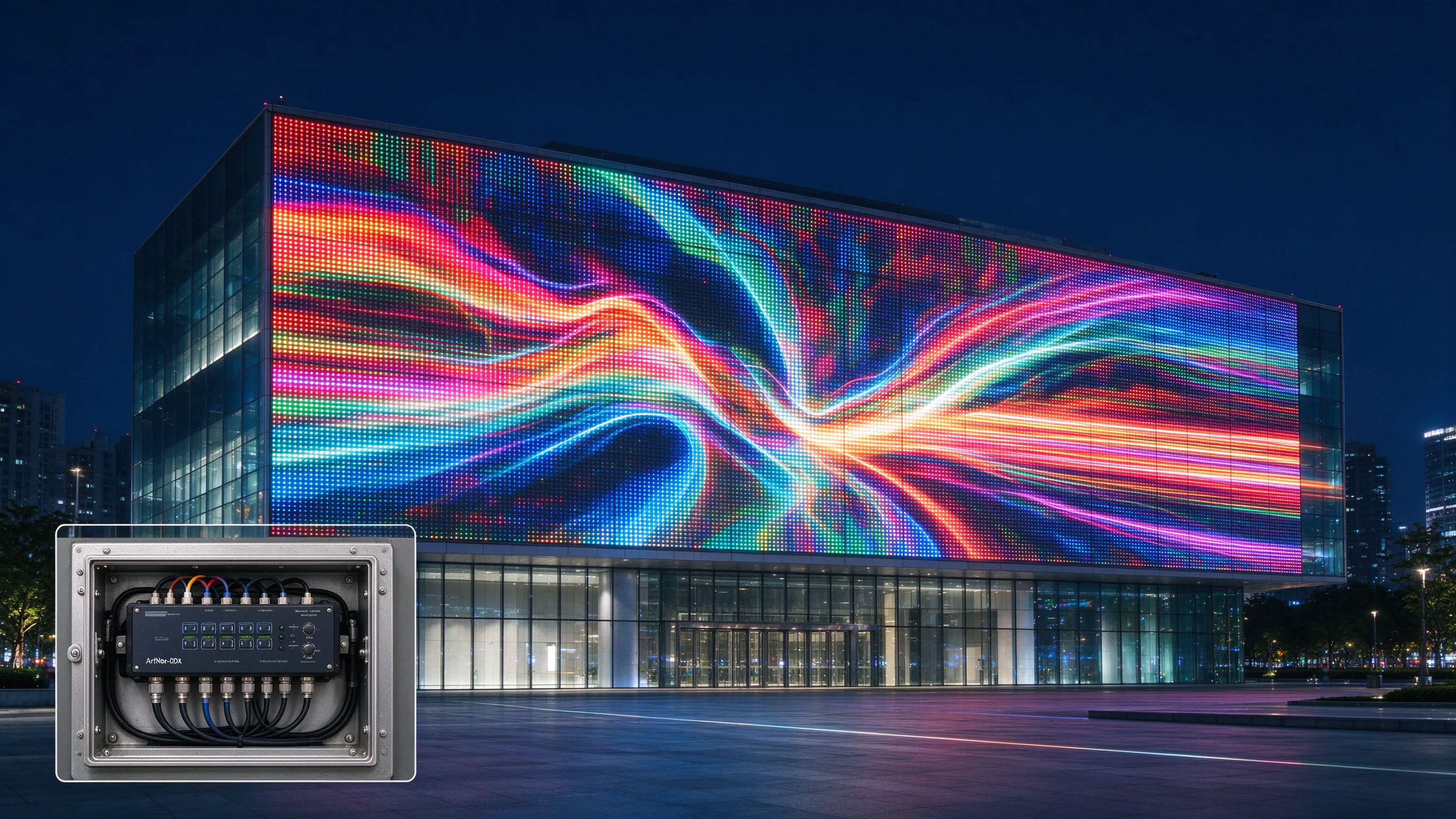
Why Facades Need Engineered Control Hardware
A media facade is a different problem from a club matrix. It runs thousands or tens of thousands of pixels across the exterior of a building, must operate unattended for years in all weather, receives content from a central control room over Ethernet, and cannot tolerate WiFi dropouts, consumer-grade power or controllers that need a phone nearby.
These installations require a permanent converter that takes standard ArtNet or DMX512-over-Ethernet universes and outputs stable pixel data across many channels, engineered for continuous professional duty.
What the EN-508 Provides
- ArtNet to DMX512 / pixel conversion over Ethernet.
- Multiple universe handling for large pixel arrays.
- Stable output for permanent, unattended facades.
- Integration with media servers and building control.
- Engineered reliability beyond consumer WiFi controllers.
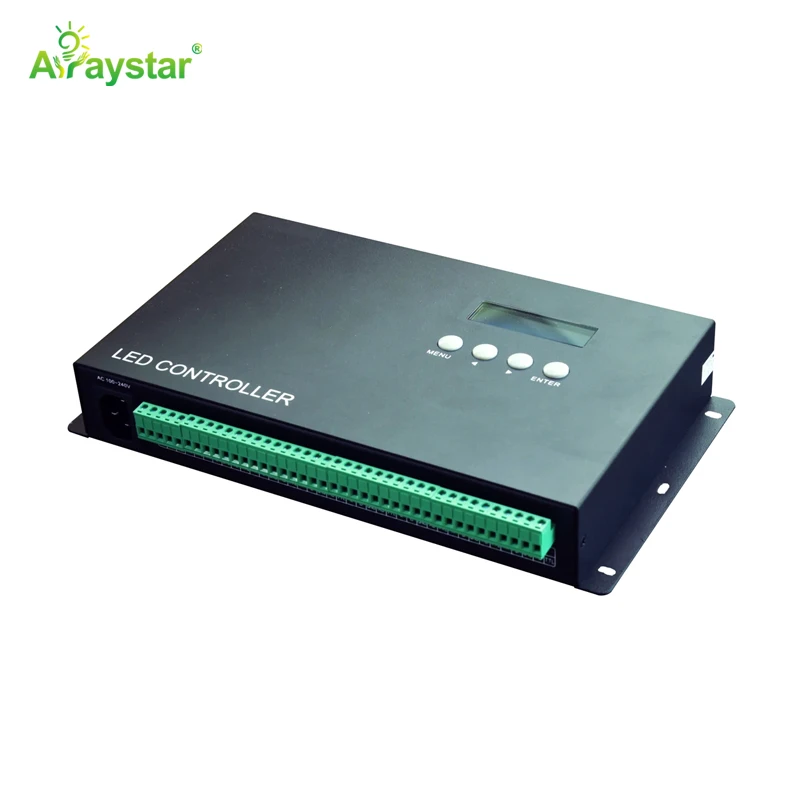
For permanent media-facade work I specify the EN-508 ArtNet-DMX512 controller. It is the engineered bridge between the control-room network and the physical pixel array.
Consumer Controller vs Facade-Grade Hardware
Permanent building-scale work demands wired, engineered conversion.
| Factor | WiFi/app controller | EN-508 facade controller |
|---|---|---|
| Connection | WiFi | Wired Ethernet |
| Duty | Intermittent, attended | Continuous, unattended |
| Scale | A few universes | Large multi-universe arrays |
| Reliability target | Convenience | Years of 24/7 operation |
| Integration | Phone / PC app | Media servers / BMS |
Where the EN-508 Is Deployed
- Building media facades and large exterior pixel grids.
- Stadium, arena and civic architectural lighting.
- Permanent installations driven from a central control room.
- Shopping mall atria and large-scale commercial media features.
- Projects integrated with media servers and show scheduling.
Universe and Channel Planning
Facade projects live or die by upfront data planning. I calculate total pixels and the channels they consume, divide the array across controllers and universes within each device's limits, assign network addresses, and document the full mapping so content creators can design to the real pixel grid. The physical layout, panel segmentation and controller outputs must match the media server's configuration exactly, so I produce a pixel-map drawing rather than configuring devices ad hoc on site.
- Count total pixels and channels before choosing controllers.
- Divide the facade into panels matched to controller outputs.
- Assign fixed network addresses and document the map.
- Give content designers the exact pixel grid to author against.
Network Architecture for Stability
ArtNet and E1.31 traffic on a facade should run on a dedicated wired network, isolated from general IT traffic, with managed switches, fixed IP addressing and careful universe routing. I specify network equipment rated for continuous operation, plan bandwidth so the lighting traffic is not competing at show time, and coordinate with the building's IT team rather than attaching critical show data to an office network. This discipline is what separates a facade that runs for years from one that stutters whenever network load changes.
Redundancy, Power and Remote Management
Permanent facades benefit from redundancy in both control and power: controllers grouped so a single fault affects only a section, industrial power supplies, and remote monitoring or auto-restart so the show recovers after a power event without a site visit. I house controllers in ventilated rack or cabinet space, provide surge protection on exterior systems, and configure the content to auto-run on power-up so the facade returns to its scheduled state independently.
Specifying a Media Facade System
Send the facade dimensions and pixel grid, total pixel count and pitch, content source and scheduling, control-room location, network constraints and required redundancy. I will confirm the EN-508 controller count, universe plan, network architecture, power and panel mapping. We supply the EN-508 and recommend a factory bench test of the full data chain with a representative panel section before site installation, so mapping and stability are proven off the building.
Commissioning and Handover on a Facade Project
Facade control hardware is only as good as its commissioning, and the EN-508 class devices reward a structured handover that most projects under-plan. I treat commissioning as a distinct phase with its own tests and documentation, because a media facade is handed to a client's facilities team who will live with it for years without the installing technicians present.
- Bench-test every controller and a representative panel in the workshop before anything goes on the building.
- Verify each ArtNet universe end to end from the media server to its physical panel using test patterns.
- Confirm failover and auto-restart by deliberately cutting power and network during commissioning.
- Record fixed IP addresses, universe assignments and panel-to-port mapping in a handover document.
- Train the facilities team on restarting the show, replacing a controller and contacting support.
On a civic facade we commissioned, the most valuable half-day was the failure rehearsal: we powered down controllers, pulled network feeds and killed the mains in turn, then confirmed that the scheduled content auto-recovered and that any single fault lit only its own panel rather than blanketing the building. Problems found in that controlled rehearsal, a misconfigured auto-start on one controller and a missing spare fuse in the cabinet, would otherwise have appeared as an embarrassing dark section on the launch night. We delivered a marked-up network and panel map, a binder of controller settings and a small stock of spares, and we trained two facilities staff through the restart and isolation procedure. The EN-508 hardware itself was straightforward; the difference between a facade the client can operate confidently and one that requires an emergency service call for every minor event was entirely in that commissioning and handover discipline. I now insist on the failure rehearsal and written map as line items in every facade quotation rather than optional extras, because permanent architectural media is judged over years of unattended operation, and the client's ability to recover a show without the original installer is the true measure of a professional system.
Recommended Products
Frequently Asked Questions
What is an EN-508 ArtNet-DMX512 controller?
It is professional wired-Ethernet hardware that converts ArtNet or DMX512-over-Ethernet universes from a media server or control room into output for large addressable pixel arrays. It is engineered for continuous, unattended operation on permanent media facades rather than the intermittent WiFi use of consumer app controllers.
Why not use WiFi controllers on a building facade?
Facades run thousands of pixels continuously and unattended, where WiFi dropouts cause visible stutter, consumer hardware is not built for 24/7 duty, and content originates from a central control room. Wired Ethernet ArtNet-DMX hardware like the EN-508 offers deterministic delivery, multi-universe capacity and long-term reliability that WiFi app controllers cannot match at that scale.
How do you plan universes for a media facade?
Calculate total pixels and channels, divide the array into panels matched to controller outputs within each device's universe limits, assign fixed network addresses, and document the complete pixel map so the media server configuration and content authoring match the physical grid exactly. Use a pixel-map drawing rather than configuring devices ad hoc on site.
What network setup does a permanent facade need?
A dedicated wired network isolated from general IT traffic, with managed switches, fixed IP addresses, bandwidth planned for the lighting universes and coordination with building IT. Deterministic isolated networking prevents the stutter that occurs when show data competes with office traffic or rides on unreliable wireless links.
How is a media facade kept reliable and recoverable?
Group controllers so one fault affects only a section, use industrial power supplies with surge protection, house controllers in ventilated rack or cabinet space, add remote monitoring or auto-restart, and configure content to auto-run on power-up so the facade returns to its scheduled state after an outage without a site visit.
Need help with your LED project?
Get factory-direct pricing, free samples and engineering support within 24 hours.
Email: info@arraystarled.com | Phone: +86-0755-2103-6746 | WhatsApp: 0086 1581 8514 077
Need to size your power supply? Use our LED Strip Power Calculator to find the right driver in seconds.







