
H807SA 8-Channel DMX-to-SPI Converters for Big Pixel Installs
- 2026-10-09 18:41
- /
- Arraystar LED
Large pixel installations are usually split into many separate runs and panels, and driving each from its own controller multiplies hardware and complexity. The H807SA provides eight DMX-to-SPI outputs on one device, accepting ArtNet/DMX and driving eight independent pixel runs or panels in parallel, which simplifies wiring and synchronisation on big installs.
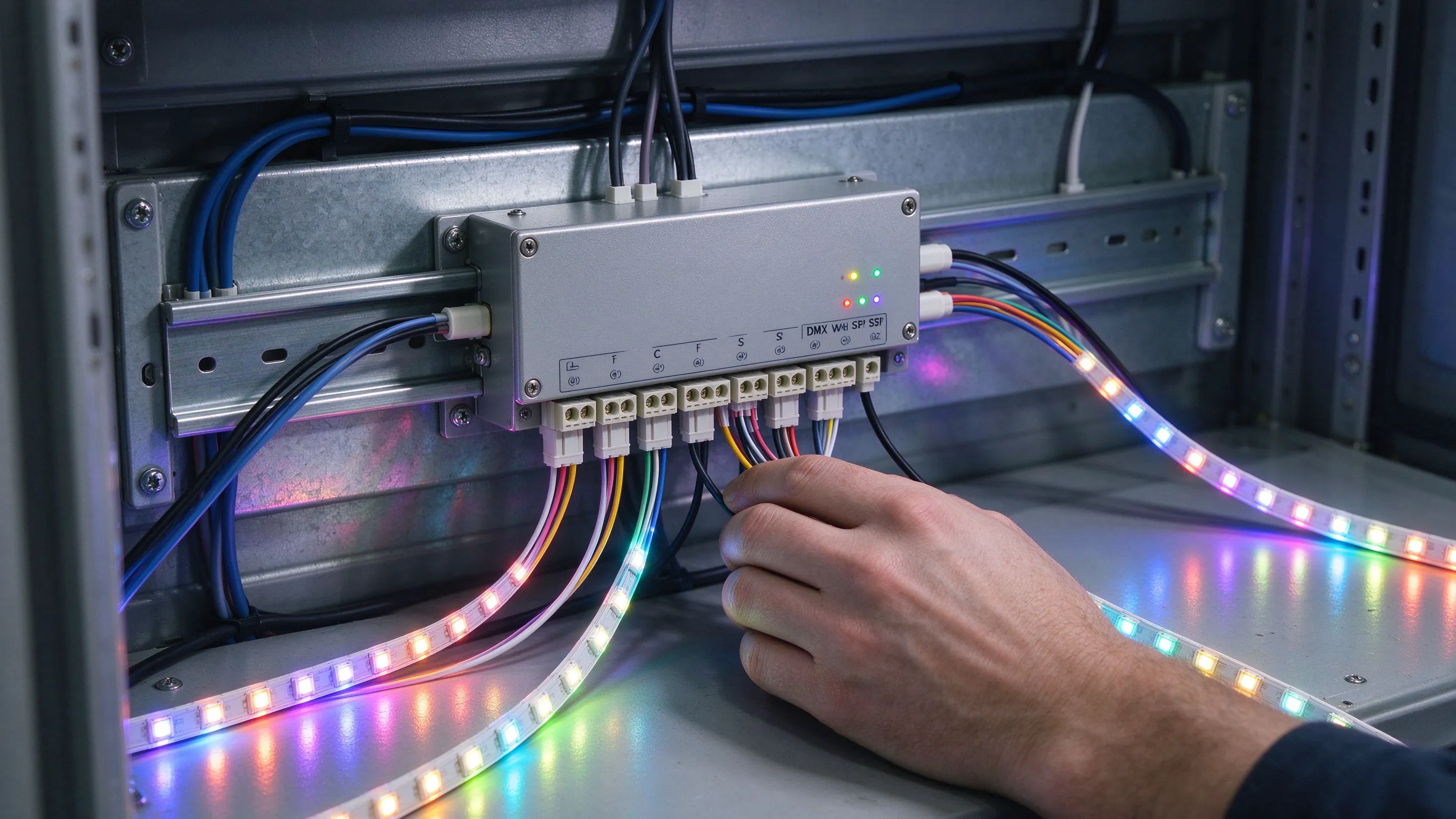
The Multi-Run Problem on Big Pixel Jobs
A large pixel feature is rarely one continuous strip. It is many runs, panels, cabinet segments or facade zones, each needing its own data output. Using a single-output controller for every run means a pile of devices, separate power and network connections, more points of failure and a harder job keeping everything synchronised.
What installers need is a multi-port converter that accepts the show data centrally and fans it out to many independent SPI runs from one box, which is exactly the role of an eight-channel DMX-to-SPI controller.
What the H807SA Offers
- Eight independent DMX-to-SPI outputs on one controller.
- Drives eight separate runs or panels in parallel.
- ArtNet/DMX input from media systems or consoles.
- Synchronised output across all eight ports.
- Less hardware, simpler wiring and fewer failure points.
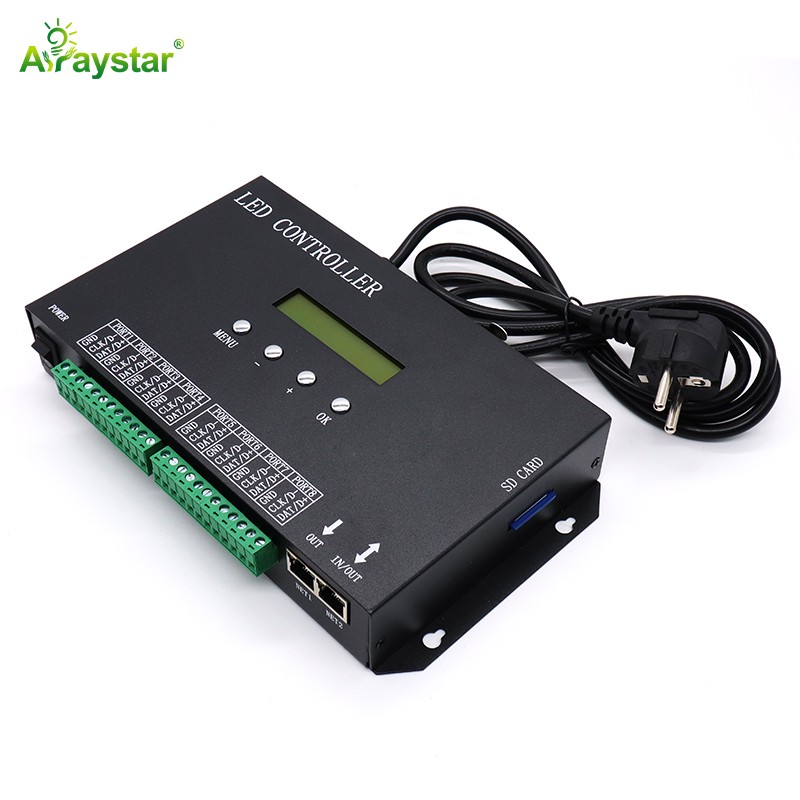
For multi-run pixel installations I use the H807SA. One device replaces a stack of single-output controllers and keeps the segments synchronised.
Single-Output vs Eight-Channel Control
An eight-port converter consolidates multi-run control into one device.
| Factor | Eight single-output boxes | One H807SA |
|---|---|---|
| Devices for 8 runs | 8 | 1 |
| Network / power connections | Many | Centralised |
| Synchronisation | Harder across boxes | Native across ports |
| Mounting / space | Spread out | One compact location |
| Fault isolation | Per box | Per output port |
Where Eight Outputs Matter
- Pixel panels and cabinets tiled into a large screen or facade.
- Multi-sided columns, bars or booths with separate runs per face.
- Stage sets divided into many independently fed strips.
- Large matrices too big for one output to refresh.
- Any install where runs naturally split into several segments.
Assigning Pixels Across the Eight Ports
Setup consists of dividing the total pixel layout across the eight outputs and telling the controller how many pixels each port carries and their addressing. I balance the load so no single output is overloaded while others are sparse, document which physical run connects to which port, and match the port mapping to the media software's pixel map. As with other controllers, wrong IC type or colour order per port produces scrambled segments, so I confirm settings for each output.
- Split the layout into eight balanced runs or panels.
- Set pixel count, IC type and colour order per port.
- Label each physical run to its port for fast fault-finding.
- Match the port map to the media software configuration.
Synchronisation and Refresh Across Ports
The advantage of driving eight runs from one controller, rather than eight independent boxes, is that all ports share one timing source, so content crossing segment boundaries stays aligned without the networking complexity of synchronising separate devices. I still respect each output's pixel limit to maintain the target frame rate, and on very large features I use multiple H807SA units fed from the same ArtNet network so the whole facade advances together.
Power, Cabling and Fault Isolation
The converter handles data; each run still needs its own properly sized LED power with injection, keeping common ground references correct. Consolidating control does not mean consolidating the LED load onto one supply. The benefit of port-based outputs is that a fault on one run is isolated to that port, and the clear port labelling means a technician can trace and fix a segment quickly from the documented map.
Specifying a Multi-Port Pixel Install
Send the number of separate runs or panels, pixels per run, the IC types, content source (ArtNet, DMX or media server) and physical layout. I will confirm how many eight-port H807SA units the project needs, the port and pixel mapping, synchronisation across units and the independent power layout. We supply the H807SA and recommend bench-testing all eight ports with a short run each before final cabling, to confirm settings and synchronisation in one place.
Wiring a Tiled Panel Screen With Eight Ports
A practical way to understand the H807SA is to walk through a tiled pixel screen. A client built a 4x2 array of eight pixel panels for an exhibition stand, each panel an independent matrix with its own data input but all required to show one continuous image across the whole screen. Feeding eight panels from eight separate single-output controllers would have meant eight network nodes, eight power adapters for the control devices and a synchronisation problem every time the show crossed from one panel to the next.
One H807SA replaced all eight control boxes. We connected each panel's data line to one of the eight outputs, balanced the pixel count so every port carried an identical panel, and mapped the eight panels in the media software as one logical screen with the port boundaries defined. Because all eight ports share the controller's timing, an image that travelled across the screen moved seamlessly from panel to panel with none of the tearing or misalignment that independent controllers produce. The LED panels themselves were powered from their own matched supplies, the controller handled only data, and the entire control side lived in a single small rack tray rather than being scattered behind the stand. Setup and teardown for the touring exhibition became dramatically faster: one controller, one network connection, eight clearly labelled panel ports that could be reconnected by anyone following the port map. When one panel was damaged in transit to the second venue, the technician simply swapped that panel into its labelled port with no reconfiguration of the other seven. The example shows the H807SA's real value in multi-panel work: it converts what would be a distributed synchronisation problem across many independent devices into a single tidy device with one timing source and per-port fault isolation, which is exactly the structure that touring and tiled installations need.
Recommended Products
Frequently Asked Questions
What is an H807SA 8-channel DMX-to-SPI converter?
It is a controller with eight independent SPI outputs that accepts ArtNet or DMX input and drives up to eight separate addressable pixel runs or panels in parallel from one device, keeping them synchronised. It replaces a stack of single-output controllers on large multi-run installations.
Why use an eight-port controller instead of eight single controllers?
One device centralises network and power connections, reduces hardware, mounting space and failure points, and synchronises all eight outputs from a shared timing source so content crossing segments stays aligned. With separate boxes, synchronisation is harder and wiring and fault-finding are spread across many devices.
How do I assign pixels across the eight outputs?
Divide the total layout into eight balanced runs or panels so no port is overloaded, set the pixel count, IC type and colour order for each output, label every physical run to its port, and match the port mapping to the media software's pixel map. Validate each port's settings, since a wrong IC or colour order scrambles that segment.
Do the eight ports stay synchronised?
Yes, because all ports share the controller's single timing source, content crossing run or panel boundaries stays aligned without synchronising separate boxes. Respect each output's pixel limit for the target frame rate, and on very large features use multiple units fed from the same ArtNet network so the entire feature advances together.
Does the H807SA also power the LED runs?
No, it converts and distributes control data; each run is powered from its own appropriately sized LED supply with regular injection and correct common ground. Consolidating control onto one box does not mean the LED load can be consolidated onto one power supply, but port-based outputs do isolate faults to a single labelled run for fast repair.
Need help with your LED project?
Get factory-direct pricing, free samples and engineering support within 24 hours.
Email: info@arraystarled.com | Phone: +86-0755-2103-6746 | WhatsApp: 0086 1581 8514 077
Need to size your power supply? Use our LED Strip Power Calculator to find the right driver in seconds.







