
Asymmetric 1310 Angled Profiles for Wall Grazing
- 2026-10-09 18:41
- /
- Arraystar LED
Washing a wall with light needs the luminaire aimed at the surface, not straight down, and a standard symmetric channel wastes much of its light into the floor or ceiling. An asymmetric 1310 profile with an angled reflector and lens directs LED light sideways onto the wall, producing clean grazing and texture-washing with controlled glare from a single compact channel.
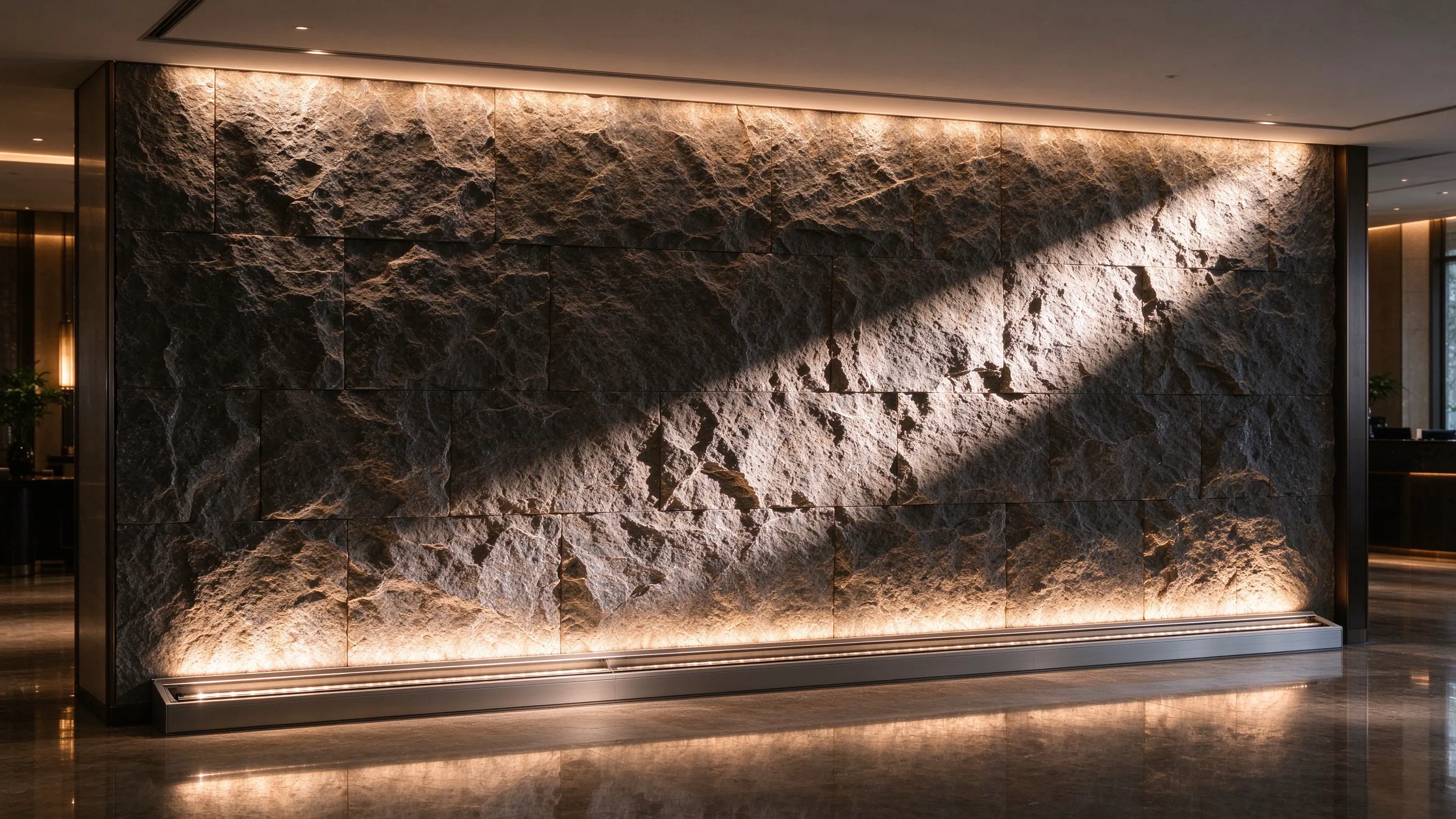
Why Straight-Down Channels Do Not Graze Walls
A conventional symmetric channel distributes light evenly around its centreline, which is correct for general downlight but wrong when the goal is to illuminate a vertical surface. Mounted at a wall-to-ceiling junction, a symmetric profile throws much of its light away from the wall into the room, leaving the feature surface underlit and requiring more power to achieve the wash.
Wall grazing and texture washing call for an asymmetric profile that physically aims the LED output toward the wall, and the 1310 does this with an angled reflector and diffuser lens.
What the Asymmetric 1310 Profile Does
- Angled reflector directs light sideways onto the wall.
- Diffuser lens controls spread and glare.
- Efficient wall grazing with less wasted floor light.
- Reveals texture on stone, brick and feature walls.
- Compact single-channel solution for 8mm-class strip.
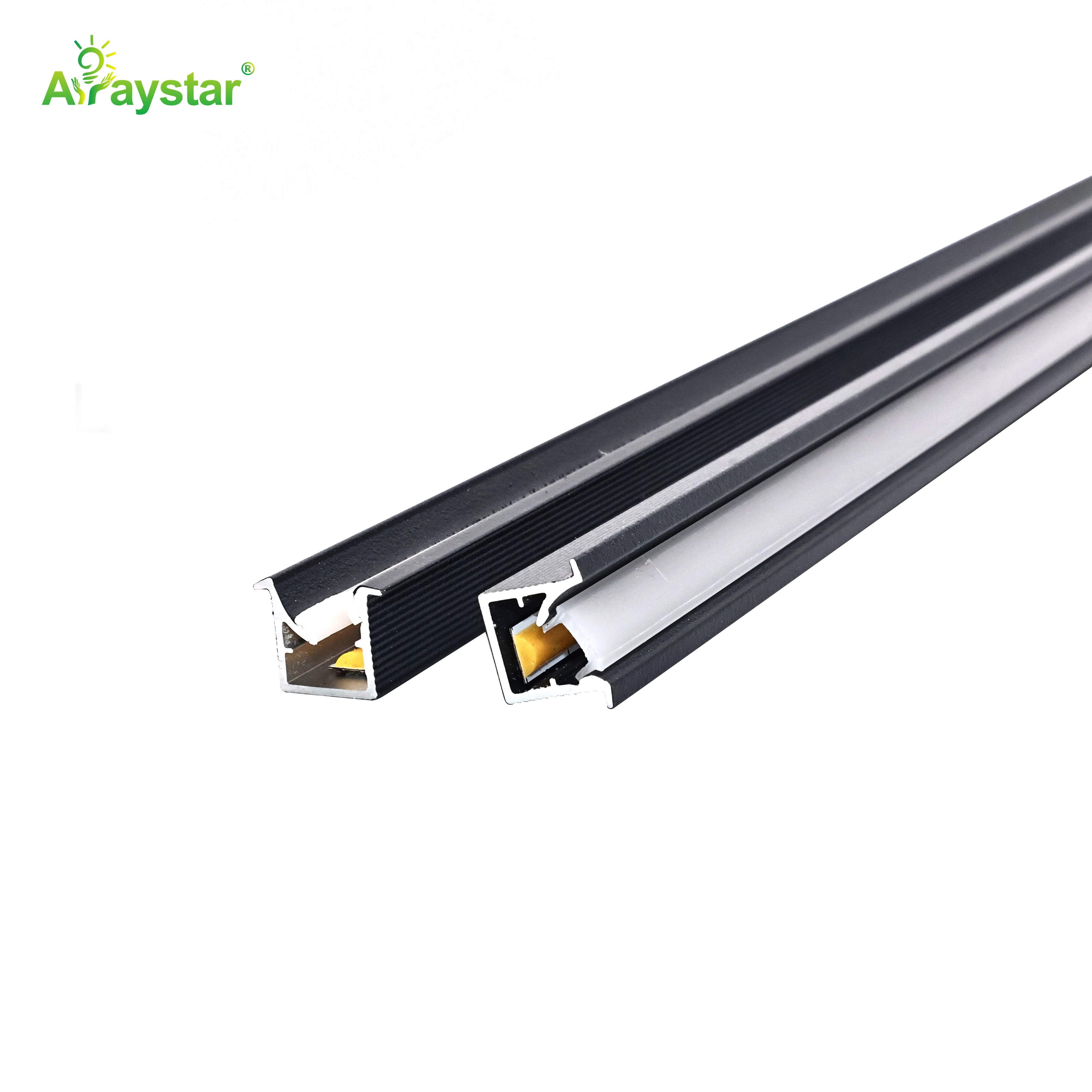
For wall grazing I use the asymmetric 1310 profile. Its angled reflector puts the light onto the vertical surface instead of wasting it into the room.
Symmetric vs Asymmetric Distribution
Choose distribution to match the surface you actually want lit.
| Profile | Light direction | Best application |
|---|---|---|
| Symmetric channel | Even around centreline | General downlight, coves |
| Asymmetric 1310 | Aimed sideways to wall | Wall grazing, texture wash |
| Adjustable tilt profiles | Manually re-aimable | Spaces needing flexibility |
Where Asymmetric Wall Grazing Is Specified
- Stone, brick, timber and textured feature walls.
- Hotel lobbies and reception accent surfaces.
- Art walls and gallery-style vertical illumination.
- Corridor walls where grazing guides movement.
- Retail feature surfaces and brand backdrops.
Setback Distance and Grazing Angle
The grazing effect depends on the gap between luminaire and wall. Mounting very close to the surface exaggerates texture with strong light and shadow, ideal for rough stone or brick, while a larger setback produces a smoother, more even wash suited to flat art walls. I establish the intended look first, then set the profile position and angle to achieve it, and I mock a short section because the relationship between setback, angle and texture is difficult to judge from drawings alone.
- Close setback: dramatic texture and shadow on rough surfaces.
- Wider setback: smooth even wash on flat walls and art.
- Mock a section to confirm angle and setback.
- Keep spacing consistent along the run for an even wash.
Controlling Glare and Spill
Because the profile aims light deliberately, I also control where it does not go. The angled reflector and lens keep the source from shining into occupants' eyes, and I orient the channel so spill into circulation space or onto screens is minimised. In corridors and lobbies where people walk past the fixture, glare control is as important as the wall brightness, and a correctly aimed asymmetric profile lights the wall without becoming a visible bright source itself.
Matching Strip and Maintaining Uniformity
The 1310 is designed for a specific strip width (around 8mm class), so I match the strip to the profile for correct alignment with the reflector. Uniformity along a long wall depends on consistent LED density, adequate power injection and identical setback at every mounting point; a wall wash is unforgiving of a channel that drifts a few millimetres closer or farther, so I fix to a consistent reference line.
Specifying a Wall-Grazing Profile
Send the wall material and texture, desired dramatic versus smooth effect, setback available, run length and viewing positions. I will confirm the asymmetric 1310 profile, compatible strip, mounting setback and angle, and glare control. We supply the 1310 and recommend a lit mock-up on the actual wall material, because texture and setback define the result more than any specification sheet.
Grazing a Rough Natural-Stone Lobby Wall
A hotel lobby featured a four-metre wall of rough-split natural stone with a deeply textured face, and the designer wanted the stone's relief to become the dominant feature at night rather than disappearing under flat downlight. A first proposal placed symmetric linear channels in the ceiling, which produced an even but flat illumination that washed over the texture without revealing it, and a portion of the light simply lit the floor in front of the wall.
We mocked three approaches on a sample panel of the actual stone: a symmetric channel, a simple uplight from the floor, and the asymmetric 1310 profile mounted tight to the wall head. The 1310 with its angled reflector aimed sideways across the stone was the only option that made the split-face relief come alive, raking light across the surface so every ridge caught a highlight and every recess fell into shadow, giving the wall depth and drama. The close setback, around a hundred millimetres from the face, was deliberate; pulling the fixture farther away smoothed the texture out and defeated the purpose. We controlled glare by positioning the channels above normal eye line with the lens aimed into the stone, so guests saw a glowing textured wall rather than a bright source, and we kept mounting setback identical along the full four metres because a grazing wall exaggerates even a small drift in distance as a visible change in shadow intensity. Power injection kept the brightness consistent end to end. The final wall became the lobby's photographic focal point at night, with the stone's natural character fully expressed. The project taught the client the difference between illuminating a surface and grazing it: the same stone looked ordinary under symmetric light and spectacular under correctly aimed asymmetric light, and the decision was only possible by mocking the real material, since the effect depends entirely on the interaction of the angled beam with the actual texture rather than on a photometric chart.
Recommended Products
Frequently Asked Questions
What is an asymmetric 1310 LED profile?
It is an aluminium channel with an angled reflector and diffuser lens that directs LED light sideways onto a wall rather than evenly around a centreline like a symmetric channel. It is used for efficient wall grazing and texture washing, putting light onto the vertical surface while controlling glare and wasted spill.
Why not use a standard symmetric channel to light a wall?
A symmetric channel distributes light around its centreline, so at a wall junction much of it goes into the room or floor instead of onto the vertical surface, leaving the wall underlit and wasting power. An asymmetric profile aims the output at the wall, achieving the wash or grazing effect efficiently from a compact fixture.
How close should a grazing profile be to the wall?
Very close setback exaggerates texture with strong light and shadow, suiting rough stone or brick, while a larger gap gives a smoother, even wash suited to flat art walls. Decide the look first, set the position and angle to achieve it, and mock a short section on the real surface because setback and texture are hard to judge from drawings.
Does an angled wall-grazing profile cause glare?
It is designed with an angled reflector and lens to keep the source from shining into occupants' eyes, but it must be oriented correctly to minimise spill into circulation space or onto screens. In corridors and lobbies, aim the channel so the wall is lit without the fixture becoming a visible bright source to people walking past.
How do I keep an even wash along a long wall?
Match the strip width to the profile (the 1310 suits around 8mm-class strip) for correct reflector alignment, use consistent LED density with adequate power injection, and fix every channel at the identical setback to a reference line. A wall wash is unforgiving of a profile that drifts even a few millimetres closer to or farther from the surface.
Need help with your LED project?
Get factory-direct pricing, free samples and engineering support within 24 hours.
Email: info@arraystarled.com | Phone: +86-0755-2103-6746 | WhatsApp: 0086 1581 8514 077
Need to size your power supply? Use our LED Strip Power Calculator to find the right driver in seconds.







