
Beauty Salon & Med Spa LED Strip Lighting: Flattering, High-CRI Light for Treatment Rooms
- 2026-09-29 12:07
- /
- Arraystar LED
In a salon or med-spa, the light is part of the service. Estheticians need accurate, bright, high-CRI light to do detailed work, while the client lying on the bed wants to feel calm and flattered. The answer is two modes in the same room - bright true-color task light for the procedure, dim-to-warm relaxation light for the rest - plus seamless fixtures that read as high-end. Get R9 right or skin and makeup will look off no matter what you spend.
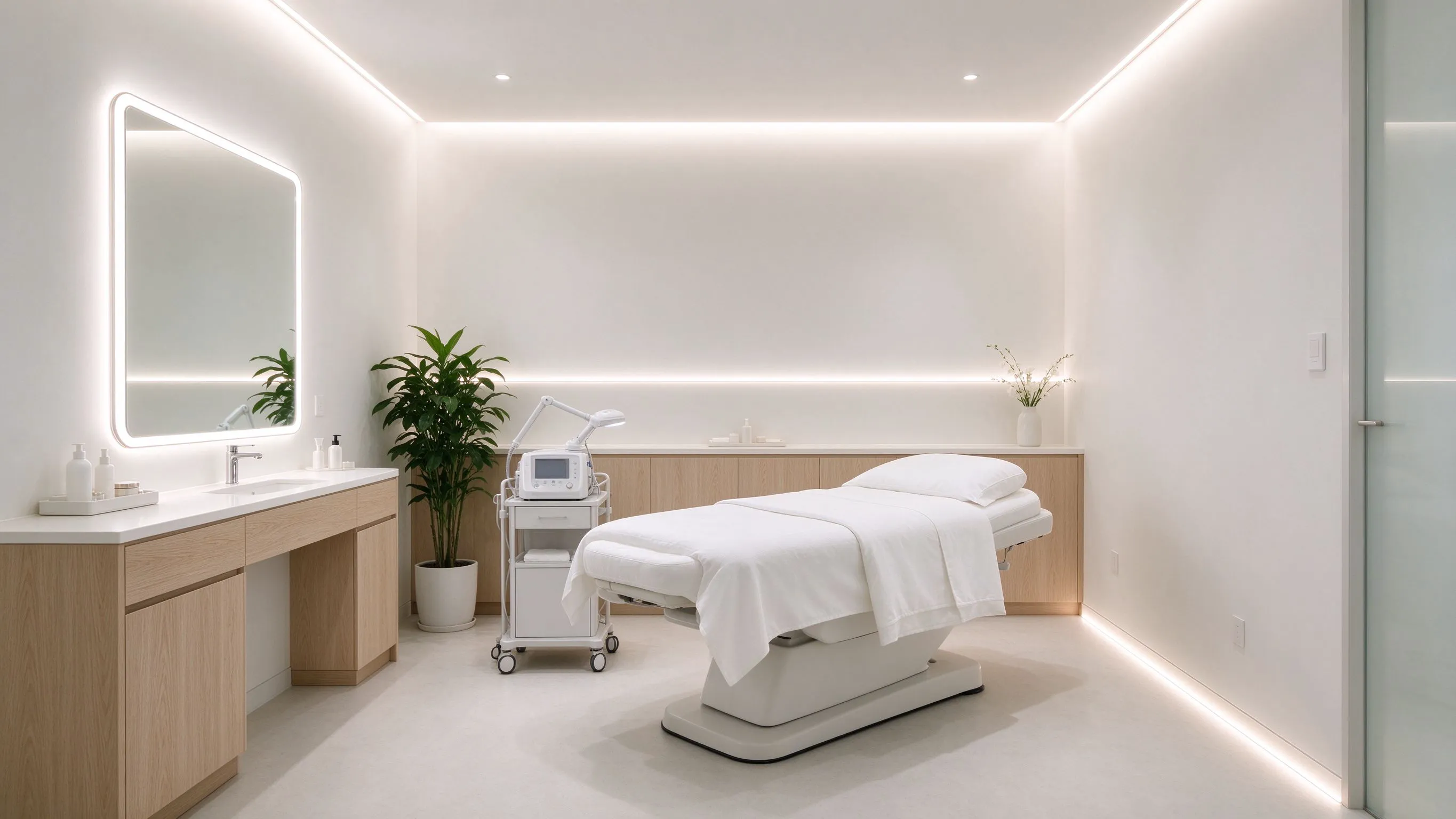
One Room, Two Opposite Lighting Jobs
Here's the tension every salon designer runs into. During a lash set, brow mapping, extraction or makeup application, the technician needs crisp, color-accurate, shadow-free light - often 700-1000 lux at the face. But the moment the treatment shifts to a mask, a massage or recovery, that same bright light feels clinical and stressful. Clients who can't relax don't rebook.
Cheap salons pick one mode and lose on both - either too dim to work in, or so harsh clients hate lying under it. The fix is layered, switchable, dimmable light that the therapist controls without leaving the chair.
Practical modes across a typical treatment room.
| Treatment phase | CCT | Level at face | Character |
|---|---|---|---|
| Consultation / makeup | 4000-5000K, CRI95+ | 700-1000 lux | True, bright, detailed |
| Lash / brow / waxing | 4000K, CRI90+ | 700-900 lux | Shadow-free, flicker-free |
| Facial / skincare | 3500-4000K, CRI90+ | 500-700 lux | Clear but soft |
| Massage / mask / rest | 2400-2700K | 50-150 lux | Warm, dim, calming |
Skin Truth: Why CRI 95 and R9 Matter More Here Than Anywhere
Clients judge your work on how their skin looks afterward, and skin is the hardest surface to light faithfully. Specify CRI 95+ for makeup and skincare areas and pay attention to R9 (red rendition) and R13 (skin tone) specifically. Under high-R9 light, complexions look healthy and even; under a cheap CRI-80 strip with weak reds, skin looks sallow and blemishes are either hidden or exaggerated.
- Ask suppliers for the full CRI/TM-30 report with R9 and R13 values, not just 'CRI 90'.
- TM-30 Rf above 90 and Rg close to 100 indicate faithful, natural rendition.
- Avoid spikes in blue that make skin look harsh - check the SPD curve if you can.
- Match CRI across all room fixtures; a true-color ring light next to a low-CRI ceiling washes results out.
Dim-to-Warm Is the Salon's Secret Weapon
A dim-to-warm strip automatically shifts toward candlelight (down toward ~1800-2200K) as you dim it, exactly like an incandescent halogen. It's perfect for treatment beds: full bright neutral light during the procedure, then dim it down and watch the room warm up for the relaxation phase - one channel, one dimmer, no second circuit needed.
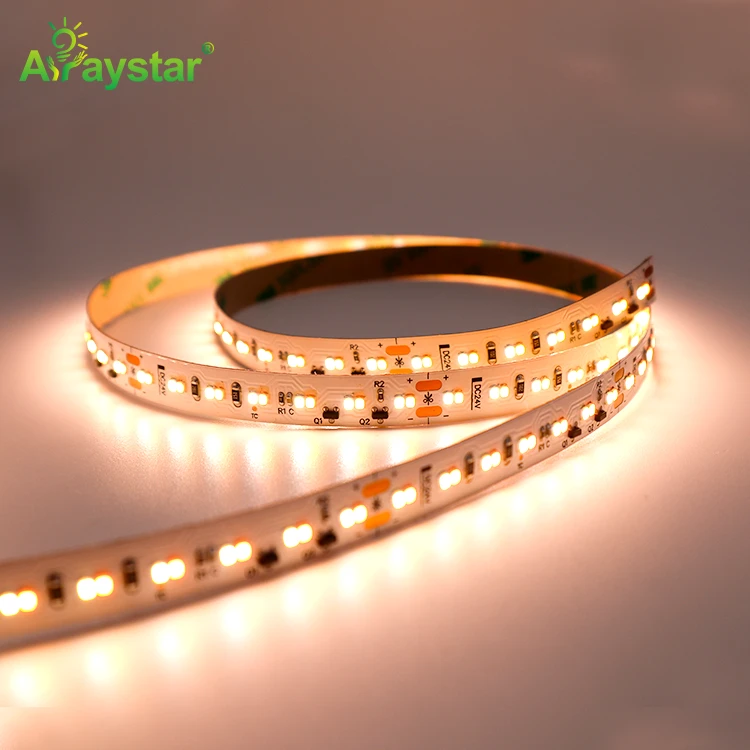
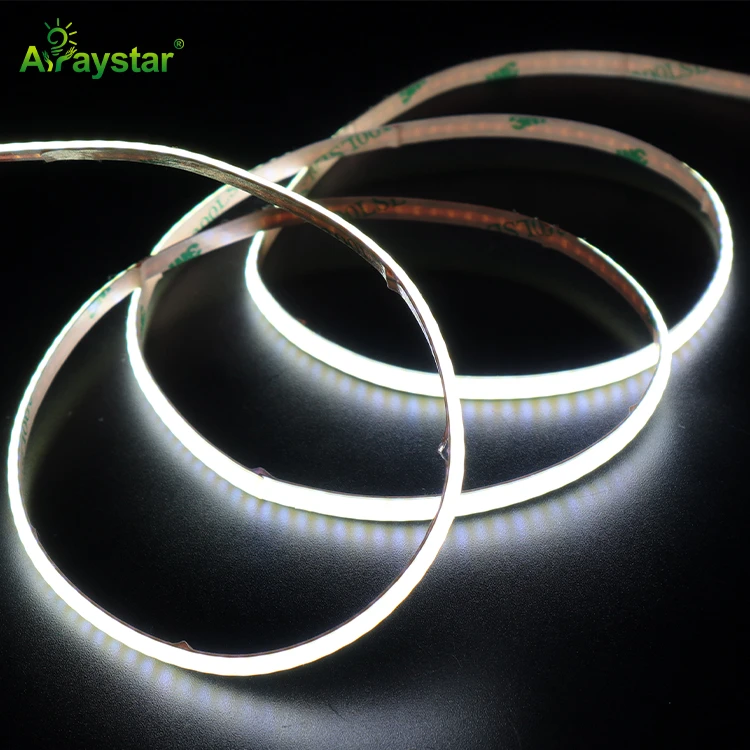
Where you need independent warm and cool at full brightness (makeup stations where clients compare day vs evening looks), use a full tunable-white strip with two channels instead. Slim tunable COB fits inside mirror frames and lash-bed light bars.
Fixtures That Look Medical-Grade, Not Hardware-Store
Med-spas especially sell a clinical-luxury aesthetic, and visible LED tape or plastic channels instantly cheapen it. Spec trimless, plaster-in aluminum profiles that finish flush with the drywall with only a hairline of light - the same detail used in high-end hotels. Run them in ceiling slots, around the bed canopy, or as a vertical wash behind the treatment bed.
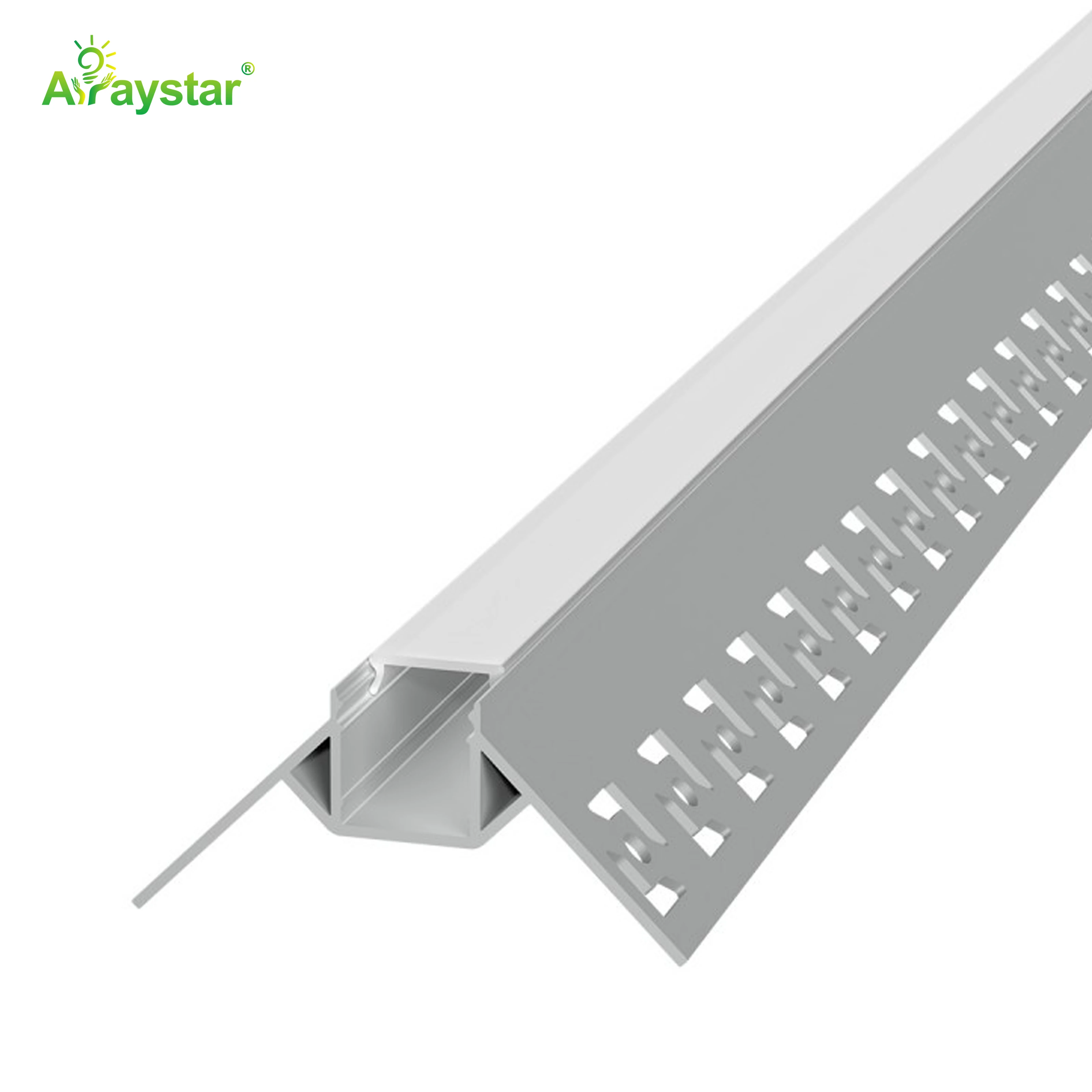
- Ceiling slot (cove) for soft indirect ambient that doesn't shine in the client's eyes when supine.
- Vertical back-wall wash behind the bed for a calming halo and perceived headroom.
- Under-cabinet strips at workstations for product prep without bright overhead light.
- Mirror-integrated vertical light for makeup and brow stations.
The Technician's Task Light
No amount of cove light replaces dedicated task light for detail work. Lash and brow techs use ring lights or articulated lamps, but the room's built-in light should still be shadow-free and bright enough that they aren't fighting their own lamp's shadows. Diffuse high-CRI strips positioned to the sides of the bed (not directly overhead) fill under the brow and chin without glare in the client's eyes.
For nail stations, position true-color light over both the technician's hands and the client's across the table; color-matching polish under poor light is a guaranteed redo. Hair salons need high-CRI vertical light at each mirror so color formulas read correctly - this is where weak R9 causes the most complaints about toner.
Control, Flicker and the Relaxation Scene
Put the treatment-room light on a small scene control - a wall panel or even a handheld remote - with at least 'Work', 'Glow' and 'Off' presets. Flicker is unacceptable in a room where clients lie with eyes open under light and often film results; use quality drivers and verify on camera.
- Flicker-free, dimmable constant-voltage drivers; buzz-free at low levels.
- A gentle 3-5 second fade between scenes feels more spa-like than an instant snap.
- Keep a low warm night-level for clients resting face-up - never full dark mid-treatment.
- Ensure mirror and bed lights are on separate zones so makeup stations stay bright during facials.
Recommended Products
Frequently Asked Questions
What CRI do I need for a beauty salon or med-spa?
Aim for CRI 95+ at makeup and skincare stations with strong R9 (red) and R13 (skin) values, and at least CRI 90 elsewhere. High CRI is what makes skin tones and makeup colors read accurately; a generic CRI-80 strip will make complexions look off.
Dim-to-warm or tunable white for a treatment room?
Dim-to-warm is simplest for a facial or massage bed because one dimmer both lowers brightness and warms the color like a halogen as the client relaxes. Use full tunable white where you need independent warm and cool at full brightness, such as makeup stations comparing day and evening looks.
How bright should treatment-room lighting be?
Around 700-1000 lux of shadow-free high-CRI light at the face for detailed work like lashes, brows and makeup, dropping to 50-150 lux of warm 2400-2700K light during massage or mask phases. Switchable scenes handle both.
How do I hide LED strips for a high-end spa look?
Use trimless plaster-in aluminum profiles that finish flush with the drywall in ceiling slots or as a wall wash behind the bed, with opal diffusers so no dots or tape are visible. Exposed strip and plastic channels look cheap and undermine the clinical-luxury feel.
Why does my client's skin look bad under the salon light?
Usually low CRI with weak red (R9) rendition, which makes skin look sallow or uneven, sometimes combined with harsh overhead glare or a color temperature that's too cool. Switch to CRI 95 high-R9 strips positioned to the sides and warm the ambient for resting phases.
Need help with your LED project?
Get factory-direct pricing, free samples and engineering support within 24 hours.
Email: info@arraystarled.com | Phone: +86-0755-2103-6746 | WhatsApp: 0086 1581 8514 077
Need to size your power supply? Use our LED Strip Power Calculator to find the right driver in seconds.







