How to Bend LED Neon Flex Around Corners Without Hot Spots
- 2026-09-19 13:17
- /
- Arraystar
Clean neon-flex corners depend on bending the product in the plane it is designed for and respecting minimum radii: top-bend (horizontal) product curves on flat surfaces, side-bend (vertical) product turns corners in elevation; bend slowly around a radius template (never sharp kinks), use factory moulded corners or cut-and-join where the radius is too tight, and secure with clips/channel so the bend cannot spring or create hot spots. Forcing a bend the wrong way or below minimum radius lifts LEDs from the PCB and causes bright/dark spots or failure.
How LED Neon Flex Bends
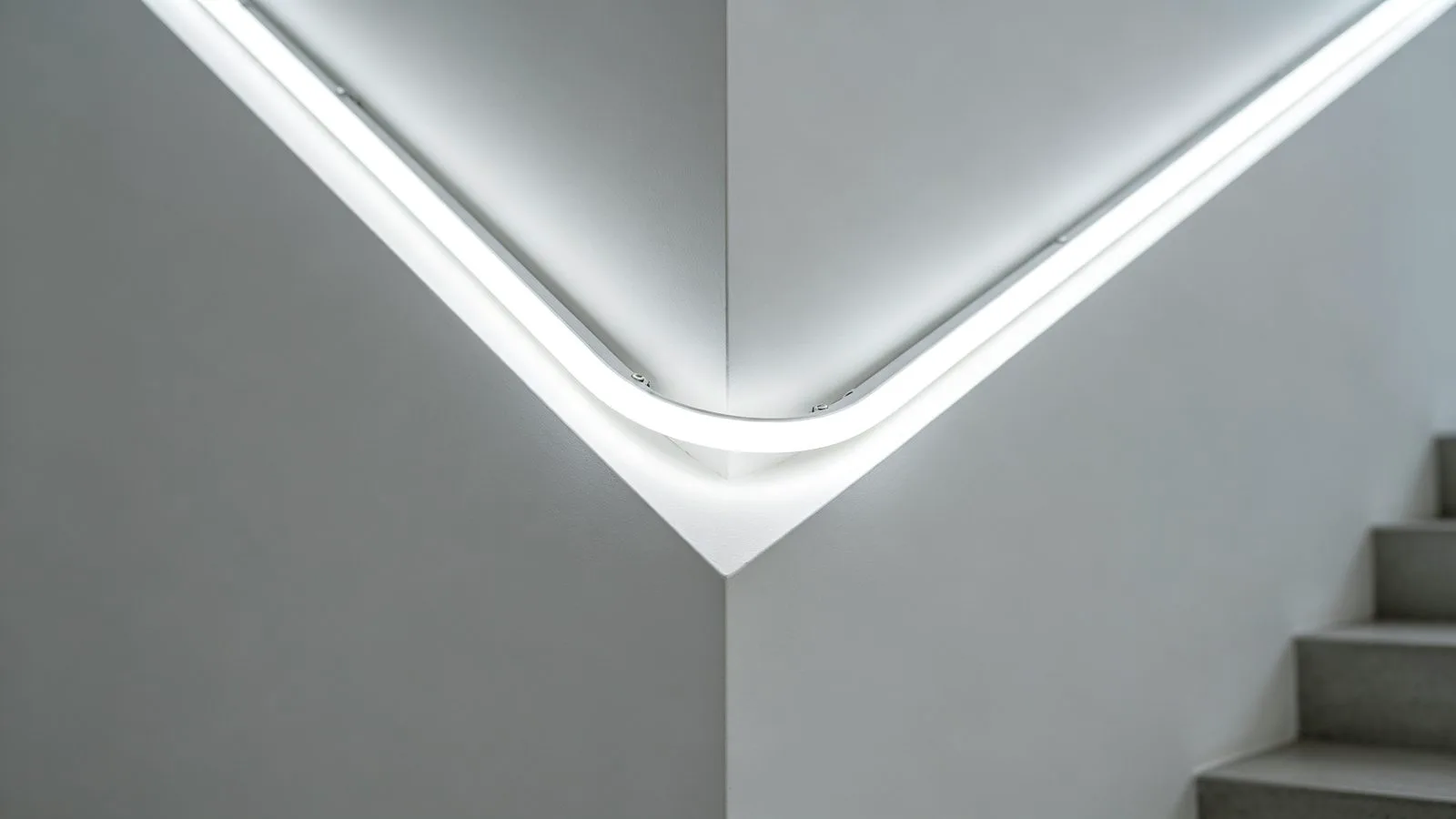
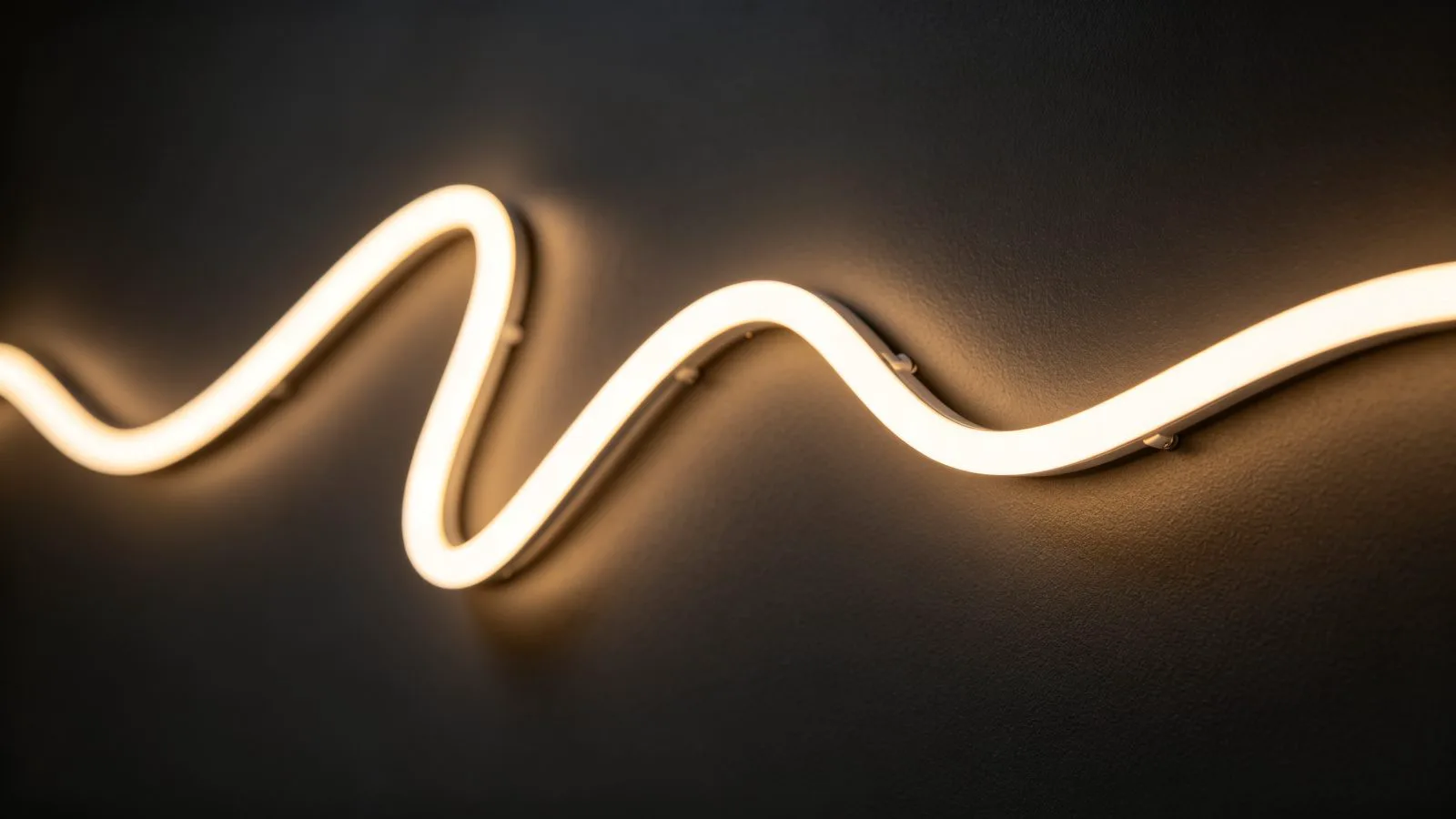
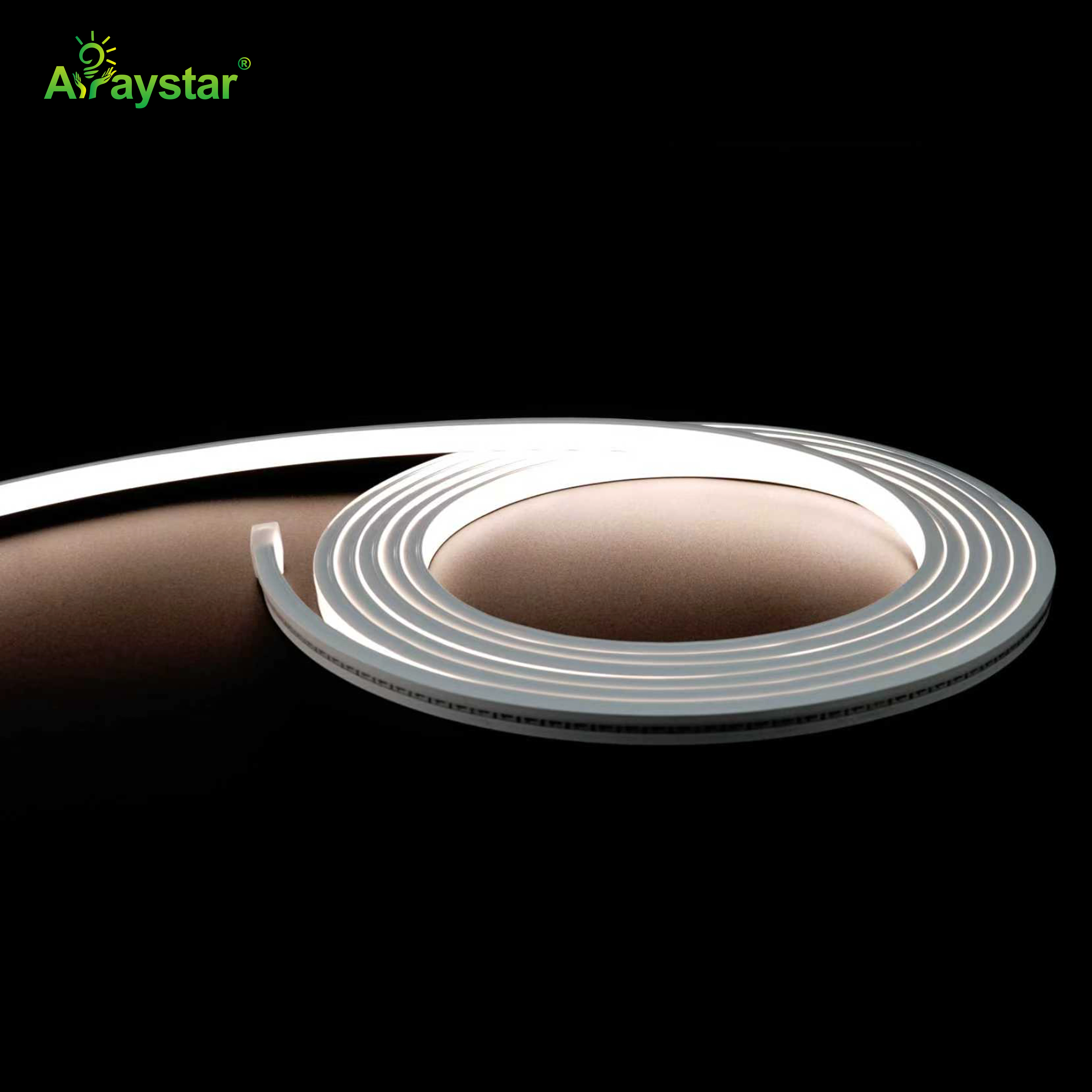
LED neon flex is a continuous LED strip (often SMD on FPC, or COB) encapsulated in a round, square or rectangular silicone/PVC body that diffuses light into a smooth neon-like line. It is manufactured in two bending orientations: top-bend (horizontal bend), where the LED face stays upward and the strip curves in the horizontal plane like following a circle on the floor, and side-bend (vertical bend), where it bends edge-to-edge so it can turn up, over and down the face of a facade or sign. Bending a product in the wrong plane stresses the PCB and solder joints; bending tighter than its minimum radius or creating a sharp fold lifts or damages LEDs and produces visible hot spots and dark gaps.
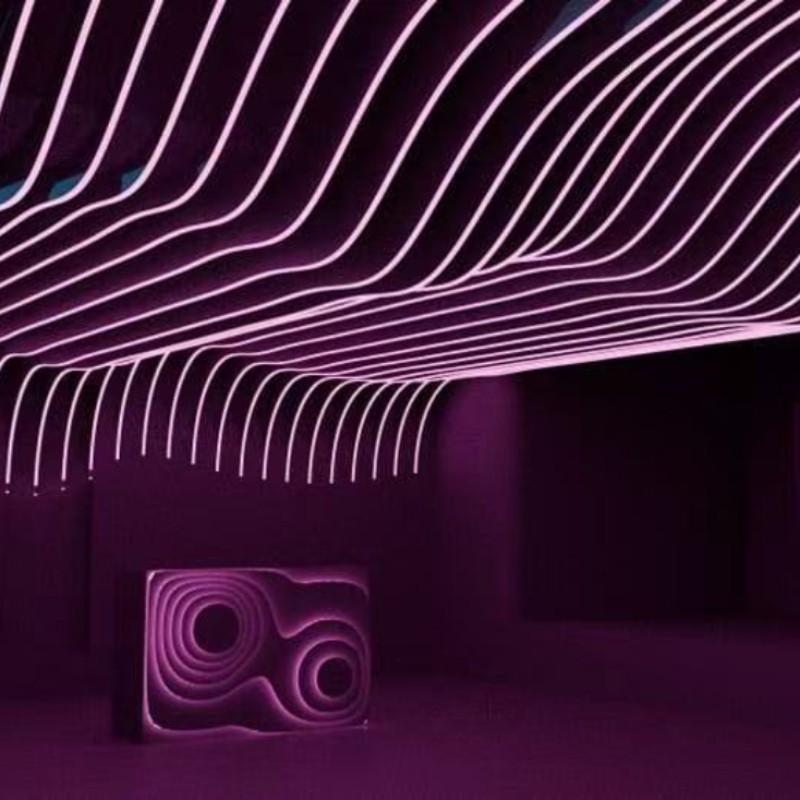
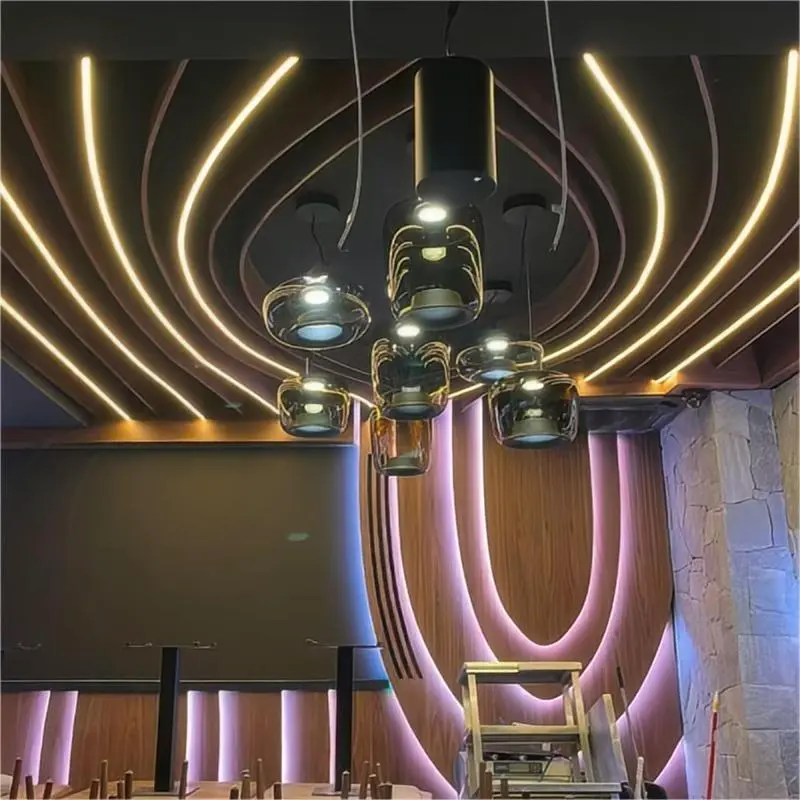
- Top-bend (horizontal): curves left/right with the light face pointing up/out — flat layouts, ceiling patterns.
- Side-bend (vertical): bends up/down edge-wise — facade outlines, letters, dimensional signs.
- Minimum bend radius is specified per product and must be respected.
- Sharp kinks are never allowed; use a radius, a moulded corner or a cut-and-connector joint.
- Hot spots/dark spots at corners signal over-bending, lifted LEDs or poor joining.
Choosing the Right Product and Corner Method
Corner methods compared
| Method | Best for | Notes |
|---|---|---|
| Radius bend (continuous) | Gentle curves ≥ min radius | Smooth, no joint; use a template |
| Moulded/factory corner | Sharp 90° and tight corners | Pre-made silicone corner, consistent |
| Cut + corner connector | Right angles when bend is too tight | Seal joints for IP; can show a dot |
| Flexible corner segment | Signs/letters with multiple turns | Short bendable sections joined |
| Aluminum channel corner | Permanent architectural runs | Holds radius, cleanest finish |
For gentle architectural curves, bend continuous neon around a radius template or form and clip it in place. For true 90-degree corners tighter than the minimum radius, the reliable options are a factory moulded corner piece (matched silicone body, best optical continuity) or a cut-and-corner-connector joint. Attempting to force continuous flex into a sharp inside corner kinks the body and concentrates stress; outside corners are more forgiving than inside corners, which compress the inner edge.
Step-by-Step Bending Technique
- Confirm orientation first: use top-bend for flat-plane curves, side-bend for elevation corners; do not mix them up.
- Check the datasheet minimum radius and never bend tighter; when in doubt use a larger radius or a corner piece.
- Form gently by hand around a template (cardboard/MDF former or the aluminum channel), warming slightly if the material is cold.
- Never twist the neon or bend it in two planes at once; avoid bending at a single LED or solder point.
- Secure at the curve with extra clips/channel so the bend cannot spring back or concentrate force locally.
- For cut-and-join corners, cut only at marked cut lines, use matched connectors, and for outdoor use re-seal with glue-filled end caps and heat shrink to restore IP.
- Power on and inspect the corner for hot spots, dark gaps or colour change before final fixing.
Bend planning quick reference
| Feature | Guidance |
|---|---|
| Flat ceiling pattern / circle | Top-bend, respect radius |
| Building/letter up-and-over | Side-bend |
| 90° inside corner | Moulded corner or connector |
| 90° outside corner | Radius bend if within min, else corner |
| Cold weather | Warm material, bend slowly |
| Outdoor joints | Re-seal to rated IP |
Avoiding Hot Spots and Failures
- A bright spot at a bend usually means the body is compressed/kinked or LEDs are pushed close together — open the radius.
- A dark spot or dead section indicates lifted/cracked LEDs or a broken trace from over-bending; replace the section.
- Keep bends away from feed points and connectors where possible, and support the neon so its own weight does not stress a curve.
- Use continuous mounting clips or channel at tighter spacing around curves to hold an even bend and prevent movement with thermal expansion.
- Allow for thermal expansion in long outdoor runs; do not clamp the neon rigidly end to end.
- For signage, prefer purpose-made sign neon and corner/return accessories rather than forcing architectural product.
We supply top-bend and side-bend LED neon flex in round, square and mini profiles with documented minimum radii, matched moulded corners, corner connectors, clips/channels and IP-rated sealing accessories. Send us your corner radii, orientation (flat vs elevation) and indoor/outdoor application and we will specify the correct product and corner method for seamless, hot-spot-free runs.
Recommended Products
Frequently Asked Questions
What is the difference between top-bend and side-bend neon flex?
Top-bend (horizontal) neon curves left/right with the LED face pointing up/out, suited to flat ceiling patterns and floor-plan shapes. Side-bend (vertical) bends edge-to-edge so it can turn up, over and down, suited to building outlines and dimensional lettering. Bending a product in the plane it is not designed for stresses the PCB and causes failures.
How tight a corner can I bend LED neon flex?
Only to the minimum bend radius stated on the datasheet for that product, formed gently around a template rather than sharp-folded. For a 90-degree or tighter corner below that radius, use a factory moulded corner piece or cut at a marked point and join with a corner connector; never force a sharp kink, which lifts LEDs and creates hot spots or dead sections.
Why is there a bright or dark spot at my neon corner?
A bright spot usually means the silicone body is compressed or kinked so LEDs bunch together; a dark or dead spot means LEDs or traces were lifted/cracked by over-bending or a bad connector joint. Open the radius, use a moulded corner or proper connector, re-seal outdoor joints, and power-test the corner before fixing.
Can I cut and rejoin neon flex at a corner?
Yes, cut only at the marked cut lines and use matched corner connectors; this is standard for right angles tighter than the bend radius. For outdoor/wet locations you must re-seal the joint and end caps with the supplied glue/heat-shrink to restore the IP rating, as cutting breaks the factory encapsulation. Moulded corners give smoother optics than connector joints.
How do I hold a neon bend in place permanently?
Use mounting clips or aluminum channel at closer spacing around the curve (and a forming template during install) so the bend cannot spring back, support the neon so its weight does not stress the curve, and in long outdoor runs allow for thermal expansion rather than clamping rigidly end to end. Keep bends away from feed points where possible.
Designing neon-flex corners or signage?
We supply top-bend and side-bend neon with stated radii, moulded corners, connectors and IP sealing accessories plus clips and channels. Send corner radii, orientation and indoor/outdoor use for a seamless hot-spot-free layout.
Email: info@arraystarled.com | Phone: +86-0755-2103-6746 | WhatsApp: 0086 1581 8514 077
Need to size your power supply? Use our LED Strip Power Calculator to find the right driver in seconds.