
IP68 LED Lighting for Car Wash Tunnels and Wet Bays
- 2026-10-09 18:41
- /
- Arraystar LED
Car-wash tunnels and wet bays are among the harshest lighting environments possible, with continuous water, detergents, hot steam and repeated high-pressure washing. Ordinary IP65 or sealed-strip lighting fails quickly there; only genuinely IP68-rated, fully extruded product such as TPU LED strip survives long-term while keeping the tunnel bright and safe for guiding vehicles.
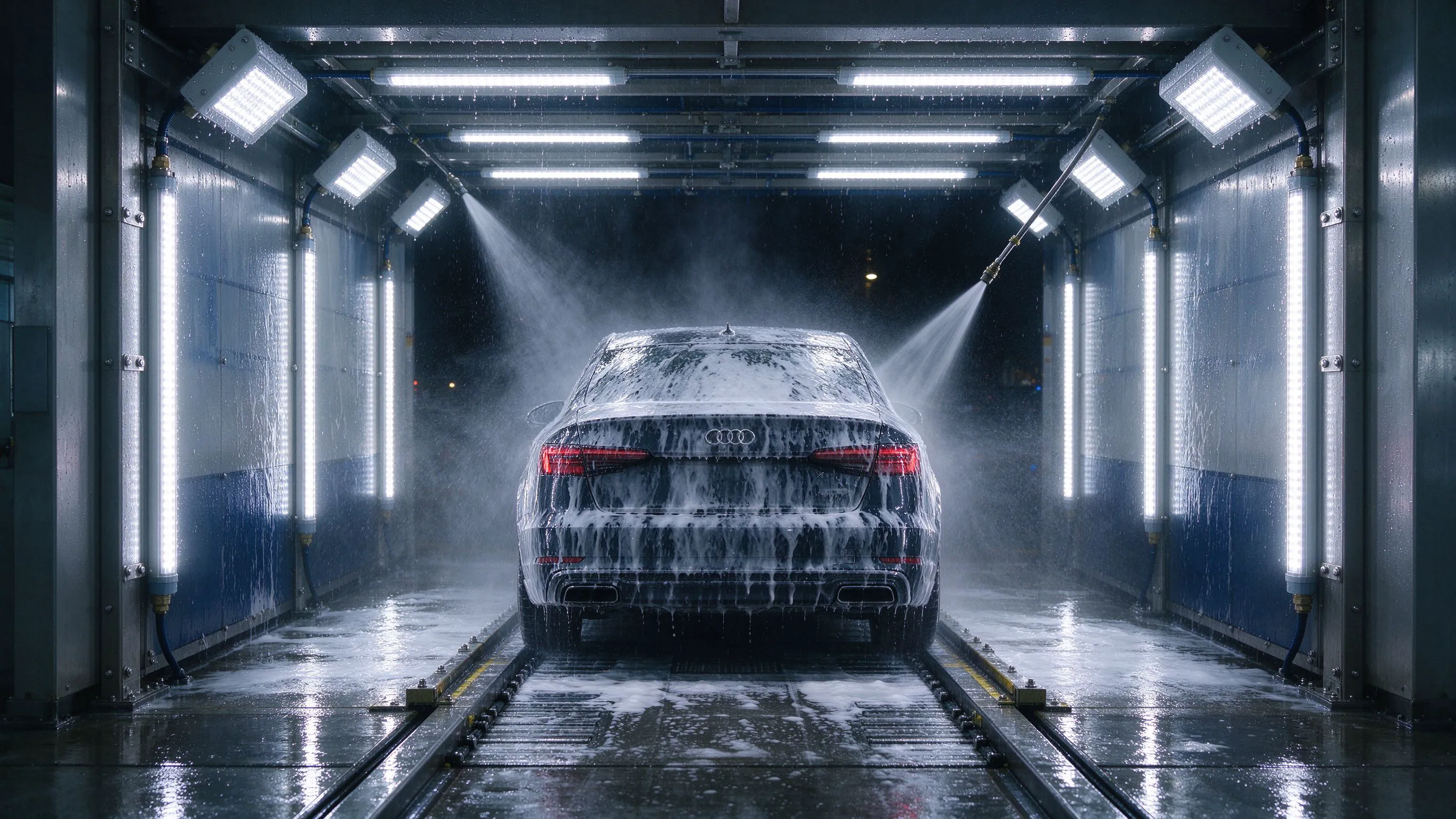
Why a Car Wash Destroys Ordinary LED Strip
A car-wash tunnel is not merely damp. Lighting inside it faces continuous spray and standing water, alkaline and acidic detergents and waxes, hot steam and foam, and direct high-pressure jets on every wash cycle. Strip rated IP65 or sealed with adhesive-backed sleeves allows water and chemicals in over time through seams and end caps, leading to corrosion, flickering and dead sections.
Tunnel lighting therefore requires the highest ingress protection, IP68, in a fully extruded construction with no water path, and TPU extrusion is well suited to the combination of water, chemicals and physical spray.
What the IP68 TPU-Extruded Strip Provides
- IP68 rated for continuous water exposure.
- Full TPU extrusion with no adhesive-sleeve water path.
- Withstands detergents, foam, steam and pressure washing.
- Bright, even guidance light along the tunnel.
- Long service life in a corrosive wet environment.
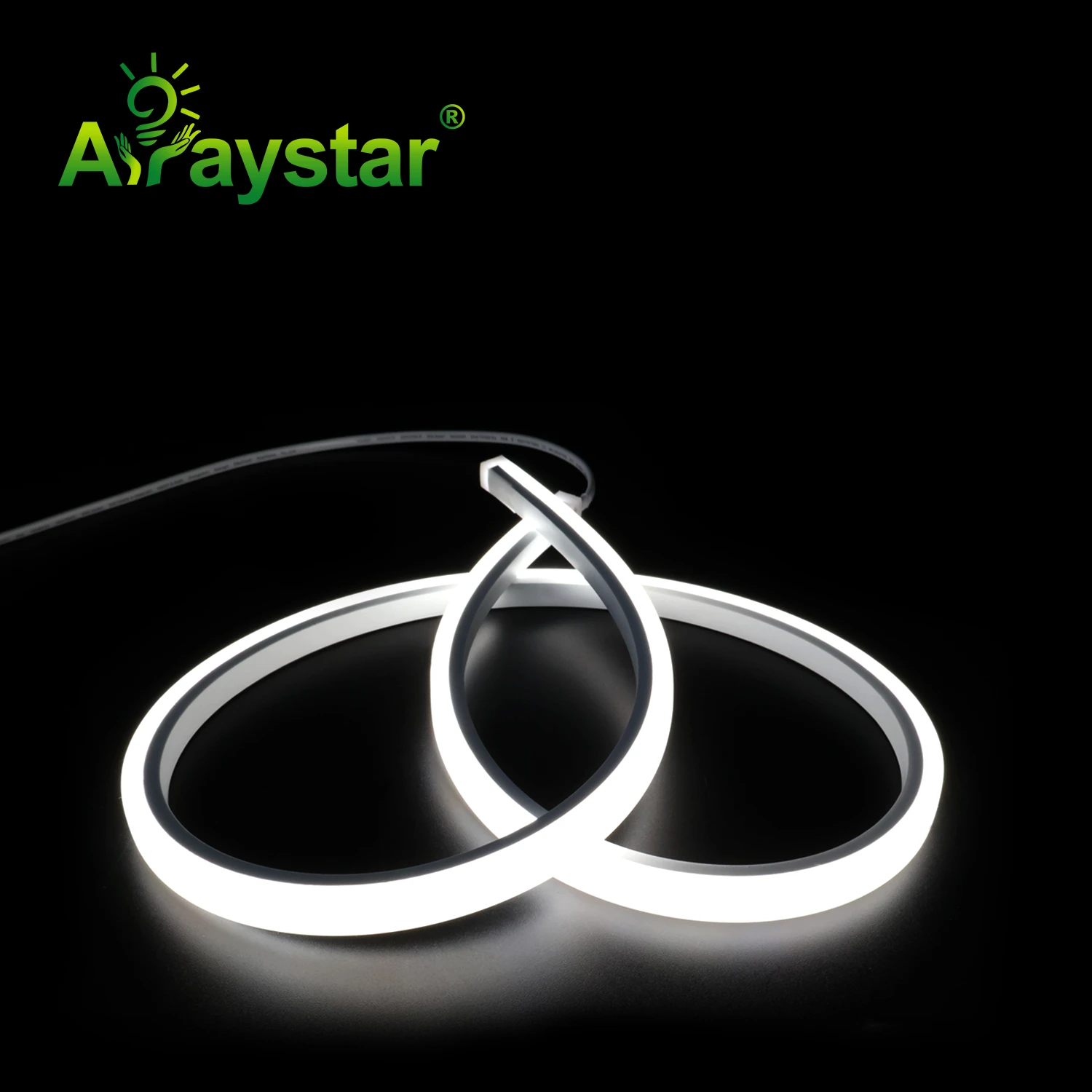
For tunnels and wet bays I use the IP68 TPU-extruded strip (TP1010-IP68). It is built for continuous water, chemicals and pressure spray where lesser-rated strip fails.
IP Ratings in a Car-Wash Context
Continuous spray and chemicals demand true IP68 extrusion, not IP65 sleeves.
| Rating | Protection | Suitable for wash tunnel? |
|---|---|---|
| IP20/IP44 | Dry/damp only | No |
| IP65 | Water jets, not immersion | Insufficient long-term |
| IP67 | Temporary immersion | Marginal at joints |
| IP68 full extrusion | Continuous water/pressure | Yes, specified choice |
Where IP68 Tunnel Lighting Is Installed
- Automatic roll-over and conveyor car-wash tunnels.
- Self-service pressure-wash bays.
- Foam, rinse and wax arch zones.
- Under-vehicle and wheel-wash areas with heavy spray.
- Detailing wet bays and vehicle wash-down areas.
Sealing Ends, Junctions and Connections
An IP68 strip is only as waterproof as its terminations, and this is where tunnel installations fail. I seal every cut end and junction with purpose waterproof connectors and proper potting or end caps, never rely on tape or glue, and I place drivers and any non-IP68 components outside the wet zone in a sealed cabinet. The strip body can survive immersion, but a single unsealed connection lets water wick in and kill a run, so I treat termination discipline as the core of the job.
- Pot or cap every cut end with rated waterproof fittings.
- Use purpose IP68 connectors, never tape or glue alone.
- Locate drivers outside the wet zone in a sealed cabinet.
- Inspect seals during scheduled wash-equipment servicing.
Chemical Resistance and Mechanical Durability
Beyond water, detergents, alkaline cleaners, tyre cleaners and waxes attack materials, and pressure jets deliver physical force that can peel poorly bonded covers. I choose TPU extrusion specifically for its chemical and mechanical resilience in this environment, mount the strip in protective channels where jets strike directly, and use corrosion-resistant fixings, because ordinary steel clips will rust in a tunnel atmosphere even if the strip itself survives.
Brightness, Safety and Maintenance Access
Tunnel lighting guides the driver safely through and illuminates the wash equipment, so I specify bright, even runs with no dark zones that confuse vehicle positioning. Because maintenance means downtime for a paid wash, I design runs and connections for quick section replacement and keep all accessible parts serviceable from outside the spray path, accepting a slightly higher product cost for IP68 in exchange for far fewer call-outs.
Specifying Car-Wash Lighting
Send the tunnel or bay length, mounting surface, the chemicals and wash equipment used, pressure-wash exposure and where drivers can be located dry. I will confirm the IP68 TPU strip quantity, waterproof terminations, protective channels, fixings and dry driver location. We supply the TP1010-IP68 and recommend agreeing the termination and junction sealing method before installation, since the connections, not the strip body, determine tunnel reliability.
Retrofitting a Conveyor Tunnel After Repeated Failures
A busy conveyor car wash had replaced its tunnel lighting three times in two years, each time with supposedly waterproof strip that failed within months, sections flickering and going dark, end caps filling with water, and metal clips bleeding rust down the white panels. The operator was losing money on call-outs and the dark zones in the tunnel were causing customers to brake and misalign their vehicles, creating genuine operational problems rather than mere inconvenience.
When we inspected the removed strip, the failure pattern was consistent and instructive. The products were IP65 or sleeve-sealed rather than genuinely IP68 extruded, and while the strip bodies looked intact, every failure traced to the terminations and junctions, cut ends sealed with glue-lined heat shrink that had let pressurised water wick in, and drivers mounted inside the wet zone in ordinary enclosures. The chemicals and hot steam of the foam and wax arches had also softened and peeled the sleeve material. We rebuilt with the IP68 TPU-extruded TP1010 strip, chosen specifically because the full extrusion has no adhesive-sleeve water path and TPU withstands the chemical and mechanical assault, but we treated the terminations as the real project: every cut end was sealed with rated IP68 connectors and proper end caps, all junctions used purpose waterproof fittings with no tape or glue anywhere, and the drivers were relocated completely outside the wet zone into a sealed cabinet at the tunnel entrance where they could be serviced without entering the spray. We mounted the strip in protective aluminium channels along the tunnel ceiling where the overhead pressure jets struck directly, and replaced every fixing with stainless clips after seeing what the tunnel atmosphere had done to ordinary steel. We laid the runs in sections with quick-connect joins so a damaged length could be swapped during the wash's quiet period without reworking the whole tunnel. Eighteen months later the operator reported zero lighting failures, the elimination of the recurring call-out cost more than covered the higher product price, and the consistently bright tunnel had removed the customer misalignment incidents. The retrofit is the case I use to set expectations with car-wash operators: the strip rating alone is not the purchase, the whole termination, driver-location, chemical and mechanical system is, and buying IP65 to save money in a tunnel is the most expensive option because it guarantees repeat replacement.
Recommended Products
Frequently Asked Questions
What IP rating do car-wash tunnel lights need?
True IP68 in a fully extruded construction. Car-wash tunnels face continuous water, detergents, foam, steam and repeated high-pressure jets, so IP65 or adhesive-sleeved strip lets water and chemicals in over time and fails. An IP68 TPU-extruded strip with properly sealed terminations is built for continuous water and pressure exposure.
Why does IP65 strip fail in a car wash?
IP65 handles water jets but not continuous soaking, and adhesive-backed sleeves and end caps develop water paths under repeated spray, chemicals and steam, leading to corrosion, flickering and dead sections. The tunnel's combination of immersion-like conditions, chemical attack and pressure washing exceeds what IP65 is designed for long-term.
Where do car-wash LED strips usually leak?
At the terminations, not through the strip body. Cut ends, junctions and connectors are the weak points, so every cut end must be sealed with purpose waterproof connectors, potting or rated end caps rather than tape or glue, and drivers and non-IP68 components must be located outside the wet zone in a sealed cabinet.
Why use TPU extrusion specifically in a wash bay?
TPU extrusion resists both the chemical attack of detergents, alkaline and tyre cleaners and the mechanical force of pressure jets that can peel poorly bonded covers, with no adhesive-sleeve water path. Mount it in protective channels where jets strike directly and use corrosion-resistant fixings, since ordinary steel clips will rust even if the strip survives.
How should tunnel lighting be maintained?
Specify bright, even runs with no dark zones that confuse vehicle positioning, design runs and waterproof connections for quick section replacement, and keep serviceable parts accessible from outside the spray path with drivers in a dry sealed cabinet. Inspect seals during routine wash-equipment servicing; paying for genuine IP68 and correct terminations greatly reduces call-outs and downtime.
Need help with your LED project?
Get factory-direct pricing, free samples and engineering support within 24 hours.
Email: info@arraystarled.com | Phone: +86-0755-2103-6746 | WhatsApp: 0086 1581 8514 077
Need to size your power supply? Use our LED Strip Power Calculator to find the right driver in seconds.







