
12V LED Strip Installation for Food Trucks and Trailers
- 2026-10-09 18:41
- /
- Arraystar LED
Food trucks and trailers run on batteries and need lighting that works efficiently on low-voltage DC, survives vibration and weather, and makes the service area and awning inviting after dark. Versatile 12V/24V 2835 LED strip is the practical backbone of food-truck lighting, running directly from the vehicle battery for awning, counter and interior accent light with simple, low-current installation.
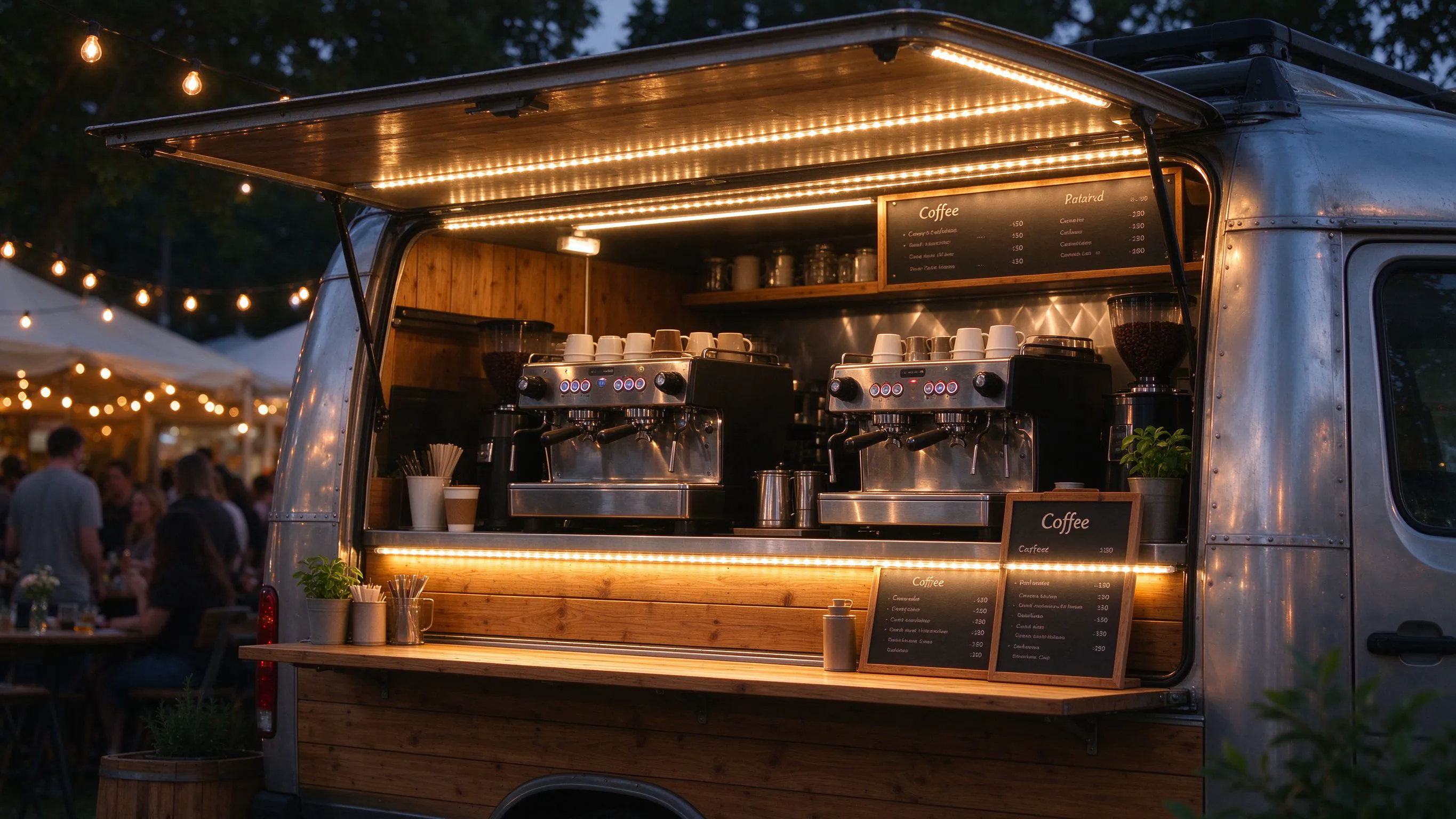
Why Food Trucks Need Low-Voltage LED Lighting
A food truck is a mobile, battery-powered business with no guaranteed mains supply at service. Lighting has to run from the vehicle's 12V (or 24V) electrical system, draw as little current as possible to preserve battery for cooking equipment and refrigeration, survive road vibration and occasional moisture, and make the ordering area and awning bright and appealing enough to attract night-time customers.
Mains halogen or high-voltage fittings are the wrong answer. Low-voltage 2835 LED strip runs directly from the truck battery, is lightweight, flexible for fitting into counters and awnings, and draws a fraction of the power of the lighting it replaces.
What 12V/24V 2835 Strip Brings to a Truck
- Runs directly from the vehicle battery, no mains needed.
- Low current draw preserves battery for cooking and fridges.
- Flexible, lightweight fit for awnings, counters and interiors.
- Bright, even service-area light for night service.
- Available in weather-protected versions for exposed awnings.
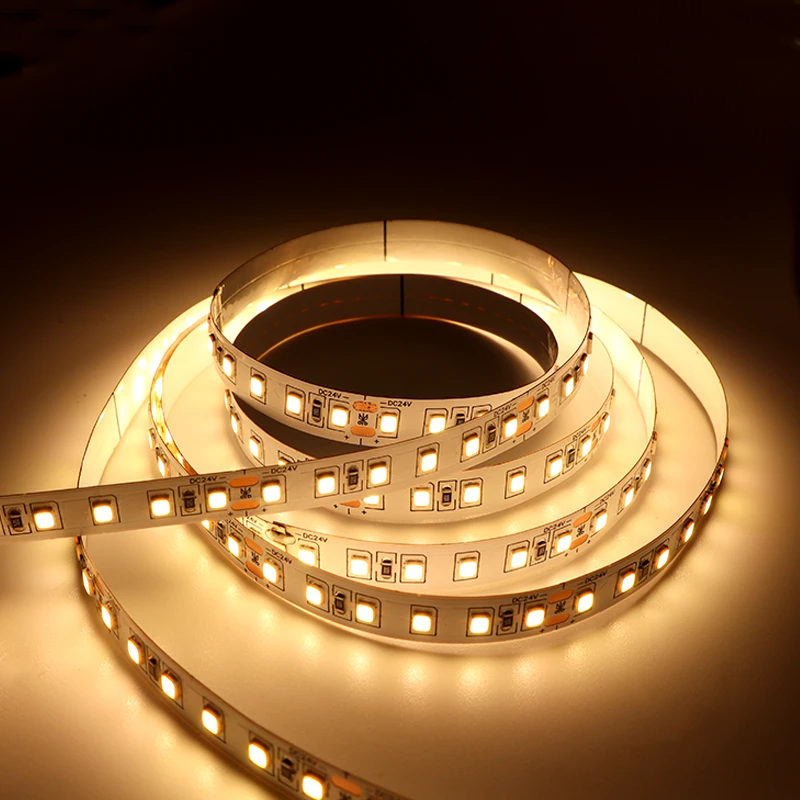
For food-truck lighting I use 12V/24V 2835 strip. It runs efficiently off the battery and fits the awning, counter and interior without heavy fixtures.
Where Strip Is Used on a Food Truck
- Under-awning perimeter light over the ordering and pickup area.
- Serving counter and menu illumination.
- Interior prep and storage compartment lighting.
- Accent light on branding, signage and display shelves.
- Step, handle and safety lighting for staff movement.
12V vs 24V and Battery Planning
I match the strip voltage to the truck's electrical system; many food trucks are 12V, while larger builds and trailers may be 24V or use converters. I total the lighting current against battery capacity and the other DC loads, because lighting competes with refrigeration and pumps for limited stored energy, and I wire lighting on its own fused circuit with a switch so it can be controlled independently and isolated when the truck is closed.
- Match strip voltage to the truck's 12V/24V system.
- Total lighting current against battery and other loads.
- Run lighting on its own fused, switched circuit.
- Isolate lighting when the truck is closed.
Awning Weatherproofing and Vibration
Awning lighting is exposed to rain, wind and road grime, so I use appropriately weather-protected strip or channel for exterior runs and seal connections, while interior dry-area strip can be lighter rated. Everything must survive constant road vibration, so I secure strip in channels or with robust fixing rather than relying on adhesive alone over a bouncing truck, and I use locking or secured connectors that will not shake loose mid-route.
Colour Temperature for Appetite and Service
Lighting colour affects how food looks and how readable the counter is. I generally use a warm-neutral to neutral white that flatters food while keeping the menu and cash area clearly lit, avoiding the cold clinical white that makes produce look unappetising, and I ensure brightness at the counter is high enough for customers to read menus and for staff to handle orders and payments accurately.
Dimming, Zones and Reliability for Service
I split lighting into useful zones, awning and exterior attractiveness light, counter task light and interior light, so staff use only what they need and save battery during setup and close-down, and I add simple dimming where the truck switches between bright service and ambient standby. Reliability matters because a dark truck loses an evening's trade, so I favour quality strip, secure terminations and a small spare length and connectors carried on board for fast roadside repair.
Specifying Food-Truck Lighting
Send the truck or trailer voltage and battery setup, awning and counter dimensions, which zones are exposed to weather and your typical service hours. I will confirm 12V/24V 2835 strip quantities, weather protection, fused circuit layout, zones and driver or converter needs. We supply the strip and recommend testing the full lighting load on the battery during a dry-run service to confirm endurance before relying on it during trade.
Working Out a Coffee Truck's Battery Budget
A specialty coffee truck operator was converting a trailer for evening markets and assumed lighting was a minor load, until we tallied the battery budget against the equipment that actually mattered, the espresso machine pump, refrigeration for milk and cold drinks, and the point-of-sale tablet. On a 12V system with finite stored energy and no mains at many market pitches, every amp drawn by lighting was an amp not available to keep milk cold through a four-hour service.
- List every DC load and its current, including lighting, pumps, fridge and POS.
- Choose low-current 12V 2835 strip and calculate its draw across all zones.
- Split awning, counter and interior lighting onto separately switched zones.
- Use dimming to drop to ambient standby between order rushes.
- Run a full dry-service on battery to confirm endurance before trading.
We built the lighting around 12V 2835 strip specifically for its low current draw, then divided it into three independently switched zones rather than one always-on circuit: bright under-awning perimeter light to make the truck visible and draw customers in the dark market, focused counter and menu task light for taking orders and steaming, and interior prep and storage light used only when staff reached for stock. This let the operator switch off the awning during quiet periods and dim the counter to an ambient standby between rushes, clawing back significant battery capacity exactly when the fridge was working hardest. We matched the strip to the 12V system, put the lighting on its own fused circuit with a master isolation switch for close-down, and used weather-protected channel for the exposed awning runs with locking connectors that would survive the trailer bouncing between pitches, securing the strip mechanically rather than trusting adhesive on a vibrating vehicle. Colour temperature was a deliberate choice, a warm-neutral white that made the coffee and pastry display look inviting while still keeping the menu board and payment area legible. The decisive step was a full dry-run service on battery at an evening market, lights, fridge, pump and POS all running, which confirmed the truck could complete a four-hour service with margin and showed the operator exactly how much the zoned, dimmable lighting saved versus running everything flat out. He also carried a short spare length of strip and a couple of connectors for a fast repair, cheap insurance against a dark truck losing a night of trade. The project is a useful reminder that on a food truck lighting is specified in amps as much as in lumens, and that low-voltage strip plus proper zoning and a real battery dry-run is what keeps a mobile kitchen trading reliably after dark.
Recommended Products
Frequently Asked Questions
What LED strip is best for a food truck?
Low-voltage 12V/24V 2835 LED strip, matched to the vehicle's electrical system. It runs directly from the truck battery with low current draw, preserving power for refrigeration and cooking, and its flexible lightweight form fits awnings, counters and interiors, with weather-protected versions for exposed exterior runs.
Can I run LED strip directly from a food-truck battery?
Yes, that is the advantage of 12V/24V strip; it runs directly from the vehicle battery with no mains supply. Match the voltage to the truck system, total the lighting current against battery capacity and the other DC loads such as fridges and pumps, and wire the lighting on its own fused, switched circuit that can be isolated when closed.
How do I protect awning lights from rain and vibration?
Use weather-protected strip or channel for exterior awning runs and seal the connections, while dry interior areas can use lighter-rated strip. Because a truck vibrates constantly, secure the strip in channels or with robust fixing rather than adhesive alone, and use locking connectors that will not shake loose on the road.
What colour temperature makes food look best at a truck?
A warm-neutral to neutral white generally flatters food while keeping the menu, counter and payment area clearly lit; avoid a cold clinical white that makes produce look unappetising. Ensure the counter is bright enough for customers to read menus and for staff to handle orders accurately.
How should I zone food-truck lighting to save battery?
Split it into awning/exterior attractiveness light, counter task light and interior light so staff switch on only what is needed during setup, service and close-down, with simple dimming for switching between bright service and ambient standby. Use quality strip and secure terminations, and carry a small spare length and connectors for fast roadside repair, since a dark truck loses trade.
Need help with your LED project?
Get factory-direct pricing, free samples and engineering support within 24 hours.
Email: info@arraystarled.com | Phone: +86-0755-2103-6746 | WhatsApp: 0086 1581 8514 077
Need to size your power supply? Use our LED Strip Power Calculator to find the right driver in seconds.







