
LED Lighting Layout for Outdoor Pickleball Courts
- 2026-10-09 18:41
- /
- Arraystar LED
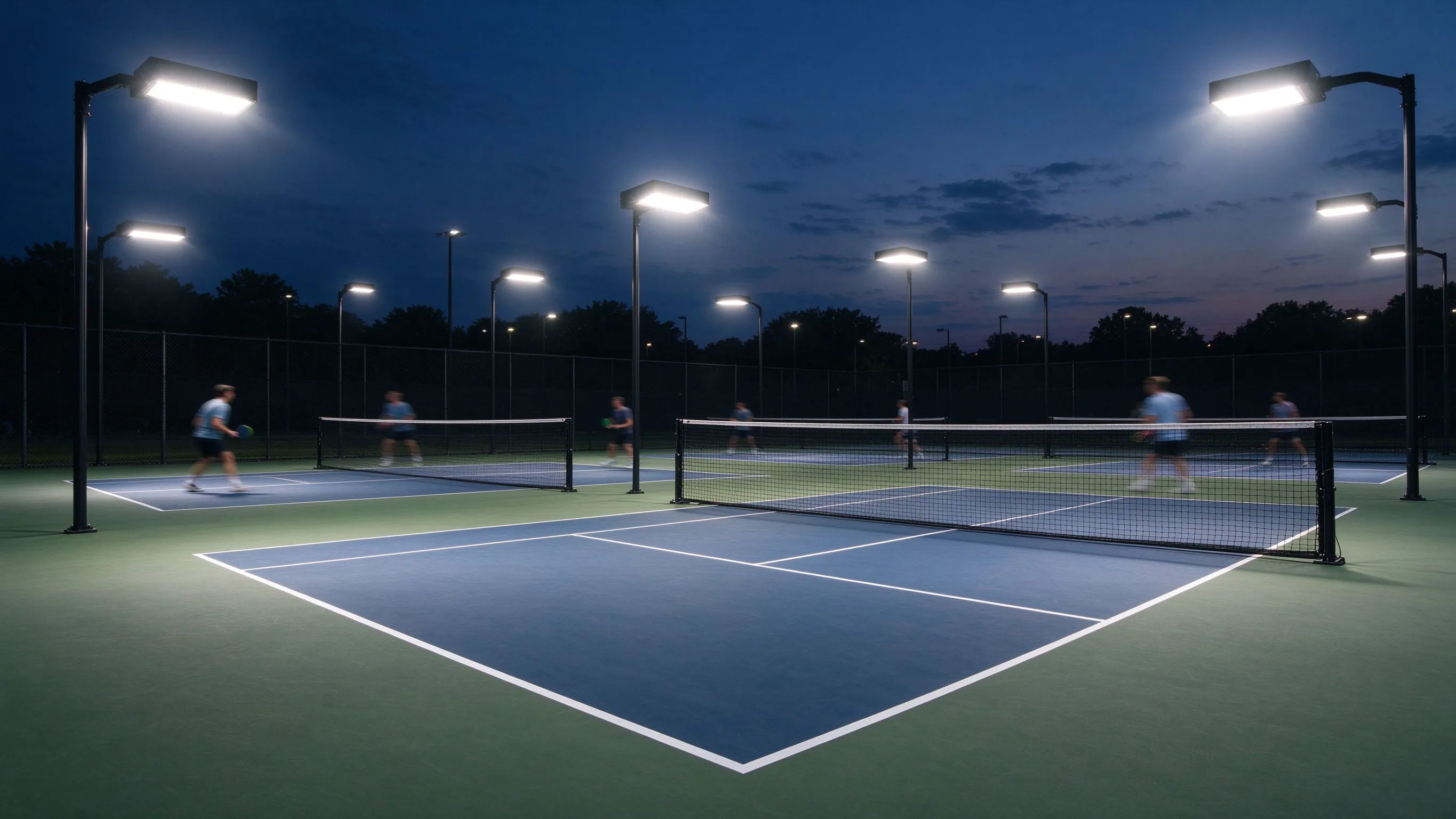
Outdoor pickleball has boomed, and recreational and club courts need evening light that is even across the playing surface and low in glare so players track the ball without staring into bright sources. A well-planned LED layout using wide-throw, low-glare perimeter fixtures illuminates the court and surrounds uniformly, extending playable hours while meeting the practical realities of recreational facilities.
Why Court Lighting Is Different From Area Floodlighting
A court is not a car park. Players look upward and across the court to track a small ball moving at speed, so a few bright floodlights on poles create harsh glare, deep shadows between poles and uneven surface brightness that makes judging the ball difficult and tiring. Good court lighting prioritises uniformity across the playing lines and control of glare into players' eyes.
Recreational pickleball courts, often built in clusters at clubs, community facilities and converted spaces, benefit from wide-throw, low-glare LED perimeter lighting that spreads even spill over the court rather than punching narrow intense beams.
What the Wide-Throw Wall-Washer Profile Brings
- Wide, even throw across the court surface.
- Low-glare spill that avoids blinding players.
- Uniform perimeter illumination for clustered courts.
- Linear form that spreads light rather than spotlighting.
- Extended evening play for recreational facilities.
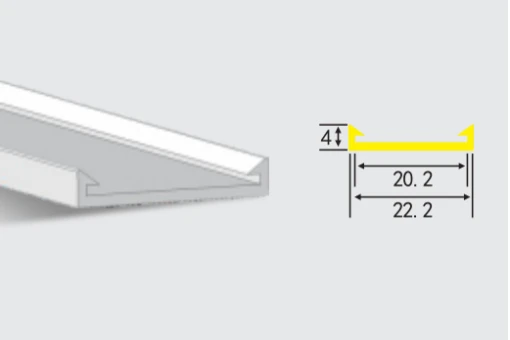
For recreational court surrounds I use the wide-throw NT20WL wall-washer profile. Its broad, controlled spill gives even light without the harsh glare of pole-mounted floods.
Pole Floodlights vs Perimeter Wide-Throw Light
Recreational courts favour even, low-glare perimeter distribution.
| Approach | Surface uniformity | Glare |
|---|---|---|
| Few pole floodlights | Hot spots and shadows | High, players look into them |
| Perimeter wide-throw | Even spill across court | Low, controlled |
| High-mast sports lighting | Very even (pro level) | Engineered, costly |
Where Recreational Court Lighting Is Needed
- Club and community pickleball courts with evening play.
- Clustered outdoor courts sharing perimeter lighting.
- Converted tennis or multi-use recreational surfaces.
- Hotels, resorts and apartment amenity courts.
- Backyard and semi-private recreational courts.
Light Levels and Uniformity for Recreational Play
Competitive and professional courts demand high, tightly specified lux and uniformity ratios, but most recreational pickleball needs a practical, comfortable level that lets players see the ball and the lines clearly without the budget of a professional stadium. I aim for even coverage across the whole court including the non-volley zone and baselines, prioritise uniformity over peak brightness, and avoid dark corners that change how the ball appears during a rally. Where the court is also used for other sports, I design to the most demanding recreational use.
- Prioritise uniformity over peak brightness.
- Cover baselines and the non-volley zone evenly.
- Eliminate dark corners that distort ball tracking.
- Design to the most demanding recreational sport sharing the court.
Glare Control and Fixture Positioning
Glare is the single biggest complaint in court lighting, so I position and shield fixtures so players never look directly into a bright source during normal play, particularly at the net where opponents face each other. Wide-throw linear fixtures around the perimeter, aimed and shielded to put light on the surface rather than across sightlines, are more forgiving than tall floods, and I check glare from representative player positions rather than only from outside the court.
Weather, Durability and Neighbour Light Spill
Outdoor fixtures must be weather-rated for the climate, and because community courts often sit near housing, I control upward waste and spill beyond the fence with shielding and aiming, reducing both light pollution and neighbour complaints. I specify durable, corrosion-resistant fittings for exposed sites and plan accessible drivers and connections so maintenance does not require closing the courts for long periods.
Specifying a Pickleball Court Layout
Send the court or cluster dimensions, surrounding fence and pole options, playing level (recreational vs competitive), neighbouring buildings and climate. I will confirm fixture count, perimeter positioning, light levels, glare shielding and weather rating. We supply the wide-throw wall-washer profile and recommend a night-time trial on one court, checking uniformity and glare from the net and baselines, before fitting out a full cluster.
Converting Tennis Courts to Lit Pickleball Courts
A community sports club converted four underused tennis courts into eight pickleball courts to meet an explosion in evening demand, and the existing lighting, tall pole floodlights designed for tennis, created exactly the problems the new sport punishes. Pickleball players look upward far more often at a soft, high-bouncing ball, and from the compact court the old floods sat in players' sightlines as glaring sources with dark patches between poles, generating complaints within the first week of night sessions.
- Assess the existing tennis floods for glare and uniformity from pickleball player positions.
- Introduce wide-throw low-glare perimeter profiles to spread even spill across each compact court.
- Aim and shield fixtures so no player at the net or baseline looks into a bright source.
- Verify uniformity over every non-volley zone and baseline, not just court centre.
- Run a night trial on one court before committing to the full eight-court rollout.
Rather than replace the entire pole infrastructure at great cost, we supplemented it with wide-throw NT20WL wall-washer profiles mounted along the perimeter fencing, using their broad controlled spill to fill the dark gaps and smooth the surface brightness while re-aiming and, where necessary, shielding the existing floods to remove them from direct sightlines. The compact pickleball court footprint suited perimeter linear distribution well, because a court is small enough that wide even throw from the edges covers the whole playing lines without the intensity of overhead floods. We treated uniformity as the priority over raw brightness, checking that the non-volley zone at the net and both baselines matched the centre so the ball did not appear to change brightness during a rally, and we paid particular attention to glare at the net where opposing players face each other across only a few metres, adjusting aim until neither position looked into a source. Because the courts backed onto residential properties, we also shielded to control spill beyond the fence and upward light, which kept the neighbours on side as evening sessions extended. We insisted on a full night trial on one converted court, with club players of different ages testing from the net and baselines, before rolling the same layout across all eight courts. The result was comfortable, even, low-glare evening play at recreational level for a fraction of a professional high-mast refit, and the club maximised its evening court bookings. The conversion is my reference for recreational sports lighting: the goal is not stadium lux but uniform surface light and protected sightlines, validated by actual players at night rather than by a photometric plan viewed in the office.
Recommended Products
Frequently Asked Questions
What LED layout suits an outdoor pickleball court?
Recreational courts are best served by wide-throw, low-glare perimeter fixtures that spread even light across the whole surface rather than a few bright pole floodlights, which create hot spots, shadows and glare into players' eyes. Uniformity over the baselines and non-volley zone and shielding to protect sightlines matter more than peak brightness.
Why are pole floodlights bad for pickleball?
Players look upward and across the court to track a small fast ball, and a small number of tall floods produce intense hot spots, dark gaps between poles and direct glare when players look toward them, making the ball hard to judge and tiring on the eyes. Perimeter wide-throw linear fixtures distribute light more evenly and can be aimed and shielded away from sightlines.
How much light does a recreational pickleball court need?
Recreational play needs a practical, comfortable level that shows the ball and lines clearly rather than the high tightly specified lux of a professional stadium. Prioritise even coverage across the whole court including the non-volley zone and baselines, eliminate dark corners, and if the surface is shared with other sports, design to the most demanding recreational use.
How do I stop court lights glaring in players' eyes?
Position and shield fixtures so players never look directly into a bright source during normal play, especially at the net where opponents face each other, and use perimeter wide-throw linear fixtures aimed to put light on the surface rather than across sightlines. Always assess glare from representative player positions on the court, not just from outside it.
How do I avoid disturbing neighbours with court lighting?
Use weather-rated, corrosion-resistant fixtures for the climate, and control upward waste and spill beyond the fence through shielding and careful aiming to cut light pollution and neighbour complaints, which is especially important for community courts near housing. Keep drivers and connections accessible so maintenance does not require long court closures.
Need help with your LED project?
Get factory-direct pricing, free samples and engineering support within 24 hours.
Email: info@arraystarled.com | Phone: +86-0755-2103-6746 | WhatsApp: 0086 1581 8514 077
Need to size your power supply? Use our LED Strip Power Calculator to find the right driver in seconds.







