My COB White Strip Looks Pink (or Green) - Where Is the Colour Fault?
- 2026-11-02 15:54
- /
- Arraystar LED
A white strip that looks pink or green is almost never a driver fault. It is either a missing die channel on a multichip white, or sloppy binning on a cheap reel. I tell the two apart by swapping the driver, and then by looking at the spectral mix on a white wall. The fix is usually a bin-matched reel, not a dimmer.
The white that is not actually white
A client calls and says their warm white strip looks pink, or their cool white has a greenish cast. They bought a cheap reel off a marketplace, installed it, and on the white wall behind the TV the tint is obvious. Sometimes it is uniform across the whole run. Sometimes it changes along the length, with one end pink and the other end green.
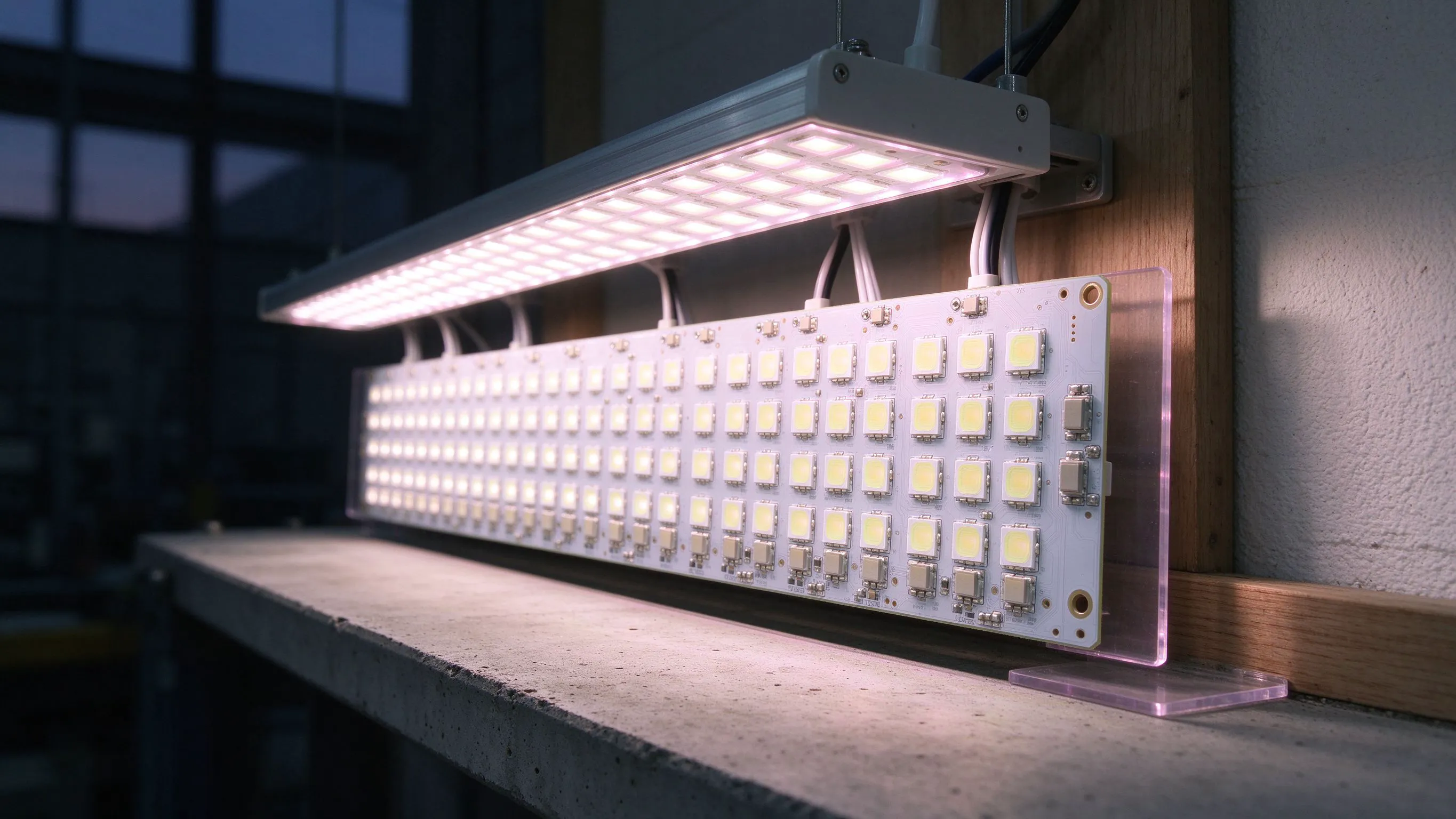
White LEDs are not a single die. A good white COB strip mixes a cool blue die, a warm red die, and a green or yellow phosphor to hit the target correlated colour temperature. If one of those channels is weak or missing, the white shifts toward whatever channel is still over-represented. Pink means the red channel is dominant; green means the green phosphor is over-represented.
Binning fault versus driver fault
The first job is telling a binning fault from a driver or dimming fault. A driver fault usually shows up as brightness or flicker, not a colour tint, because a constant-voltage driver does not mix channels. But a cheap PWM dimmer running at a low frequency can distort the perceived colour on some strips, and a faulty tunable-white controller can leave one channel on full. I rule those out first.
Diagnostic steps in order
- Swap the driver for a known-good constant-voltage supply at the correct voltage.
- Disconnect any dimmer or tunable controller and run the strip straight from the driver.
- Measure the voltage at both ends of the run; a sag under load can dim one section.
- Compare a 200 mm sample of the strip against a known-good white light on a white wall.
What pink versus green actually means
Once the driver is ruled out, the tint tells you the root cause. A pink or magenta white usually means the cool blue die is weak or missing, leaving the red and warm phosphor to dominate. A greenish or sickly white means the green phosphor is over-represented, which happens on cheap bins where the manufacturer did not sort the phosphor batches tightly. Both are binning problems.
- Pink / magenta tint: weak blue die or too much red phosphor in the mix.
- Greenish tint: over-represented green phosphor, typical of unsorted cheap reels.
- Yellowish tint: normal phosphor ageing from heat, see the cabinet heat article.
- Uniform tint across whole reel: binning fault on the whole lot.
- Patchy tint along the run: mixed reels from different bins.
How binning should work
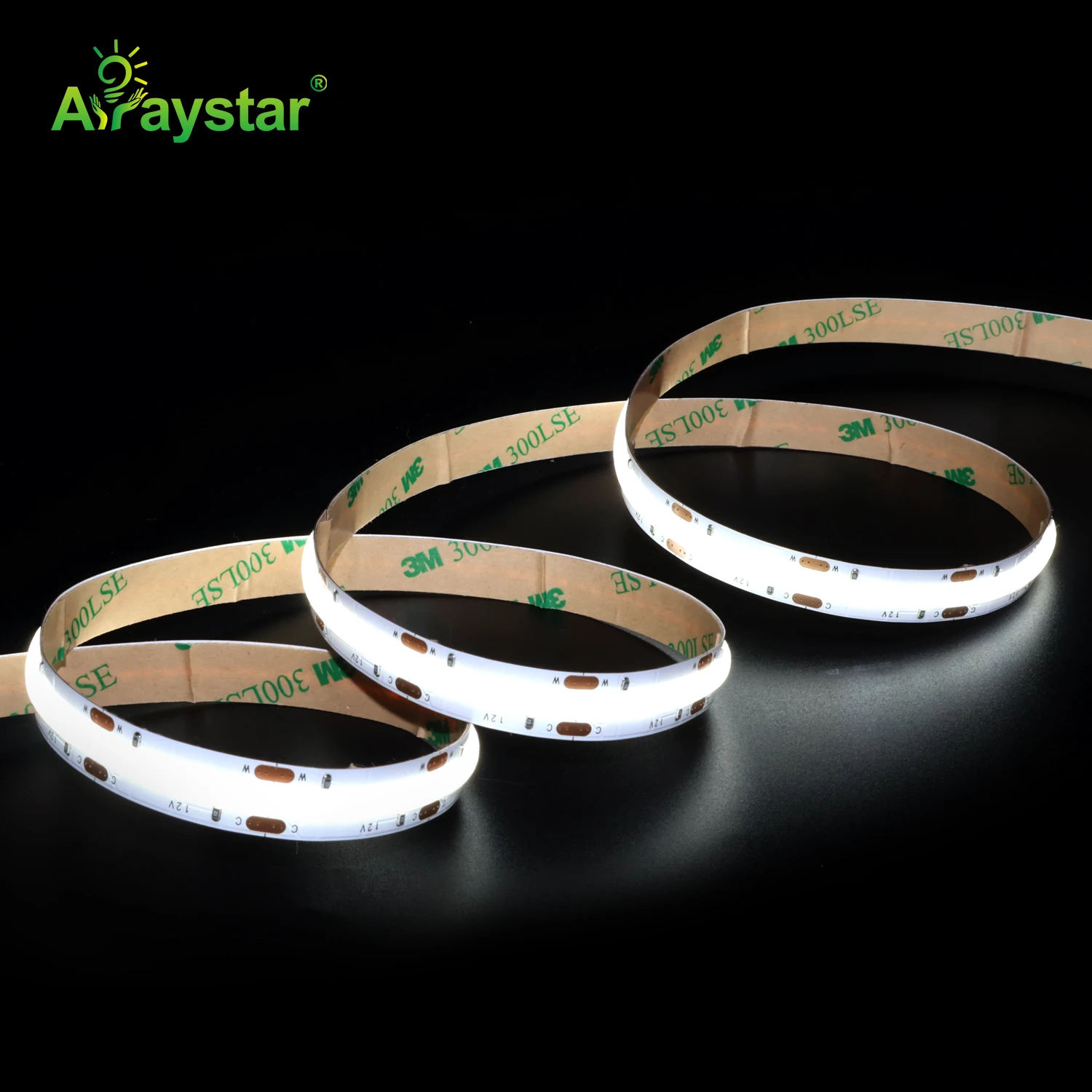
A reputable LED supplier bins white LEDs tightly on the 1931 chromaticity diagram, usually to a 3-step MacAdam ellipse. That means every LED in a reel sits within a small oval around the target colour, and the human eye cannot tell adjacent dies apart. Cheap reels are binned to a 5-step or 7-step ellipse, which lets pinkish, greenish, and neutral dies mix on the same strip.
Ask for the bin step on white strips; 3-step is the spec to aim for.
| Bin grade | MacAdam ellipse | Colour consistency | Typical use |
|---|---|---|---|
| Premium | 3-step | Invisible variation | High-end retail |
| Standard | 4-step | Minor at close range | General interior |
| Budget | 6 to 7-step | Visible pink/green patches | Temporary installs |
| No bin | Open | Obvious tint on every reel | Avoid for white light |
Fixing the tint on an existing install
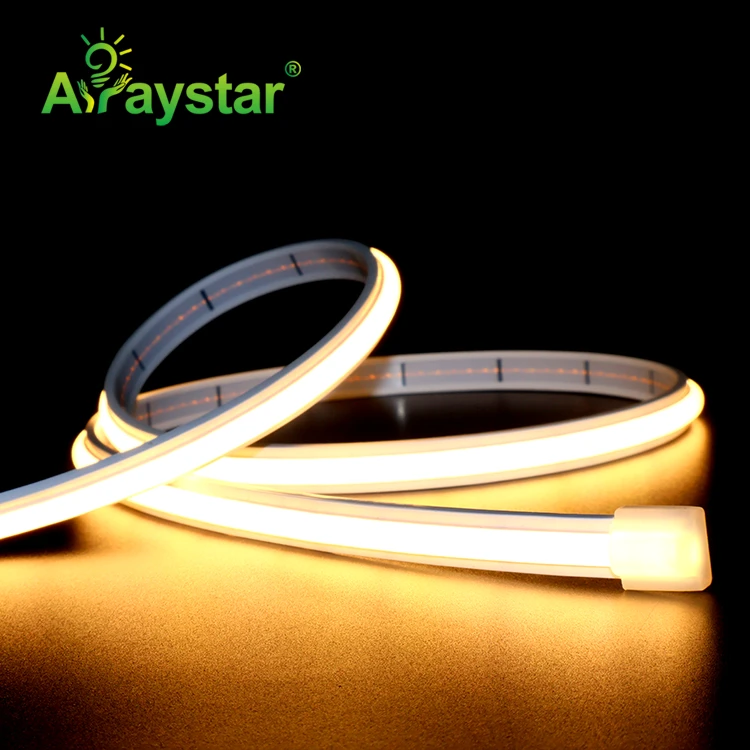
If the whole reel is pink or green, there is no bench fix. The strip is binned wrong and you have to replace it. Before you order a new reel, ask the supplier for a 300 mm sample lit on a white wall in a dark room, and compare it against the existing strip side by side. Sample first, then order the full run. For tunable installations, a CCT-adjustable strip with a proper controller can be trimmed to neutral white.
- Request a 300 mm sample of the replacement strip before ordering the full reel.
- Light the sample on a matte white wall in a dark room and compare to a known-good white.
- Ask the supplier for the MacAdam step and the chromaticity coordinates on the 1931 diagram.
- For tunable white runs, calibrate the controller after install to hit the target CCT.

Recommended Products
Frequently Asked Questions
Why does my cheap white LED strip look pink?
A pink white usually means the cool blue die in the LED mix is weak or missing, leaving the red phosphor to dominate. This is a binning and die-mix fault on cheap reels. It is not a dimmer problem. Swap the driver to rule it out, then replace the reel with a 3-step bin-matched white.
What makes a white LED look green?
A greenish white means the green phosphor in the mix is over-represented, which happens when a supplier does not sort phosphor batches tightly. On a 6 or 7-step bin reel, greenish dies can land next to neutral ones. The fix is a tighter bin, not a filter or a coloured diffuser.
Can a dimmer make my white strip change colour?
A cheap PWM dimmer running at under 1 kHz can distort the perceived colour on some strips, and a faulty tunable controller can leave one channel on full. Disconnect the dimmer and run the strip straight from the driver. If the tint stays, it is binning, not the dimmer.
What is a 3-step MacAdam bin?
It means every LED in the reel sits within a small oval on the 1931 colour diagram around the target white, and the human eye cannot tell adjacent dies apart. Budget reels use 6 or 7-step bins, which let pinkish and greenish dies mix on the same strip. Ask for 3-step on any white strip that will be seen on a white wall.
Should I buy a tunable CCT strip to fix a tint?
Only if the rest of the strip is good and you just need to nudge the colour. A tunable strip with a proper controller lets you dial in the exact white on the wall. But if the underlying reel is pink or green across the whole run, tuning will not fix a bad die mix. Sample first.
Need help with your LED project?
Get factory-direct pricing, free samples and engineering support within 24 hours.
Email: info@arraystarled.com | Phone: +86-0755-2103-6746 | WhatsApp: 0086 1581 8514 077
Need to size your power supply? Use our LED Strip Power Calculator to find the right driver in seconds.