
Sizing an LED Strip Power Supply: Watts, the 20% Rule, Class 2 and Rainproof vs Waterproof
- 2026-10-08 17:37
- /
- Arraystar LED
Choosing an LED strip driver is three separate decisions that get collapsed into one bad purchase. First, it must be constant-voltage (12V or 24V, sometimes 48V) and matched to the strip - constant-current drivers will not work on ordinary tape. Second, size the wattage at the real connected load plus 20% headroom, and decide whether code requires a Class 2 limited-power source. Third, pick the enclosure for where it actually lives - indoor, rainproof under eaves, or fully IP67 in a wet location - and whether the circuit dims, which demands a dimmable driver matched to your control. Get those three right and the driver disappears for a decade; guess, and it is the part that flickers, trips or dies first.
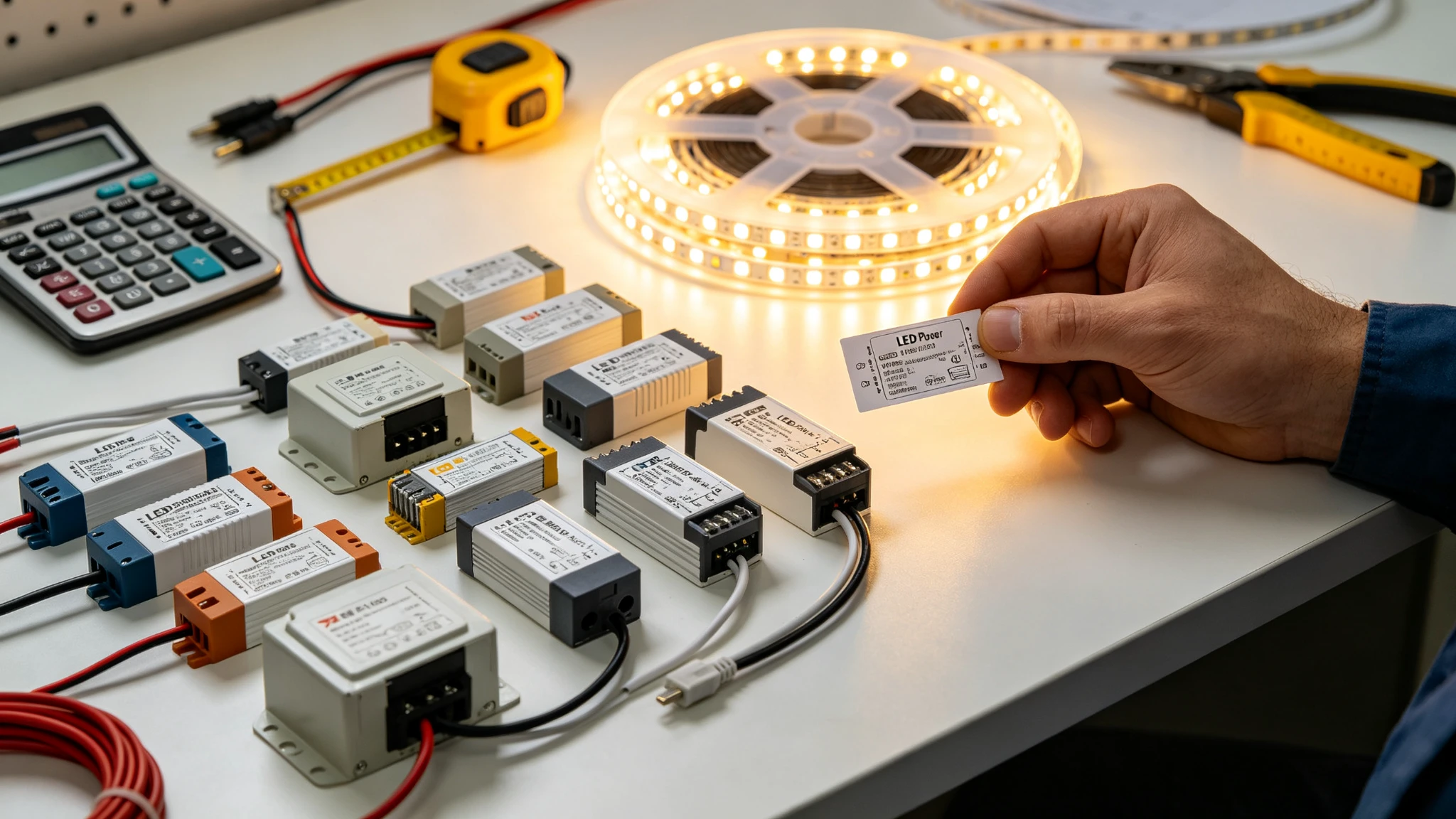
Step 1 - Constant Voltage, and the Right Voltage
Nearly all flexible LED strip is constant-voltage: the strip has resistors built in and expects a steady 12V, 24V or 48V feed. The driver's job is simply to hold that voltage and supply whatever current (up to its rated maximum) the strip draws. This is the opposite of constant-current drivers used for high-power COB chips and rigid modules, which push a fixed current - putting one of those on standard tape will overdrive or fail to run it. Check the strip markings and spec the same voltage; 12V strip on a 24V driver burns out fast.
- Match voltage exactly: 12V, 24V or 48V as printed on the strip.
- Constant-voltage (CV) for tape with onboard resistors; constant-current (CC) only for CC fixtures.
- Prefer 24V over 12V for runs over ~5m - half the current means less voltage drop and thinner wire.
- Consider 48V for very long architectural runs to minimise feeds (still a CV driver).
Step 2 - Calculate Watts and Add Headroom
This is the part people get wrong most often. Multiply the strip's watts-per-metre by the total connected metres on that driver - including every parallel branch. Then multiply by 1.2 for a 20% safety margin. Running a driver flat-out at 100% keeps it hot and shortens its life; the 80% rule keeps it cool, gives you room for small additions, and covers the difference between nominal and real-world wattage.
Round up to the next standard size rather than running a driver at its limit.
| Connected load | Driver to choose (at 80% rule) | Typical job |
|---|---|---|
| ~40W | 60W | Short under-cabinet run |
| ~80W | 100-120W | Single room cove |
| ~120W | 150W | Kitchen + living cove |
| ~200W | 250-300W | Open-plan perimeter |
| ~400W+ | 500-600W or split into two drivers | Commercial / long facade |
A 150W supply is the workhorse I reach for constantly - it comfortably covers a single room or one long cove once headroom is added without being so oversized that you waste money or struggle with minimum-load dimming. For genuinely large totals I would rather split the load across two drivers near the runs than push one 600W unit, because shorter wire runs reduce voltage drop and a single failure does not black out everything.
Step 3 - Class 2 and When Code Limits Your Watts
In North American commercial work, a Class 2 driver limits output current and power (commonly under 60V and up to 96VA/100W per circuit) so the wiring is considered safe from fire and shock and can run without conduit. That is convenient, but it caps how much strip one driver can feed - long or high-density runs often need several Class 2 supplies rather than one big non-Class-2 unit. Non-Class 2 (also called Class P or standard) drivers deliver more power but usually require licensed wiring, conduit and overcurrent protection.
- Class 2: simpler, safer wiring, but capped around 96-100W per output - plan multiple drivers.
- Non-Class 2: more watts per driver, more wiring-code requirements and protection needed.
- Check local code and the fixture label; signage and residential rules vary.
- When in doubt on a commercial bid, ask the electrical contractor before you quote driver count.
Step 4 - Indoor, Rainproof or Waterproof Enclosure
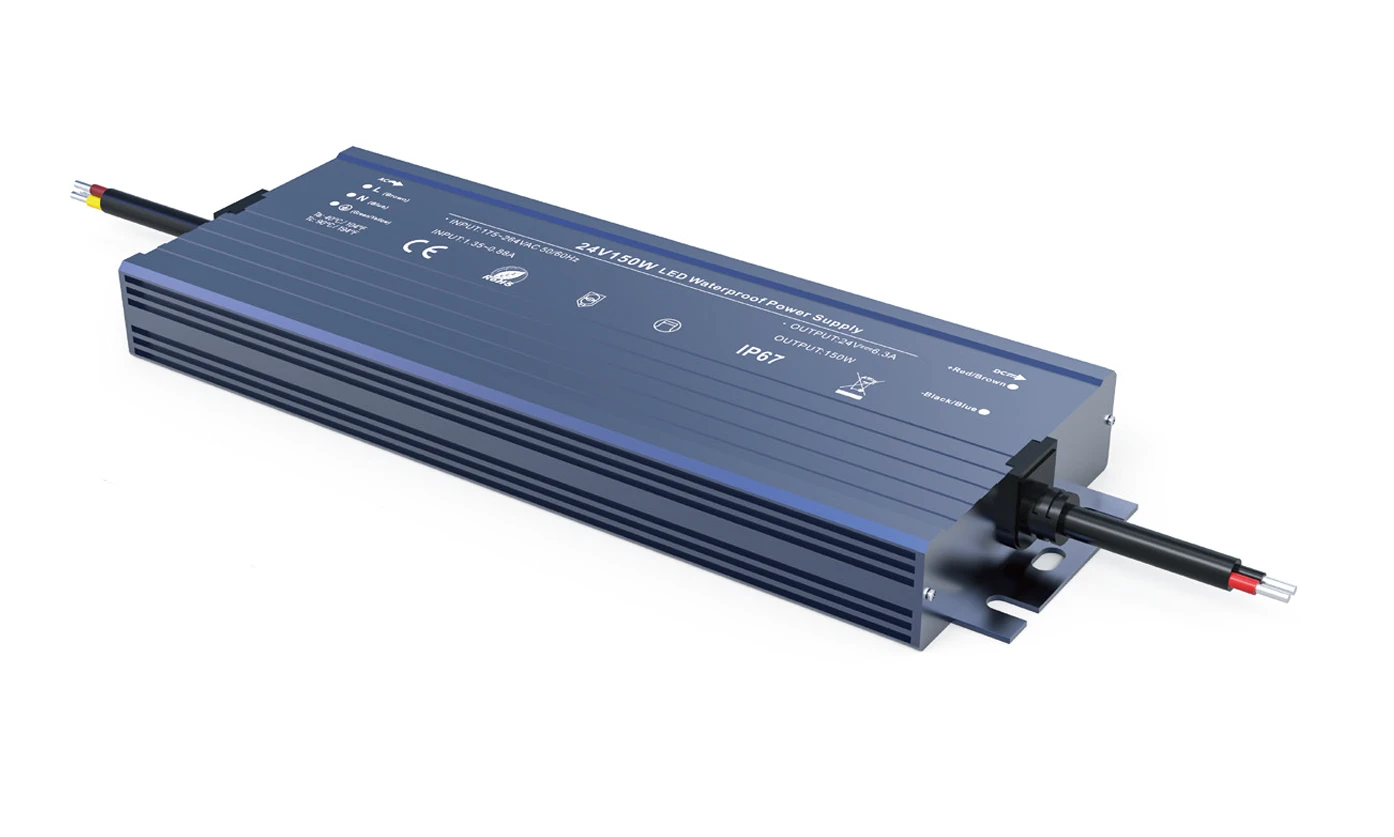
The IP rating of the driver matters as much as the strip's. A bare metal desktop PSU belongs in a ventilated indoor cabinet only. 'Rainproof' (often IP44/IP54) handles condensation and indirect spray under eaves or in a ventilated sign cabinet but not direct jets or immersion. Fully waterproof IP67 pot-filled supplies are sealed against jets and temporary wetting for pool-side, bathroom ceiling, kitchen wash-down and exterior ground-level locations.
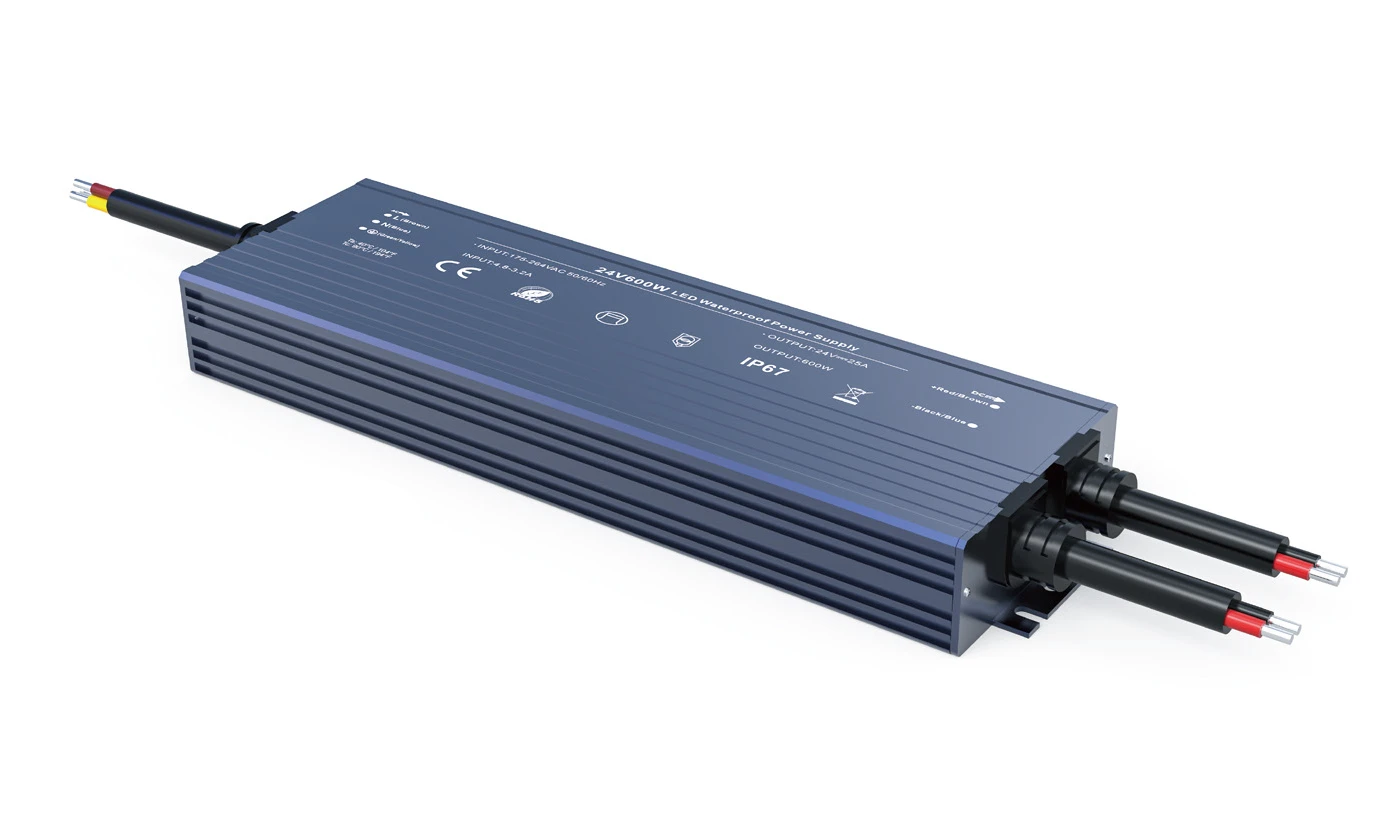
For exterior and wet-area jobs I use the pot-filled waterproof range. The 600W waterproof supply consolidates long outdoor or commercial loads in a single sealed unit where several indoor drivers would be impractical, and the potting also sheds heat and suppresses moisture-related failure. Just mount it with the cable glands downward and leave airflow - sealed does not mean you can wrap it in insulation.
Step 5 - If It Dims, the Driver Must Be Dimmable and Matched
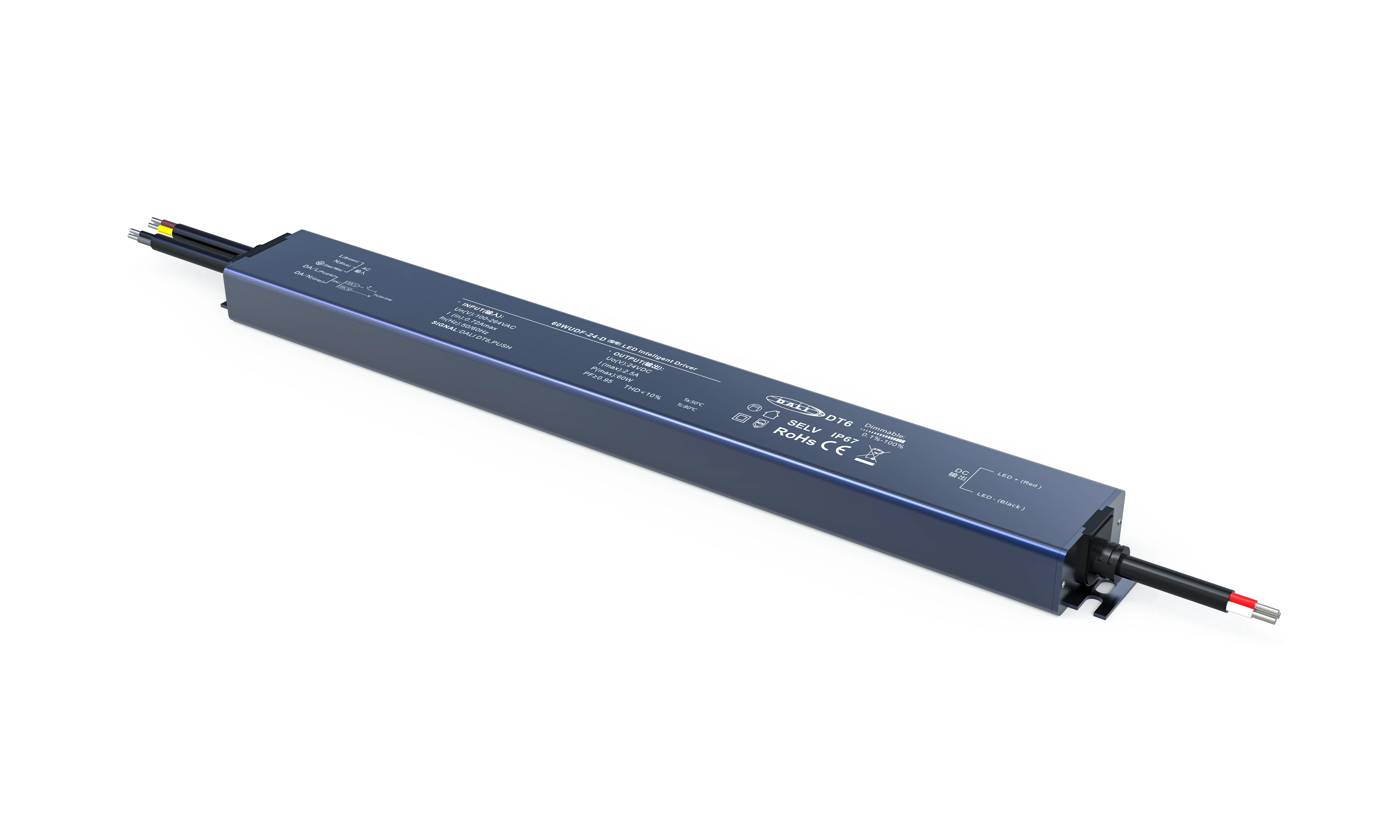
A standard (non-dimmable) driver fed through a dimmer will buzz, flicker, pop on late or refuse to dim below a bright level. If the circuit dims, buy a dimmable driver made for the control protocol you are actually using - TRIAC/phase-cut for wall dimmers, 0-10V for many commercial systems, DALI for addressable buildings, or PWM remote/receiver kits for simple low-voltage control. The driver and control must be a matched pair.
On TRIAC and 0-10V jobs I use the dimmable DF series rather than a generic supply, because it is designed to hold a smooth output down to low levels without the strobing that cheap dimmable supplies show under 20%. Specify it up front; retrofitting dimming onto a non-dimmable driver later means replacing the driver anyway.
Pick the control protocol, then buy the matching driver.
| Control type | Driver needed | Best for |
|---|---|---|
| No dimming | Standard CV driver | Cost-sensitive fixed output |
| TRIAC / wall dimmer | TRIAC/phase-cut dimmable | Retrofit residential |
| 0-10V | 0-10V dimmable + control wires | Offices, commercial |
| DALI | DALI driver/controller | Addressable buildings |
| Remote / app / sensor | PWM receiver + standard CV driver | Cabinets, bedrooms, RGB |
Mounting, Heat and Why Location Changes the Rating
The IP rating on the box only counts if you mount the driver the way it was tested. Even a waterproof supply should sit with its cable glands facing down so water runs away from the seals, never flat on its back where rain pools around the lid. Drivers are cooled by the case, and screwing one flush against insulation foam or stacking two on top of each other cooks the electrolytic capacitors, which brings flicker and early failure straight back.
- Keep drivers accessible above a removable ceiling panel - one sealed permanently inside a wall is a service nightmare.
- Leave clear air around pot-filled supplies and never bury them in loft insulation.
- Mount close to the load to shorten high-current low-voltage cable, but keep mains wiring inside a rated enclosure.
- Fuse each DC branch and use proper glands so a short on one run cannot take down the whole driver.
I also spread a large load across two mid-size drivers mounted near their runs rather than one giant supply in a distant cupboard. The low-voltage cable runs stay short, voltage drop all but disappears, and a single failed driver never blacks out an entire floor. It is cheaper on copper, easier on the hardware and far simpler to service at midnight.
Recommended Products
Frequently Asked Questions
How do I calculate what wattage LED driver I need?
Add the strip's watts-per-metre across every metre connected to that driver, including all parallel branches, then multiply by 1.2 to keep the driver at or below 80% of its rating. For example, 10 metres of 12W/m strip is 120W, so choose a 150W driver. Round up to the next standard size; do not run a supply continuously at 100% because heat and small wattage variations will shorten its life.
What happens if your LED power supply is too big?
A constant-voltage driver does not push its rated wattage - it only supplies what the strip draws, so a slightly oversized supply is harmless and actually runs cooler. The real issues are minimum-load dimming (a very large dimmable driver on a tiny run may flicker or fail to turn on smoothly), wasted cost, and code limits on non-Class-2 high-wattage units. Oversizing by the normal 20% margin is fine; oversizing by 5x on a dimmed circuit is not.
What is the difference between Class 2 and a regular LED driver?
A Class 2 driver limits output to under about 60V and 96-100VA, which makes the circuit low fire/shock risk and allows simpler wiring without conduit, but caps how much strip one driver can power. A regular (non-Class 2) driver can feed far more strip but generally requires conduit, overcurrent protection and licensed wiring. Use multiple Class 2 drivers for long residential and signage runs, and non-Class 2 where code and a qualified electrician allow it.
Can I use a rainproof LED power supply outdoors?
A rainproof (roughly IP44/IP54) supply is fine under eaves, inside a ventilated sign cabinet or anywhere protected from direct spray and standing water, mounted with cables pointing down. For direct rain exposure, wash-down areas, poolside or ground-level wet locations, use a fully pot-filled IP67 waterproof driver. Never use an indoor open-frame or metal-desktop supply outdoors, and never seal any driver airtight in insulation - it still needs to shed heat.
Do I need a special driver for dimmable LED strip?
Yes. A standard non-dimmable constant-voltage driver will buzz, flicker or dim poorly if you put it on a dimmer. Choose a dimmable driver matched to your control protocol - TRIAC/phase-cut for a wall dimmer, 0-10V or DALI for commercial systems, or a PWM receiver for remote/app control. Buying the matched dimmable driver up front is cheaper and smoother than trying to force a standard supply to dim.
Need help with your LED project?
Get factory-direct pricing, free samples and engineering support within 24 hours.
Email: info@arraystarled.com | Phone: +86-0755-2103-6746 | WhatsApp: 0086 1581 8514 077
Need to size your power supply? Use our LED Strip Power Calculator to find the right driver in seconds.







