
Beyond CRI: Using TM-30 (Rf/Rg) and R9 to Pick White LED Strip That Renders Color Honestly
- 2026-10-08 17:37
- /
- Arraystar LED
If you only ever read CRI Ra off a spec sheet, you have been missing the two numbers that actually predict whether a customer likes the light on their product, their food or their face: R9 and TM-30. Ra averages eight pastel colors and completely ignores saturated red, so a strip can score CRI 80 or even 90 while rendering deep reds, wood tones and skin as muddy and grey. R9 tells you how strong that red is, and TM-30's Rf (fidelity) and Rg (saturation) tell the full story across 99 colors, including whether the light washes everything out or over-saturates it. For retail, furniture, art, hospitality and beauty, spec CRI 90+ minimum, a positive R9 (50+ for premium), and Rf 90+ with Rg close to 100 - then verify it on a test reel, not a marketing PDF.
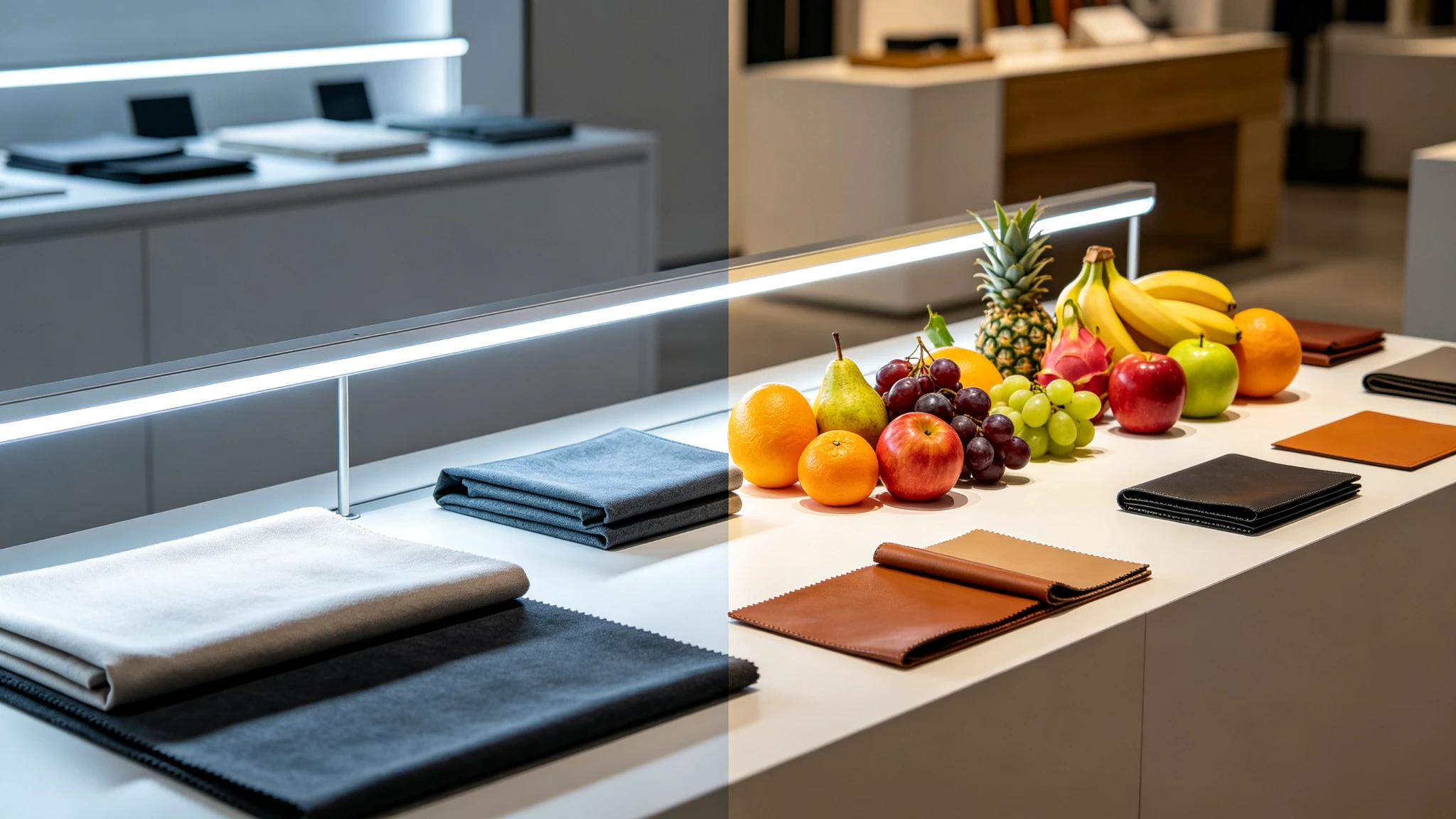
Why CRI Ra Is Not Enough on Its Own
Color Rendering Index (CRI or Ra) averages just eight test colors, R1 to R8, and they are mostly muted, desaturated tones. Crucially, strong red (R9) is measured but excluded from the Ra average. That loophole lets cheap strips score a respectable Ra 80 while scoring a negative or near-zero R9, which is why red signage, mahogany furniture, fresh meat, lipstick and warm skin can look flat and lifeless under a 'high CRI' tape.
I learned this the hard way on a furniture showroom where the specified Ra 82 strip made walnut veneer look grey-brown. The Ra number looked fine on the quote; the missing red content was invisible until the product was lit. Since then I treat Ra as a pass/fail floor, not the spec I optimize.
R9 - The Number That Sells Red, Wood and Skin
R9 scores how faithfully the light reproduces a saturated, deep red. Good neutral-white strips sit around R9 0-50; genuinely high-quality high-CRI product reaches R9 50-90. Because red content also warms wood, brings life to skin tones and makes food look appetizing, a strong positive R9 matters far beyond obviously red subjects.
R9 requirements rise with how much color fidelity the customer judges.
| Application | Minimum I spec | Why R9 matters |
|---|---|---|
| General cove / indirect | CRI 80+, R9 > 0 | Source is hidden, color less critical |
| Furniture / wood / floors | CRI 90+, R9 50+ | Wood grain lives in red/brown content |
| Retail / apparel / jewelry | CRI 90-95, R9 50+ | Fabric and gem color drives sales |
| Beauty / skin / food | CRI 95+, R9 70+ | Skin and food look natural or terrible |
| Art / museum / gallery | CRI 95-98, R9 80+ | Needs the widest, most honest palette |
Our wide 30mm high-brightness COB is available in CRI 90, 95 and 98 bins, and the difference between the 90 and 98 versions is most obvious exactly where R9 lives - reds, warm woods and skin. Specify the bin at order time; the same physical strip is produced in multiple color-quality grades and they are not interchangeable.
TM-30: Rf and Rg Tell the Rest of the Story
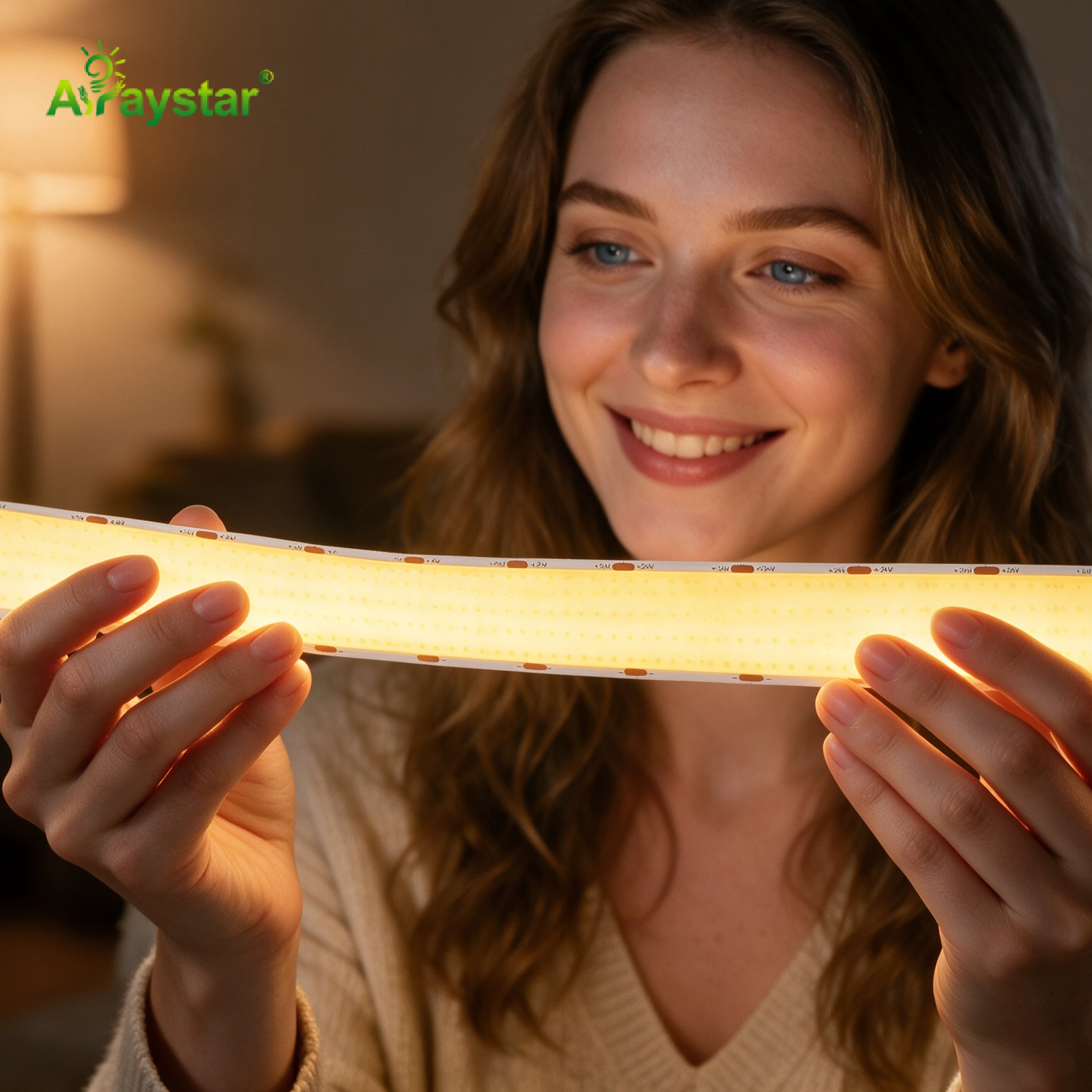
IES TM-30 is the modern metric and uses 99 colors plus real-world reference sources. Two numbers matter: Rf (fidelity, 0-100, how accurately colors match their reference - analogous to but more complete than CRI) and Rg (gamut, centered on 100, where below 100 means colors look washed out and above 100 means over-saturated). High-quality white strip targets Rf 90+ and Rg between roughly 95 and 105 - accurate but not artificially pumped.
- Rf 90+ is the practical threshold for color-critical retail and hospitality.
- Rg near 100 renders naturally; Rg well over 110 makes everything look artificially vivid.
- TM-30 also reports hue-specific chroma and hue shift, exposing problems CRI hides in skin and foliage.
- Ask suppliers for TM-30 reports from an integrating-sphere test, not just a CRI number on a flyer.
Be wary of strips with a high Rg sold as 'vivid colors' for general lighting - over-saturation makes whites look tinted and distorts product color. Punchy saturation has a place in entertainment and accent, but for selling real merchandise you want fidelity, which means Rg close to 100.
Matching the Metric to the Product Being Lit
The correct spec follows what the customer is trying to render. Fresh food, cosmetics, fashion, art, wood and human faces all demand high R9 and Rf; warehouses, corridors and back-of-house do not, and spending on CRI 98 there is wasted money. I match the bin to the merchandise and use economical Ra 80 strip only where color judgment genuinely does not matter.
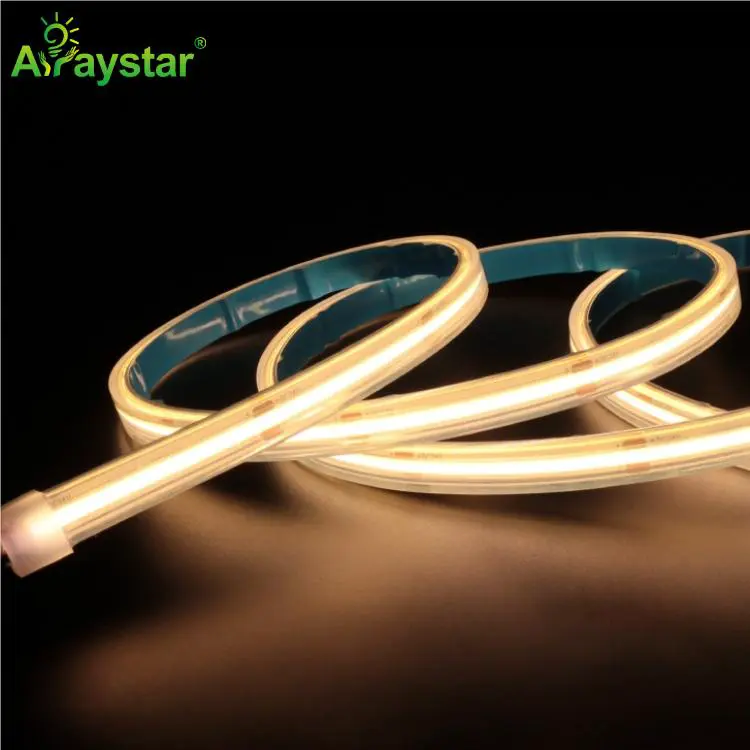
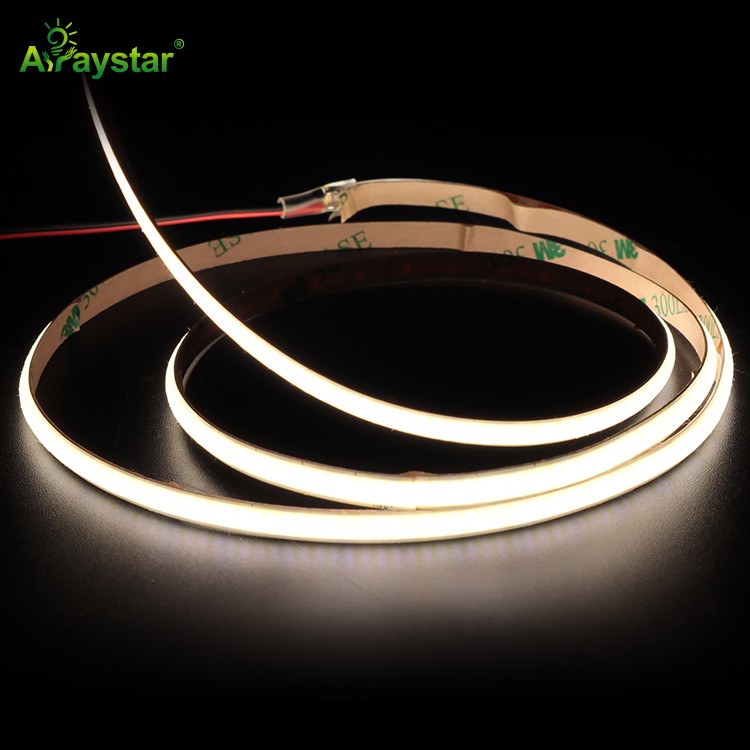
In damp display and furniture settings I reach for an IP65 silicone-tube COB in a high-CRI bin - the continuous emitter gives smooth light across veneer and fabric, and the sealed construction survives kitchens and showcases. For close viewing at low level, such as display cases and jewellery trays, a lower-watt 480-LED free-cut COB in a 95/98 bin gives even color without hot spots, which matters because at 30cm any chromaticity variation is obvious.
CCT and SDCM - Why Two 'Identical' Reels Look Different
High CRI is only half of color consistency. Two reels can both be CRI 95 and still fail to match, because color temperature and bin tolerance vary. A 3000K reel from a loose bin might actually read 2900K and slightly pink while the next batch reads 3100K and yellow, and side by side across one ceiling the mismatch is glaring. SDCM (Standard Deviation Color Matching) measures exactly this: a 1-2 step bin is effectively invisible, 3-step is the professional architectural standard, and anything above 4-5 steps shows as obvious patchiness.
On long runs I order every reel from one production batch and specify a 3-step SDCM maximum on the purchase order the same way I specify R9. I run continuous reels wherever possible and tuck any unavoidable joins into corners rather than across the middle of a wall, so small bin differences never sit next to each other in the viewer's line of sight. Honest fidelity and tight binning together are what make a premium install actually look premium.
Verifying the Bin Before You Commit
Paper specs are optimistic. Before a color-critical order, request a sample reel from the actual production bin and compare it against a known reference under the finished CCT. Lay the samples on a white surface next to the products being lit (the actual wood, fabric or packaging), view at the intended brightness, and check with a handheld spectrometer if you do this regularly - it reads CRI, R9, Rf, Rg and chromaticity directly.
- Order samples from the same bin you will buy in volume; 'typical' values are not guaranteed.
- Compare at the real CCT and dim level - color shifts when dimmed and between warm/cool bins.
- Keep one labelled sample from each accepted batch to check future reorders for consistency.
- Specify CRI, R9, Rf/Rg and SDCM bin tolerance in writing on the purchase order.
Putting the numbers on the PO matters: without a written minimum R9 and Rf, a factory can legitimately ship whatever bin clears the headline CRI figure. A single line - 'CRI Ra >= 95, R9 >= 70, Rf >= 90, 3-step SDCM' - turns a vague 'high CRI' claim into something you can reject a shipment against.
Recommended Products
Frequently Asked Questions
Is CRI 90 good enough or do I need CRI 95/98?
CRI 90 with a positive R9 is fine for most hospitality, general retail and residential cove work where the source is indirect. Move to CRI 95 for apparel, jewellery, cosmetics, furniture and food where customers judge color closely, and CRI 98 for art, galleries and color-critical beauty work. The upgrade cost is small relative to the sales impact, but it is wasted in back-of-house and circulation spaces where CRI 80 is adequate.
What is a good R9 value for LED strip?
R9 measures saturated red rendering, which is excluded from the CRI Ra average. Aim above 0 at minimum for acceptable whites, R9 50 or higher for furniture, wood and general retail, and R9 70+ for beauty, food, fashion and skin tones. Premium high-CRI strips reach R9 80-95. A strip with a negative or near-zero R9 will make reds, wood and skin look dull even if its Ra looks high.
What is the difference between CRI and TM-30 Rf/Rg?
CRI (Ra) averages eight mostly pastel colors and ignores saturated red, so it can overstate quality. TM-30 uses 99 colors and reports Rf (fidelity to the reference, like a fuller CRI) and Rg (saturation around 100). Rf 90+ with Rg near 100 means accurate, natural color; Rg far above 100 means over-saturated. TM-30 gives a more complete and harder-to-game picture of real-world color.
Does high CRI LED strip produce less brightness?
High-CRI phosphors historically convert light slightly less efficiently, so at identical current a CRI 95/98 strip can be a few percent less efficient than a CRI 80 version. In practice the gap on modern COB is small, and you usually compensate by choosing a slightly higher wattage-per-metre or better thermal design rather than accepting dim light. For color-critical spaces the small efficiency trade is always worth it.
How do I verify the CRI and R9 of the LED strip I receive?
Request the LM-80/test report and a sample from the actual production bin, then measure with a handheld spectrometer that outputs CRI, R9, TM-30 Rf/Rg and chromaticity. Compare the lit sample against the real products being shown at the finished CCT and brightness, and keep a labelled reference sample for future reorders. Put minimum CRI, R9, Rf and SDCM bin tolerance in writing on the purchase order so shipments can be rejected if they fall short.
Need help with your LED project?
Get factory-direct pricing, free samples and engineering support within 24 hours.
Email: info@arraystarled.com | Phone: +86-0755-2103-6746 | WhatsApp: 0086 1581 8514 077
Need to size your power supply? Use our LED Strip Power Calculator to find the right driver in seconds.







