Dim-to-Warm COB Strip for Restaurants: Tuning the Evening Curve
- 2026-10-28 10:03
- /
- Arraystar LED
A restaurant strip that dims to 3000K feels warmer as the night goes on. I set the driver and dimming profile for that curve, not just for brightness.
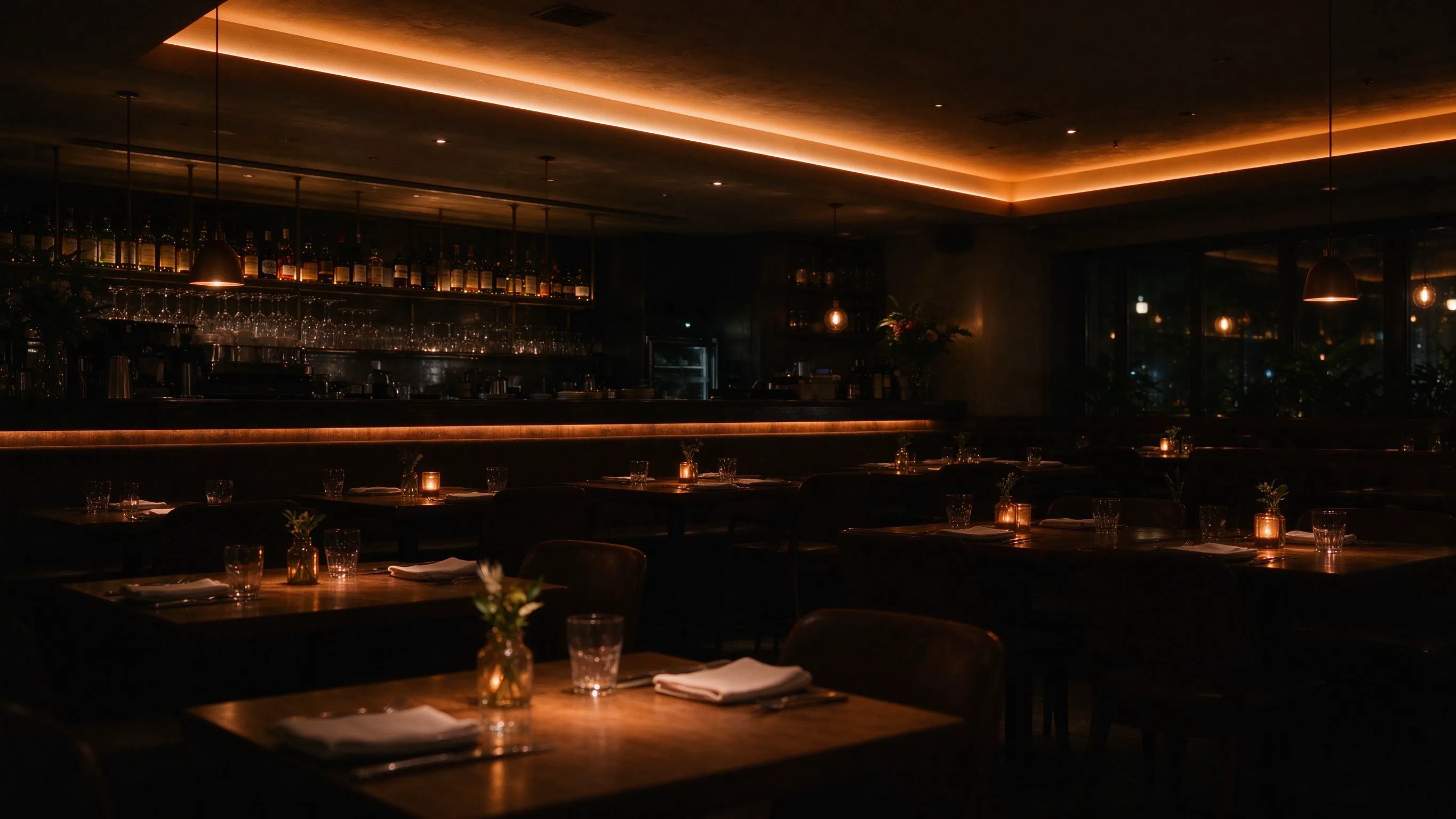
What dim-to-warm actually does
A normal COB strip is a fixed colour temperature — 3000K, 4000K, or 6000K. When you dim it, the colour stays the same; it just gets darker. A dim-to-warm, also called warm-dim or incandescent-mimic, strip combines a warm channel and a neutral channel, and as you dim, the warm channel takes over. At 100% output it might be 3000K; at 10% output it drops to 1800K — roughly the colour of a candle.
That shift is what makes a restaurant feel softer at 10pm. A fixed 3000K strip at 10% brightness still looks clinical; a dim-to-warm strip at 10% looks like a half-melted candle flame. Diners stay longer, order dessert, and do not squint at the bill.
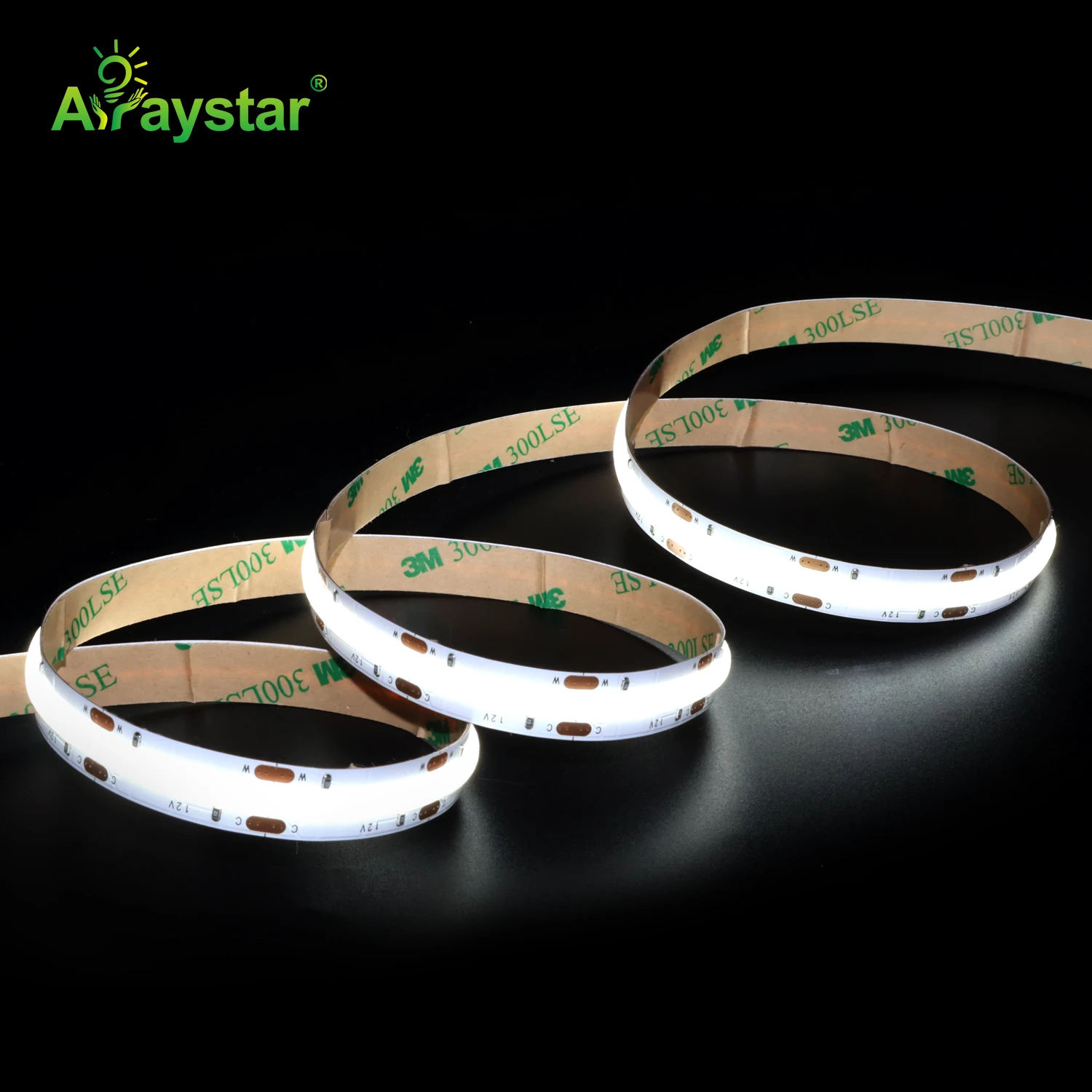
What dim-to-warm means
- 100% output: 2700–3000K
- 30% output: 2200K
- 10% output: 1800–1900K
- Brightness and colour shift together
How to wire and tune the curve
You need a driver that supports two channels, not a single-channel PWM dimmer. I use a 0–10V or DALI driver with a warm-dim profile, or a tunable-CCT controller that maps brightness to colour. The curve is not linear: at 50% brightness I want 2400K, at 20% I want 2000K. A linear map between full and minimum feels wrong.
I set the minimum output to 5–10%, not 0%. A strip that goes fully off at the bottom of the dimmer is annoying on a dinner service; guests like a faint glow even when the room is dark.
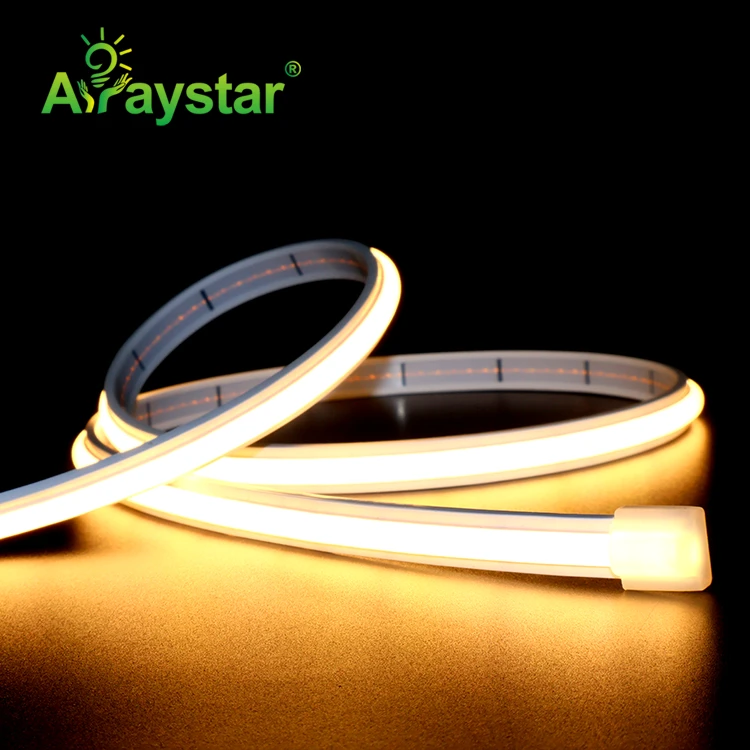
Controller choices
| Type | Curve support | Use case |
|---|---|---|
| 0–10V with warm-dim profile | Mapping built-in | Most restaurants |
| DALI DT8 | Full colour plus intensity | High-end venues |
| Tunable CCT controller | Manual curve | Bars and cafes |
| Single-channel PWM | No colour shift | Avoid for this job |
Tuning by room: dining, bar, kitchen
In the dining room I start at 100% brightness (3000K) at 6pm, drop to 60% (2600K) by 8pm, and to 30% (2100K) by closing. The kitchen stays at a fixed 4000K because chefs need to see; I do not dim the pass. The bar sits between: 80% at opening, 40% at last orders, with a slightly warmer 2700K baseline.
I put a time clock on each circuit. Staff do not want to ride a dimmer through service; the room changes itself. A simple Astronomo-style timer with three presets beats a wall controller every time.
Evening schedule
- 18:00: 100% / 3000K dining
- 20:00: 60% / 2600K dining
- 22:00: 30% / 2100K dining
- Kitchen: fixed 4000K all night
Common tuning mistakes
The first is using a single-channel dimmer on a two-channel strip. The colour does not shift; you just get a brighter or dimmer 3000K. The second is setting the minimum too high — guests want darkness, and 30% at closing still feels like lunch service. The third is tuning in daylight. Set the curve after dark, sitting at the tables, not on a ladder at 2pm.
I also see installers run dim-to-warm in the kitchen. Chefs need 4000K to read tickets and judge doneness; a 2000K kitchen makes them angry. Keep the warm-dim for guest areas only.
Mistakes to avoid
- Single-channel dimmer on a two-channel strip
- Minimum output too high at closing
- Tuning in daylight
- Warm-dim in the chef pass
Testing the curve before opening night
I do a walk-through at 9pm, sitting at a table, holding a phone to judge the white point on a napkin. If the napkin looks orange, the minimum is too warm. If it looks neutral, the curve is fine. I order a coffee and stay an hour; the eye adapts after 10 minutes, and what looked warm at first feels right later.
I also check that the bar counter does not glow brighter than the dining room. A common error is running separate circuits with no coordination; the bar becomes an island of brightness while the tables are dark.
Pre-opening checks
- Sit at a table, not on a ladder
- Test white point on a napkin
- Compare bar versus dining brightness
- Run the full evening schedule once
Recommended Products
Frequently Asked Questions
What is dim-to-warm lighting?
Dim-to-warm combines a warm and a neutral channel so that as brightness drops, colour temperature drops with it. At 100% output it might be 3000K; at 10% it falls to 1800–1900K, candle colour. A normal fixed-CCT strip just gets darker; a dim-to-warm strip gets warmer, which is what makes a restaurant feel softer late at night.
What driver do I need for dim-to-warm COB?
You need a two-channel 0–10V or DALI driver with a warm-dim profile, or a tunable-CCT controller. A single-channel PWM dimmer will not shift colour. Set the minimum output to 5–10% so the room never goes fully dark during dinner service.
What colour temperature should a restaurant dining room be?
Start at 3000K at 100% for opening, drop to 2600K at 60% brightness by 8pm, and to 2100K at 30% by closing. The chef pass stays at a fixed 4000K so staff can read tickets. Put the schedule on a time clock so staff do not ride the dimmer through service.
Why does my dimmed restaurant light still feel clinical?
Because you are using a fixed-CCT strip on a single-channel dimmer. It gets darker but stays the same 3000K white. You need a two-channel dim-to-warm system where the warm channel takes over as brightness drops, bringing the colour toward 1800K at minimum.
How do I tune the dim-to-warm curve properly?
Do it after dark, sitting at a table, not on a ladder at 2pm. Hold a white napkin and judge the colour. If the napkin looks orange at closing, the minimum is too warm; if it looks neutral, the curve is right. Run the full evening schedule once before opening night and compare bar versus dining brightness.
Need help with your LED project?
Get factory-direct pricing, free samples and engineering support within 24 hours.
Email: info@arraystarled.com | Phone: +86-0755-2103-6746 | WhatsApp: 0086 1581 8514 077
Need to size your power supply? Use our LED Strip Power Calculator to find the right driver in seconds.