Does COB Strip Actually Need an Aluminum Channel? Field Data
- 2026-10-28 10:03
- /
- Arraystar LED
COB runs hot and dense. I share measured junction temps in free air versus in a channel, and where free air is genuinely acceptable.
What COB actually does to temperature
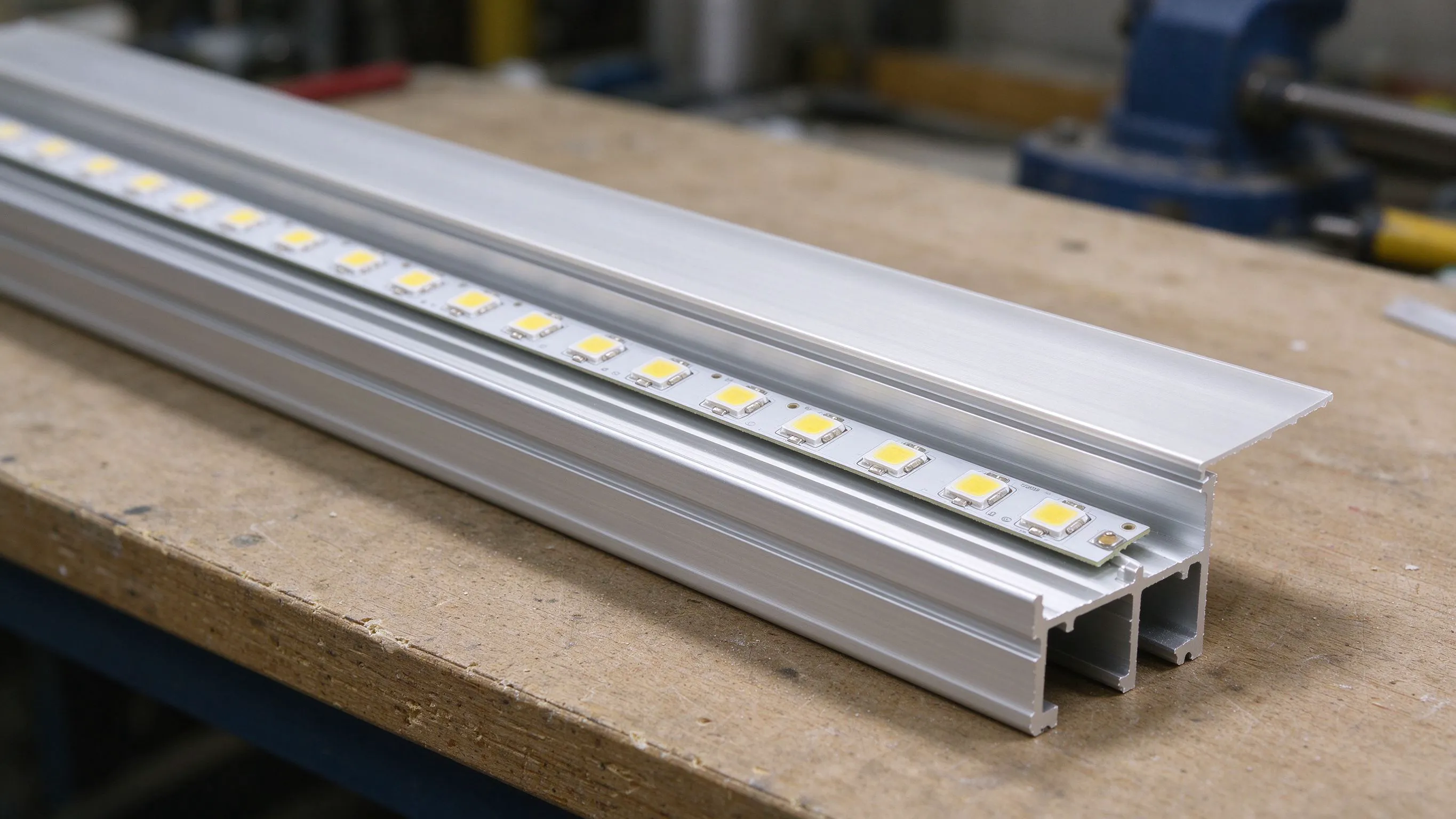
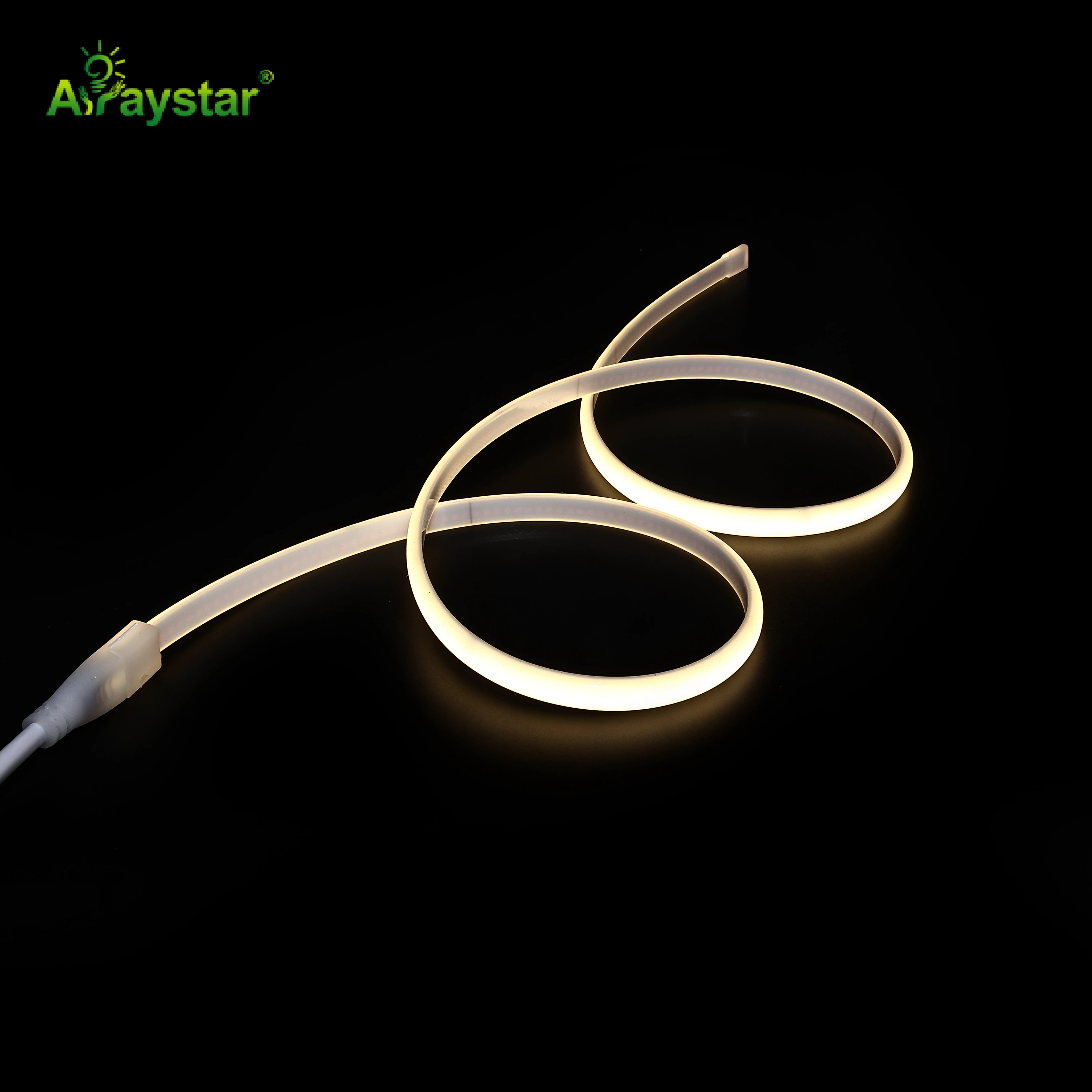
COB strips pack 300–600 LEDs per metre on a narrow PCB, often 8–12 mm wide. At 10–20 W per metre, that is 1.5–2.5 W per centimetre of PCB density — far higher than conventional SMD. The junction temperature is what ages the phosphor and the bond wires. Every 10°C rise above 85°C roughly halves the rated life.
I measure PCB temp with a thermocouple stuck to the centre of the strip. In free air at 25°C ambient, a 15 W/m COB strip runs 55–65°C on the PCB. In a sealed aluminium channel, that jumps to 80–95°C. In a vented channel with a diffuser, it lands around 65–75°C.
What I measure
- PCB temp at the centre of the run
- Ambient temp at the driver
- Junction estimate: PCB plus 20–25°C
- Long-run temp rise after 2 h on
Free air versus channel: the data
I ran a side-by-side last winter. Same strip, same current, 3 m runs. Free air on a wooden ceiling: PCB hit 58°C after two hours. Sealed aluminium channel with milky diffuser: 87°C. Vented channel with a 10 mm air gap: 68°C. The sealed channel cut life expectancy by roughly 70% on paper.
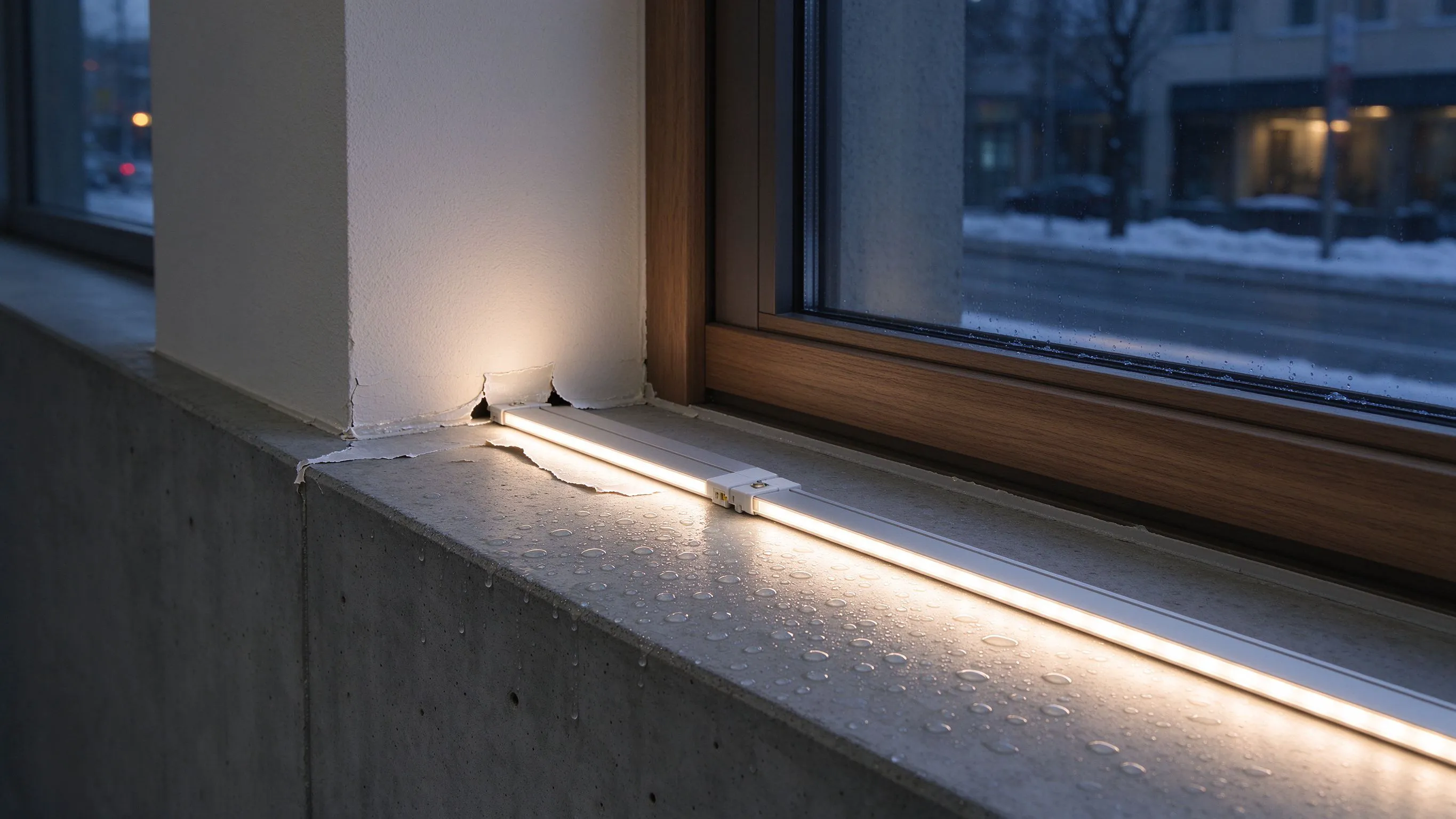
The catch: free air only works where the strip is not touching insulation or fabric. If the COB strip is stuck to a foam ceiling, a fabric wall, or inside a soffit with no airflow, free air becomes trapped air and the channel data applies anyway.
Temperature targets
| Setup | PCB temp at 25°C ambient | Life impact |
|---|---|---|
| Free air, open space | 55–65°C | Baseline |
| Vented aluminium channel | 65–75°C | Small reduction |
| Sealed diffuser channel | 85–95°C | About 70% life cut |
| Stuck to insulation | 90–100°C+ | Danger zone |
Where free air is genuinely acceptable
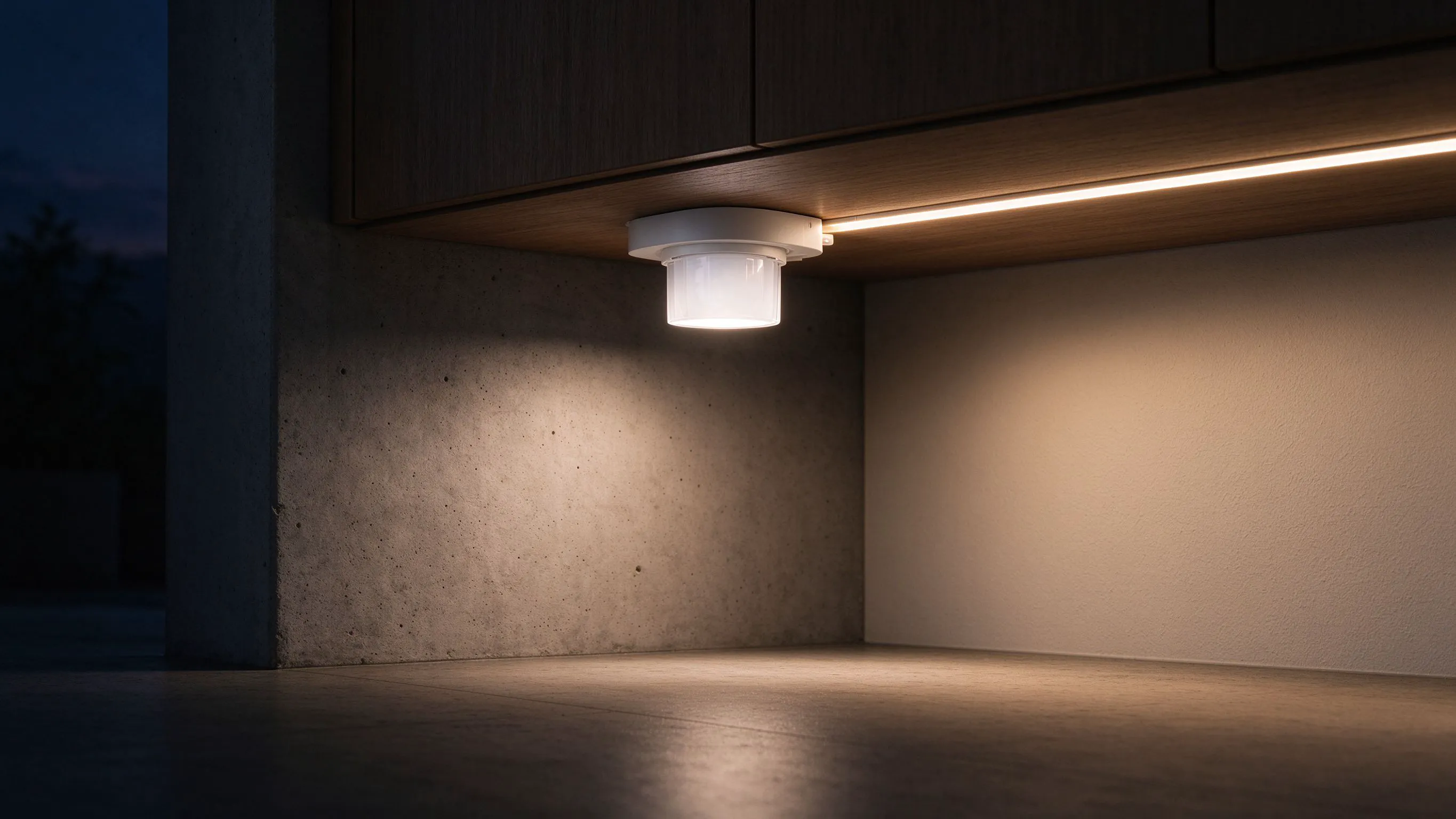
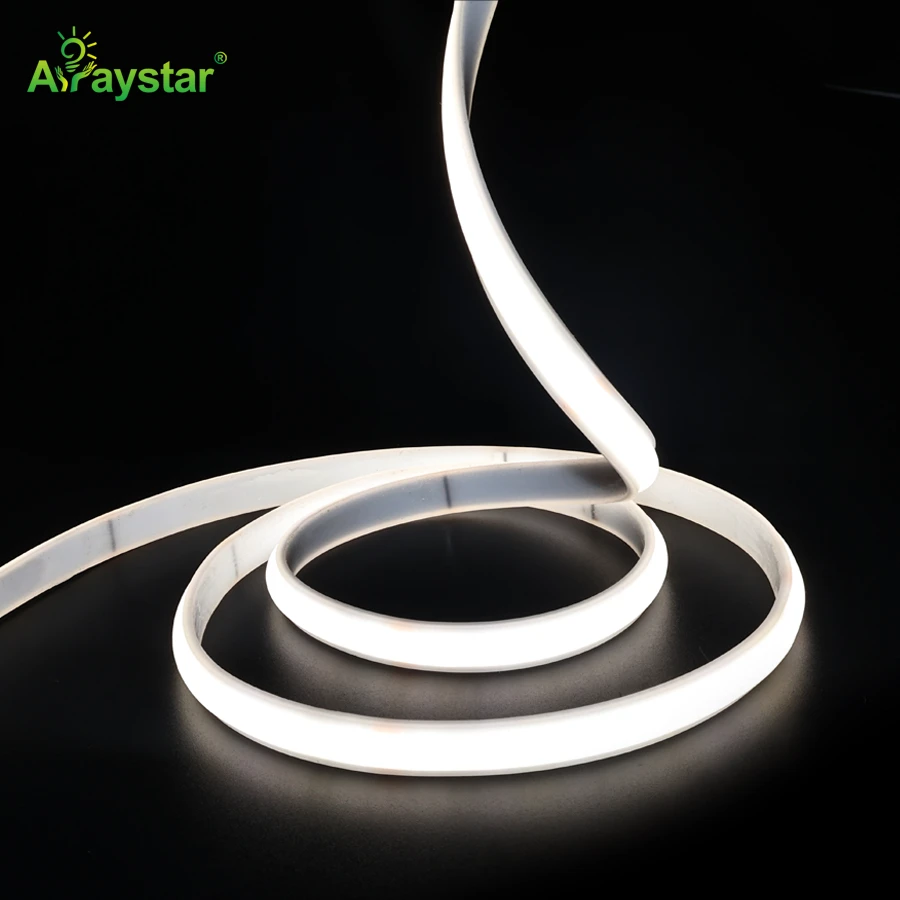
I run COB in free air on open coves, under wall cabinets with a 5 mm air gap, and inside shelving that is not enclosed. The strip must be visible or exposed to room air. If you can reach it and feel a gentle warmth, convection is working. If you cannot reach it or it is boxed in, put it in a vented channel.
Free air also matters where you do not want a visible aluminium extrusion. On a white ceiling with a white cove, a bare COB strip disappears into the surface; a silver channel becomes a visible line.

Free-air cases
- Open coves with room air circulating
- Under cabinets with 5 mm air gap
- Open shelving, not enclosed boxes
- Decorative runs where channel shows
When you must use a channel
Use a channel when the strip is exposed to splashes (kitchen, bathroom), when it is inside an enclosed soffit, or when you need a diffused line rather than a bare strip. In those cases pick a vented channel, not a sealed one. The diffuser slot on the underside, plus 5 mm of air behind, makes a huge difference.
For heat-critical long runs (over 5 m at 20 W/m), I default to a channel even in open space. The channel spreads heat along the run and evens out the hotspots at the centre of a long string.
Channel cases
- Wet zones: splash, steam, outdoor
- Enclosed soffits or sealed cavities
- Long runs over 5 m at high wattage
- Where a diffused line is required by design
Practical checks before you energise
After install, I let the strip run for two hours, then touch the centre of the run with the back of my hand. If I can hold it there for five seconds, it is under 60°C — fine. If I have to pull away, it is over 70°C and I need to add a channel or reduce current.
I also check the far end of long runs for colour drift. If the last half-metre looks warmer than the middle, voltage drop is loading the strip; feed from both ends.
Pre-power checks
- Hand-touch test after 2 h
- Look for colour drift at run ends
- Check no insulation touching the PCB
- Verify 5 mm air gap behind the strip
Recommended Products
Frequently Asked Questions
Does COB strip need an aluminium channel?
Not always. In open coves, under cabinets with a 5 mm air gap, or in open shelving, free air keeps PCB temp at 55–65°C, which is fine. Use a channel when the strip is wet-rated, enclosed in a soffit, or on long runs over 5 m at high wattage. Always pick a vented channel, not a sealed diffuser box.
How hot can a COB strip get before it is a problem?
PCB temp over 80°C starts to cut life expectancy significantly. Every 10°C rise above 85°C junction roughly halves rated life. A quick hand test after two hours: if you can hold the back of your hand on the centre of the run for five seconds, it is under 60°C and fine. Pull away immediately and it is over 70°C.
Why does a sealed channel make COB run hotter?
A sealed diffuser traps heat that would otherwise convect away. I measured 87°C in a sealed channel versus 58°C in free air on the same 3 m run. A vented channel with a 10 mm air gap lands around 68°C — acceptable. If you must use a diffuser, pick one with ventilation slots.
Can I stick COB strip directly to wood or plaster?
Yes, as long as the surface is not insulation or foam. Wood and plaster are fine conductors compared to foam. Keep a 5 mm air gap behind the strip if possible; if you stick it flat, watch the hand-touch test after two hours. Never stick COB to closed-cell foam or fabric.
When should I feed a long COB run from both ends?
On runs over 5 m at 15–20 W/m, feed from both ends. The sign is visible: the last half-metre of the run looks warmer than the middle, which is voltage drop loading the strip. Use 18 AWG leads to the driver and keep the per-half current under 4A.
Need help with your LED project?
Get factory-direct pricing, free samples and engineering support within 24 hours.
Email: info@arraystarled.com | Phone: +86-0755-2103-6746 | WhatsApp: 0086 1581 8514 077
Need to size your power supply? Use our LED Strip Power Calculator to find the right driver in seconds.