
COB LED Strip vs SMD LED Strip: An Engineer's Honest Comparison (2026)
- 2026-09-22 10:50
- /
- Arraystar LED
We manufacture both. After 8 years of building LED strips for commercial projects, here's the short version: COB looks better but costs more and needs heat sinks. SMD 2835/5050 is cheaper, field-repairable, and wins on long runs. Pick based on the look you need and the run length, not the marketing.
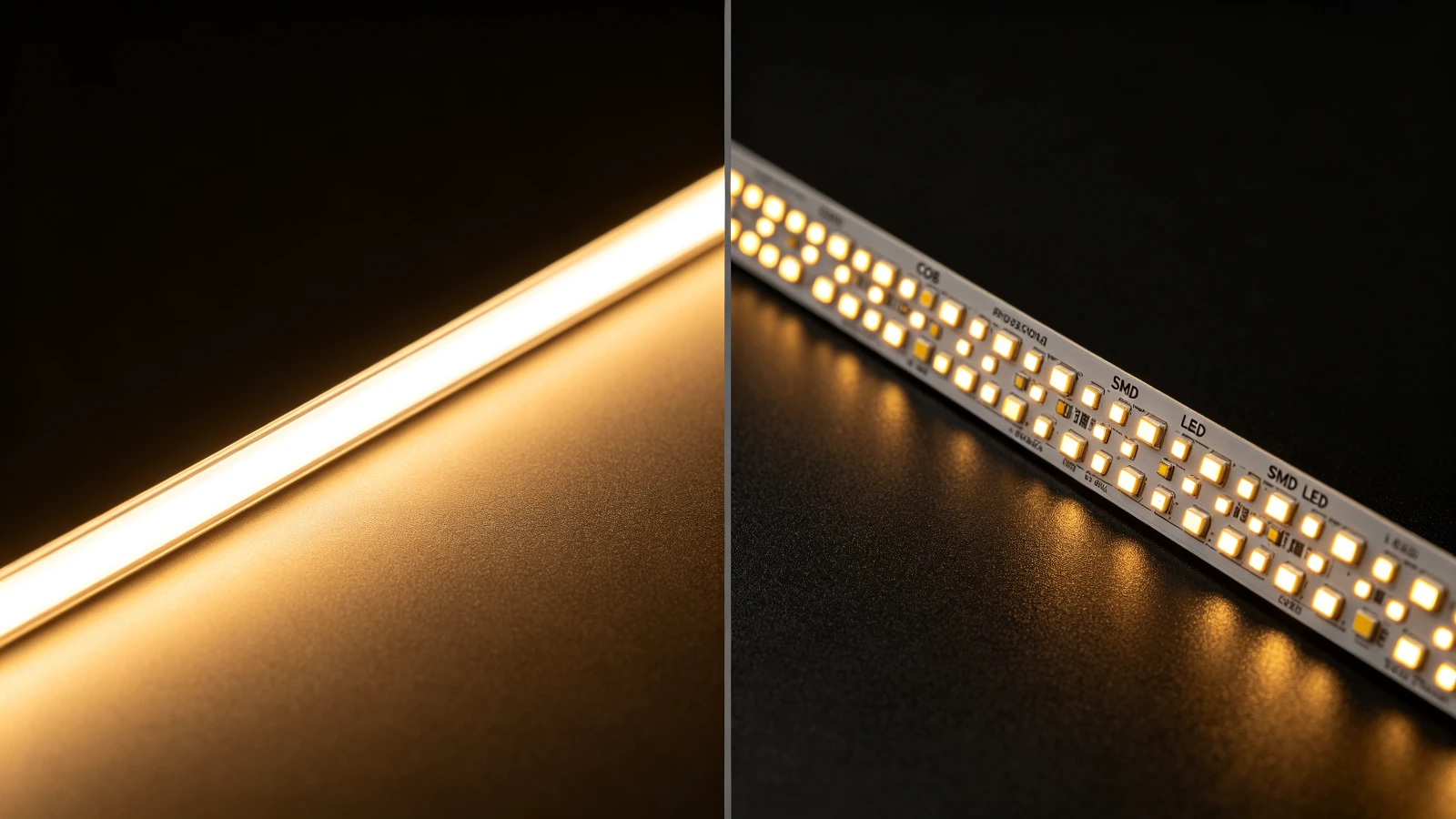
What People Mean When They Say 'COB' vs 'SMD'
I've sat through too many sales decks where both terms get thrown around like they're different leagues. They're not — they're just two ways of packing LED chips onto a flexible PCB.
COB (Chip-on-Board)
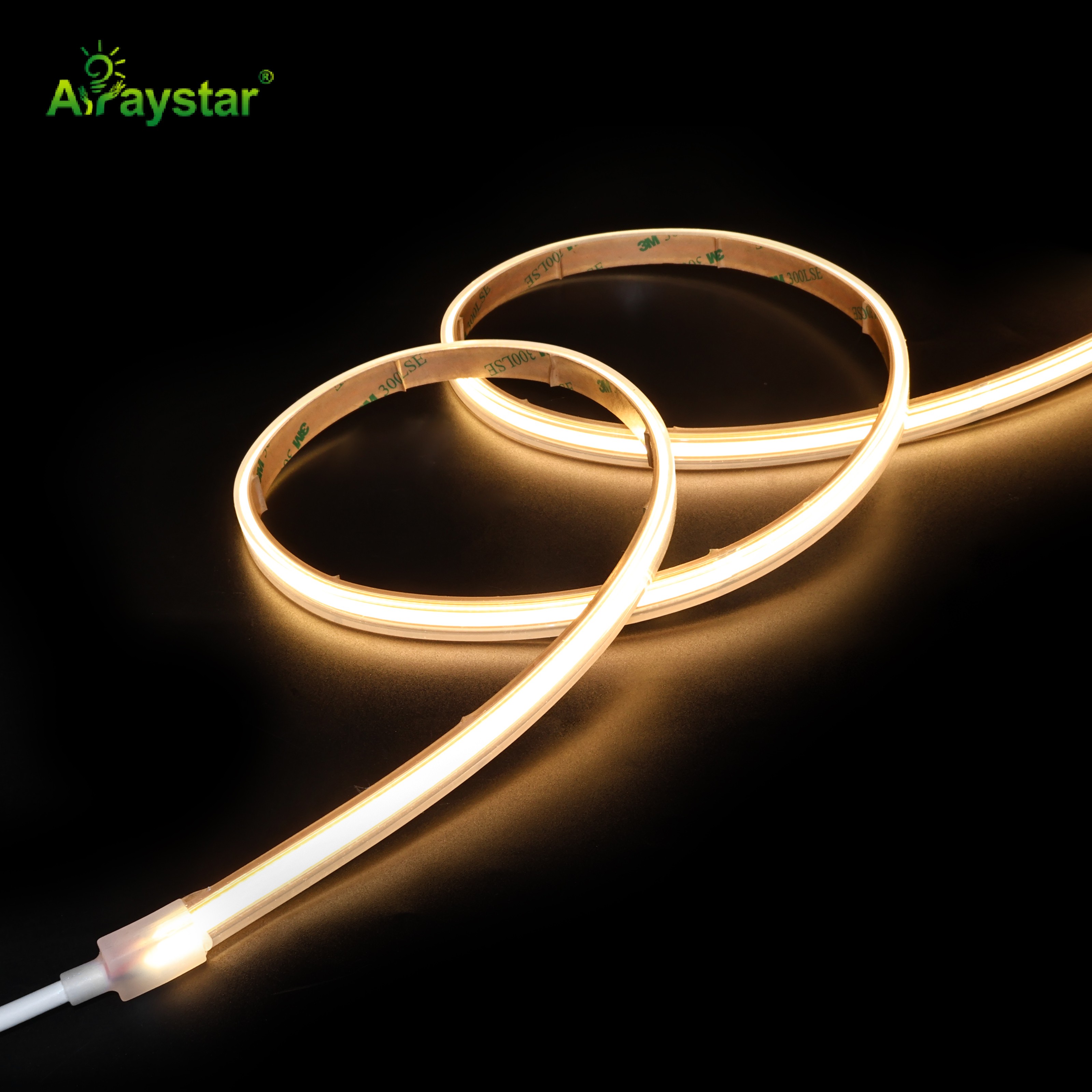
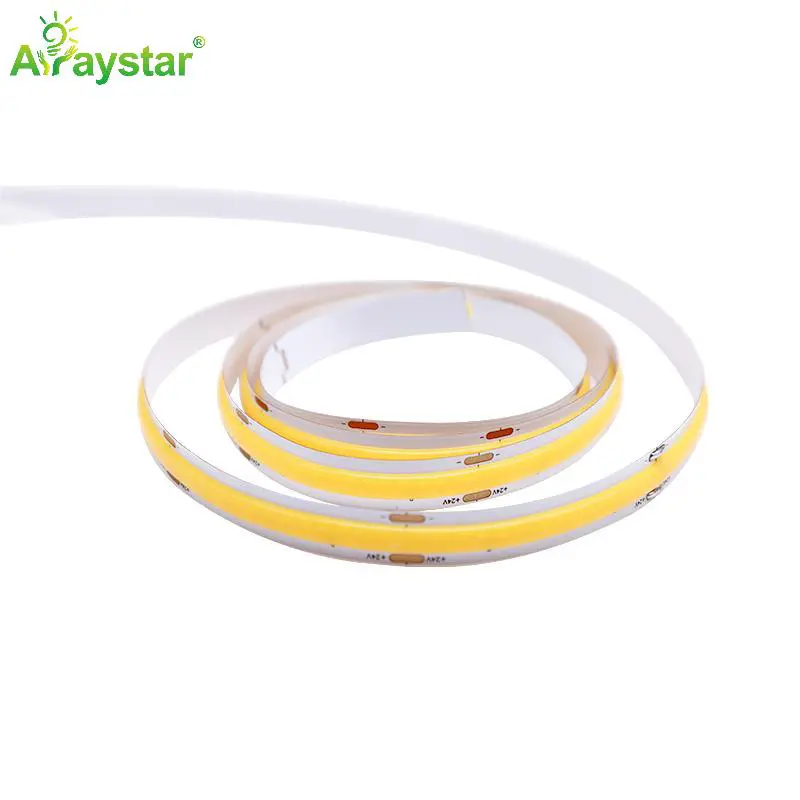
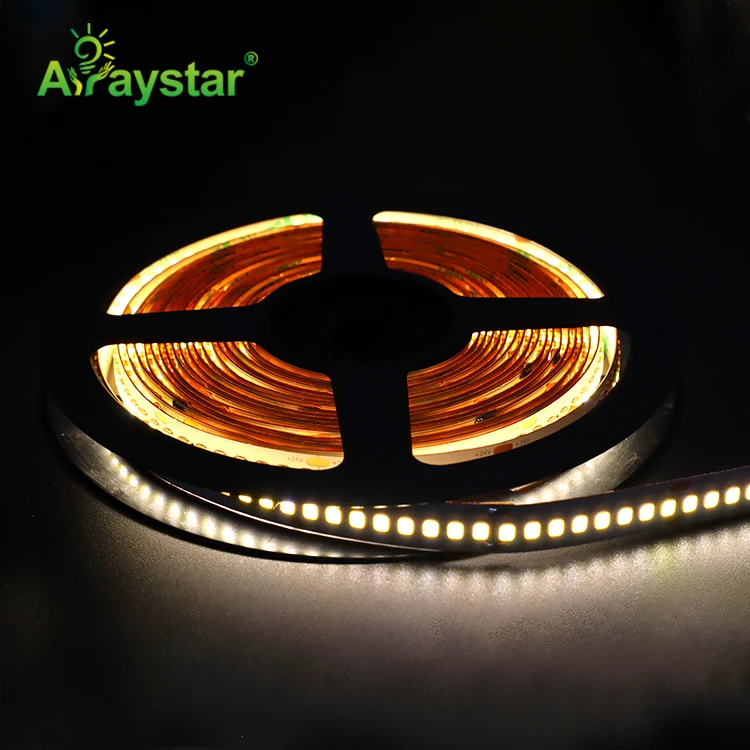
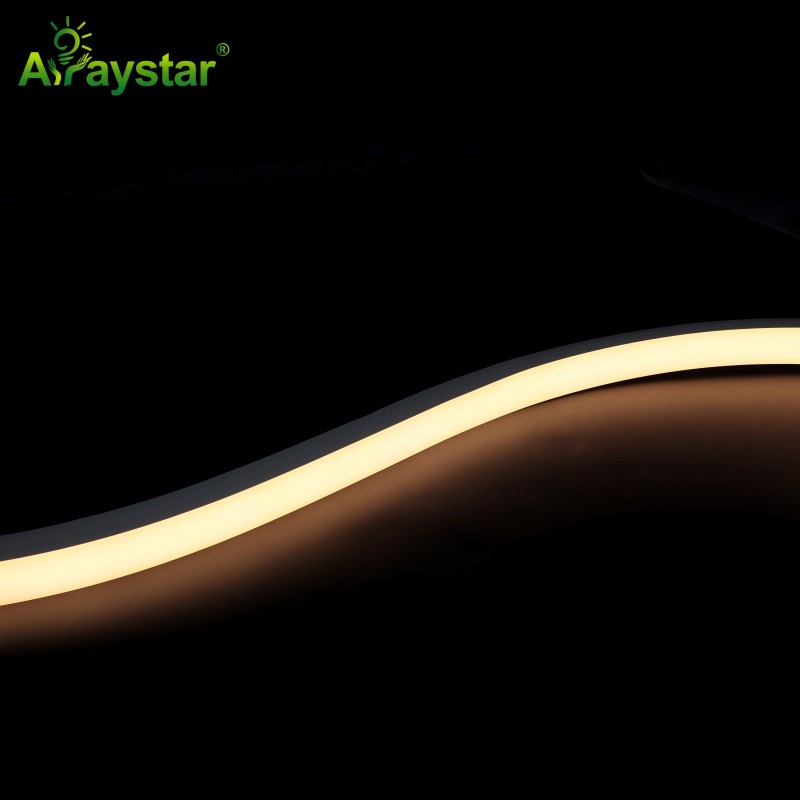
Thousands of tiny LED dies are bonded directly to the PCB under a layer of phosphor and silicone. No individual packages, no visible chips. The result is a continuous line of light that looks like a single glowing filament. Think of it like an LED tape that hides all its parts.
SMD (Surface-Mount Device)
Individual LED packages — usually 2835 or 5050 in size — are soldered onto the PCB at fixed intervals. You can see each chip, and at close distance you'll see the dotted pattern. 2835 is the workhorse for general lighting (around 18-24W/m). 5050 adds an extra LED per package for RGB.

The Spec Sheet Look — But Don't Stop Here
Every comparison page will show you this table. It's useful, but it's only the starting point. The real differences show up when you install them.
Typical values for 24V white strips. Your mileage varies with quality tier.
| Spec | COB Strip | SMD 2835/5050 |
|---|---|---|
| Visible dots | None — continuous glow | Visible individual chips |
| Typical power | 10-24 W/m | 9-24 W/m |
| Brightness | 800-2200 lm/m | 800-2000 lm/m |
| CRI | 90+ (good ones) | 80 standard, 90+ available |
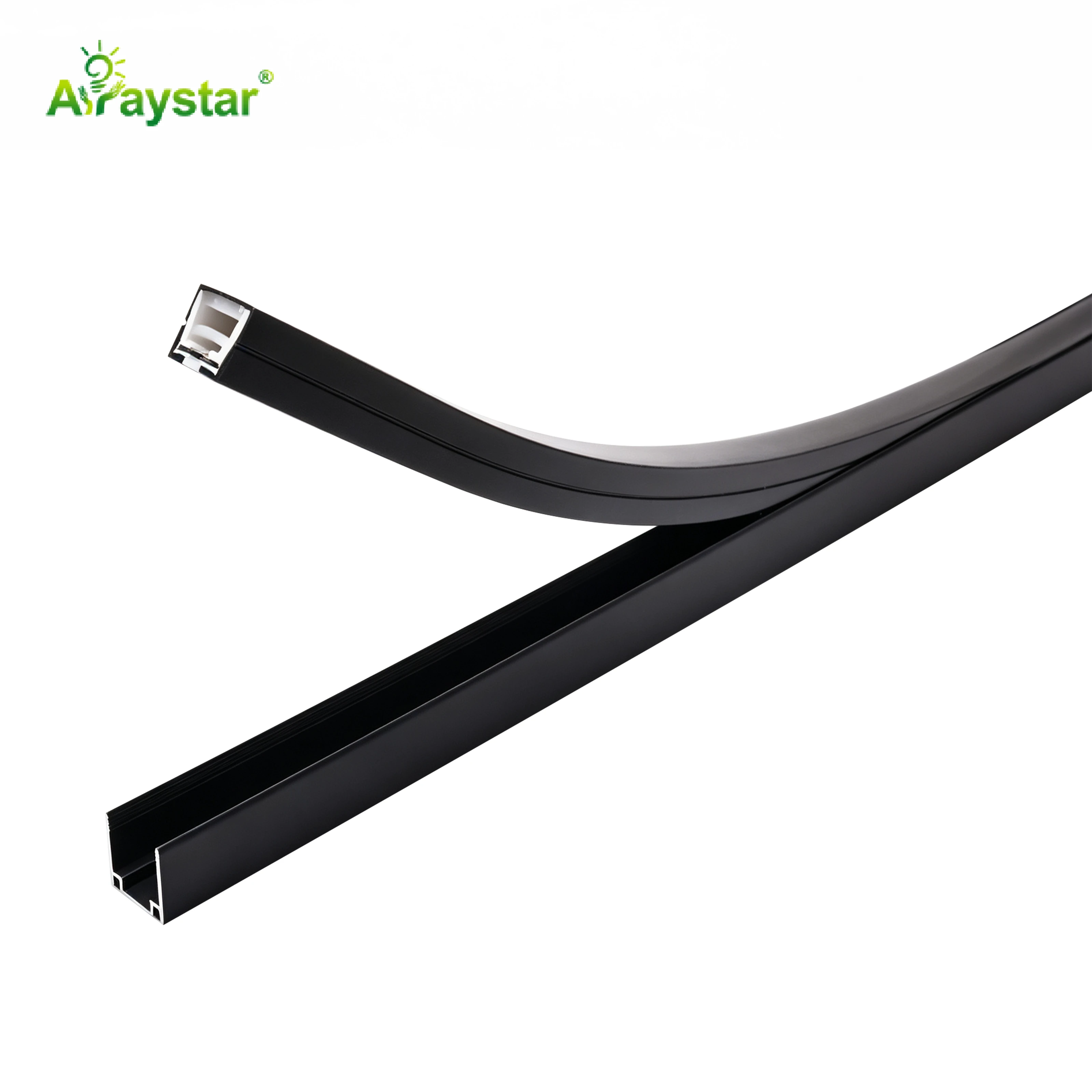
| Min bend radius | 25-35 mm | 5-10 mm |
| Cut interval | 50-100 mm | 50-100 mm |
| Heat requirement | Must use aluminum channel | Can run bare on wood |
| Field repair | Hard — whole section may die | Swap a single LED |
| Relative cost | 2-3x SMD | Baseline |
Where SMD Actually Wins (Most Vendors Won't Tell You This)
This is the section no LED factory blog writes. Because we build both, I'll be straight with you: in these situations, SMD is the right call even if COB sounds fancier.
Long runs without mid-point injection
COB strips draw serious current — 24W/m at 24V is 1A per meter. Run it 8 meters on 12V and the far end loses 20-30% brightness. SMD 2835 at 12W/m pulls half the current, so the same 8m run looks even end to end. Reddit threads are full of 'why does my strip go dim in the middle' posts — it's almost always COB + 12V + long runs.
Field service matters
A commercial building has 50 meters of strip in the ceiling. One SMD LED fails — you swap the chip, done. A COB strip fails one diode on a 20-meter run? You're replacing the whole section. For facilities teams, this is a maintenance budget decision, not a lighting decision.
Outdoor high-voltage (220V) projects
Outdoor signage and building outlines almost always use 220V input strips. The entire 220V strip market is SMD-based. COB doesn't exist at 220V because of the current density. If you're doing a building facade, SMD or neon flex, not exposed COB.
Budget projects where CRI 80 is enough
A warehouse aisle, a closet, a garage — nobody cares about CRI there. SMD 2835 at $1.5/m does the job. COB at $4/m for a garage ceiling is overkill.
Where COB Wins: The Aesthetic Premium
Now the flip side. If you're doing retail, hospitality, or any space where the lighting is a design feature, COB is worth the money.
No dots = no distraction
Walk into an Apple store and look at the ceiling. That continuous, seamless glow? That's COB in an aluminum channel. In a jewelry display or a museum case, the dotted pattern of SMD would pull your eye away from the product.
High CRI for color-critical spaces
COB can hit CRI 95+ with proper phosphor. For art galleries, fashion retail, and food display, this is the difference between 'the shirt looks right' and 'the shirt looks washed out.' Make sure the supplier sends you the actual spectroradiometer report — 'CRI 90' printed on a spec sheet means nothing.
Smooth dimming at low levels
When you dim to 5%, COB stays uniform. SMD at 5% often shows flicker or uneven brightness because individual chips turn on/off. For a restaurant or hotel lobby that runs dim all evening, this matters.
The Hidden Costs Nobody Puts on the Spec Sheet
This is where people get burned. The sticker price isn't the real cost of a COB installation.
Real numbers from our Shenzhen factory BOMs for a 10-meter project.
| Cost Factor | COB | SMD |
|---|---|---|
| Strip per meter | $3.50 - $6.00 | $1.20 - $2.50 |
| Aluminum channel required? | Yes — bare on wood = early death | Optional |
| Power supply derating | Derate 20% (heat) | Standard rating |
| Cut and rejoin | Possible but harder | Easy with solderless connectors |
| Failure mode | Whole section dark | Single LED off |
| 5-year light maintenance | 30-40% loss typical | 15-20% loss typical |
Run the math: a 10-meter COB project costs you roughly $35-60 for the strip, plus $20-35 for aluminum channels, plus an oversized driver. A comparable SMD project? $15-25 for strip, channel optional. That 2-3x price difference is real — make sure the aesthetic justifies it.
The Failure Modes We See On Real Projects
After handling warranty claims for years, these are the ones that come up again and again.
Glue yellowing on white COB
The silicone layer on white COB strips starts to yellow after 2-3 years if it's in a hot or UV-exposed spot. You'll notice the 'white' slowly warms to cream, then to pale yellow. It's not the LEDs dying — it's the packaging. Ask for strips with UV-stable silicone if you're installing near a window.
Bare COB on wood = early death
Someone saved $20 on aluminum channels and stuck COB directly to a plywood ceiling. Six months later, the middle section is visibly dim. The heat had nowhere to go. COB without a channel is like a GPU without a heatsink — it works, briefly.
'CRI 90' that measures CRI 80
Budget COB strips list CRI 90 on the spec sheet. We've seen units measure CRI 78-82 in our lab. The only way to verify is to ask for the spectrum graph — if a supplier sends a photo of a chip and says 'trust me,' they're usually selling you the cheap bin.
Pick the Right One for Your Project
Quick decision guide. Still unsure? Send us your layout and we'll tell you honestly.
| Your Project | Pick This | Why |
|---|---|---|
| Retail window / museum display | COB + deep aluminum channel | No dots, high CRI, smooth dimming |
| Kitchen under-cabinet | COB in shallow channel | Clean line, no visible dots |
| Warehouse / garage / closet | SMD 2835 | Cheaper, heat doesn't matter |
| TV backlight / RGB ambience | Addressable SMD (WS2812B/WS2815) | COB doesn't do addressable well |
| Outdoor building outline | 220V SMD or neon flex | COB doesn't come at 220V |
| Long hallway (>8m) | SMD 2835 24V | Lower current, even brightness |
| Jewelry / art display | High-CRI COB (CRI 95+) | Color accuracy sells the product |
Recommended Products
Frequently Asked Questions
Is COB LED strip really worth the extra money?
Only if the 'no visible dots' look matters to the person looking at it. Retail, museum, showcase — yes. General ambient lighting, garage, warehouse — no, SMD 2835 at half the price looks 90% as good. Don't pay a premium for aesthetics nobody will notice.
Why does my COB strip look dimmer in the middle?
Voltage drop. COB draws high current, so past 3-5 meters on 12V the far end loses brightness. Fix it by running 24V instead of 12V, or inject power at the midpoint. It's a wiring issue, not a defective strip.
Can you cut and reconnect COB strips?
Yes, at the marked scissor lines. But unlike SMD, you can't replace a single dead LED — if one diode fails on COB, the whole section is usually dark. For projects where field service matters, SMD is the safer choice.
Need help picking between COB and SMD for your project?
Send us your layout, run length and budget. We'll tell you honestly which one fits — even if that means recommending SMD over our own COB line.
Email: info@arraystarled.com | Phone: +86-0755-2103-6746 | WhatsApp: 0086 1581 8514 077
Need to size your power supply? Use our LED Strip Power Calculator to find the right driver in seconds.







