Connector Corrosion in Coastal Installations: The Gremlin Points
- 2026-10-28 10:04
- /
- Arraystar LED
At the coast the connectors green-fuzz first, long before the strip or the driver shows a mark. I grease every contact, choose sealed over open clips, and service the box once a year, because salt air eats copper and brass before anything else notices.
Why connectors fail first by the sea
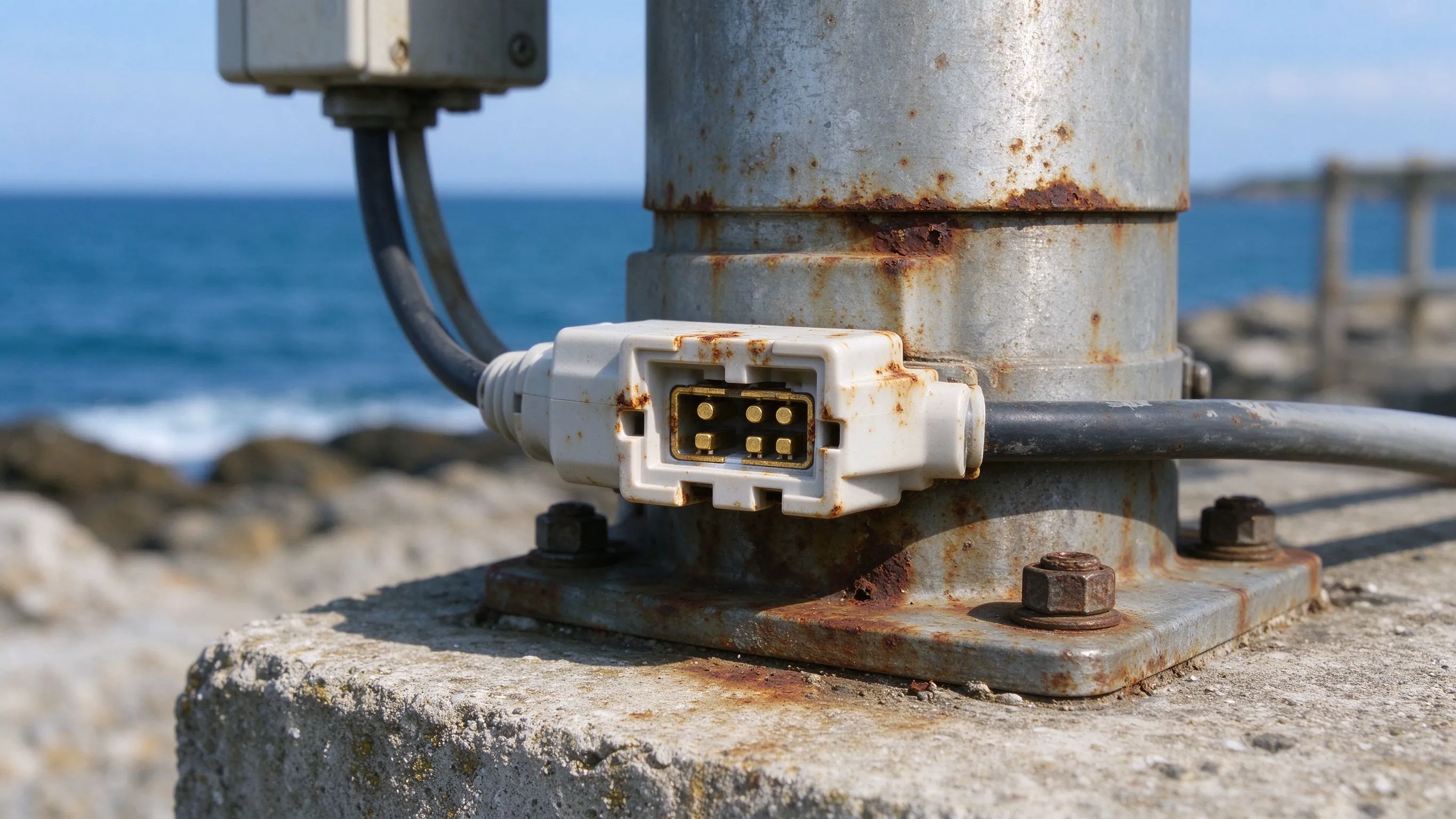
Salt air carries tiny hygroscopic particles that settle on every metal surface and hold a thin film of moisture against it. A sealed strip has silicone over the LEDs, the driver is in a box, but a solderless connector leaves bare copper pads and a brass contact spring exposed. That film turns the contact into a tiny electrochemical cell, and within a season you see green verdigris, black oxide, or a contact that has gone high-resistance and hot. The connector is the wet, salty, exposed weak point in the whole circuit.
On a boardwalk job ten years ago I used ordinary open PCB clips to join two strip runs. By the second winter one run had gone half-dark. I opened the clip and found the copper pad had turned to powder. Since then I treat every coastal connection as a sealed, greased joint, even the ones that look indoors. The salt gets everywhere.
The corrosion gremlins I look for
- Green or white powder on a copper pad or brass spring.
- A contact that is bright but filmy, where moisture has dried and left residue.
- Discolouration creeping along the flex from the connector inward.
Choosing the right connector for salt air
Open push-down clips are fine in a dry bedroom but a liability a hundred metres from the surf. For coastal runs I favour a fully sealed inline connector with a gel or dielectric insert, or a soldered joint protected by adhesive-lined heat shrink. If a clip must be used for serviceability, I pick one with a closed housing and pack the contact with silicone dielectric grease before I close it. The grease keeps the moisture film off the metal, and it is cheap insurance against a callback.
Sealed and soldered joints outlast open clips in salt air by years.
| Connector type | Coastal suitability | Extra protection |
|---|---|---|
| Open PCB clip | Avoid outdoors | Grease plus heat shrink |
| Sealed gel inline | Good | Dielectric grease on entry |
| Soldered joint | Best | Adhesive-lined heat shrink |
The grease and sealing routine I use
Before I close any coastal joint I wipe the copper pad with iso-propyl alcohol, let it dry, and apply a thin film of neutral-cure dielectric grease over the contact and the first 10 mm of flex. I never use acetic-cure silicone, which releases acid as it cures and attacks brass and aluminium. Cable entries get a double-compression gland with an EPDM seal, and I bed the outside of the gland with neutral-cure silicone so no rain can track down the hole.
- Clean pads with iso-propyl before greasing; grease over dirt traps moisture.
- Use only neutral-cure silicone, never acetic-cure near brass.
- Fit a drip loop so water runs away from, not into, the connector.
The routine adds maybe three minutes per joint. Over a ten-metre facade that is half an hour on site and a driver that is still working in year five instead of a service call in year two.
Control gear and the coastal box
The sensors and receivers on a coastal install are electronics as sensitive as the driver, and they sit outside in the salt. I keep sender units behind a sealed plastic cover or inside a vented, drained box, and I avoid exposing a bare PCB board to the horizontal spray that blows off the sea. A hand-wave or door sensor that sees salt directly will corrode its switch contacts even when the lighting circuit itself is fine.
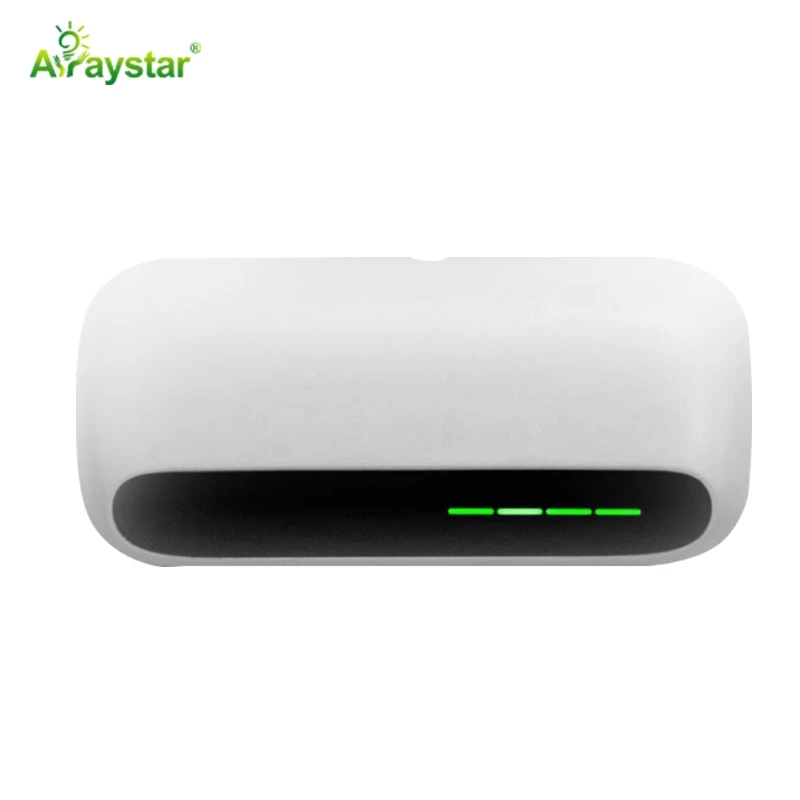
- Keep sender electronics behind a cover, not open to spray.
- Provide a 3 mm drain hole at the bottom of any external box.
- Use EPDM or NBR seals; neoprene hardens and cracks in salt air.
The annual coastal service
I book a once-a-year visit for coastal installs. On that visit I open every external connector, inspect the pads, re-grease the contacts, check the glands, and clear the drain holes. Salt blocks vents and shrinks nylon glands, so a fifteen-minute check prevents a driver replacement in year three. I tell the client up front that coastal lighting is a maintained system, not a fit-and-forget one.
- Open and inspect every external connector once a year.
- Re-apply dielectric grease and tighten any slack terminals.
- Clear drain vents and look for verdigris creeping along the flex.
Recommended Products
Frequently Asked Questions
How far from the sea is coastal protection needed?
Salt travels further than people think. Within about three kilometres of the surf, on an exposed coast, I treat every external connection as coastal: sealed, greased and glanded. Inland a few kilometres, open clips are usually fine. If the site sees horizontal spray, sea wind, or salt mist on the windows in winter, use the coastal routine regardless of the measured distance.
Can I just use a spray-on conformal coating instead of grease?
A conformal coating helps on a bare PCB but it cracks and peels where a flex flexes or a contact moves. For a connector that gets opened, bumped or serviced, dielectric grease is easier to renew and it stays flexible. I use both where I can: coating on a sealed board, grease on a serviceable contact. Never rely on coating alone on a joint that moves.
What does verdigris on a connector actually do?
It raises contact resistance, which makes the joint warm and eventually causes flickering, drop-out or a dark half-run. The green powder is non-conductive copper oxide, so the current that used to flow through the contact now heats the remaining good metal. Once you see powder, clean the pad back to bright copper, re-grease, and if the spring is corroded replace the whole connector rather than hoping.
Is stainless steel hardware safe at the coast?
Use 316 grade, not 304. Standard 304 stainless still rusts at the salt line, and a rusted standoff streaks a white facade for years. 316 marine-grade stainless costs a little more and stays bright. The same logic applies to screws and gland bodies; cheap zinc-plated steel will bloom orange within a year by the sea.
How often should I service a coastal lighting run?
Once a year, ideally in autumn before the wet winter. Open the external connectors, inspect for verdigris, re-grease, tighten terminals and clear the drain vents. A fifteen-minute annual check avoids a driver or connector replacement in year three. I write the service interval into the handover notes so the client knows the light is a maintained coastal system.
Need help with your LED project?
Get factory-direct pricing, free samples and engineering support within 24 hours.
Email: info@arraystarled.com | Phone: +86-0755-2103-6746 | WhatsApp: 0086 1581 8514 077
Need to size your power supply? Use our LED Strip Power Calculator to find the right driver in seconds.