
Constant Current vs Constant Voltage Rigid LED Bars: Matching Drivers to Bars
- 2026-09-30 17:39
- /
- Arraystar LED
Constant-voltage and constant-current are the two ways to drive LEDs, and choosing wrong is at the root of uneven brightness, overheating and driver mismatches in rigid linear fixtures. CV supplies a fixed voltage and each LED section regulates its own current - forgiving, parallel-wired and easy to chain. CC supplies a fixed current through a series string - extremely uniform and efficient over long runs but requiring the right driver and series wiring. Understand how each regulates, where current can run away, and which architecture fits the fixture length, and rigid bars behave exactly as designed.
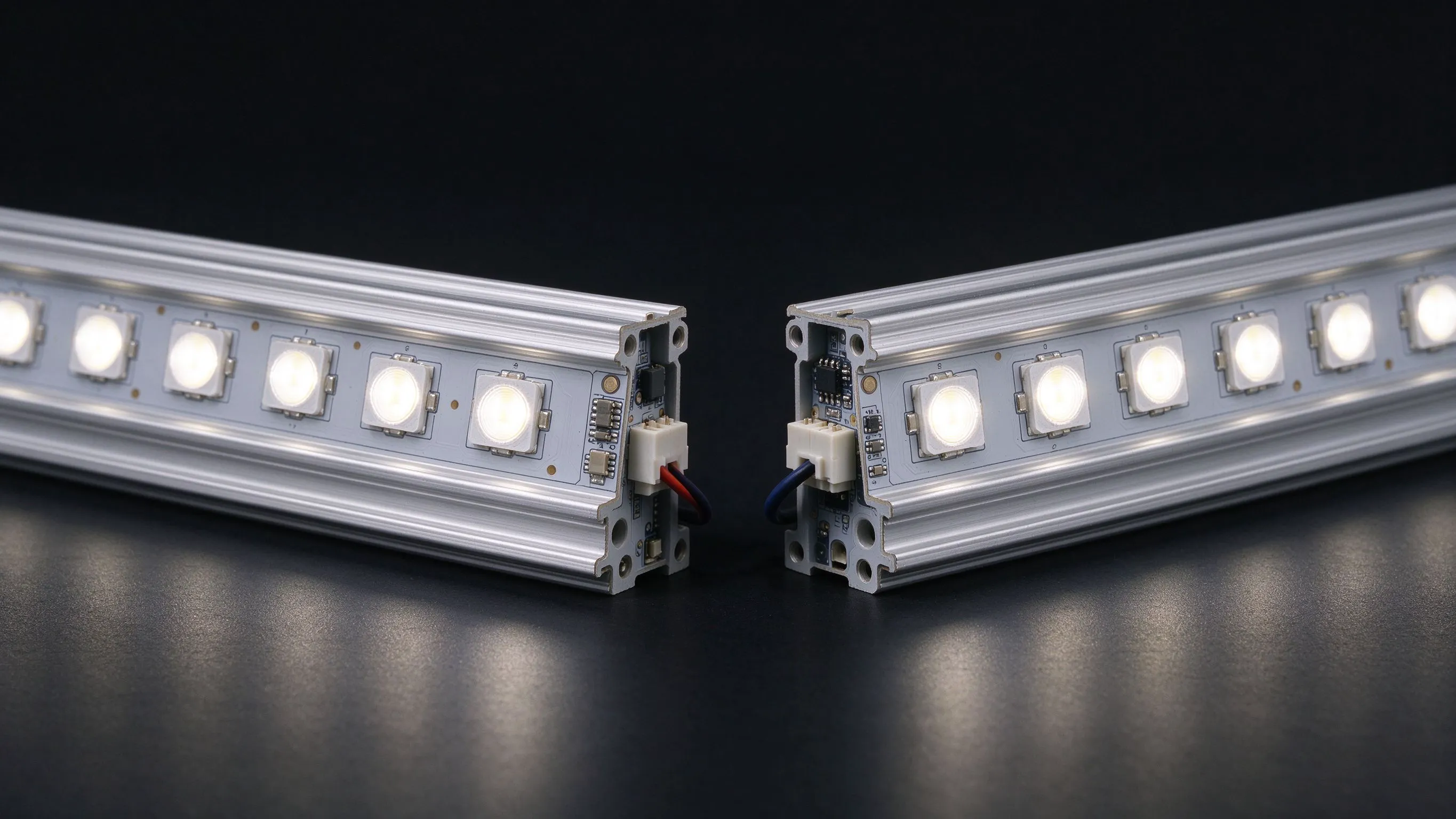
LEDs Are Current Devices, but Systems Differ
LEDs fundamentally respond to current, not voltage - light output tracks the current through the chip. The difference between CV and CC systems is how that current is controlled. In a constant-voltage system, a fixed voltage (12/24V) is supplied and resistors or small regulators on each strip/bar section limit the current. In a constant-current system, the driver itself supplies a regulated fixed current (e.g. 350mA/700mA) through a series string of LEDs.
Both are legitimate and widespread; they simply suit different fixtures. Confusing them - connecting a CC bar to a CV supply or vice versa, or mixing series and parallel assumptions - causes dim sections, overheating or immediate failure. The architecture must be matched end to end: bar type, wiring topology and driver.
Constant-Current Bars: Uniformity Over Long Series Strings
In a CC rigid bar, LEDs (or small groups) are arranged in a series string and the driver pushes a fixed current through the whole string. Because every LED sees the same current regardless of small voltage differences or wire length, brightness is exceptionally uniform along very long runs - there's no cumulative voltage drop dimming the far end the way parallel CV runs can show.
Two 24V constant-current rigid modules in the range represent the CC approach for purpose-built linear fixtures - they're specified with a matching constant-current driver and series wiring for long, high-uniformity, high-efficacy lines such as architectural fixtures, premium shelving and continuous cove replacements where even brightness across many meters is non-negotiable.
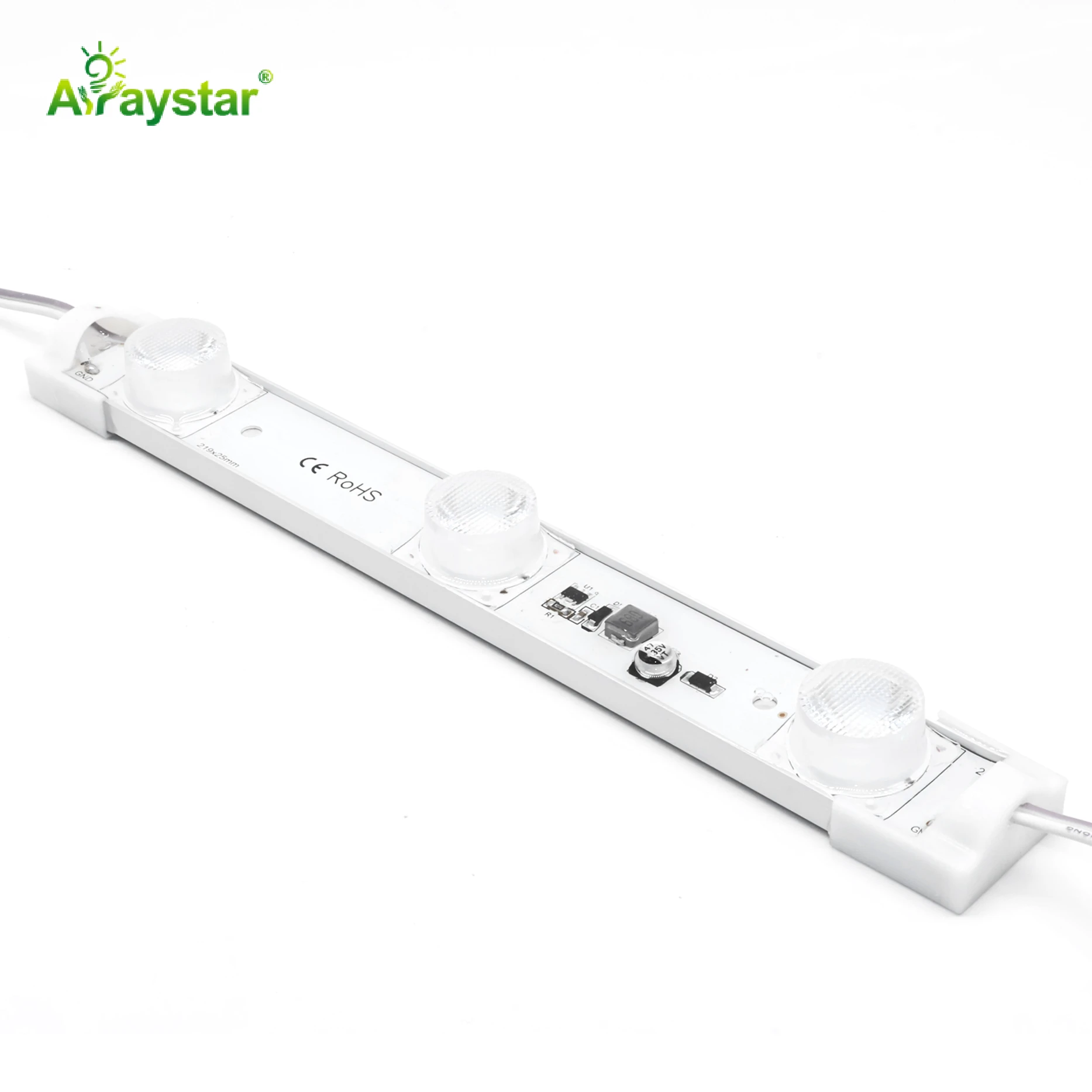
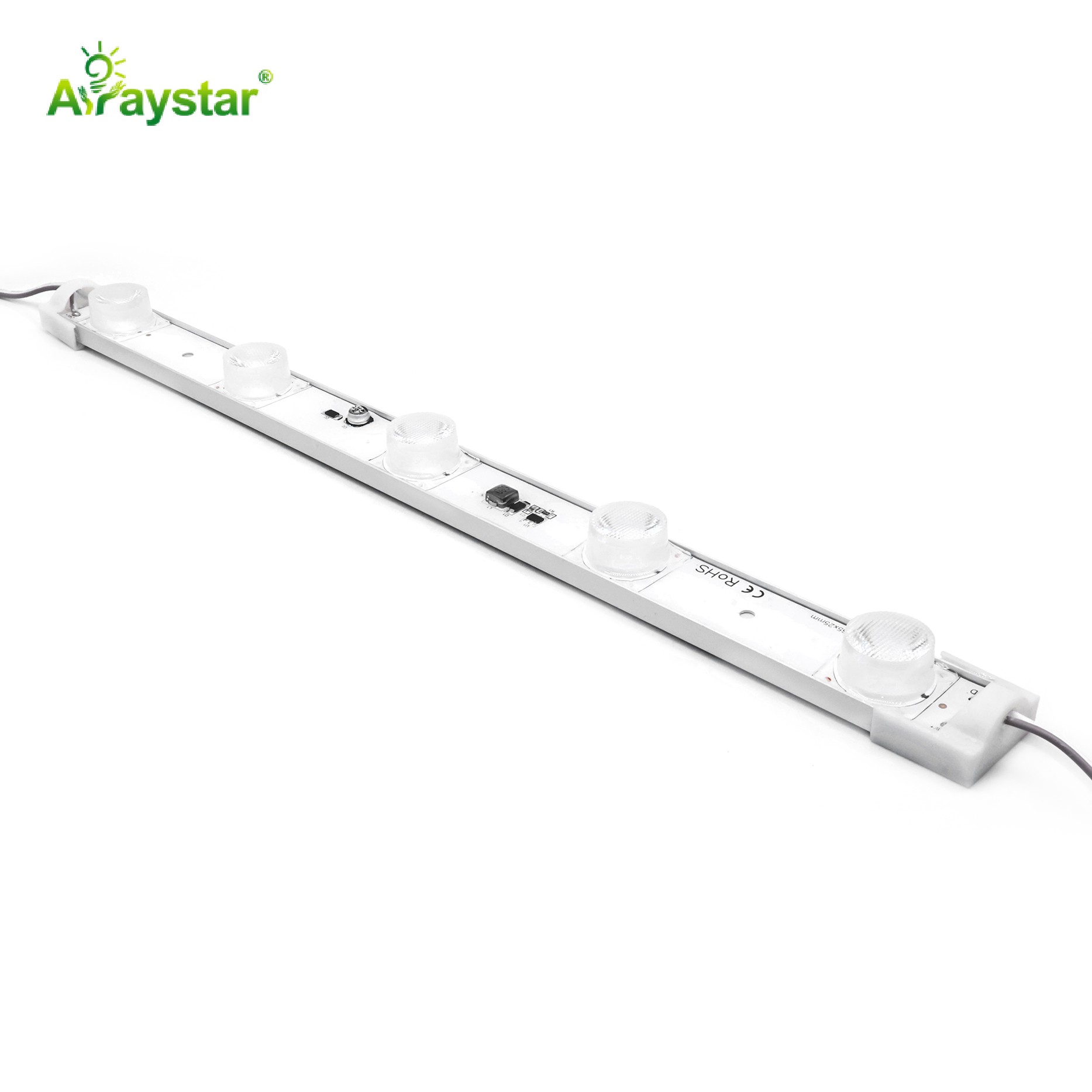
CV vs CC rigid bars.
| Attribute | Constant voltage (CV) | Constant current (CC) |
|---|---|---|
| Driver output | Fixed 12/24V | Fixed current (mA) |
| Wiring | Parallel sections | Series string |
| Current control | Resistors/regulators per section | By the driver |
| Chaining/extension | Easy, add parallel runs | Defined by driver rating |
| Long-run uniformity | Can show voltage-drop dimming | Excellent, same current throughout |
| Typical use | Shelves, cases, flexible-style builds | Long premium linear fixtures |
Constant-Voltage Bars: Forgiving and Easy to Extend
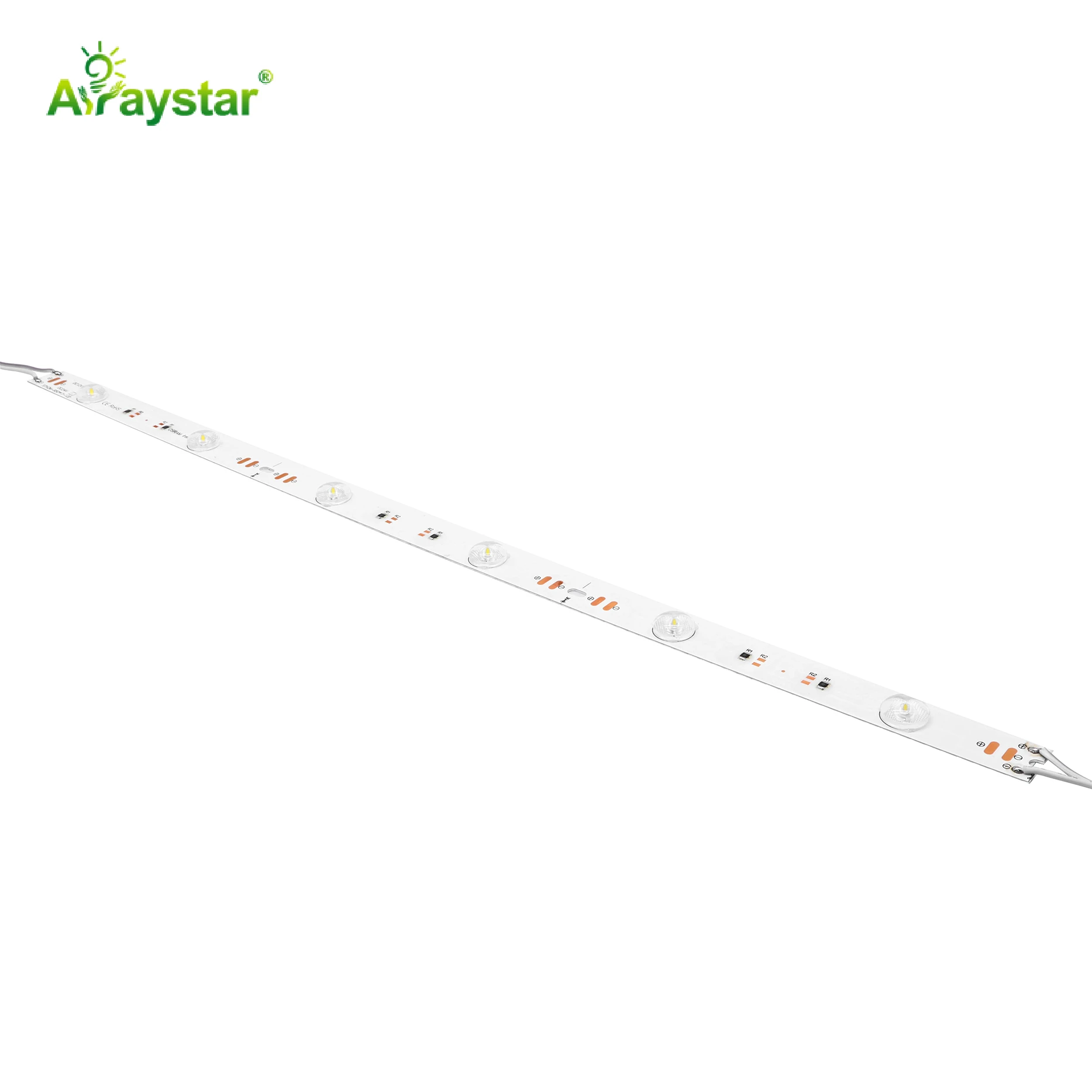
CV rigid bars are wired in parallel across a stable 24V supply; each section draws the current it needs via its own current-limiting resistors. This is the same forgiving topology as LED strip - you can run multiple bars in parallel, add branches, use standard 24V power supplies, and extend the system without recalculating a series string.
A 24V constant-voltage rigid module is the practical choice for display cases, retail shelves, cabinets and furniture where fixtures are built from several connected bars and may be reconfigured. The trade-off is that very long parallel runs still need adequate wire and power injection to avoid voltage-drop dimming - the same discipline as strip - whereas CC sidesteps that within one series string.
Why Current Runaway Happens and How CC Prevents It
LEDs have a steep voltage-current relationship: a tiny rise in voltage (or heating that lowers forward voltage) can cause a large current rise, which heats the LED further, drawing more current - thermal runaway that shortens life or destroys chips. CV systems rely on per-section resistors/regulators to clamp this; CC drivers simply cannot exceed their set current, making them inherently protected against runaway.
That inherent current control is why high-power and long-life linear fixtures favor CC - the driver guarantees each LED runs at its designed current regardless of temperature variation, maximizing both uniformity and lifespan. CV is perfectly safe when the bar has proper current-limiting components (quality bars do), but it places that regulation on the fixture rather than the driver.
Matching Drivers and Deciding
- CV bars: specify a 12/24V constant-voltage supply sized to total watts.
- CC bars: specify a constant-current driver matching current and string voltage.
- Never connect a CC bar to a voltage supply or a CV bar to a current driver.
- Long single continuous line wanting perfect uniformity: lean CC.
- Multiple parallel bars, reconfigurable fixtures: lean CV 24V.
- Check total forward voltage of a CC string against the driver's voltage window.
Simple decision: if you're building from several bars in parallel with standard supplies and want easy extension, use constant-voltage. If you're designing one long, premium, continuous fixture where absolute head-to-tail uniformity and thermal protection matter and you'll specify a dedicated driver, use constant-current. Match the driver to the architecture and the rest follows.
Recommended Products
Frequently Asked Questions
What is the difference between constant-voltage and constant-current LED bars?
Constant-voltage bars run on fixed 12/24V with current limited per section, wired in parallel - forgiving, easy to chain and extend like rigid strip. Constant-current bars are wired in series and driven by a fixed-current driver, so every LED sees identical current for exceptional long-run uniformity and inherent protection against thermal runaway, but need a matched CC driver.
Which is better for long linear LED fixtures?
Constant-current generally gives the best head-to-tail uniformity over long continuous runs because every LED sees the same current regardless of wire length, with no cumulative voltage-drop dimming, and it protects against thermal runaway. Constant-voltage is simpler for multiple parallel bars and reconfigurable fixtures but needs proper wire sizing/injection on long runs.
Can I use a normal 24V power supply on a constant-current LED bar?
No - a CC bar requires a constant-current driver that supplies the rated fixed current and matches the total forward voltage of the series string; a fixed-voltage supply won't regulate current and can damage the LEDs. Conversely a CV bar must use a constant-voltage supply. Bar type, wiring and driver must all match.
What is LED thermal runaway and how is it prevented?
As an LED heats, its forward voltage drops, which can let current rise, causing more heat in a self-reinforcing cycle that shortens life or destroys the chip. Constant-current drivers can't exceed their set current, so they inherently prevent runaway; constant-voltage bars rely on proper per-section current-limiting resistors/regulators (present on quality bars) to clamp it.
How do I choose the driver for a constant-current rigid bar?
Match the driver's output current (e.g. 350/700mA) to the bar's rated current, and ensure the driver's output voltage window covers the total forward voltage of the LEDs wired in series (plus headroom). Size power for total watts. For CV bars instead, just size a 24V constant-voltage supply to total wattage and wire bars in parallel.
Need help with your LED project?
Get factory-direct pricing, free samples and engineering support within 24 hours.
Email: info@arraystarled.com | Phone: +86-0755-2103-6746 | WhatsApp: 0086 1581 8514 077
Need to size your power supply? Use our LED Strip Power Calculator to find the right driver in seconds.







