
Rigid Lens Bars & Diffuse Reflective Strips for Lightboxes and Display Shelves
- 2026-09-30 17:39
- /
- Arraystar LED
Display shelves, glass cases and light boxes punish bad linear light: bare tape gives hot spots and inconsistent coverage, reflects off glass, and fails to evenly illuminate merchandise or graphics. Rigid lensed bars solve this by controlling the beam - asymmetric lenses pull light onto the shelf face, diffuse lens bars wash light boxes evenly, and the rigid aluminum body keeps the line straight and cool inside an enclosed case. Matching the lens to what's being lit (shelf edge, vertical face, or backlit graphic) is the difference between merchandise that pops and flat, patchy display light.
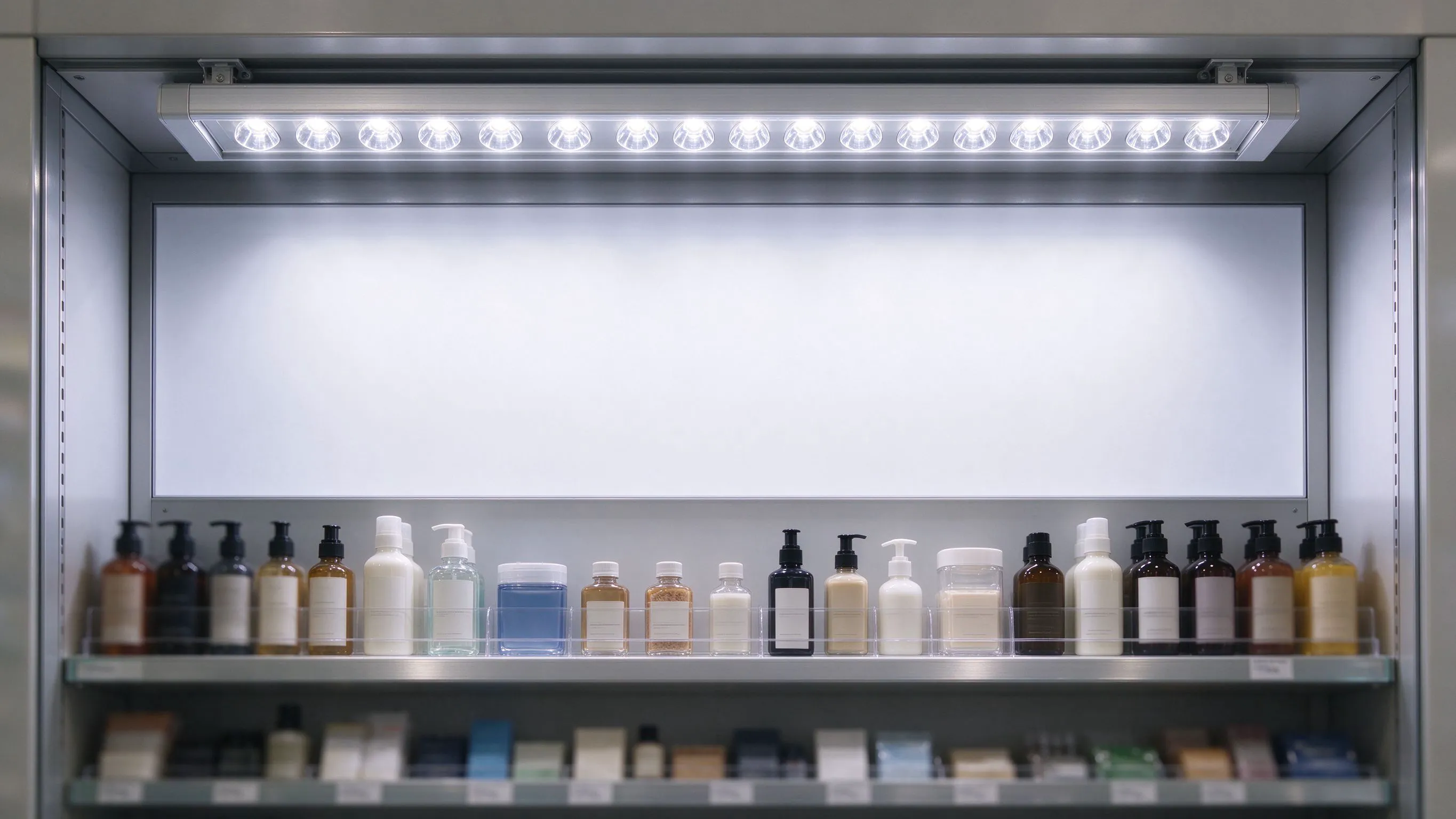
Display Lighting Is About Controlled Direction
In a display case, shelf or light box, the goal isn't maximum raw light - it's the right light on the product or graphic with no glare, no hot spots and no dark zones. Bare LED strip mounted at the shelf edge throws light straight down in a narrow cone, over-lighting the near edge, leaving the front of the merchandise dim and reflecting in the glass.
Rigid LED bars with integrated lenses shape the beam to the task: wide or asymmetric optics direct light where the merchandise is, diffused optics provide even glow for backlit graphics, and the rigid body mounts precisely and stays cool in the enclosed case. Specifying the lens is the core of display lighting; the LED density alone doesn't determine the result.
Shelf and Case Lighting With Lensed Rigid Bars
Retail shelves and museum vitrines typically need light pulled toward the front edge and across the products rather than straight down. Asymmetric or angled-lens rigid bars mounted at the rear or front of the shelf redirect light across the merchandise, while the rigid board keeps the beam angle consistent along the whole shelf and conducts heat away inside the sealed case.
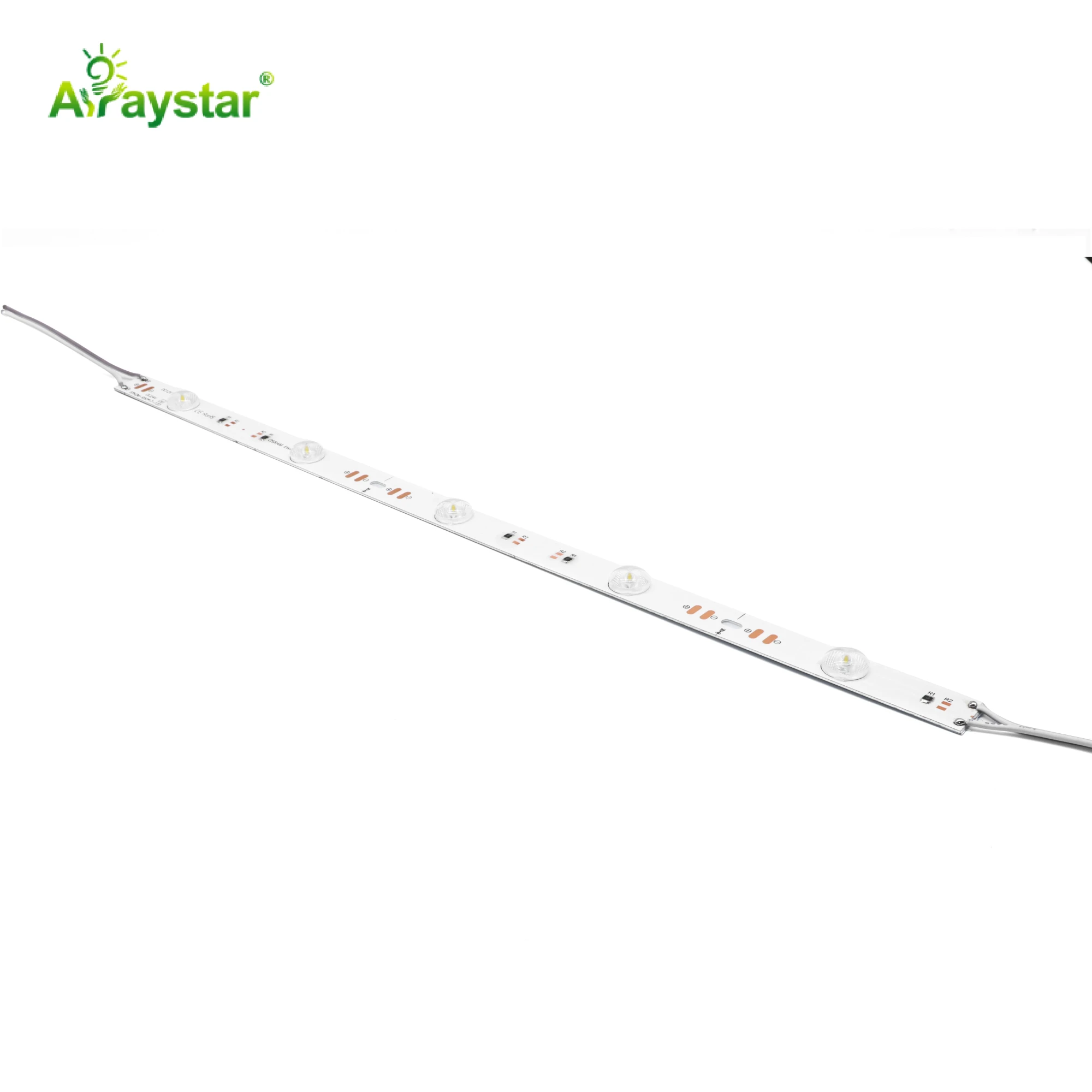
A 24V constant-voltage rigid lensed module is the workhorse for shelf and case builds - it chains in parallel from a standard 24V supply across multiple shelves, and its integrated lens sets the beam so each shelf is evenly covered without glass glare. A second 24V constant-voltage rigid module variant covers different shelf depths and beam requirements, letting you match optic to the merchandise.
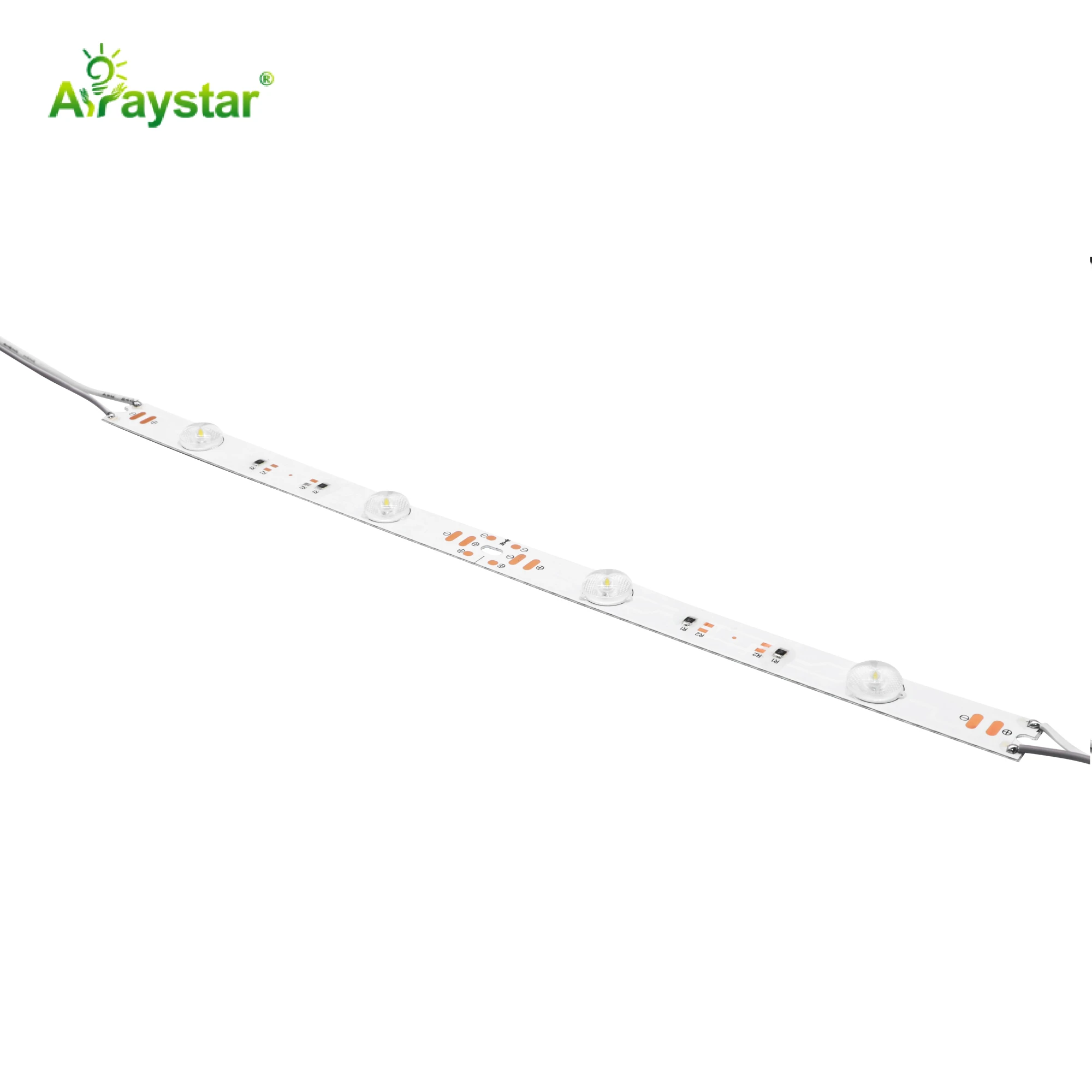
Matching rigid-bar optics to display applications.
| Application | Optic needed | Why |
|---|---|---|
| Retail shelf edge | Asymmetric/angled lens | Pulls light to front of products |
| Glass museum case | Soft wide lens, low glare | Even coverage, no glass reflections |
| Under-cabinet task | Medium beam, angled | Even countertop illumination |
| Light box / graphic | Diffuse lens bar | Uniform edge-to-edge glow |
| Deep display | Narrower focused beam | Reach the lower/front area |
Diffuse Lens Bars for Even Light Boxes
Light boxes, menu boards and backlit graphics demand perfectly uniform edge-to-edge illumination with no visible LEDs or bright center - the opposite of accent lighting. This needs a diffuse, wide-emitting linear source spaced correctly from the diffuser face so the individual light sources blend before reaching the graphic.
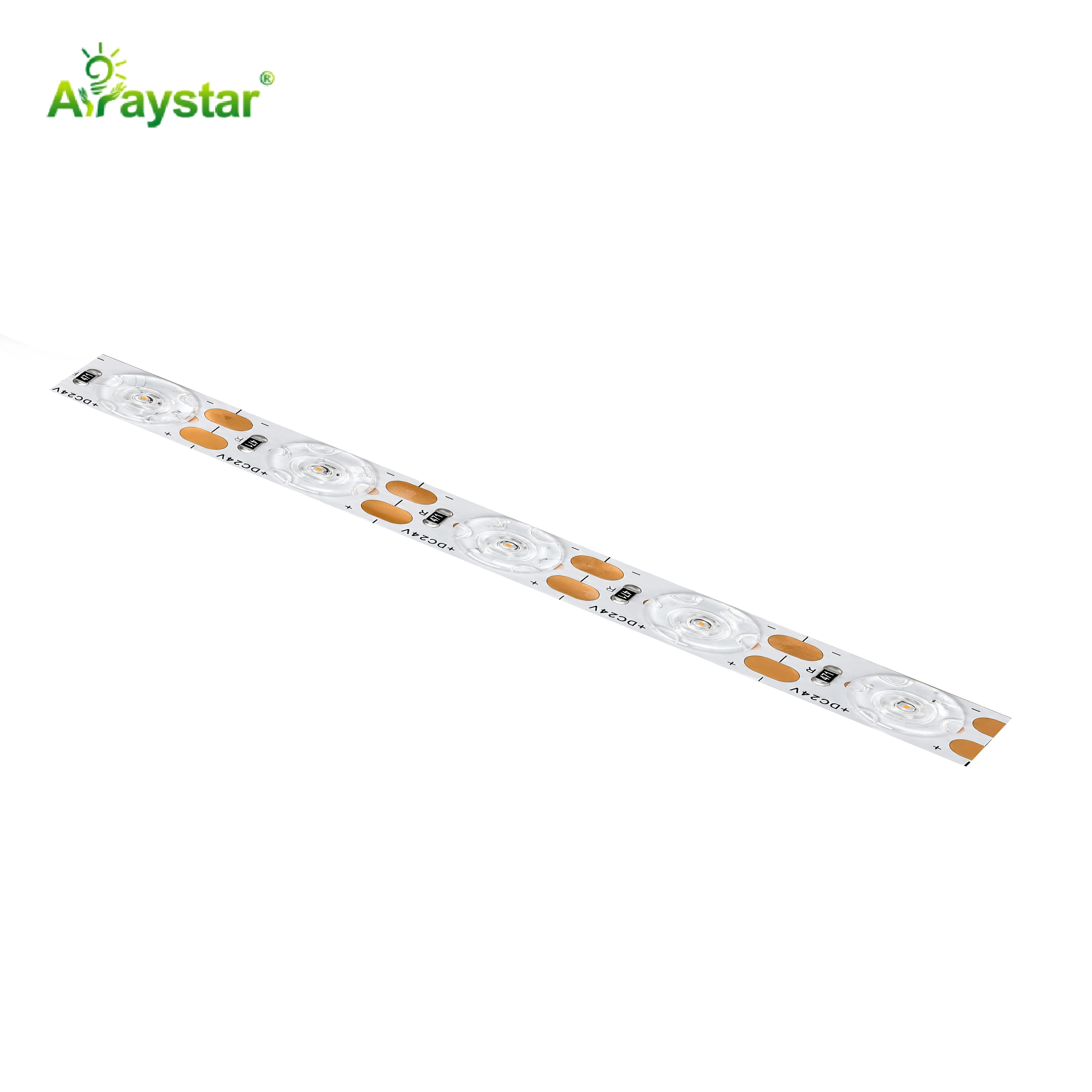
The diffuse-reflective LED lens strip is purpose-engineered for this: its lens optics diffuse and spread light (often via a reflective/diffuse optical path) to produce an exceptionally even field for light boxes and backlit panels, eliminating the LED 'pinpoints' and center-hotspot that bare tape shows through a translucent face. Combined with correct spacing from the diffuser film, it turns a panel into uniform glowing surface.
Thermal, Mounting and Color for Enclosed Cases
Display cases and light boxes are enclosed, often poorly ventilated spaces where heat can't escape - a problem for both LED life and heat-sensitive merchandise. Rigid aluminum bars conduct heat into the case structure and run far cooler than bare tape on adhesive, sustaining output and protecting products (chocolate, cosmetics, collectibles) from heat damage.
- Match the lens to the target: asymmetric for shelves, diffuse for boxes.
- Space diffuse bars from the diffuser face so sources blend fully.
- Use rigid aluminum bars in enclosed cases for heat conduction.
- Choose high CRI (90+) for accurate merchandise color.
- Angle bars to avoid reflections in glass fronts; hide the source from direct view.
- Chain CV bars per shelf from a clean 24V supply with dimming control.
Color quality matters disproportionately in display - high CRI (90+) makes products and graphics look true to life, and tunable/correct CCT sets the mood (warm for jewelry and hospitality, neutral for tech and galleries). A dimmable 24V supply lets staff tune levels for different merchandise and opening hours.
Layout Rules for Uniform Merchandise Coverage
Space bars according to shelf depth and beam angle - one bar per shelf tier is common, positioned and angled so the beam reaches the front lip without scalloping. For tall cases, stagger or angle bars to cover multiple levels. Prototype one shelf with the actual products before fitting the whole fixture: display lighting should always be verified with merchandise in place, not on an empty shelf.
Recommended Products
Frequently Asked Questions
What LED is best for lighting retail shelves and display cases?
Rigid 24V constant-voltage LED bars with integrated lenses, not bare tape. Asymmetric/angled-lens bars pull light across the front of merchandise, the rigid aluminum body stays straight and runs cool inside enclosed cases, and they chain per shelf from a standard 24V supply. Use high-CRI (90+) light and angle bars to avoid glass reflections.
How do I evenly light a light box or backlit menu board?
Use a diffuse-reflective lens strip/bar designed to spread light into a uniform field, and space it correctly from the diffuser film so individual LEDs blend before reaching the graphic. Bare tape shows pinpoints and a bright center; the diffuse optic (like the diffuse-reflective lens strip) gives edge-to-edge even glow across the panel.
Why do my display case LEDs show hot spots or reflect in the glass?
Bare strip or the wrong beam throws a narrow cone straight down, over-lighting the near edge and reflecting off the glass front. Use a lensed rigid bar with a wide/asymmetric optic angled to light the merchandise while hiding the source from direct view, and soften the beam for glass cases. Verify with products in place.
Do rigid LED bars run cooler than strip inside enclosed cases?
Yes - the rigid aluminum board conducts heat into the case structure, whereas bare tape on adhesive traps heat in a sealed case. That protects both LED life and heat-sensitive merchandise (cosmetics, chocolate, collectibles). Rigid lensed bars are therefore preferred for enclosed vitrines and light boxes.
What color temperature and CRI should display lighting use?
Use high CRI (90+) so products and graphics render accurately, and pick CCT by merchandise: warm (~2700-3000K) for jewelry, hospitality and luxury goods; neutral (~3500-4000K) for tech, galleries and accurate white. Run rigid bars from a dimmable 24V supply so staff can tune levels for different products and times of day.
Need help with your LED project?
Get factory-direct pricing, free samples and engineering support within 24 hours.
Email: info@arraystarled.com | Phone: +86-0755-2103-6746 | WhatsApp: 0086 1581 8514 077
Need to size your power supply? Use our LED Strip Power Calculator to find the right driver in seconds.







