
Rigid LED Bars vs Flexible Strips: When to Spec a Hard Linear Module
- 2026-09-30 17:39
- /
- Arraystar LED
Flexible strip gets specified by default, but a lot of lighting - display cases, shelves, under-cabinet task lines, light boxes, machine and furniture integration - is actually better served by rigid LED bars, which hold a perfectly straight line, conduct heat through their aluminum body, take clean lenses and connectors, and don't sag or need continuous mounting. The choice comes down to geometry (straight vs curved), thermal needs, beam control and how the fixture is physically integrated. Reaching for a rigid bar where the run is fixed and straight gives a more precise, durable and controllable fixture than tape ever will.
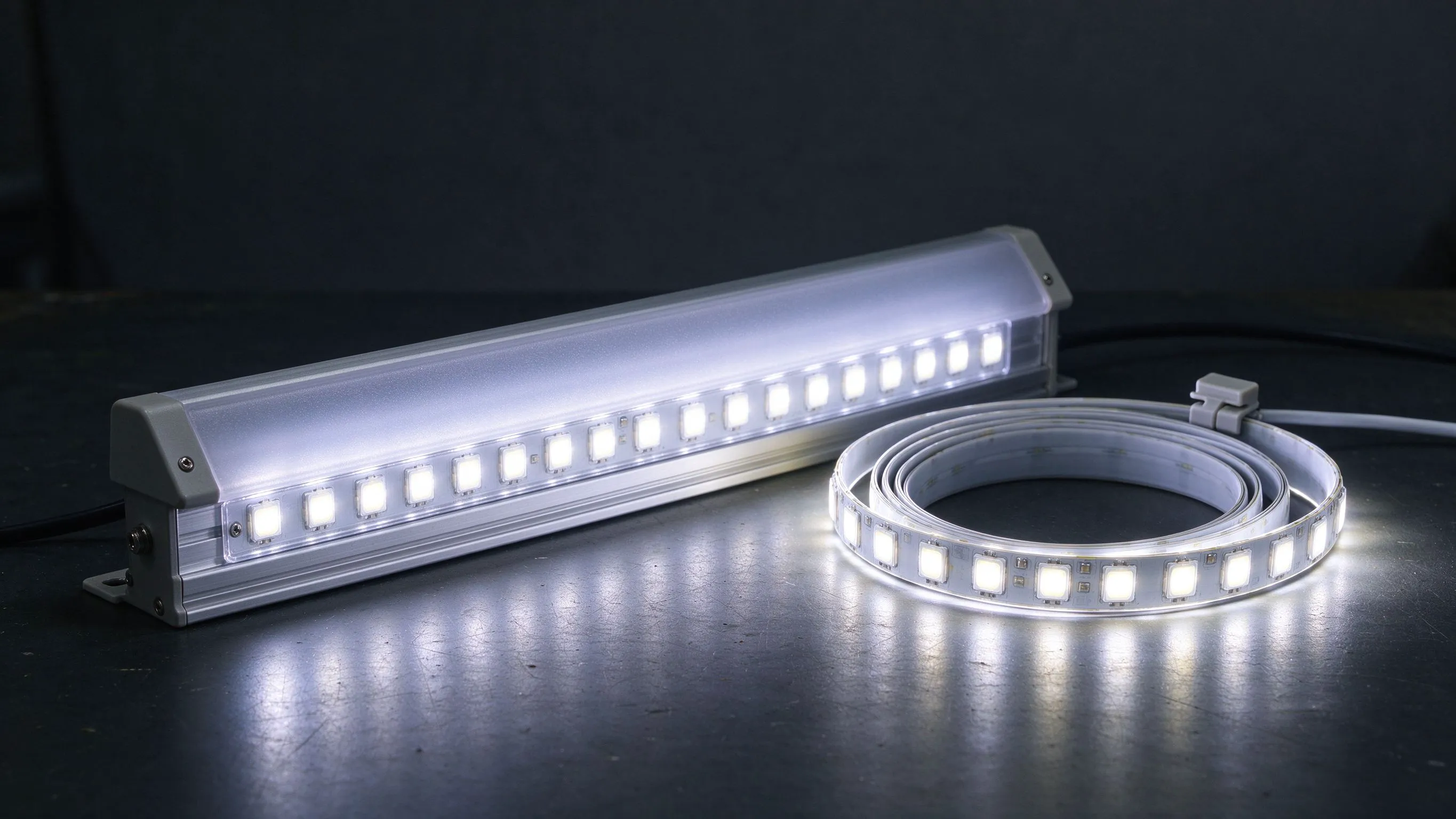
Flexible Tape Is a Generalist; Rigid Bars Specialize
Flexible LED strip is wonderfully adaptable - it bends, sticks and follows curves - but that flexibility comes with trade-offs: it needs a profile or frequent fixing to stay straight, its thin PCB dissipates heat poorly on its own, beam control depends on whatever channel it sits in, and long self-adhered runs can sag or peel.
Rigid LED bars (hard strips) are LED arrays built onto rigid aluminum circuit boards in fixed straight lengths, often with integrated lenses and mounting. Where the run is genuinely straight and fixed, they outperform tape: pin-straight light line, superior thermal conduction, built-in optics for beam control, robust end-to-end connectors, and no reliance on adhesive. They're components, not consumables.
Where Rigid Bars Clearly Win
Rigid bars are the right call for straight, precision and thermally demanding applications: glass display cases and museum vitrines, retail shelf and cabinet lighting, under-cabinet task lines, light boxes and menu boards, furniture and wardrobe integration, machine/equipment lighting, and anywhere the fixture must hold a precise line with a defined beam for years.
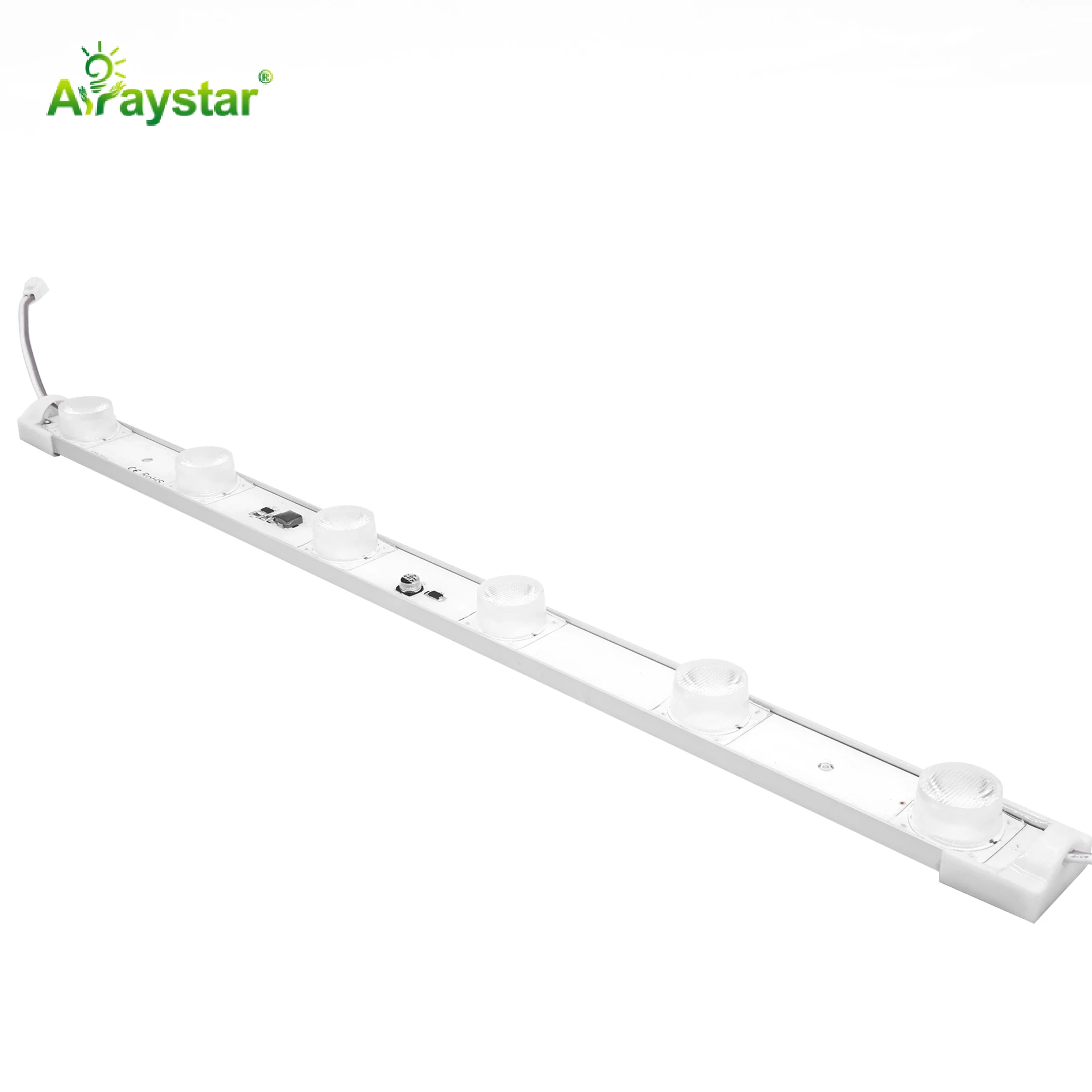
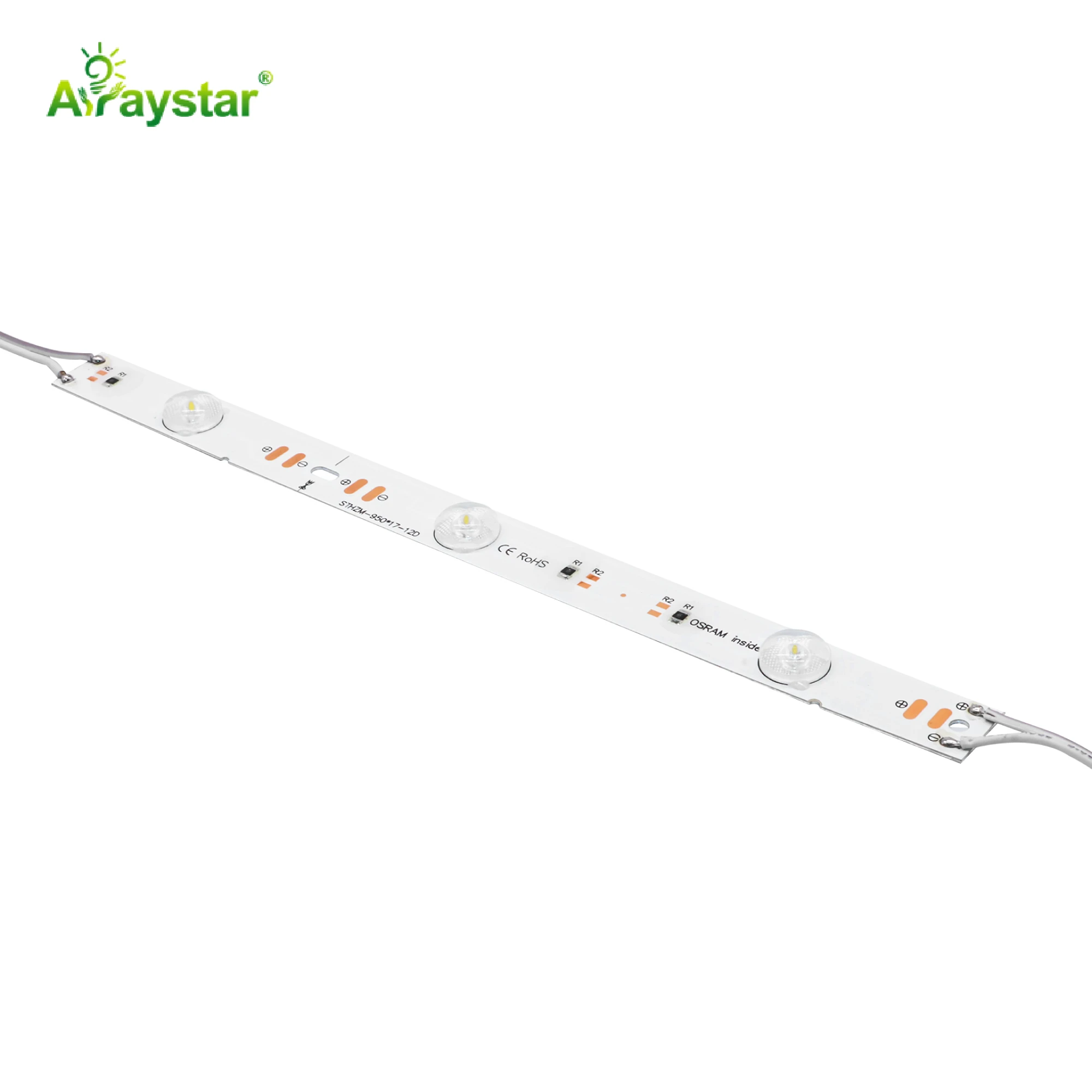
A 24V constant-voltage rigid LED module forms the backbone of these straight fixture builds - constant voltage (CV) bars run in parallel and can be chained and cut/connected like conventional tape but on a rigid board, making them the versatile default for shelves, cases and cabinets where you connect multiple bars to one 24V supply. They mount with clips or screws and stay straight without a separate profile.
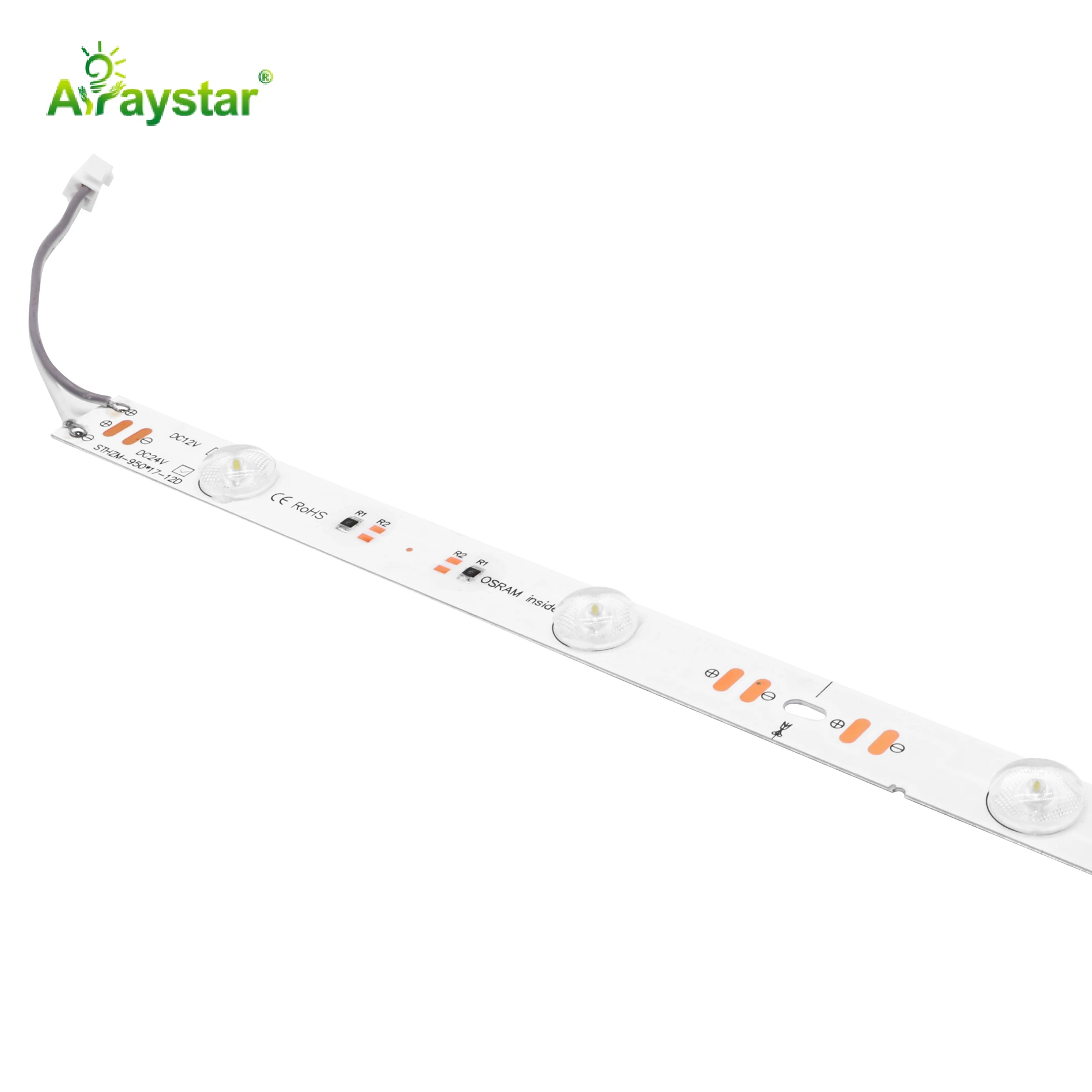
Flexible strip vs rigid bar at a glance.
| Factor | Flexible strip | Rigid LED bar |
|---|---|---|
| Geometry | Curves and irregular surfaces | Straight fixed runs |
| Straightness | Needs profile/fixing | Naturally pin-straight |
| Heat dissipation | Thin PCB, needs channel | Aluminum board conducts heat |
| Beam control | Via added channel/lens | Integrated lenses common |
| Mounting | Adhesive + clips | Screws/clips, robust connectors |
| Best for | Coves, curves, retrofits | Cases, shelves, light boxes, machines |
Constant Voltage vs Constant Current Bars
Rigid bars come in two electrical architectures. Constant-voltage (CV) bars run at fixed voltage (typically 24V) with current regulated per section - they're forgiving, chainable and work like rigid tape, so you can run multiple bars in parallel from one supply and field-connect them easily. This is the common choice for display and furniture work.
Constant-current (CC) bars are wired in series with a driver that supplies fixed current, often used for longer continuous lines and high-efficiency/high-CRI fixtures where uniform current across the whole run gives extremely consistent brightness and efficacy. A 24V constant-current rigid module suits purpose-built linear fixtures and longer runs where the designer wants maximum uniformity and is prepared to wire to a CC driver. Another constant-voltage rigid module variant covers standard 24V chaining for general fixtures.
Thermal and Mechanical Advantages
The rigid aluminum board is both structure and heat sink. Heat is the main driver of LED degradation, and a rigid bar conducts heat away from the chips far better than flexible tape floating on adhesive, which is why rigid bars sustain output and CRI longer in enclosed fixtures and high-density applications. In a sealed display case or light box that thermal difference matters.
- Choose rigid for any straight run needing a precise permanent line.
- CV bars for easy chaining/parallel runs in cases, shelves, cabinets.
- CC bars for long continuous fixtures needing peak uniformity/efficacy.
- Use rigid bars in enclosed/hot fixtures where tape would overheat.
- Reserve flexible strip for curves, irregular surfaces and retrofits.
Connecting and Designing With Bars
Rigid bars typically join end to end with clip or wire connectors, letting you build continuous straight lines of defined length with no soldering and no dark gaps between sections. Specify bar length, beam angle (lensed bars control the spread), color and electrical type together, and mount to a clean flat surface. For curved work, don't force rigid bars - that's the one place flexible strip or flexible neon remains correct.
Recommended Products
Frequently Asked Questions
When should I use a rigid LED bar instead of flexible strip?
For straight, fixed, precision runs - display cases, shelves, under-cabinet task lines, light boxes, furniture and machine lighting - where you want a pin-straight line, better heat dissipation through the aluminum board, integrated lens beam control and robust connectors without relying on adhesive. Keep flexible strip for curves, irregular surfaces and retrofits.
What's the difference between constant-voltage and constant-current rigid bars?
Constant-voltage (usually 24V) bars run in parallel, chain easily and work like rigid tape - the forgiving default for shelves, cases and cabinets from one supply. Constant-current bars run in series from a CC driver and give extremely uniform brightness and high efficacy over long continuous fixtures, but require CC wiring. Choose CV for flexibility, CC for maximum uniformity on long purpose-built lines.
Do rigid LED bars run cooler than flexible strip?
Yes - the rigid aluminum circuit board acts as a structural heat sink, conducting heat away from the LEDs far better than a thin flexible PCB on adhesive. That matters in enclosed display cases, light boxes and high-density fixtures, where rigid bars sustain output and color longer than tape that would otherwise overheat.
How do you join rigid LED bars into a continuous line?
They typically connect end to end with clip or wire connectors (no soldering), forming straight lines of defined length with no dark gaps, powered from a matched 24V supply (CV) or CC driver. Mount with screws or clips to a flat surface. Specify length, beam angle, color and electrical type together for a seamless run.
Can rigid LED bars bend around curves?
No - rigid bars are fixed straight lengths and forcing them damages the board and LEDs. For curved or irregular surfaces use flexible strip, flexible neon or a bendable profile system. Use rigid bars only where the run is genuinely straight and permanent, which is exactly where their precision and thermal advantages pay off.
Need help with your LED project?
Get factory-direct pricing, free samples and engineering support within 24 hours.
Email: info@arraystarled.com | Phone: +86-0755-2103-6746 | WhatsApp: 0086 1581 8514 077
Need to size your power supply? Use our LED Strip Power Calculator to find the right driver in seconds.







