Constant Voltage vs Constant Current LED Strips
- 2026-09-18 18:16
- /
- Arraystar
Quick Answer
Flexible LED strips run on constant voltage (CV) — they need a fixed 12/24/48 V supply and their own onboard resistors or drivers set the current. Constant current (CC) is for high-power single LEDs and rigid modules, where the driver fixes the current and the voltage floats. Match driver type to the load — a CV driver on a CC load (or vice versa) will not work.
📑 Table of Contents
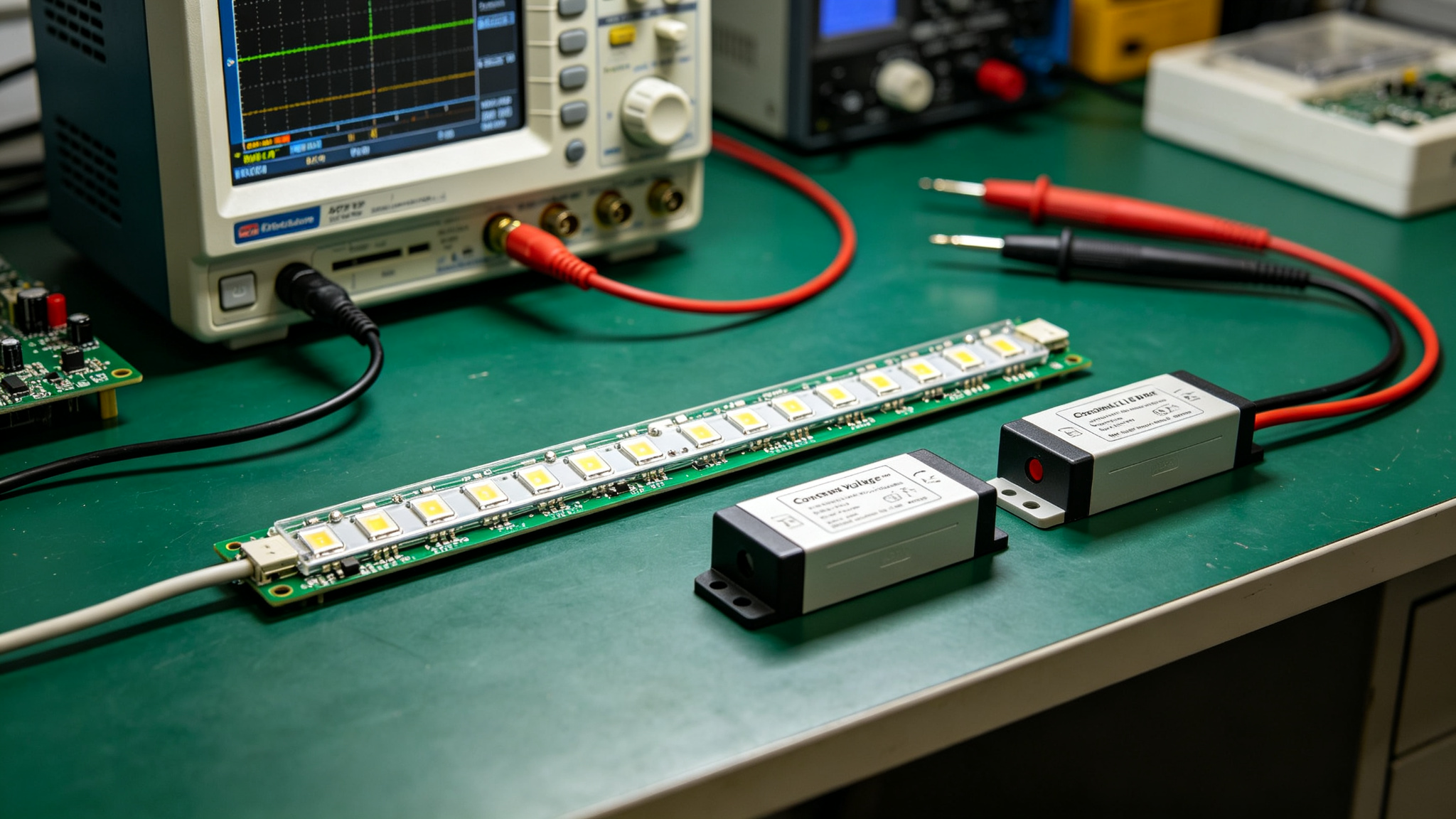
Match the driver topology to the load: CV driver to CV strips, CC driver to CC rigid modules.
Constant Voltage vs Constant Current: the Core Difference
A constant voltage (CV) driver holds its output at a fixed — say 24.0 V — while the load draws whatever current it needs. A constant current (CC) driver holds its output at a fixed current — say 700 mA — while the voltage floats up or down to push that current through the load. One stabilizes voltage, the other stabilizes current. LEDs are current-driven devices, so each approach regulates current by a different route.
On flexible strips, the PCB already contains current-limiting resistors (or constant-current ICs) per LED group, so all the strip needs from you is a clean, fixed voltage — hence the world runs strips from 12/24/48 V CV drivers. For the voltage trade-offs, see 12 V vs 24 V.
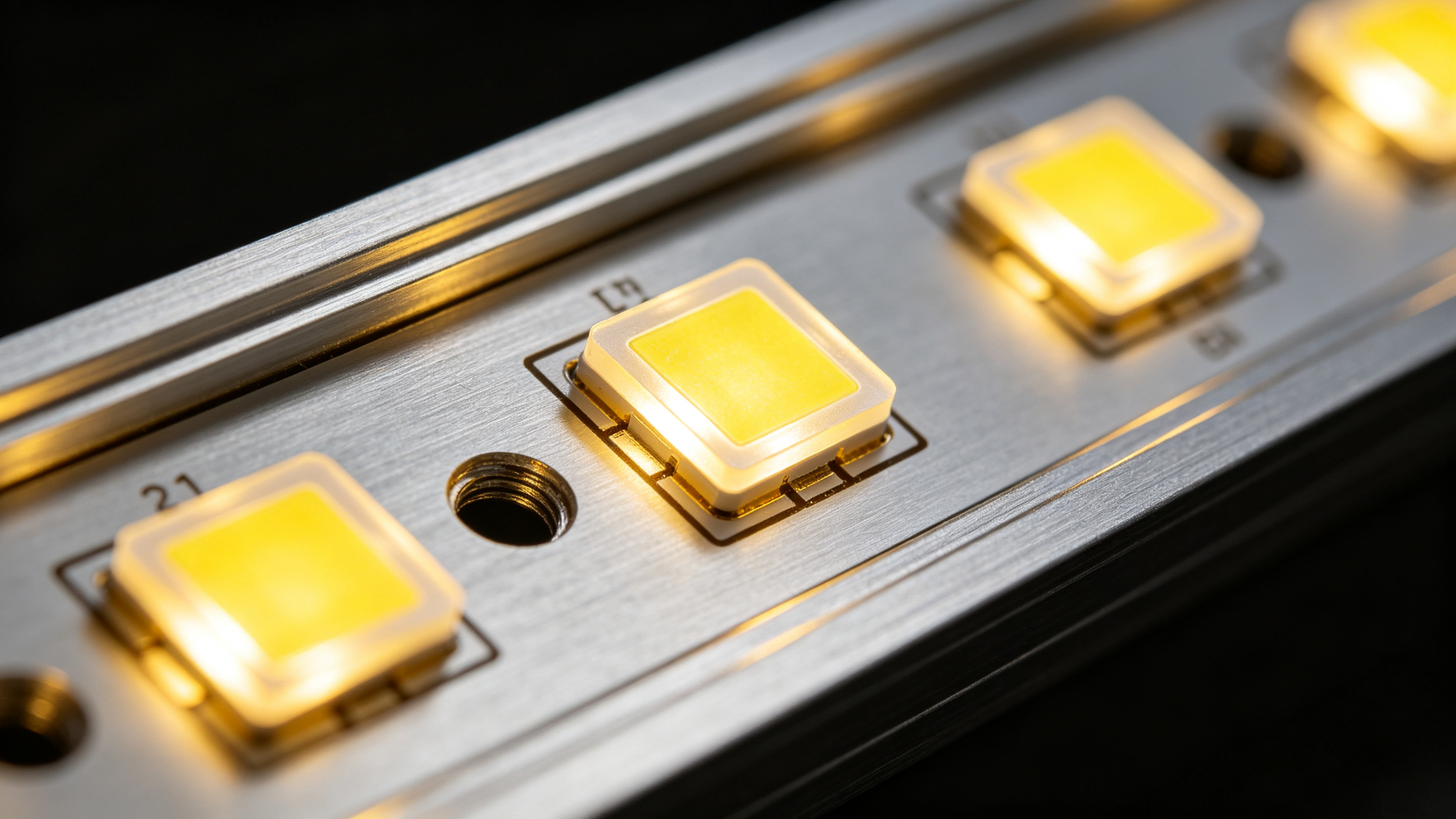
Rigid aluminum-substrate modules often pair with CC drivers that fix the current to each LED.
Constant Voltage vs Constant Current: Full Comparison
| Factor | Constant Voltage (CV) | Constant Current (CC) |
|---|---|---|
| Output | Fixed 12 / 24 / 48 V | Fixed current (e.g. 350/700 mA) |
| Typical load | Flexible LED strips | High-power single LEDs, rigid modules |
| Current control | Onboard resistors / ICs on the PCB | Built into the driver |
| Number of loads | Many in parallel | Series string matched to driver |
| Dimming | PWM / TRIAC / 0–10V / DALI easy | Requires CC dimming driver |
| Voltage drop tolerance | Needs care (see our guide) | Self-compensating to a degree |
| Cost / flexibility | Low, modular, widely available | Higher, load-specific |
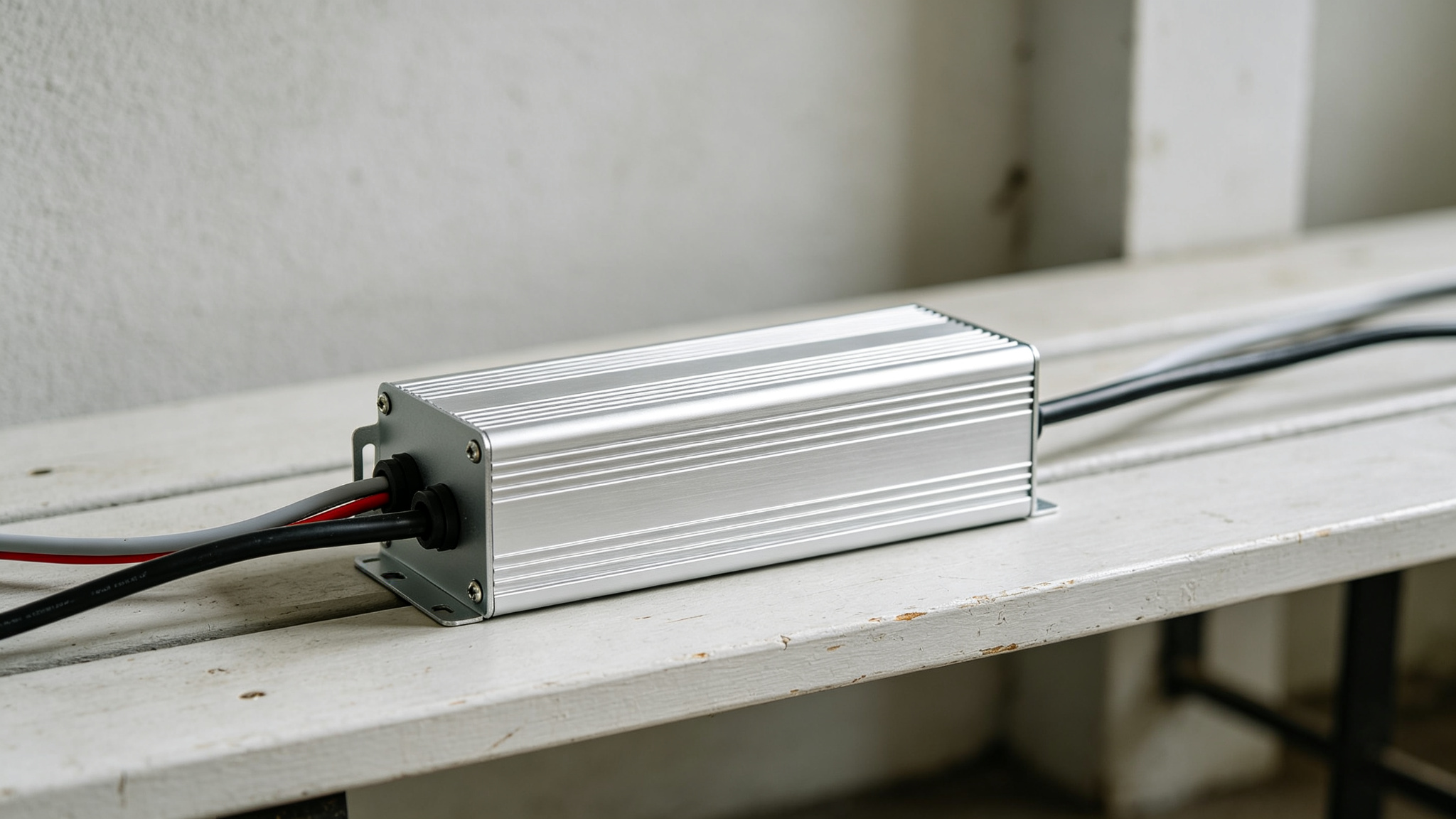
A CV driver — the familiar box that powers almost every flexible LED strip installation.
Why Flexible Strips Are Constant-Voltage by Design
A flexible strip is made of many LEDs in short series groups, each group dropping roughly the same voltage. Put a fixed 24 V across the strip and each group’s series resistor sets the current safely. That lets you cut the strip anywhere and add more strips in parallel — the modular, DIY-friendly flexibility that made LED strips ubiquitous. It also means the strip is sensitive to voltage drop: if the supply sags to 22 V, every group sags slightly. This is why cable gauge and injection matter — covered in our voltage drop guide.
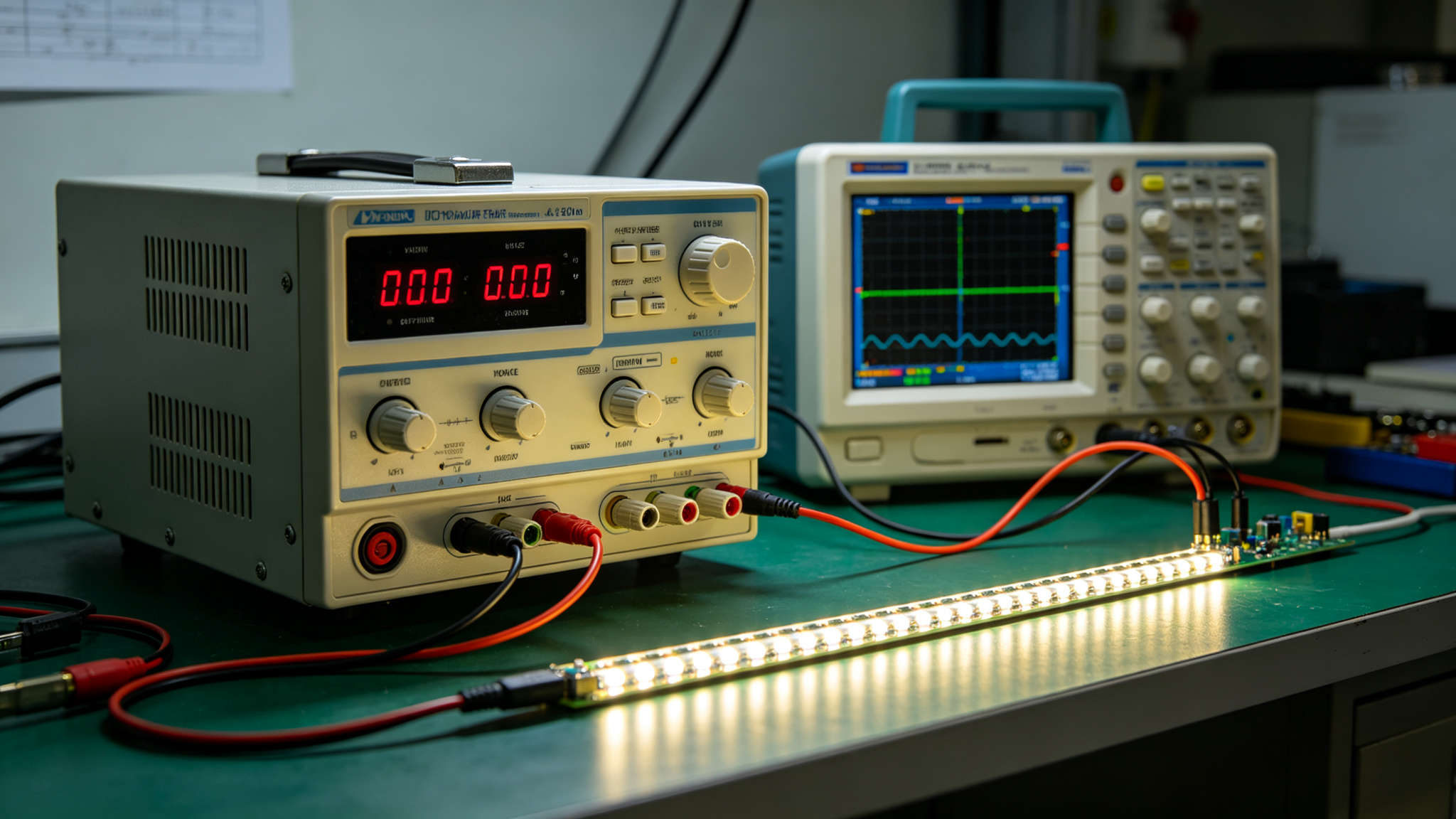
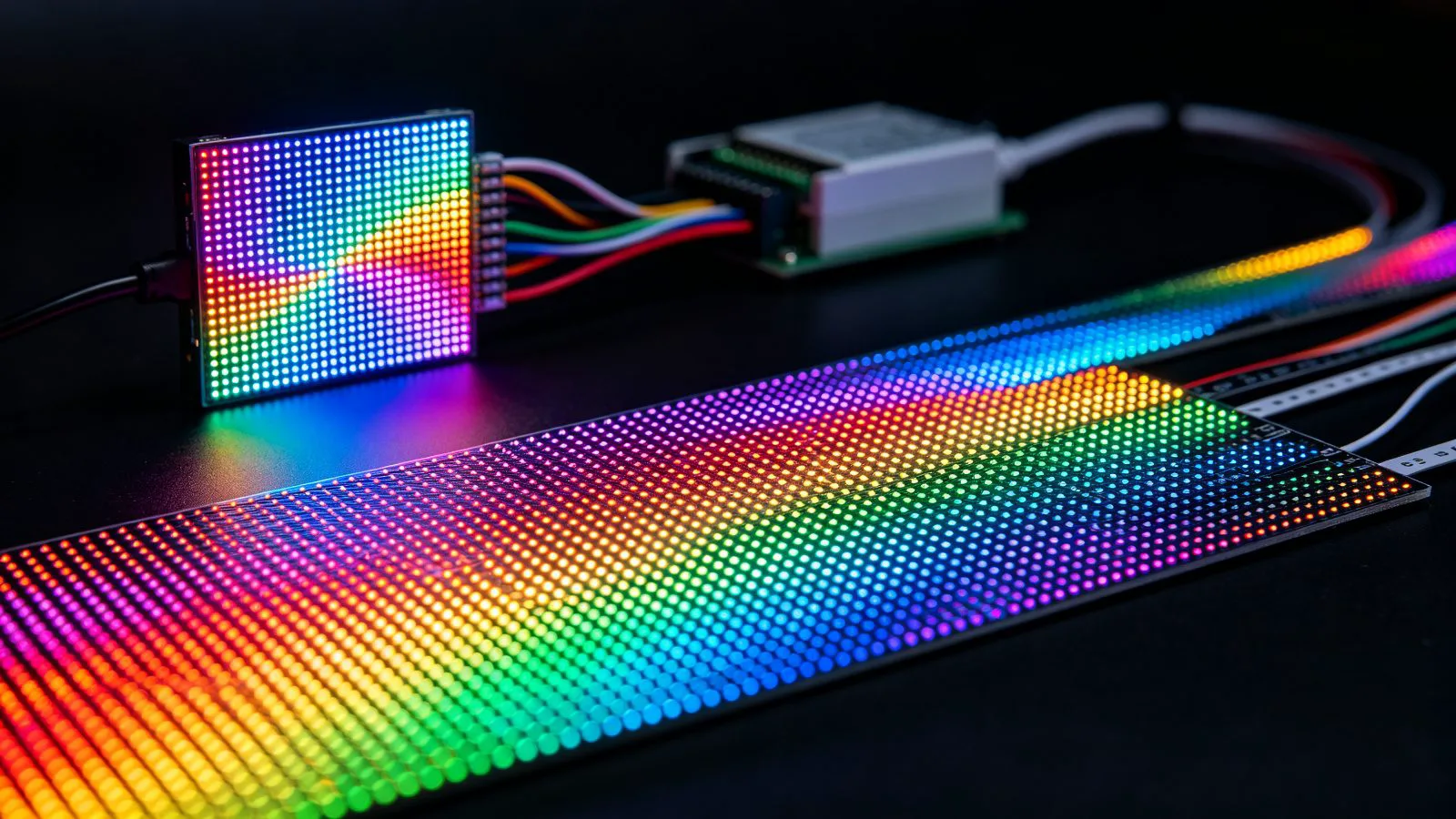
Testing a CV strip on a bench supply — set the fixed voltage, and the strip’s onboard resistors do the rest.
Where Constant-Current Is the Right Choice
CC shines with high-power LEDs (1–10 W each) and rigid module bars where precise current equals precise lumen output and long life — architectural wall washers, downlight engines and some professional linear fixtures. Because the driver holds current constant regardless of small voltage changes, brightness is stable across temperature and as LEDs age. If your product spec says “700 mA” or “1050 mA”, it is a CC load.
Rule of thumb: flexible tape → constant voltage 12/24/48 V. Rigid bars or single high-power LEDs with a rated mA → constant current. Never mix them — check the label before wiring.
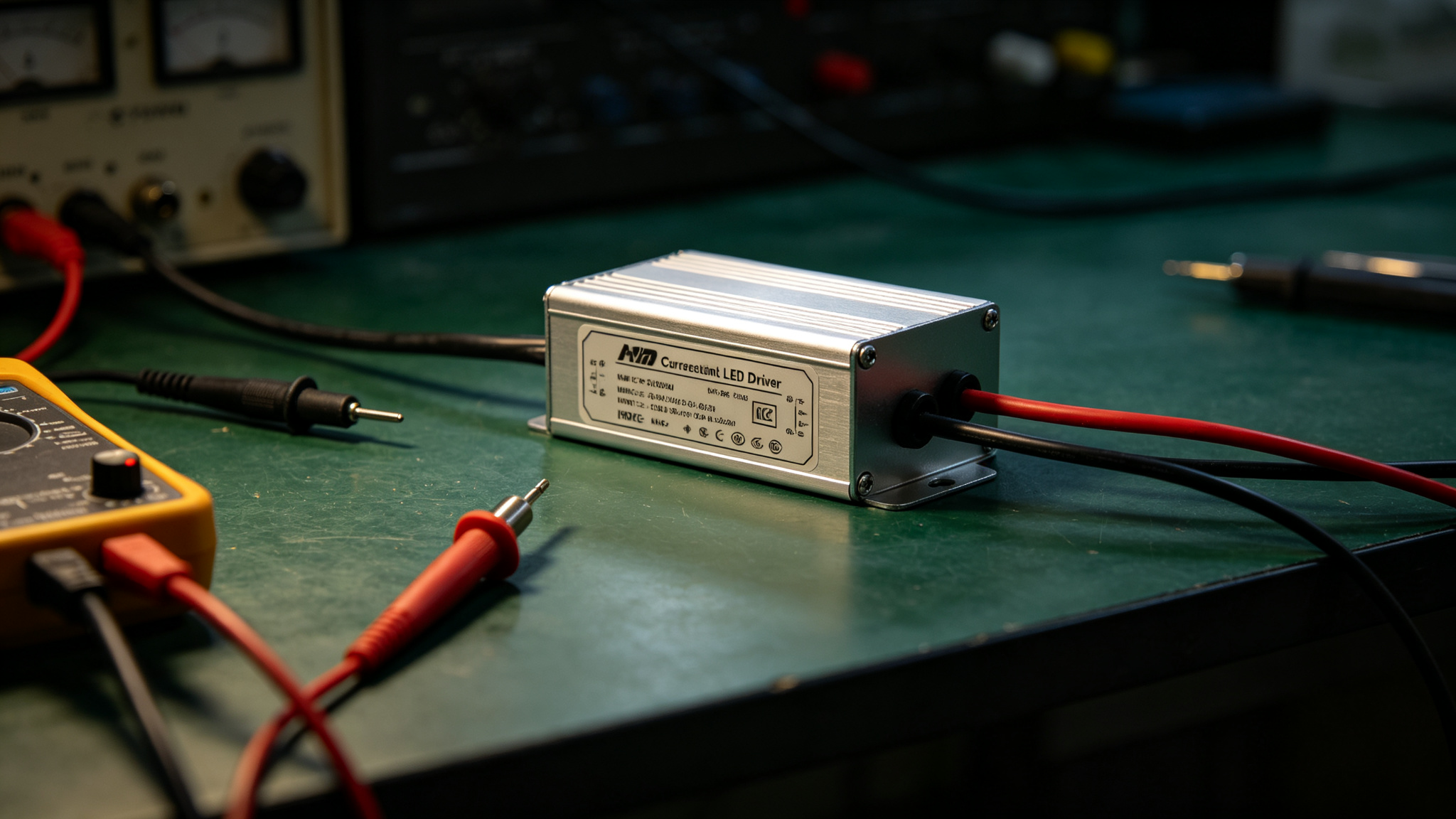
A CC driver fixes the current to the LED string; the output voltage floats within its rated window.
Matching the Driver to the Load
- Read the label: confirm the load is CV (12/24/48 V) or CC (rated mA) before choosing.
- Voltage match: a CV driver’s output must equal the strip’s rated voltage — 24 V in, 24 V out.
- Wattage margin: load should be 80–90% of driver capacity for cool, reliable running.
- CC series count: for CC, match the number of LEDs in series to the driver’s voltage window.
- Dimming: pick a dimmable driver of the correct topology — see the dimming guide.
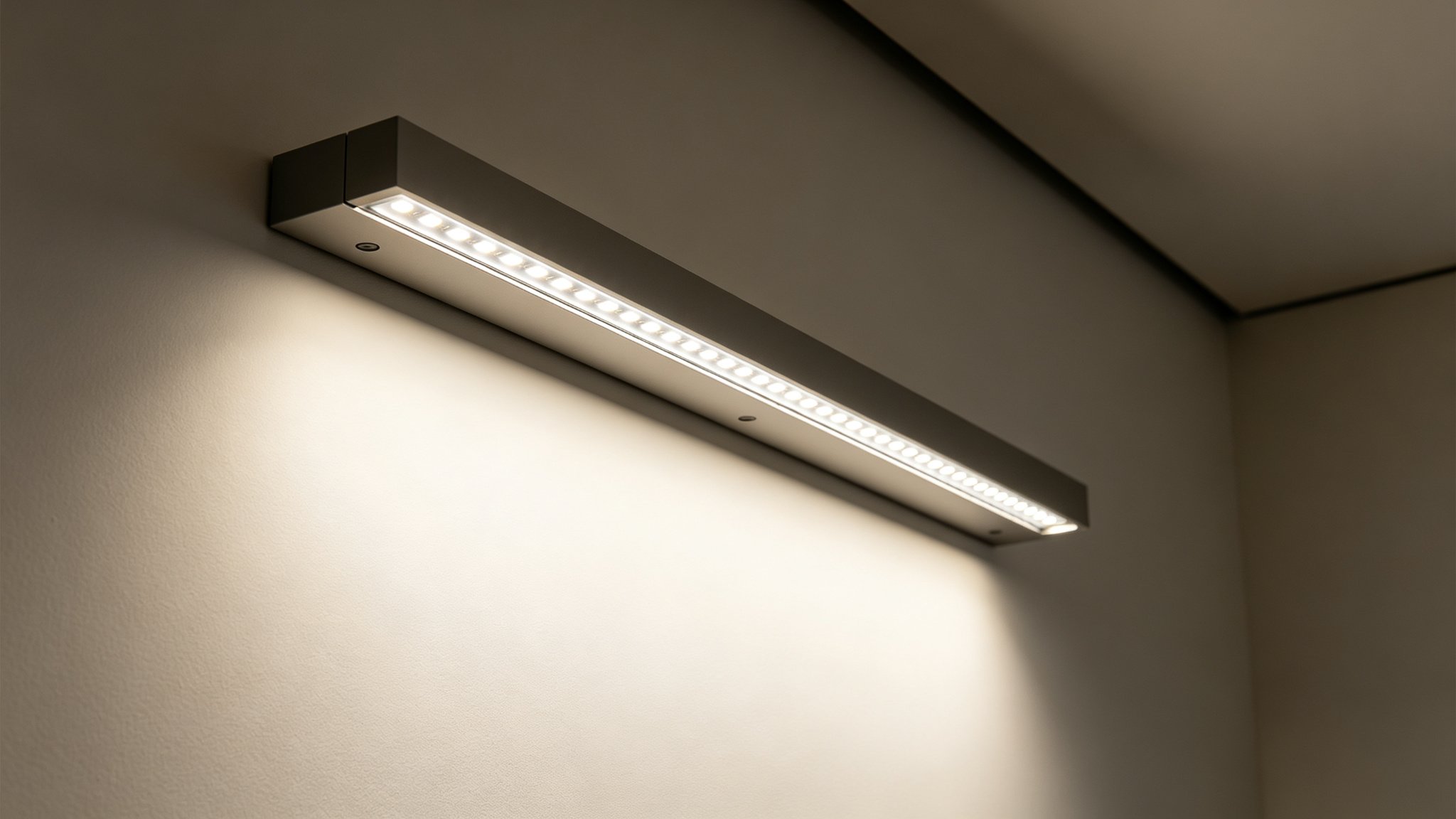
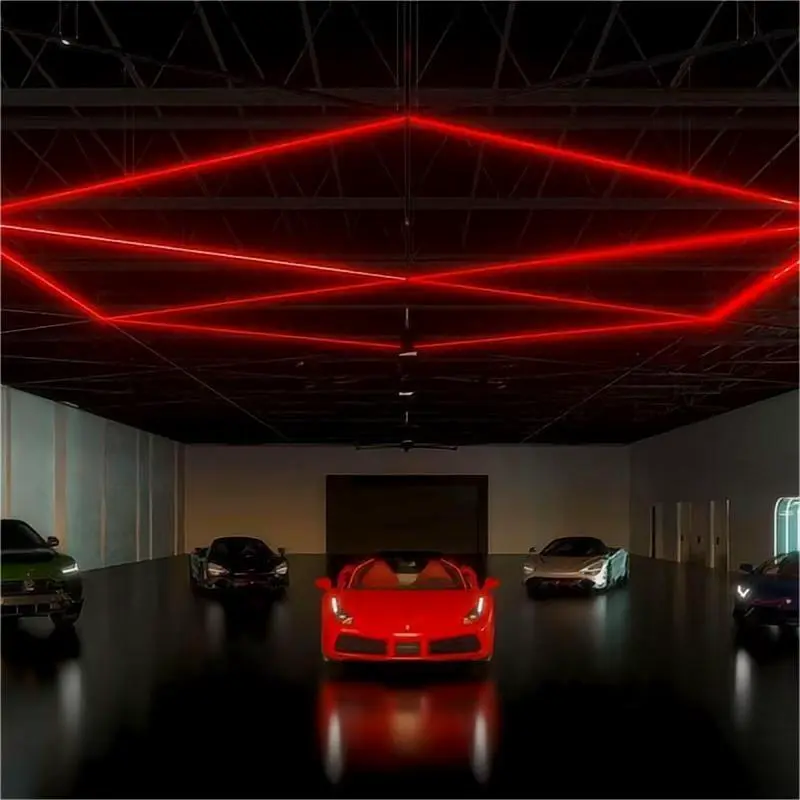
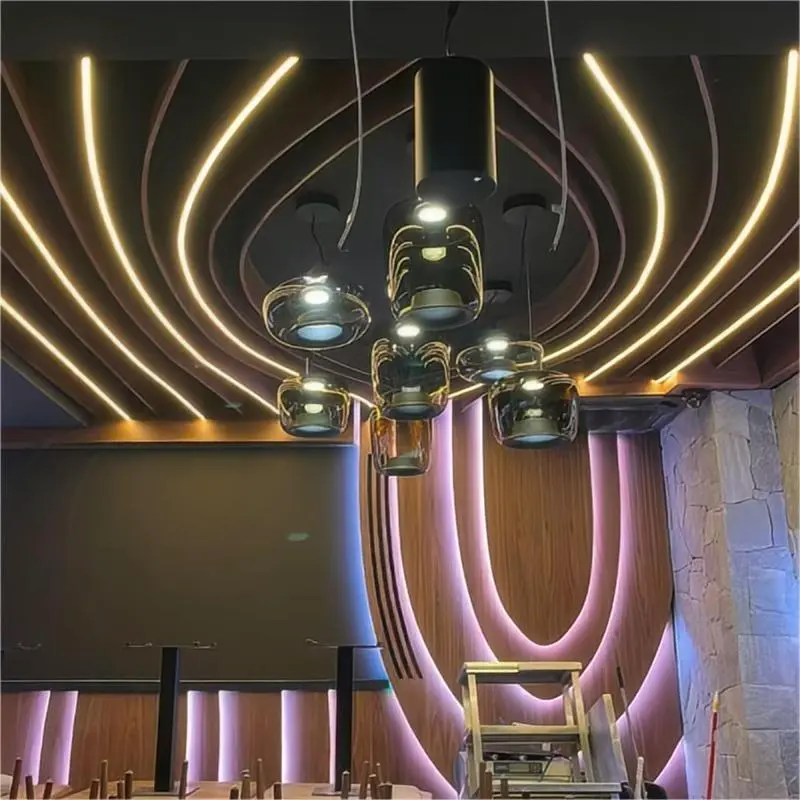
Architectural wall washers often use rigid CC modules — stable current for uniform, long-life beams.
Recommended Products
Frequently Asked Questions
Are LED strips constant voltage or constant current?
Flexible LED strips are constant-voltage devices. They run from a fixed 12 V, 24 V or 48 V supply, and current is limited by onboard resistors or ICs on the PCB. Constant-current drivers are reserved for high-power single LEDs and rigid modules.
What happens if I connect a constant-current driver to an LED strip?
It will not work correctly. A CC driver does not hold a fixed voltage, so the strip’s current-limiting resistors cannot set the right current — the strip may be dim, over-current, or not light at all. Use a constant-voltage driver matched to the strip’s rated voltage.
Can I use a constant voltage driver for high-power LEDs?
Not directly. A single high-power LED needs a specific current (e.g. 700 mA), which a CV supply does not regulate. You would need an inline constant-current regulator, or simply choose a CC driver rated for that LED. For strips, CV is always correct.
Which lasts longer, constant voltage or constant current LED systems?
Done correctly, both can reach tens of thousands of hours. CC more precisely stabilizes current over temperature and aging, which is why professional high-power fixtures favor it. Flexible strips with a well-sized CV driver and good thermal design also deliver full rated life.
Unsure whether your project needs CV or CC?
Get factory-direct driver selection and a custom quote within 24 hours.
Get a Quote