
Triac-Dimmable LED Drivers for Existing Wall Dimmer Retrofits
- 2026-10-09 18:41
- /
- Arraystar LED
Most homes and many retrofit projects already have a wall dimmer in place and simply want LED strip to dim from it. A Triac/ELV-compatible dimmable driver accepts the existing phase-cut wall dimmer signal, so low-voltage strip can be retrofitted without running new control wiring or learning a smart system, provided the driver and dimmer are genuinely compatible.
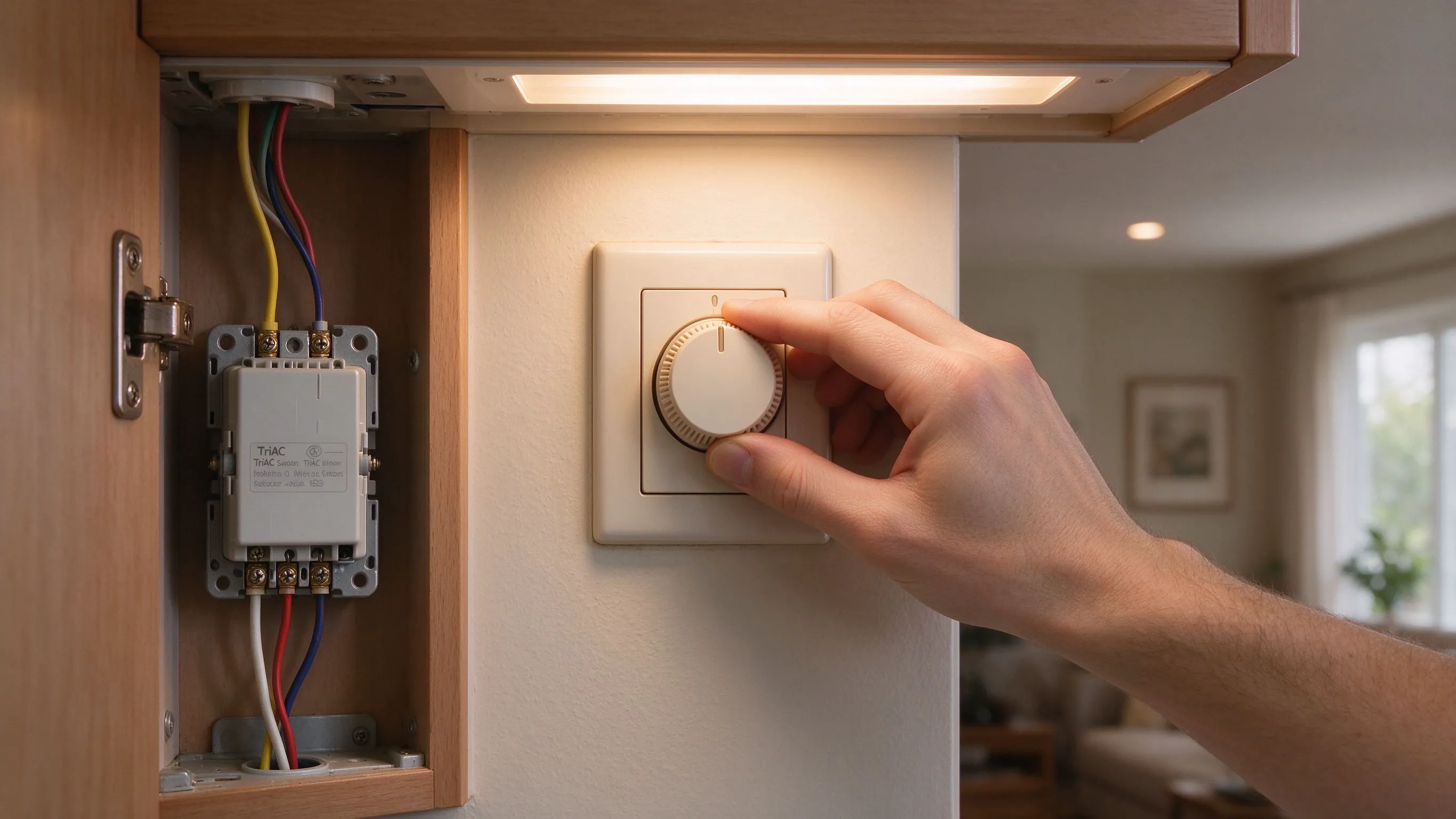
The Retrofit Situation: A Dimmer Already Exists
In a renovation, the wall box often already holds a conventional rotary or slide dimmer that used to control halogen or incandescent lighting. The client wants new LED strip to dim from that same familiar control, with no new switches, no app and no rewiring of the switch leg back to the distribution board.
That is exactly the job of a phase-cut (Triac/ELV) dimmable driver: it interprets the existing wall dimmer's signal and delivers dimmable low-voltage power to the strip.
What the DF-Series Dimmable Driver Does
- Works with standard Triac / ELV (phase-cut) wall dimmers.
- Lets existing wall controls dim low-voltage strip.
- No new control wiring or smart system required.
- Simple retrofit path from halogen-era dimming.
- Dimmable constant-voltage output for LED strip.
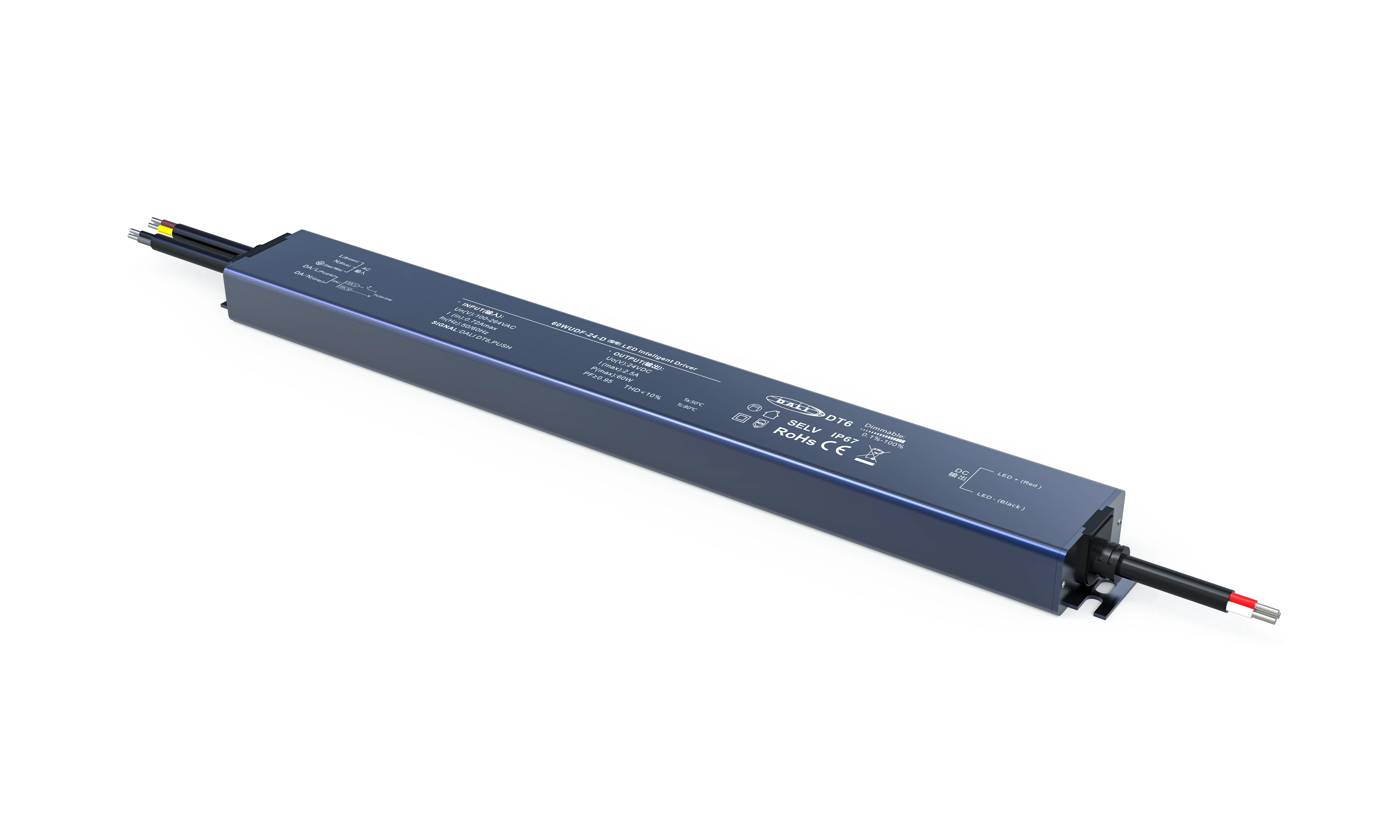
For retrofit projects that must keep the existing wall dimmer, I use the DF-series phase-cut dimmable driver. It is the most straightforward way to make strip dimmable from the control already on the wall.
Dimming Methods Compared for Retrofit
Keeping the wall dimmer points to a Triac/ELV-compatible driver.
| Method | Uses existing wall dimmer | Best for |
|---|---|---|
| Triac/ELV driver (DF) | Yes | Home retrofits, familiar wall control |
| 0-10V / DALI driver | No, new control bus | Commercial, new build |
| Smart/app controller | No | Phone or automation users |
| Non-dimmable driver | N/A | On/off only |
Where Phase-Cut Retrofits Are Specified
- Living rooms, bedrooms and kitchens renovated around existing dimmers.
- Cove and shelving light replacing old halogen systems.
- Projects where clients want familiar rotary/slide dimming.
- Older homes without smart-home infrastructure.
- Jobs where running new control wiring is impractical or costly.
Triac vs ELV and Dimmer Compatibility
Phase-cut dimming comes in leading-edge (Triac/MLV) and trailing-edge (ELV) forms, and LED drivers behave best when matched to the right dimmer type. I identify the existing dimmer, check it against the driver's compatibility list, and where possible use a quality trailing-edge ELV dimmer, which generally dims LED more smoothly and quietly. The single biggest retrofit failure is pairing a dimmable driver with an unsuitable or over-cheap dimmer and then blaming the strip for flicker, buzzing or poor low-end range.
- Identify the existing dimmer type and minimum load.
- Check it against the driver's compatibility list.
- Prefer a quality trailing-edge ELV dimmer for smooth LED dimming.
- Respect minimum load; add a dummy load if required.
Minimum Load, Buzzing and Low-End Range
Phase-cut dimmers were designed for higher-wattage halogen loads, and a small LED run can fall below the dimmer's minimum load, causing unstable dimming, flash or restricted range. I size the circuit so the driver and load sit within the dimmer's working window, add a load correction device where the load is too light, and test the lowest dimmed level, where buzzing and drop-out appear first. A correctly matched Triac/ELV setup dims quietly and smoothly to a usable low level.
When to Choose a Different Dimming Method
I steer commercial projects and new builds toward 0-10V, DALI or dedicated control for precision and multi-zone scenes, and clients wanting phone or voice control toward smart drivers, because phase-cut dimming inherits the wall dimmer's limitations and is not ideal for large coordinated systems. The DF Triac/ELV driver is chosen specifically when the requirement is to reuse an existing wall dimmer cleanly and simply.
Specifying a Wall-Dimmer Retrofit
Send the existing dimmer brand and model (or whether it can be replaced), the strip voltage and wattage, run length and the lowest dimming level you need. I will confirm DF driver sizing, dimmer compatibility, minimum-load handling and whether an ELV dimmer or load correction is advisable. We supply the DF-series driver and recommend testing the dimmer-to-driver combination through its full range on site before closing up the installation.
Matching a Dimmer to a Living-Room Cove Retrofit
A homeowner replaced the old halogen pelmet lighting in a living room with warm 24V LED strip in the cove and wanted it to dim from the existing rotary dimmer by the door, the control the household had used for twenty years. The first installation, using an inexpensive generic dimmable driver with the original leading-edge dimmer, produced exactly the symptoms people blame on LED itself: a faint buzz at low levels, a jumpy start where the strip snapped on at thirty percent, and an inability to dim below a harsh mid-brightness.
- Identify the legacy dimmer; the original leading-edge unit was marginal for a low-wattage LED load.
- Replace it with a listed trailing-edge ELV dimmer matched to the DF driver.
- Confirm the small cove load met the dimmer's minimum, adding correction only if needed.
- Set the low-end trim so the strip fades smoothly to a soft evening glow.
- Re-test the full travel from off to full after the change.
We swapped in the DF-series driver paired with a quality trailing-edge ELV dimmer from its compatibility list rather than persisting with the legacy leading-edge unit. The cove load was light, so we checked the minimum-load requirement and set the dimmer's low-end trim during an evening visit, which is the only realistic time to judge whether the lowest level is a usable warm glow or an unstable flicker. The buzz disappeared, the strip now faded smoothly from full brightness down to a candle-like minimum, and the switch-on ramped gently instead of jumping. Critically for the client, nothing about how the room was controlled changed: the same rotary control by the door dimmed the new light exactly as it had dimmed the halogen. The total fix was the correct driver-to-dimmer pairing and a few minutes of low-end calibration, not a new control system. I keep this job as a reminder that the majority of home retrofit dimming complaints are not defective strip but a phase-cut mismatch inherited from the halogen era, and that confirming the dimmer model against the driver before installation, then trimming the low end in real evening conditions, is the entire difference between a frustrating retrofit and one the client never has to think about.
Recommended Products
Frequently Asked Questions
What is a Triac/ELV dimmable LED driver?
It is a constant-voltage driver that accepts the phase-cut signal from a standard wall dimmer, leading-edge Triac/MLV or trailing-edge ELV, and uses it to dim low-voltage LED strip. It lets existing wall dimmers control new strip with no new control bus, app or rewiring, which makes it the straightforward retrofit choice.
Can I keep my existing wall dimmer with LED strip?
Yes, if you use a phase-cut dimmable driver such as the DF series and the wall dimmer is compatible, ideally a quality trailing-edge ELV dimmer. Identify the dimmer, check it against the driver's compatibility list and respect its minimum load; an unsuitable or cheap dimmer is the main cause of flicker, buzzing and poor low-end dimming.
What is the difference between Triac and ELV dimming?
Triac (leading-edge/MLV) and ELV (trailing-edge) are two ways of cutting the AC waveform. LED drivers generally dim more smoothly and quietly on a quality trailing-edge ELV dimmer, while some leading-edge dimmers cause buzzing or a restricted low end on low-wattage LED loads. Match the dimmer type to the driver's stated compatibility.
Why does my retrofitted strip flicker or buzz when dimmed?
Usually the LED load is below the wall dimmer's minimum load or the dimmer and driver are incompatible. Size the circuit within the dimmer's working window, use a listed compatible ELV dimmer, add a dummy/load-correction device if the load is too light, and test the lowest dimmed level where buzzing and drop-out first appear.
When should I not use a Triac dimmable driver?
For commercial projects or new builds needing precise multi-zone scenes, prefer 0-10V or DALI, and for phone or voice automation use a smart driver. Phase-cut dimming inherits the wall dimmer's limits and is best chosen specifically when the goal is to reuse an existing wall dimmer simply in a home retrofit.
Need help with your LED project?
Get factory-direct pricing, free samples and engineering support within 24 hours.
Email: info@arraystarled.com | Phone: +86-0755-2103-6746 | WhatsApp: 0086 1581 8514 077
Need to size your power supply? Use our LED Strip Power Calculator to find the right driver in seconds.







