Dim-to-Warm vs Tunable White LED Strip Compared
- 2026-09-18 19:00
- /
- Arraystar
Quick Answer
Dim-to-warm strips shift from warm white (~3000K) to candle-like amber (~1800K) automatically as you dim — mimicking old incandescent bulbs. Tunable white strips let you move freely between cool (6500K) and warm (2700K) at any brightness. Choose dim-to-warm for restaurants and bedrooms that need a cosy sunset mood; choose tunable white for offices and homes that want daylight-by-day, warm-by-night control.
📑 Table of Contents
Both technologies deliver mood, but they control colour in fundamentally different ways.
The Two Warm-White Technologies Defined
Both technologies replace the one-colour strip, but they solve different problems.
- Dim-to-warm (also called warm-dim / single-channel): a special phosphor strip where, as brightness drops, the colour temperature automatically follows it down — usually from 3000K at 100% to ~1800K at 1%. You dim with a normal dimmer and get incandescent-like warmth for free.
- Tunable white (dual-channel CCT): a strip with separate warm (e.g. 2700K) and cool (e.g. 6500K) LED channels. A controller mixes them, so you can pick any CCT from warm to cool at any brightness — morning daylight, noon focus, evening amber.
They overlap at the “warm at night” end, but tunable white also covers cool white, while dim-to-warm covers the very deep 1800K candle tone that few tunable strips reach. See our RGB vs RGBW vs CCT guide for where tunable white sits in the colour family.
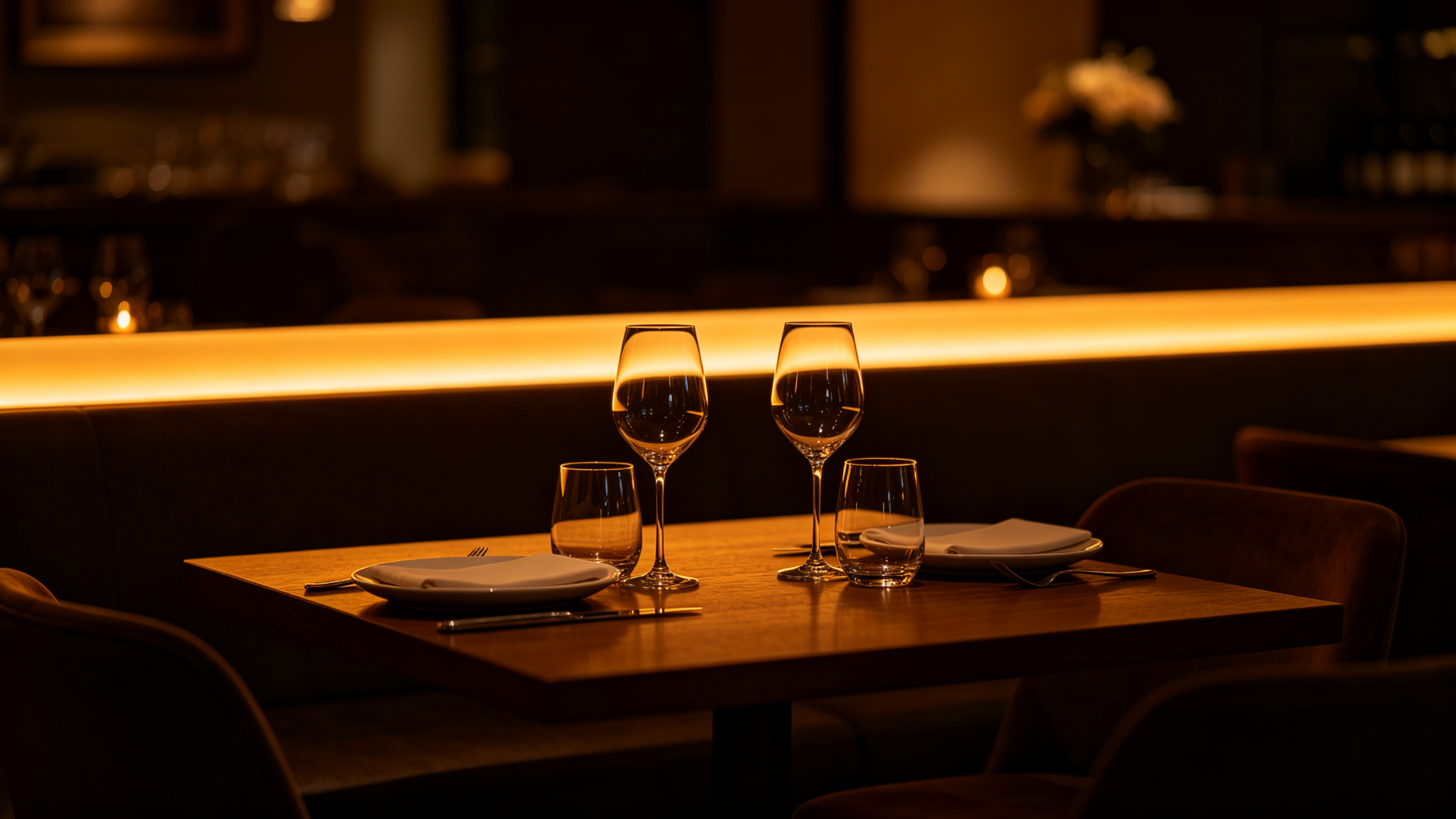
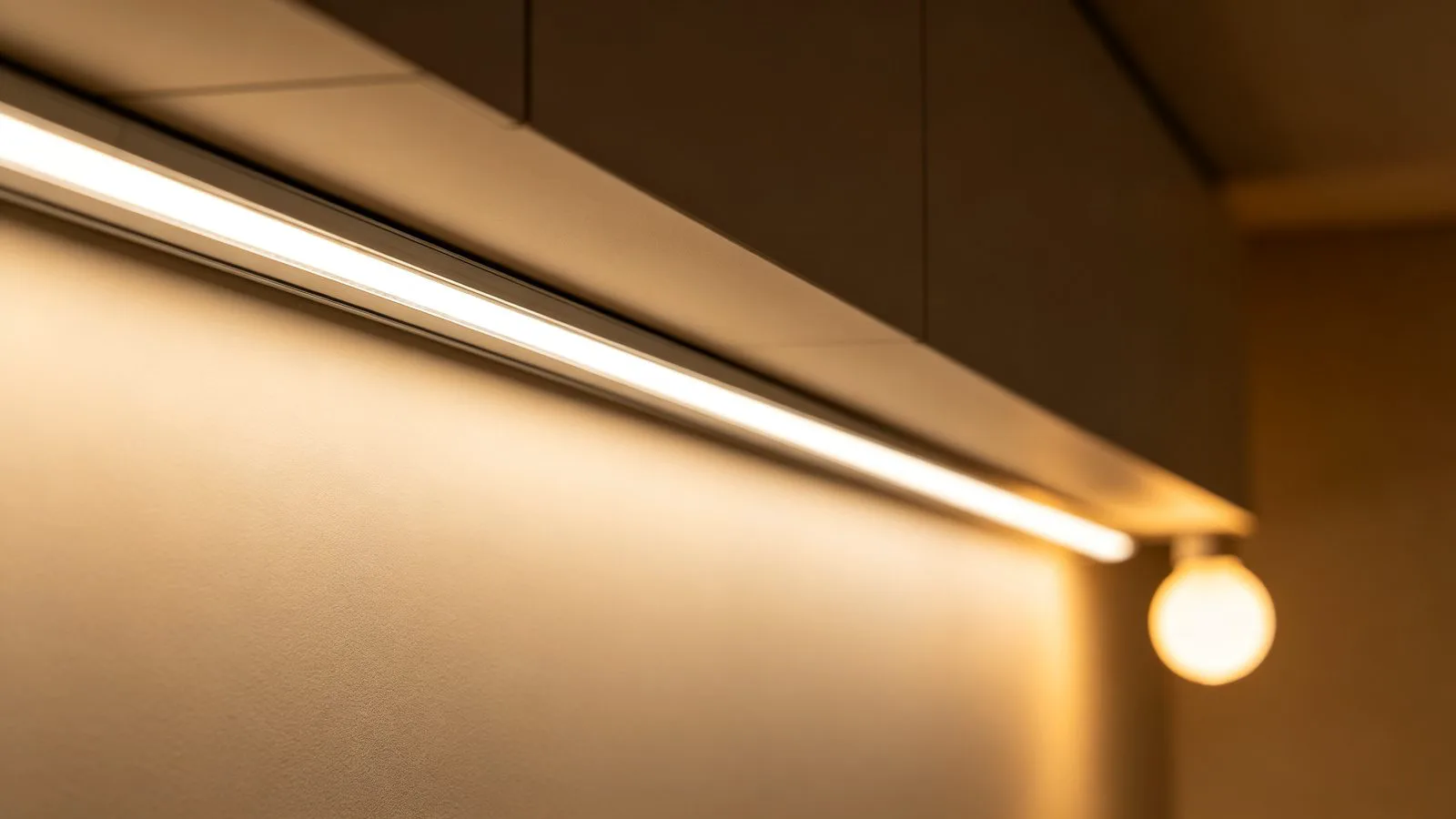
Dim-to-warm’s signature look: at 1% brightness the light falls to a candle-like ~1800K.
Dim-to-Warm vs Tunable White: Comparison Table
| Aspect | Dim-to-Warm | Tunable White (CCT) |
|---|---|---|
| Channels | 1 (special phosphor) | 2 (warm + cool) |
| Control needed | Any compatible dimmer | CCT controller / 2-channel driver |
| CCT range | ~3000K to ~1800K as it dims | ~2700K to ~6500K, any point |
| Brightness → colour | Falls together automatically | Independent control of each |
| Deep candle tone (1800K) | Yes, at minimum dim | Usually stops at 2200–2700K |
| Cool white for daytime | No | Yes, up to 6500K |
| Best for | Restaurants, bars, bedrooms | Offices, living rooms, circadian |
| Cost / complexity | Lower | Slightly higher (controller) |
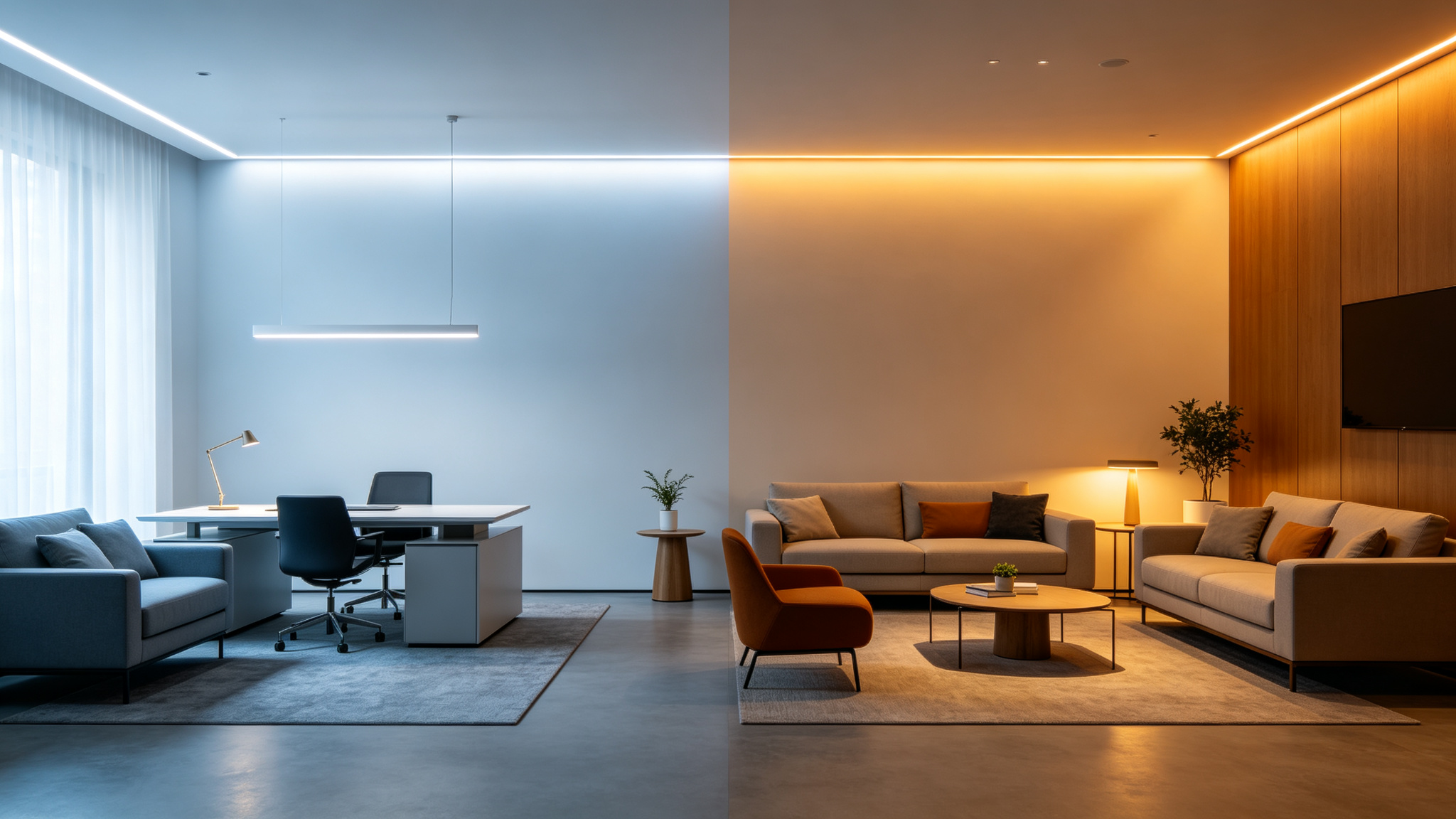
Tunable white spans the whole cool-to-warm range; dim-to-warm only walks down from warm.
How Dim-to-Warm Actually Works
A dim-to-warm phosphor blend has a red-emitting component whose relative output rises as the overall drive current falls. On a standard PWM or TRIAC dimmable driver, reducing brightness therefore also reduces colour temperature in a smooth, pre-tuned curve — roughly 3000K → 2200K → 1800K between 100% and 1%. The result feels like a familiar incandescent bulb on a dimmer, which is why it dominates hospitality.
You do not need a special CCT controller — just a dimmable driver matched to the strip. That simplicity is its big advantage. Dimming details are in the LED strip dimming guide.
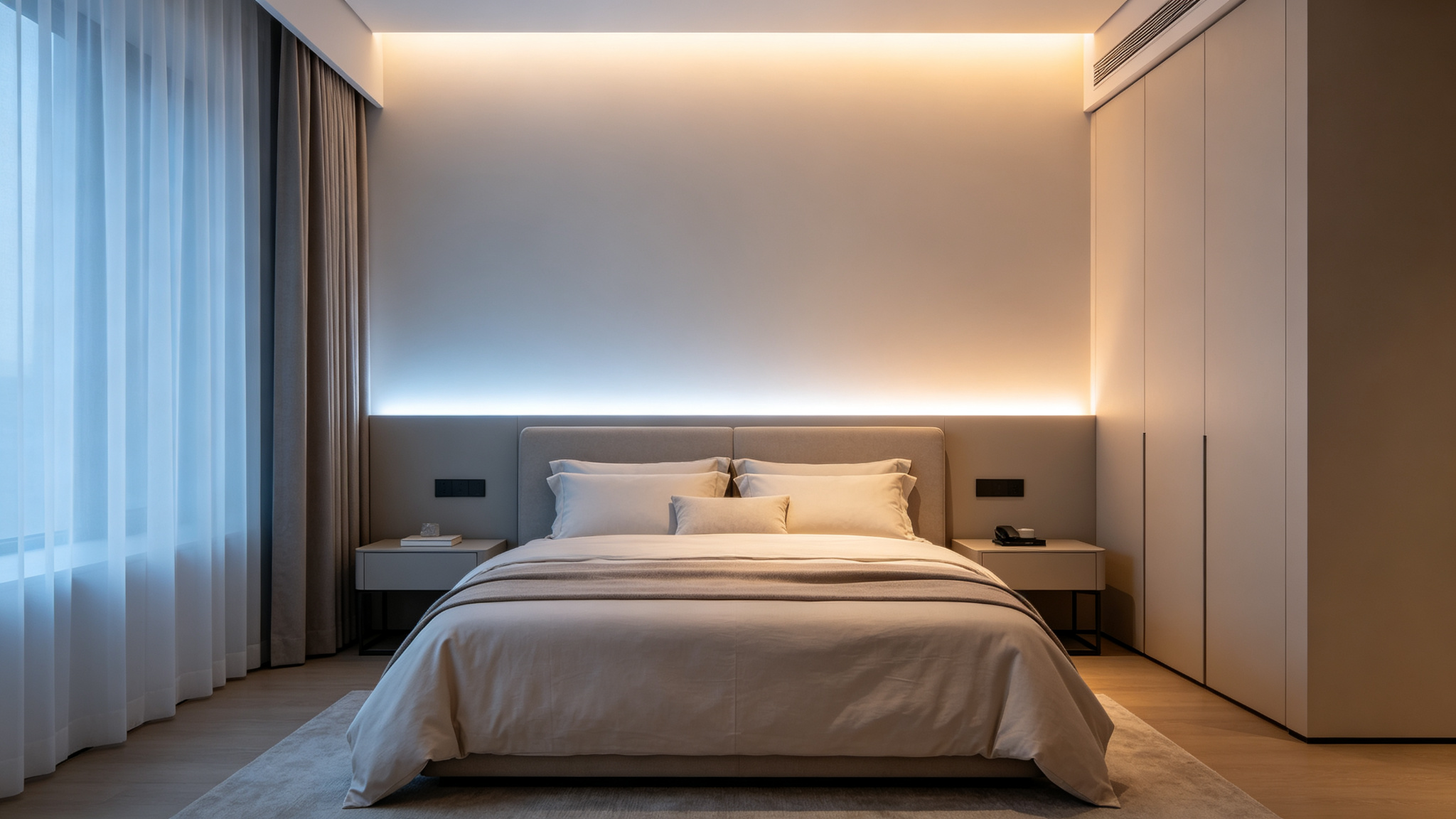
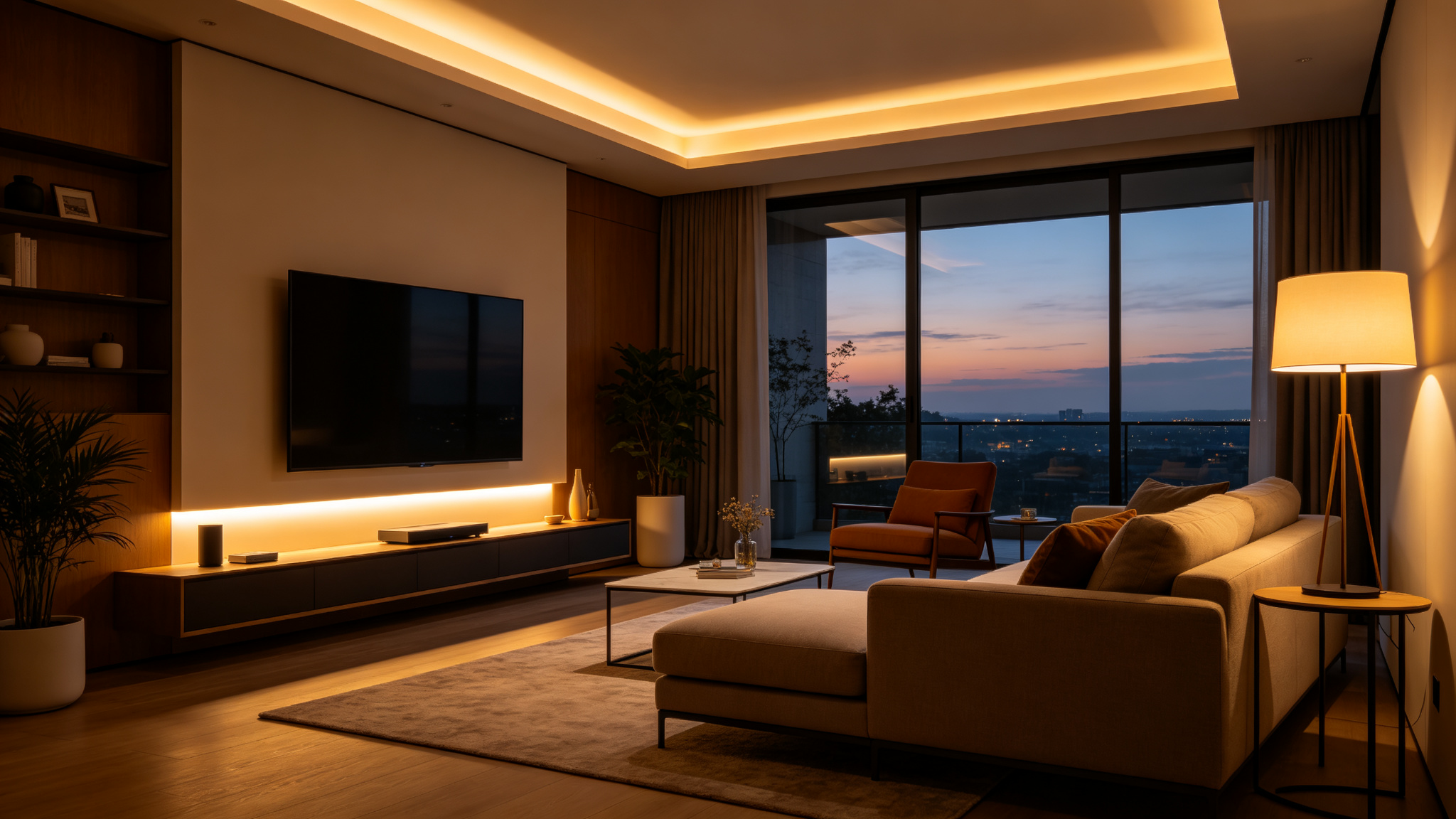
Tunable white adapts the bedroom from energising morning light to a soft warm wind-down.
How Tunable White Mixes Colour
A tunable white strip carries two emitters on one PCB — a warm-white channel and a cool-white channel. A 2-channel controller (or CCT driver) varies the ratio: all warm gives 2700K, all cool gives 6500K, and 50/50 gives ~4000K. Because the channels are independent, you can keep brightness high while still choosing cool or warm, and automate scenes — a bright 5000K in the morning, a 2700K film scene at night.
Rule of thumb: if the room only ever needs to feel warm “on” or candle-“off”, dim-to-warm is simpler and cheaper. If the same space must also deliver cool daylight for working or waking, choose tunable white.
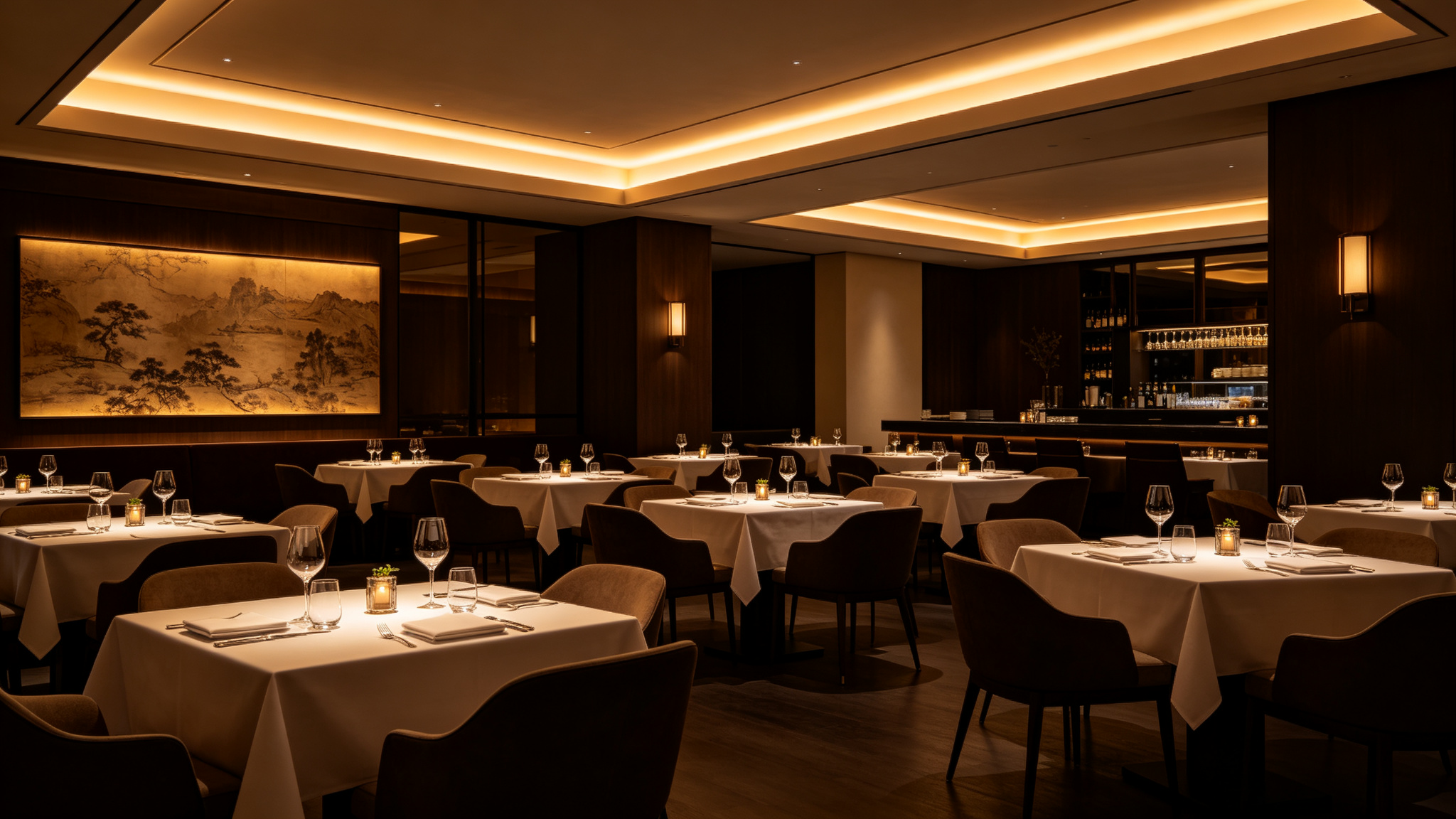
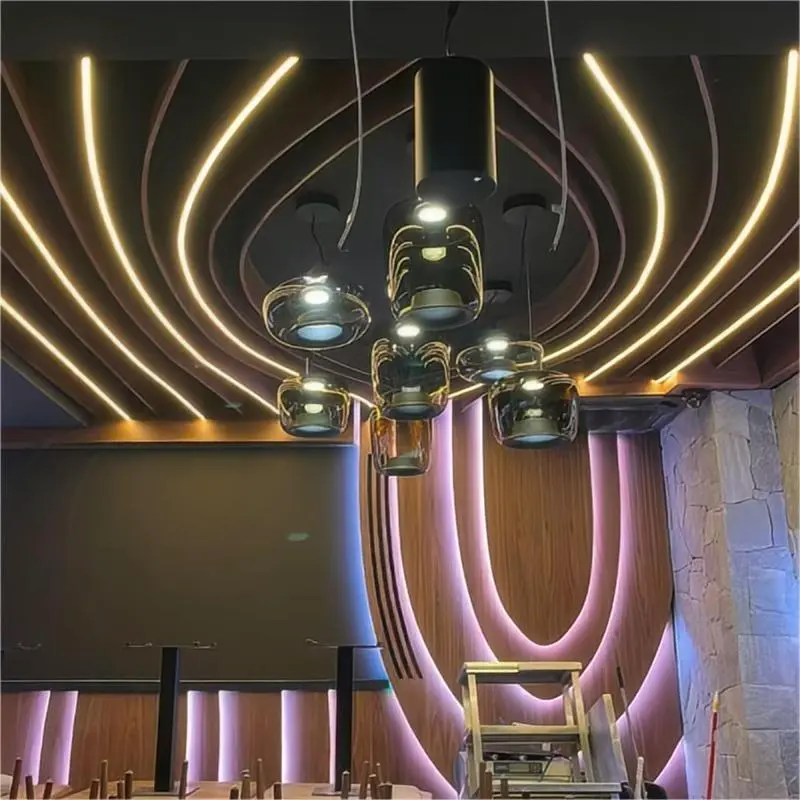
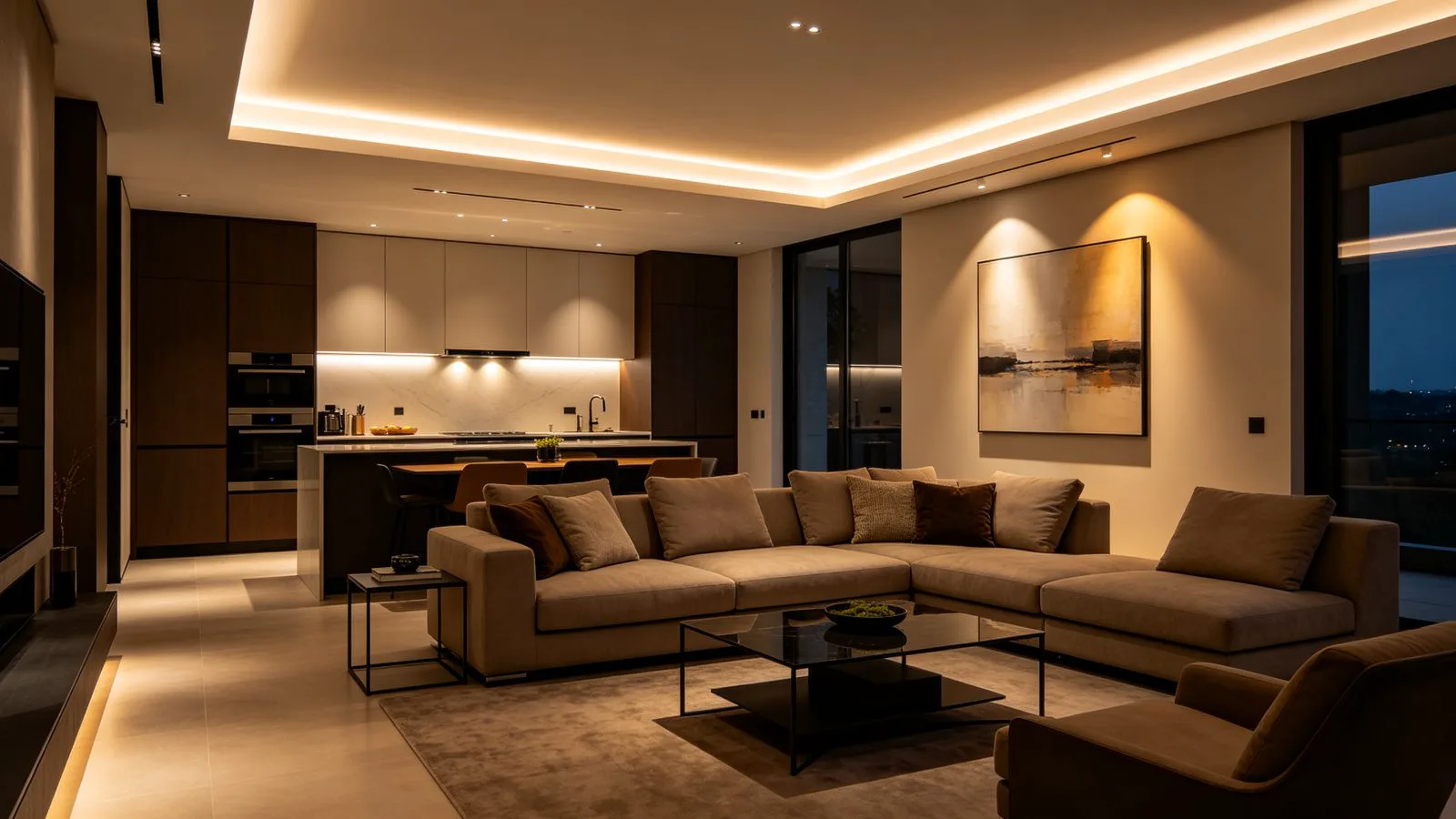
Hospitality loves dim-to-warm: tables glow warmer as the evening deepens, no controller required.
Wiring, Control and Dimming
- Dim-to-warm: 24V strip → dimmable constant-voltage driver (TRIAC, 0-10V or PWM) → dimmer. One channel, one curve.
- Tunable white: 24V strip → 2-channel (CCT) dimmable driver or CCT controller → remote/phone/wall panel. Two channels, independent mix.
- For smart scenes, pair tunable white with a WiFi/Zigbee/Bluetooth controller — see the smart control comparison.
- Check the strip’s minimum dimming level — good systems reach 1-5% flicker-free; cheap ones stall or colour-shift badly below 20%.
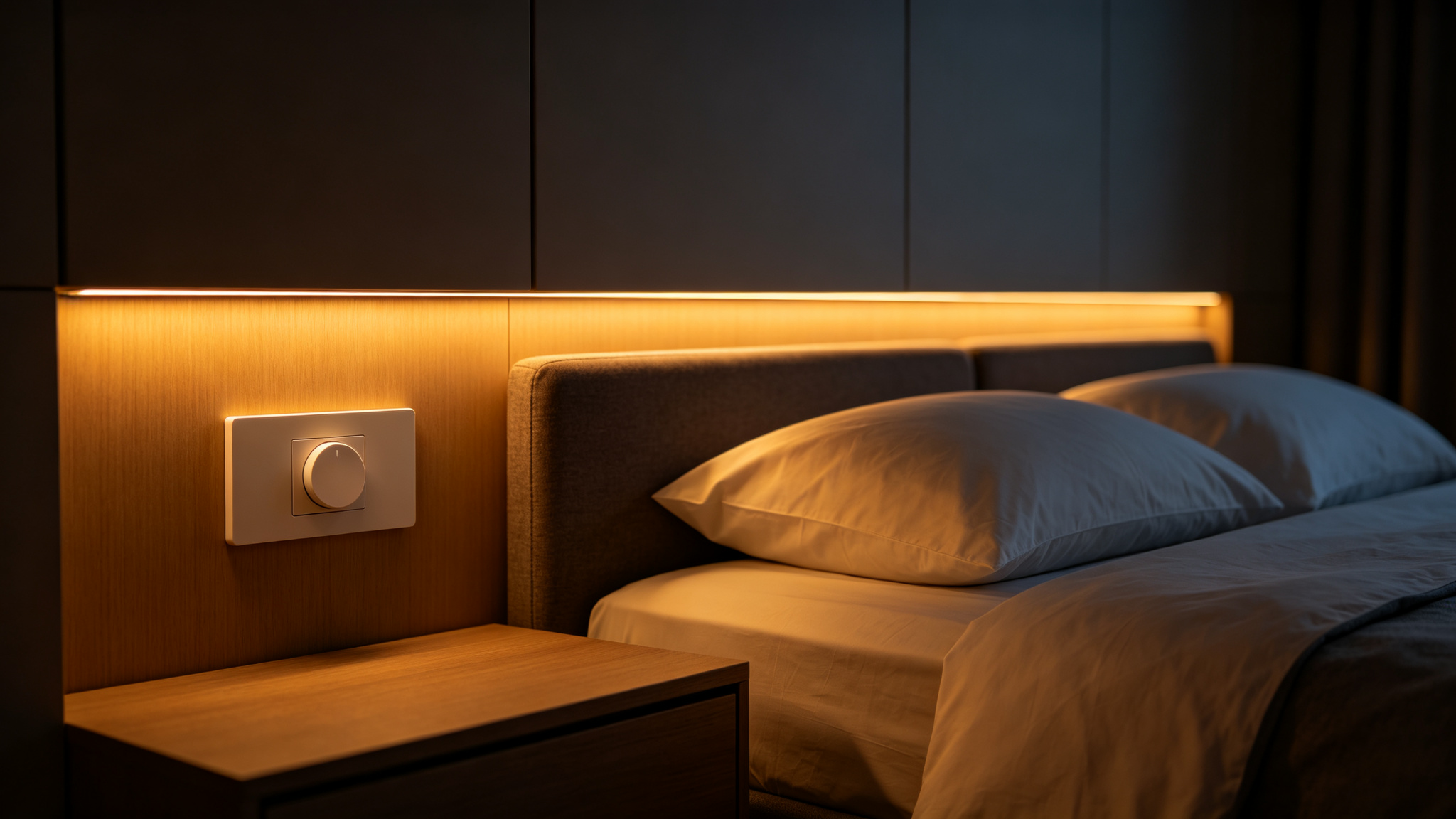
A simple knob dimmer is all dim-to-warm needs; tunable white wants a CCT wall panel or app.
Which One Fits Your Project
The 30-second decision
Bars, fine dining, hotel rooms, bedrooms and candle-scene ambience → dim-to-warm. Open-plan homes, offices, living rooms that need morning daylight plus evening warmth → tunable white. Want both? Use tunable white and simply drive it to the 1800–2200K end for the evening mood.
Recommended Products
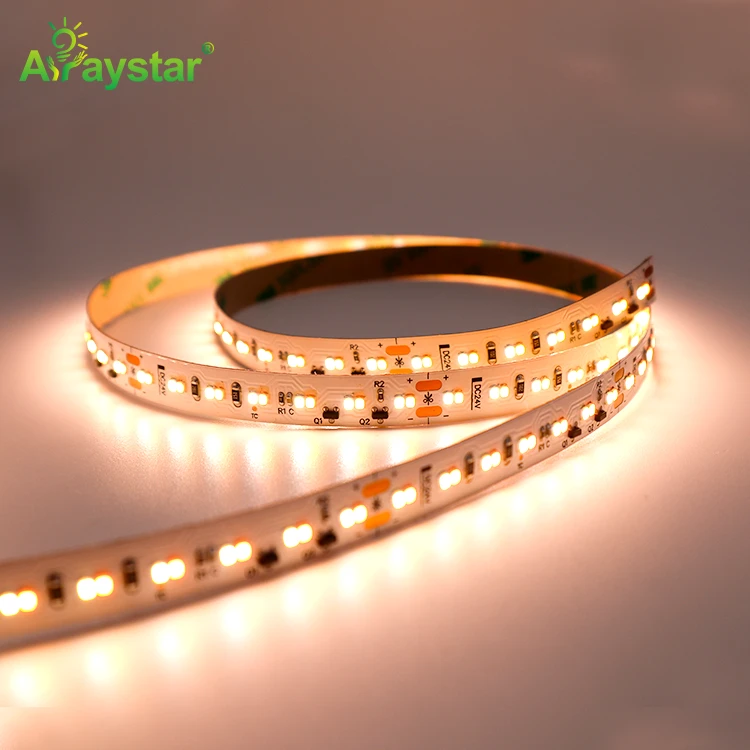
Dim to Warm LED Strip ART-2216-224-24-2WTCW
The classic warm-dim strip: walks smoothly from 3000K to a candle-like 1800K as it dims — perfect for restaurants and bedrooms.
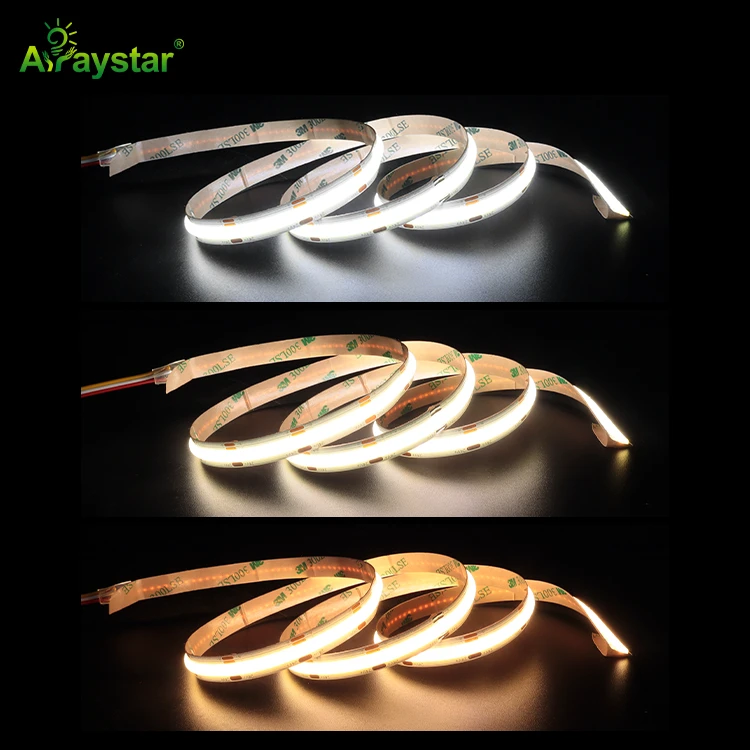
CCT Tunable COB LED Strip 8 mm, 9W+9W
Dot-free dual-channel COB tunable white from 2700K to 6500K for coves and living spaces that need full CCT control.
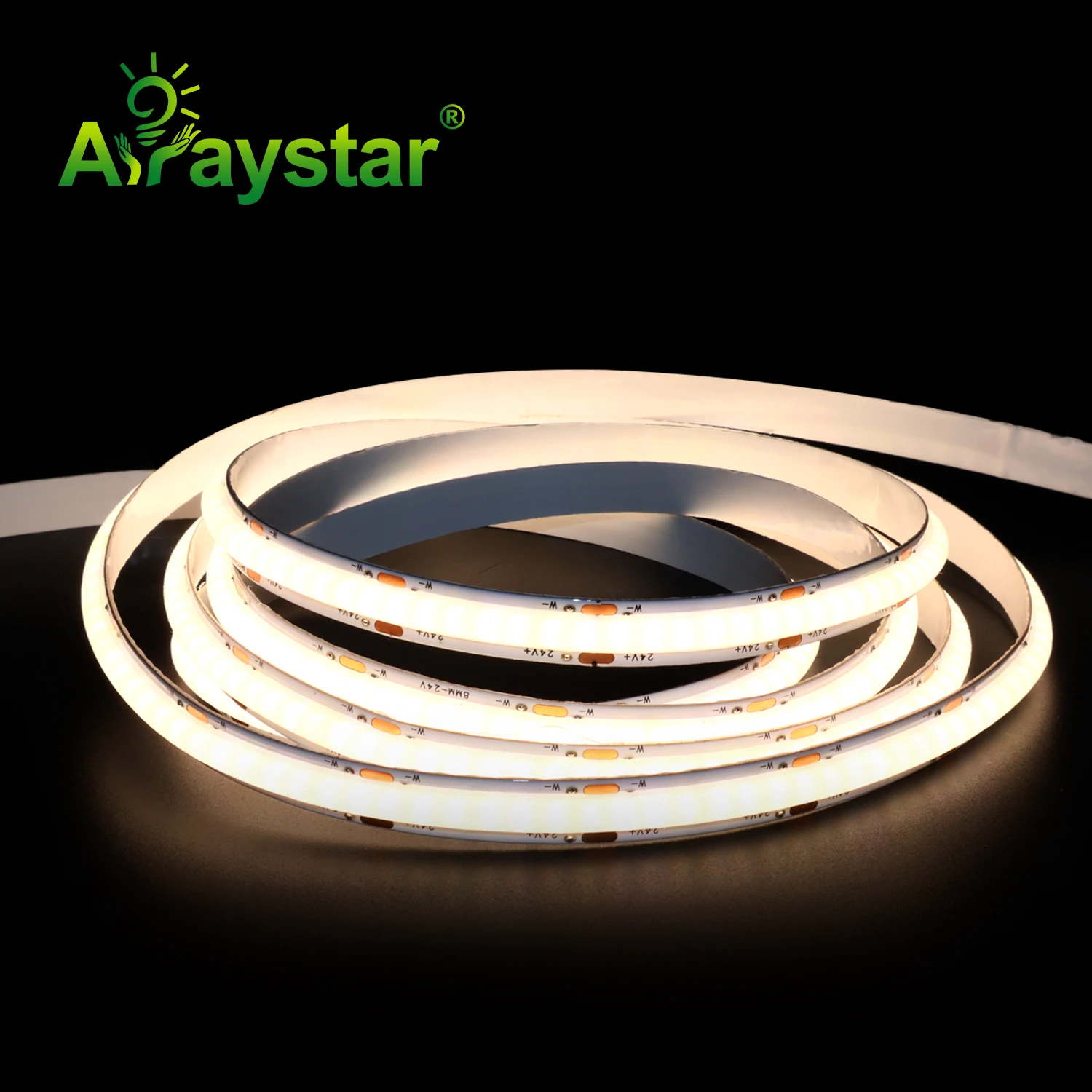
Tunable 2700K–6500K SOB LED Strip, 560 LEDs/m
High-density tunable SOB with smooth mixing across the full warm-to-cool range for close-view installations.
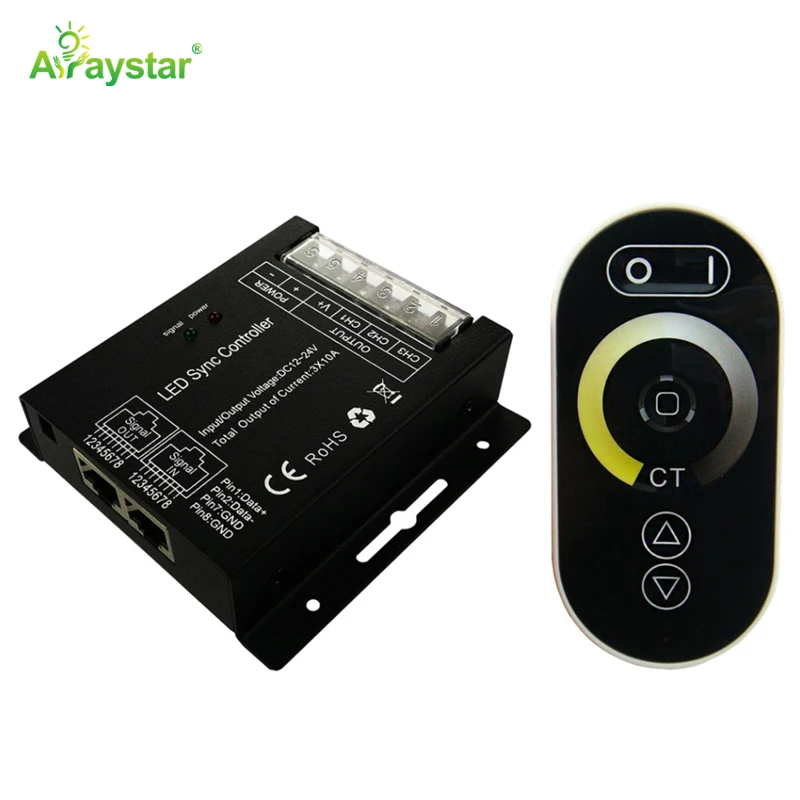
ART-LC800-CCT Touch Colour Temperature Controller
Touch-panel CCT controller to dial warm-to-cool and set scenes on any 2-channel tunable white strip.
Frequently Asked Questions
What is the difference between dim-to-warm and tunable white?
Dim-to-warm automatically drops colour temperature (typically 3000K to 1800K) as you dim brightness, using a single channel. Tunable white uses two channels (warm and cool) so you can choose any colour temperature from 2700K to 6500K at any brightness. Dim-to-warm is simpler; tunable white is more flexible.
Does dim-to-warm need a special controller?
No. A compatible dimmable driver (TRIAC, 0-10V or PWM) and a standard dimmer are enough — the warm-down curve is built into the strip’s phosphor. You only need a 2-channel CCT controller for tunable white systems.
Can tunable white reach candle-like 1800K light?
Most tunable white strips reach about 2200-2700K at their warmest, not the 1800K candle tone that dim-to-warm delivers at minimum brightness. If that deep amber evening mood is the goal, dim-to-warm is the more authentic option.
Which is better for a home office?
Tunable white. You can use cool 5000K light for focus during the day and warm 2700K in the evening, supporting a natural day-night rhythm. Dim-to-warm only makes things warmer as they dim and cannot deliver cool daylight.
Need high-CRI, color-consistent LED strips for your project?
Get factory-direct pricing, free samples and a tailored quote within 24 hours.
Get a Quote