Dot-Free vs Dot Visible LED Strip: Density Selection Guide
- 2026-09-18 19:01
- /
- Arraystar
Quick Answer
“Dot-free” means you cannot see individual LED chips — the strip looks like a smooth, continuous line of light. “Dot-visible” means you can see separate points. Whether you need dot-free depends on density and viewing distance: high-density SMD (≥128 LEDs/m) or COB looks smooth beyond about 0.5–1 m, while low-density strips show obvious dots up close. Choose COB for visible coves; budget SMD is fine hidden in a diffuser.
📑 Table of Contents

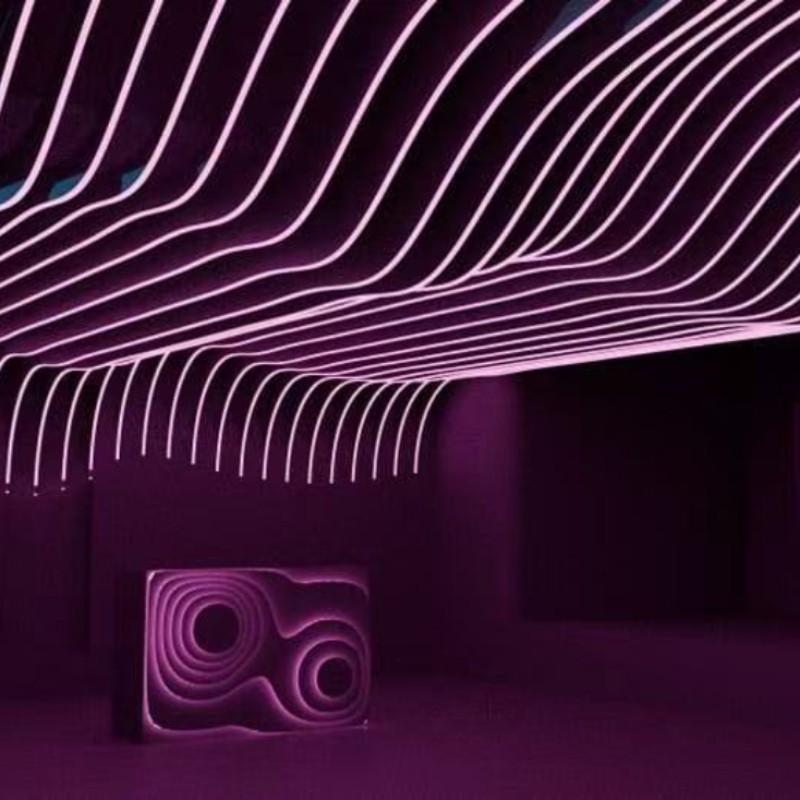
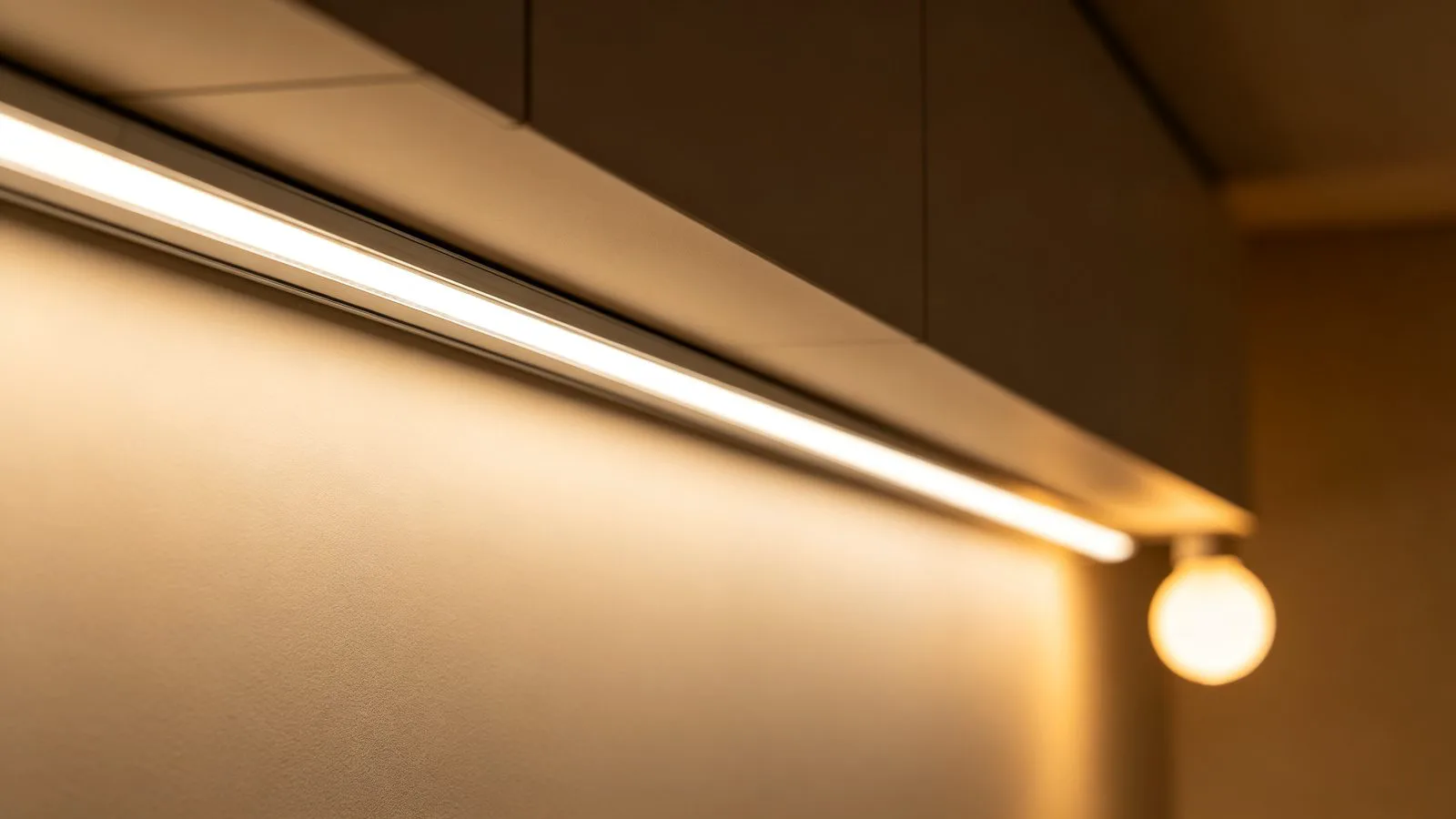
A seamless continuous line — the dot-free look — is the signature of premium cove lighting.
What ‘Dot-Free’ and ‘Dot-Visible’ Actually Mean
An LED strip is made of discrete chips on a PCB. Seen up close, each chip is a point of light. If the chips are far apart, you see separate dots (and dark gaps). If they are dense enough — or blended by a continuous phosphor layer (COB) — the eye merges them into a smooth line. This is the difference between “dot-visible” and “dot-free”.
It is not a quality grade; it is a visual choice driven by viewing distance and budget. A hidden cove ten metres away does not need the same density as a shelf strip 30 cm from your eyes. For the chip-level detail, read our COB vs SMD comparison.
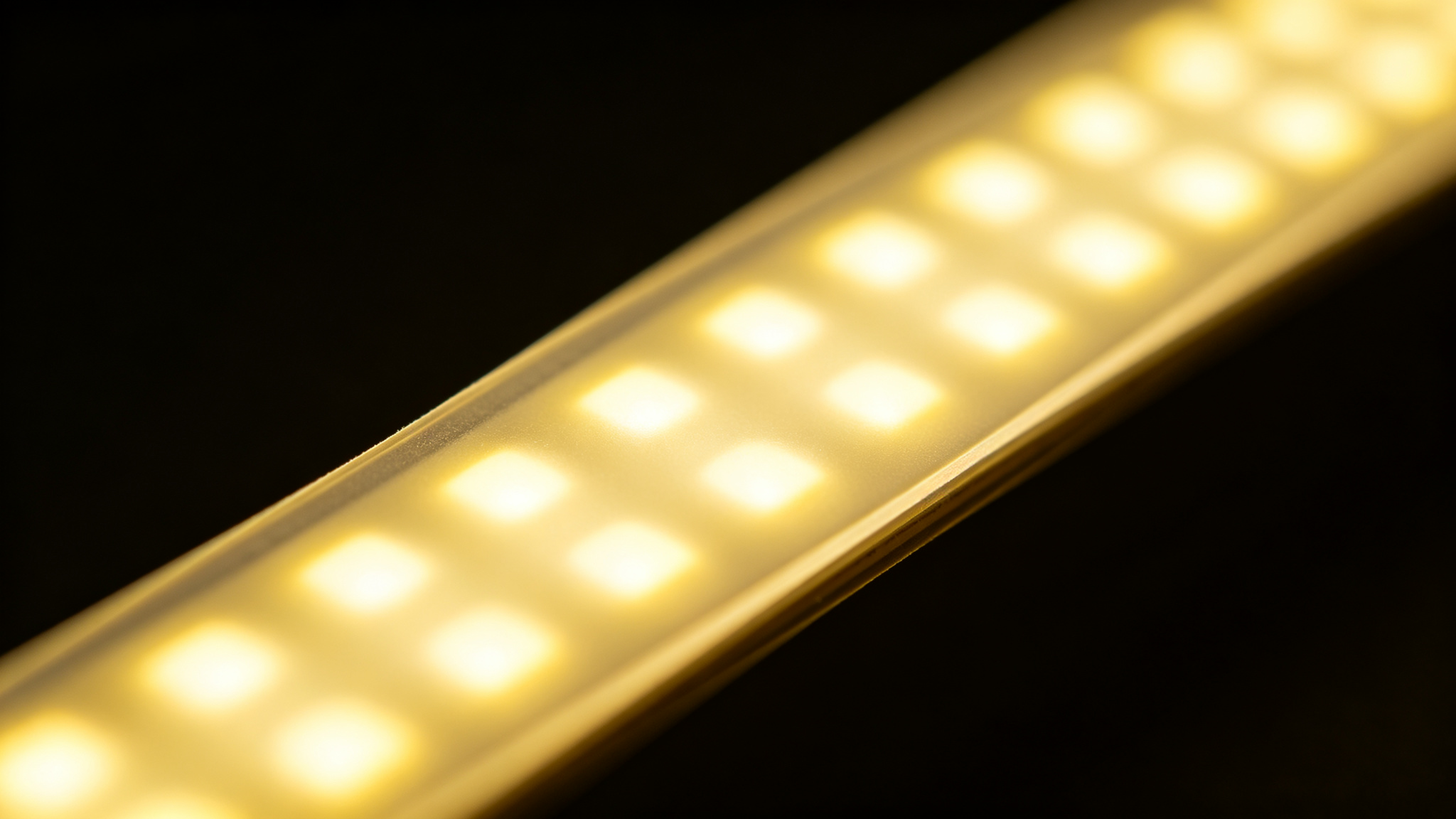
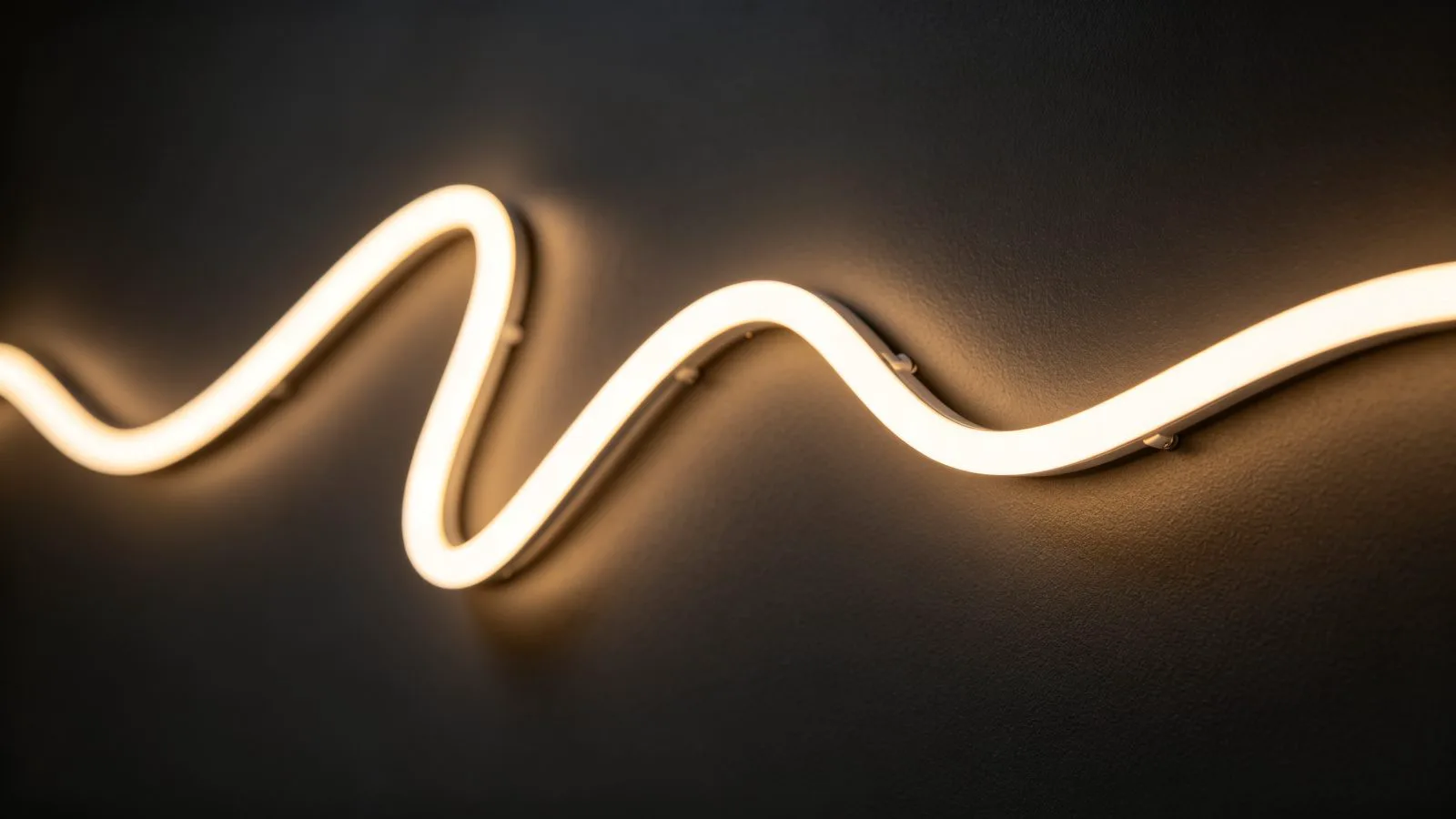
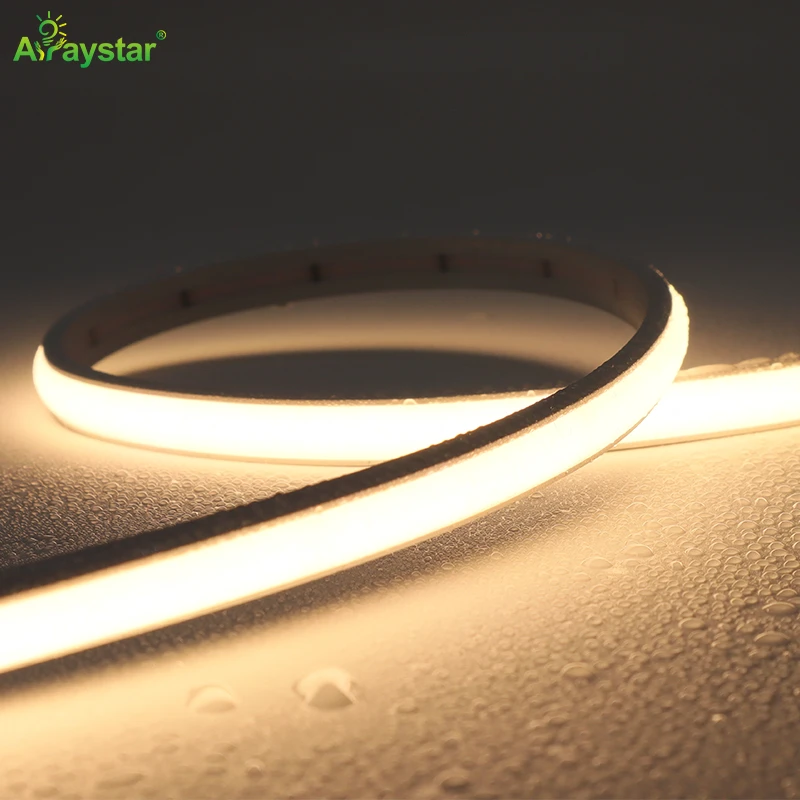
COB deposits a continuous phosphor layer — seen as one glowing line, never as dots.
LED Density: How Many Chips per Metre
Density is measured in LEDs per metre. Higher density packs chips closer, so they merge at a shorter viewing distance. SMD strips range from 60 to 240 LEDs/m; COB/SOB packs 320–1,000+ “emitting points”/m in a continuous layer. Our dedicated LED density guide covers the numbers in depth.
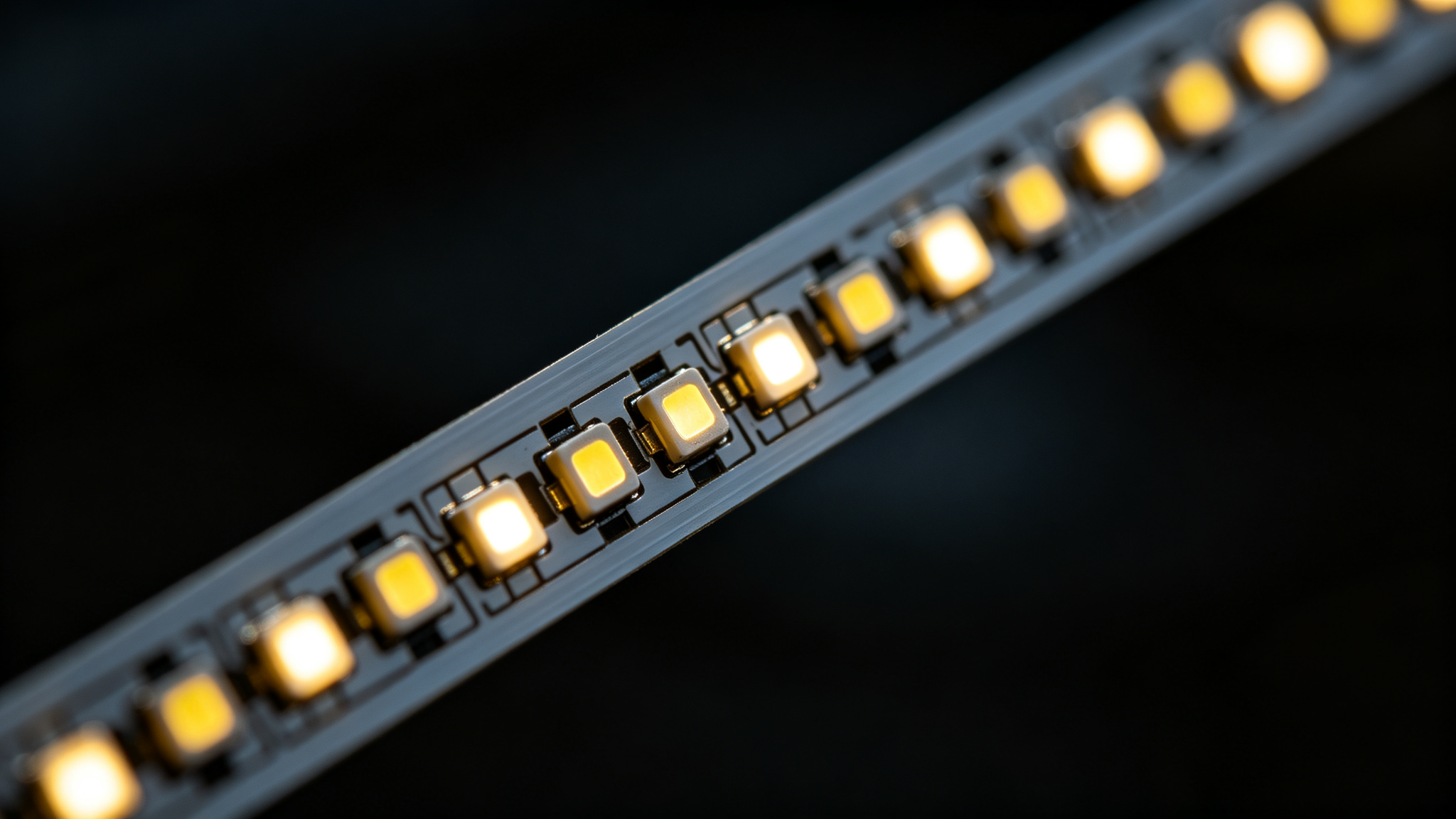
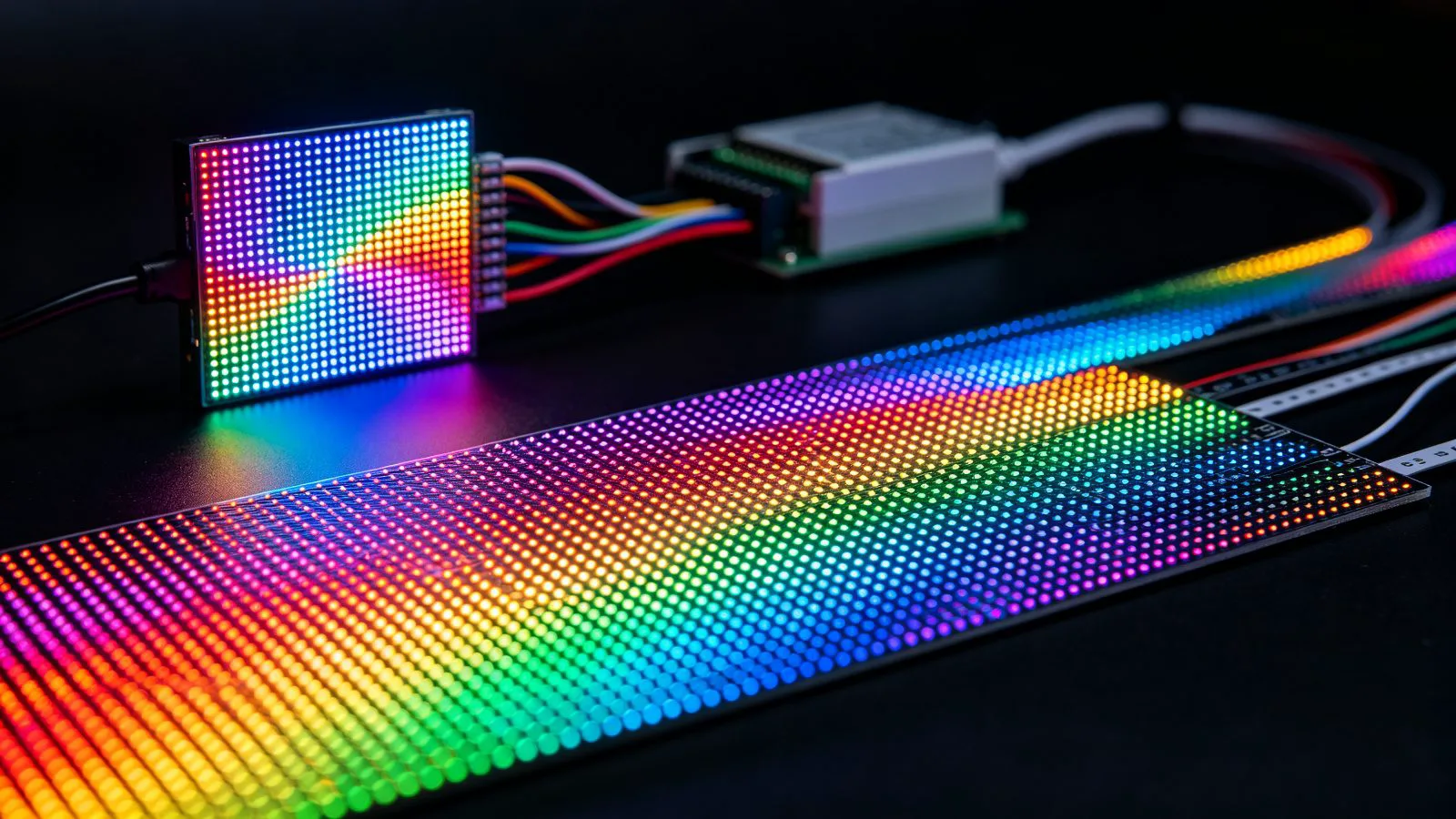
Low-density SMD shows individual chips and gaps — fine behind a diffuser, visible up close.
Dot-Free vs Dot-Visible: Comparison Table
| Spec | Low-Density SMD | High-Density SMD | COB / SOB |
|---|---|---|---|
| LEDs per metre | 60–120 | 128–240 | 320–1000+ |
| Dot-free from | > 1.5–2 m | ~0.8–1 m | < 0.3 m (or direct) |
| Smoothness | Dots visible | Mostly smooth | Truly seamless |
| Best used in | Diffusers, far coves | Visible coves, shelves | Close-view coves, wall wash |
| Cost | Low | Medium | Higher |
| Heat per metre | Lower | Medium | Higher (needs channel) |
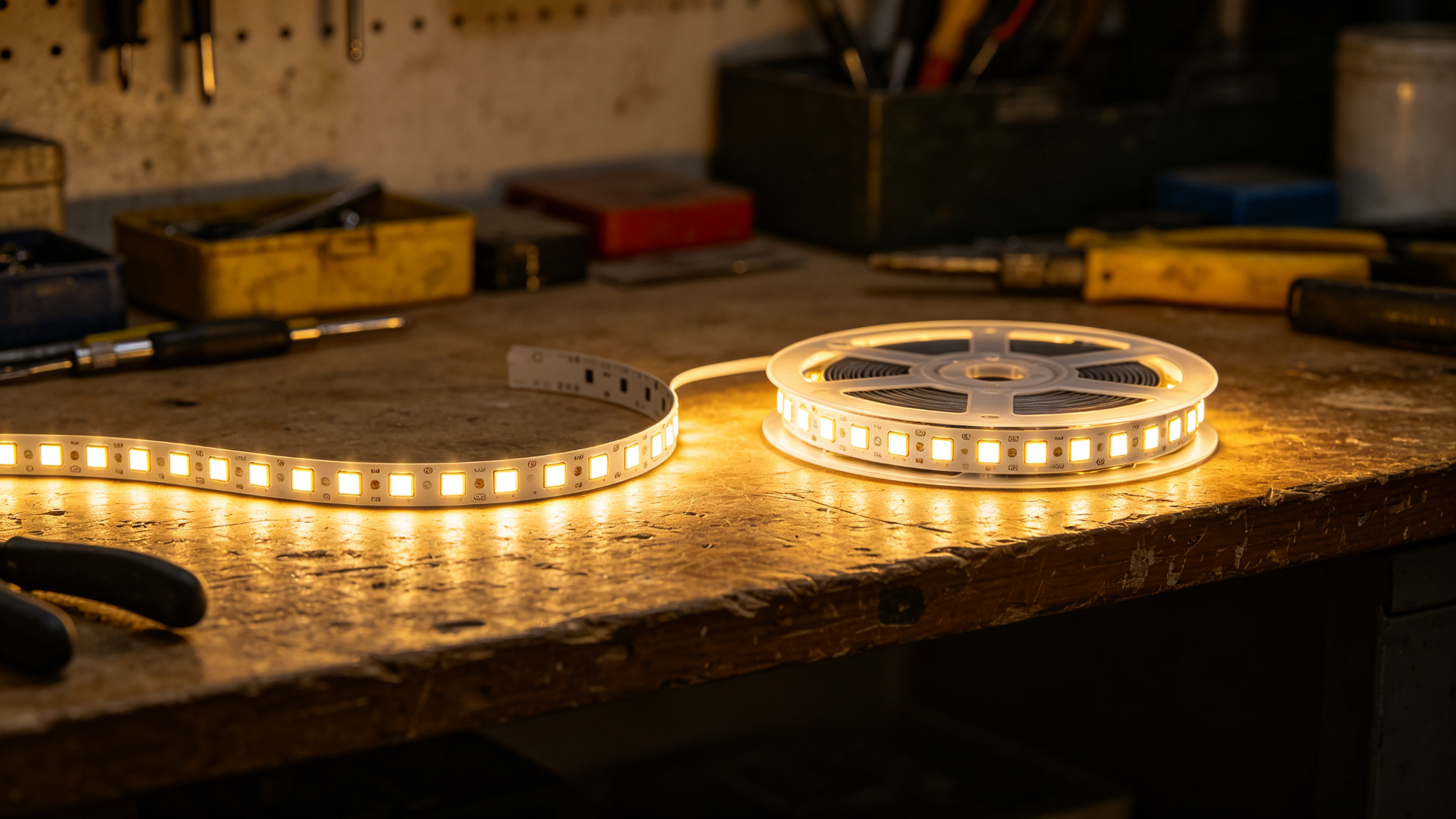
Side by side: the smooth COB line vs the dotted SMD line — choose by viewing distance.
COB vs SMD: The Technology Behind the Look
- SMD strips mount separate surface-mount chips; dots depend purely on LEDs per metre. Cheap and flexible, but show dots up close.
- COB (Chip on Board) prints LED dies under a continuous phosphor layer — the whole length glows as one line. This is how you get true dot-free at any viewing distance.
- SOB / FCOB variants push density and smoothness further for ultra-clean lines.
Rule of thumb: view the installed position. If the strip will be seen from under ~1 m — under shelves, on a wall, in a shallow cove — go COB. If it is hidden in a deep cove behind a lip or inside an aluminium diffuser channel, a high-density SMD is enough. See the beam angle guide for how the diffuser spreads the light.
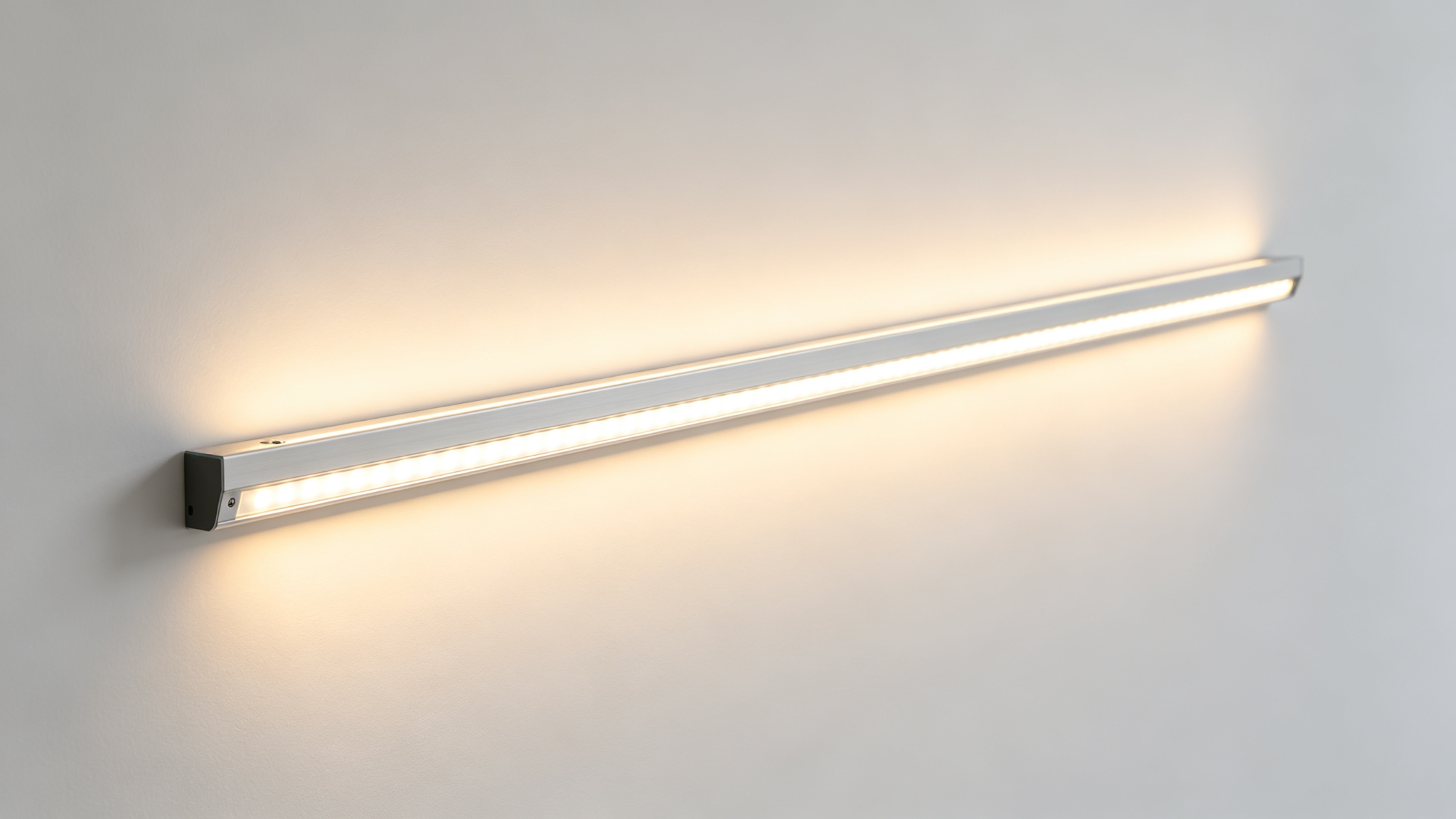
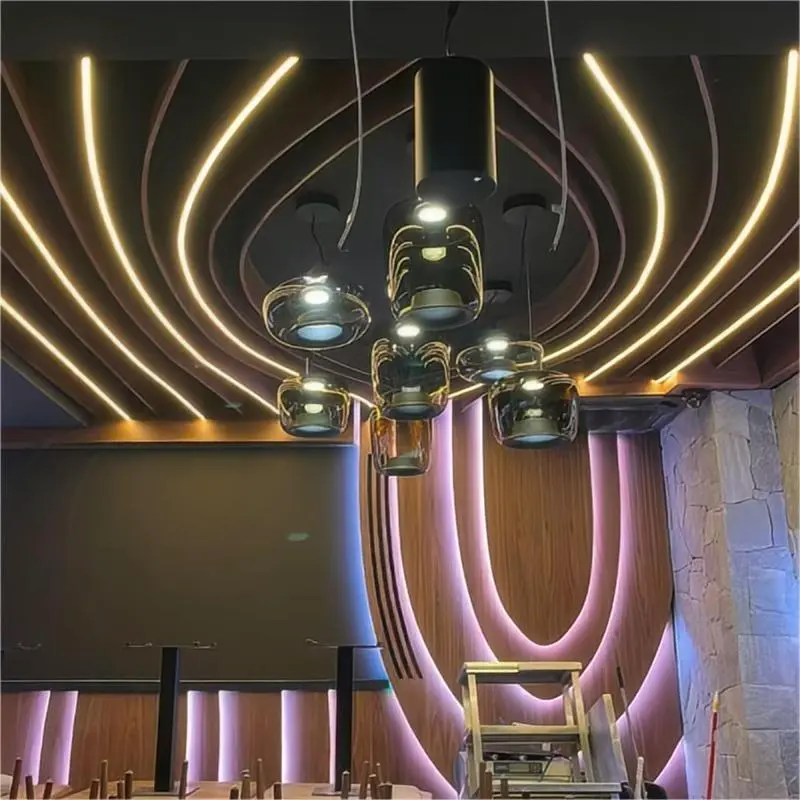
A dot-free strip in a channel washes the wall with a smooth gradient, no spots.
When Dots Matter (and When They Don’t)
Dots matter: shallow or open coves, under-shelf lighting, glass cabinets, mirror and vanity, wall-wash channels, and any strip seen from less than about a metre — here choose COB or ≥180 LEDs/m.
Dots don’t matter: strips hidden deep behind a cabinet lip, inside a frosted silicone neon tube or aluminium diffuser, or seen from >2 m, where even 60 LEDs/m merges into a line. The diffuser does the smoothing for you (see our aluminium channel guide).

A magnifier check before installation reveals whether dots will show at your viewing distance.
The 30-second decision
Visible within ~1 m or a shallow/open cove → COB. Hidden in a diffuser or far away → high-density SMD suffices. Budget is the only reason to choose dot-visible for a visible run.
Recommended Products
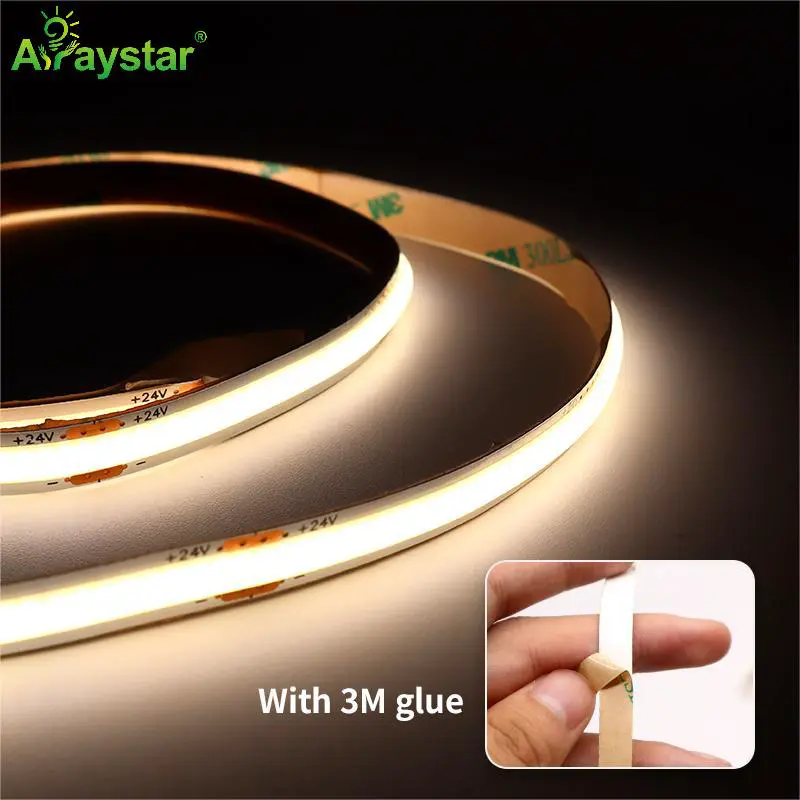
Reel-to-Reel COB LED Strip, 480 LEDs/m
Truly dot-free reel-to-reel COB — the default for visible coves, shelves and wall-wash where smoothness is critical.
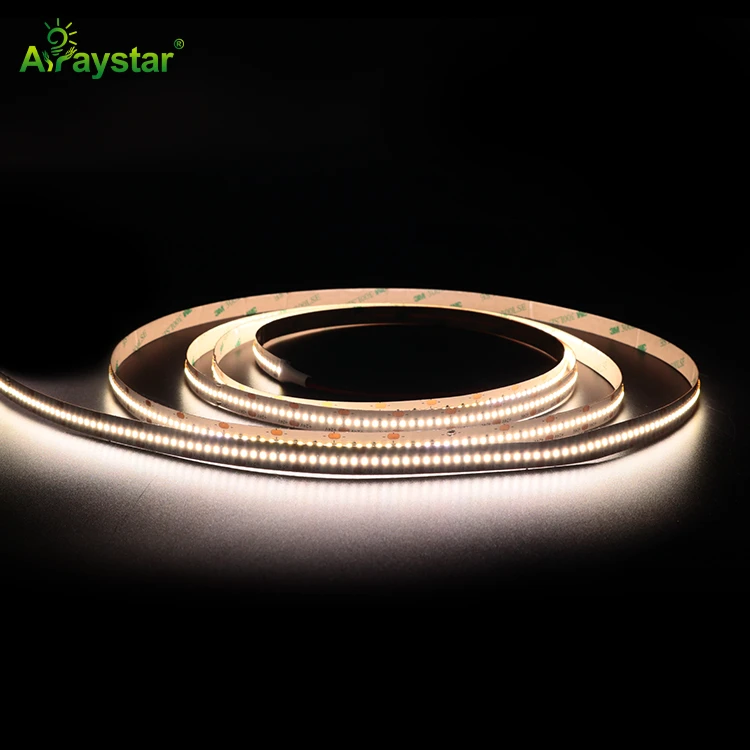
High Density 2216 LED Strip, 300 LEDs/m
Very dense SMD that looks nearly seamless at normal viewing distance, a cost-effective smooth line.
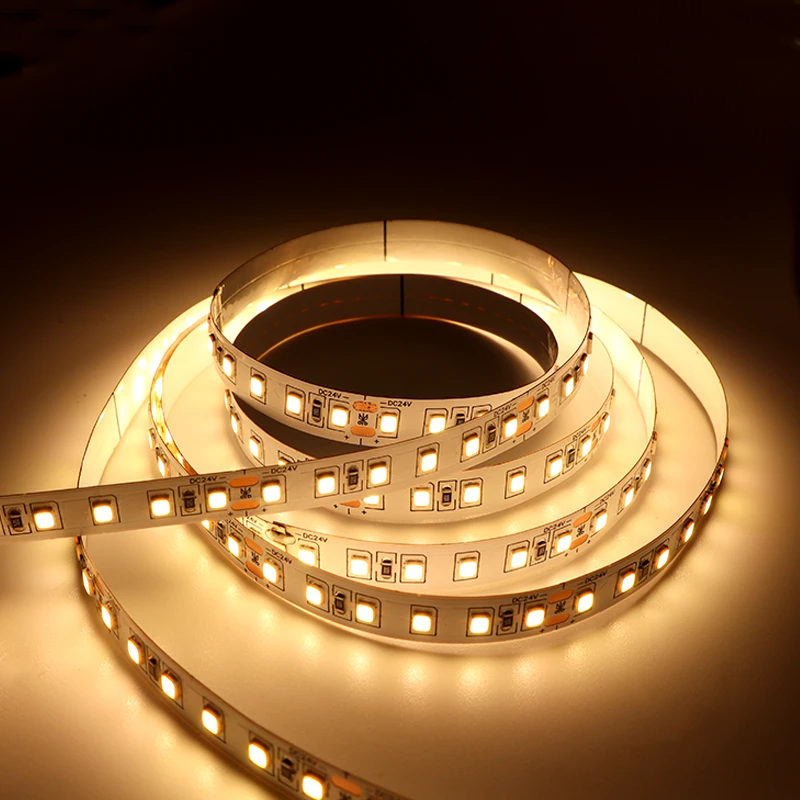
The classic general-purpose strip — dot-visible up close but perfectly fine hidden in a diffuser or deep cove.
Waterproof Silicone Extrusion Milky LED Strip, 280 LEDs/m
Milky diffused extrusion that hides the chips — a smooth glowing line even from a dense SMD base.
Frequently Asked Questions
What does dot-free LED strip mean?
Dot-free means you cannot see individual LED chips; the strip appears as one smooth continuous line. COB strips achieve this with a continuous phosphor layer, while high-density SMD strips merge into a line once the viewing distance is far enough. Dot-visible strips show separate chips and gaps.
How many LEDs per metre do I need for a dot-free look?
As a rough guide, 120 LEDs/m looks smooth from about 1.5-2 m, 180-240 LEDs/m from about 1 m, and COB (320+ emitting points) looks dot-free even close up. For visible coves or under-shelf lighting within 1 m, choose COB or at least 180 LEDs/m.
Is COB always better than SMD?
Not always. COB gives the smoothest, dot-free line but costs more, runs hotter and needs an aluminium channel. High-density SMD is cheaper, more flexible and perfectly smooth when hidden behind a diffuser. Choose COB when the strip is visibly close; SMD for hidden or farther runs.
Does a diffuser make SMD strip dot-free?
Yes — a frosted aluminium channel or silicone neon tube spreads the light so even 60-120 LEDs/m reads as a continuous line. If you can hide a lower-density SMD behind a quality diffuser, you save money without losing the smooth look.
Need high-CRI, color-consistent LED strips for your project?
Get factory-direct pricing, free samples and a tailored quote within 24 hours.
Get a Quote