DMX512 RGBW Strips With Built-In IC: No Separate Decoder
- 2026-10-09 18:41
- /
- Arraystar LED
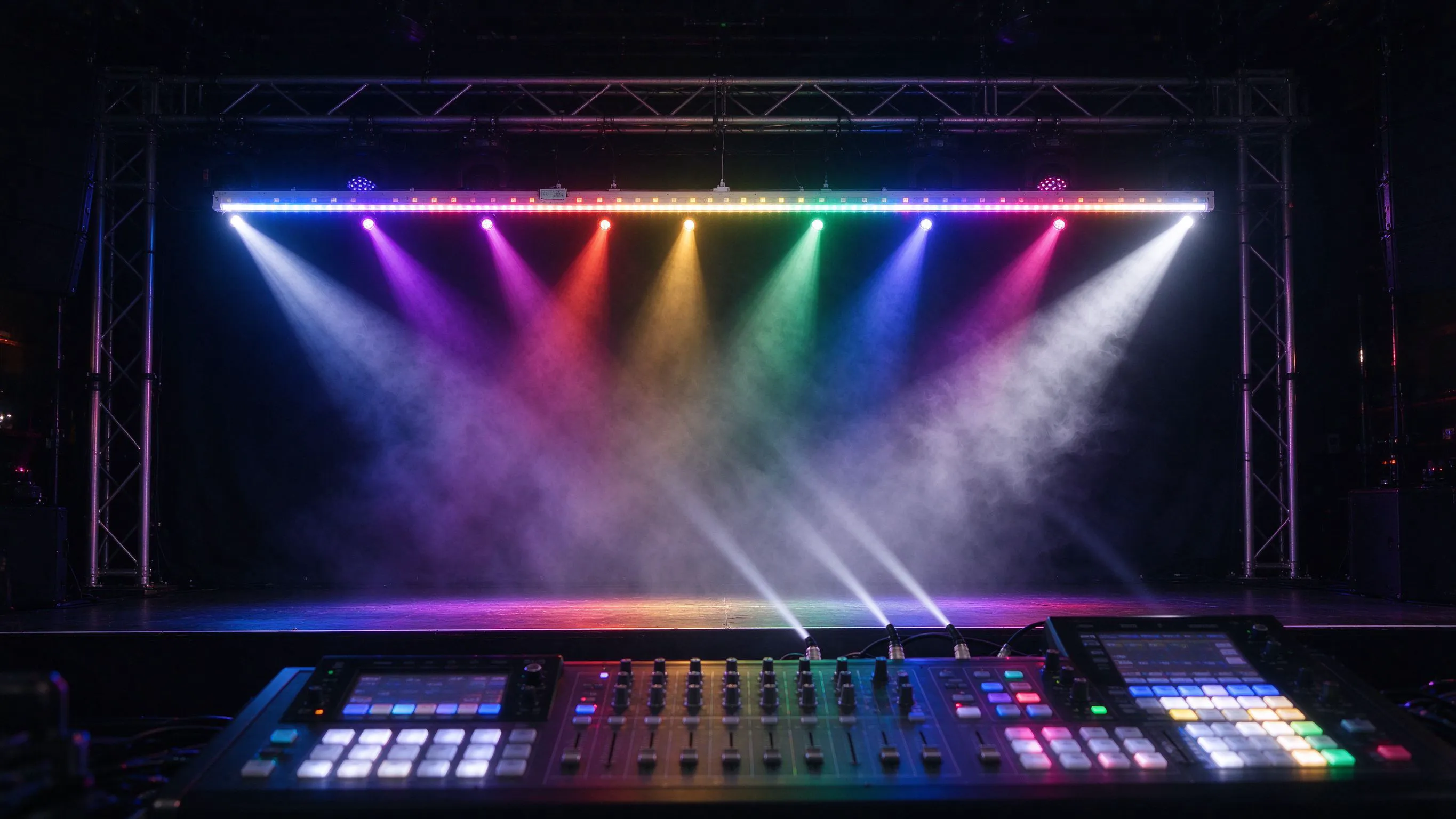
Conventional DMX LED strip needs a separate decoder between the console and every run, which multiplies hardware, wiring and failure points on large professional jobs. DMX512 RGBW strip with the decoder IC built in lets the lighting console address the strip directly over DMX, with no decoder boxes, integrating linear colour and white into the same DMX universe as the rest of the stage or architectural rig.
The Decoder Problem in Traditional DMX Strip
DMX512 is the standard control language of professional lighting, but ordinary RGB or RGBW strip cannot speak it directly. The usual solution places a separate DMX decoder at each run to translate console data into the signals the strip understands, and every decoder needs power, a DMX address, mounting space and wiring.
On a large rig with many runs, those decoders become a substantial hardware and labour cost and a long list of additional failure points, often crammed into inaccessible ceiling voids.
What Built-In DMX IC Strip Changes
- DMX decoder IC integrated into the strip.
- Console addresses the strip directly, no separate decoder box.
- RGBW four-channel control for colour plus white.
- Fewer devices, less wiring, fewer failure points.
- Native integration with existing DMX consoles and universes.

For professional DMX-controlled linear light I use the built-in IC DMX512 RGBW strip. It collapses the decoder layer into the strip itself.
Traditional Decoder vs Built-In DMX Strip
Built-in IC removes a whole device layer on DMX jobs.
| Factor | Strip + separate decoder | Built-in DMX IC strip |
|---|---|---|
| Hardware per run | Decoder required | None, IC on strip |
| Mounting / space | Decoder location needed | Strip only |
| Failure points | More connections and boxes | Fewer |
| Addressing | At each decoder | Set on the strip runs |
| Integration | Works but more parts | Native DMX throughout |
Where Native DMX Linear Light Wins
- Stage, theatre and television rigs already built around DMX consoles.
- Architectural installations controlled by a central DMX system.
- Large venues with many linear runs and limited void space.
- Projects where colour and white must sit in one DMX universe.
- Tours and rentals that benefit from fewer parts and faster setup.
Addressing and DMX Universe Planning
Removing the decoder does not remove addressing discipline. Each section of built-in DMX strip still consumes DMX channels, four per RGBW control point, and the runs must be addressed so they fit within the 512-channel universe, with splitters or additional universes where the count is exceeded. I plan the channel map and addressing before installation, label each run's start address, and keep a written channel schedule, which makes commissioning and later patching far faster than discovering address clashes on site.
- Count channels: four per RGBW control point.
- Stay within 512 channels per universe; add universes as needed.
- Set and label each run's DMX start address.
- Keep a channel schedule for commissioning and patching.
RGBW on DMX: Colour and White Together
The RGBW version gives the console four channels per point, so a venue can run saturated colour during a show and switch to dedicated neutral white for conferences, cleaning or daytime function mode, all from the same desk and the same strip. I confirm the console personality or channel profile matches the strip's RGBW order so the white fader controls the white chip rather than being mis-assigned, and I test white, colour and cross-fades during commissioning.
Wiring, Termination and Signal Reliability
DMX is a robust but specific protocol: I use proper DMX cable daisy-chained through the runs, fit a terminator at the end of long lines, avoid star wiring, and use opto-splitters where the signal must branch or cover long distances. Because the IC is distributed along the strip, a damaged run section is easier to isolate than a failed central decoder feeding a whole zone, but clean DMX signal practice still decides whether a large rig behaves reliably.
Specifying a Built-In DMX System
Send the console model, number and length of runs, RGBW channel needs, total channel count and the physical layout. I will confirm the built-in DMX512 RGBW strip, addressing plan, universe and splitter requirements, termination and power. We supply the built-in IC DMX strip and recommend bench-testing the channel profile and white fader against your console before installation, so the strip responds exactly as patched when the rig is commissioned.
Retrofitting a Theatre Cove to Native DMX
A regional theatre had an older proscenium cove lit by conventional RGB strip through a cluster of DMX decoders installed in a cramped ceiling void. Over years of touring productions the decoders had become a maintenance nightmare: they were stacked in an inaccessible location, each generated heat, and addressing faults required a technician to climb into the void during load-in, occasionally delaying the lighting focus. When the cove reached the end of its life the technical director asked for the same DMX control from the existing console but without the decoder farm.
We replaced it with built-in IC DMX512 RGBW strip, which the console addresses directly. The RGBW choice mattered theatrically: the cove could run saturated colour for contemporary productions but switch to a dedicated warm or neutral white for spoken-word and classical programmes where mixed-RGB white had always looked slightly wrong against the stage's tungsten fixtures. We mapped the four-channel control points into the existing DMX universe, labelled every run's start address against a channel schedule, and used opto-splitters and termination to keep the long DMX line clean. Removing the decoders freed the ceiling void, cut a dozen powered devices and their heat and potential failure points, and made addressing a desk-side task rather than a ceiling climb. During commissioning we matched the console's RGBW personality to the strip so the white fader genuinely controlled the white chips, and the technical director could cross-fade the cove from a deep colour to a clean white that finally sat naturally beside the stage wash. The retrofit demonstrates where built-in DMX strip pays back most clearly: in venues already centred on a DMX console, eliminating the decoder layer simplifies both the installation and the daily reality of patching and fault-finding that touring technicians live with.
Recommended Products
Frequently Asked Questions
What is DMX512 strip with a built-in IC?
It is RGB or RGBW LED strip with the DMX decoder integrated circuit mounted along the strip itself, so a DMX lighting console can address and control the strip directly without a separate decoder box on each run. It reduces hardware, wiring, mounting space and failure points on professional installations.
Do I still need a DMX decoder with built-in IC strip?
No separate decoder box is required; the decoding electronics are on the strip and the console addresses it directly. You still need normal DMX infrastructure such as cable, addressing, splitters where the signal branches, and a terminator at the end of long lines, and the runs still consume DMX channels.
How many DMX channels does RGBW strip use?
Four DMX channels per RGBW control point, one each for red, green, blue and white. Plan the addressing so the total fits within a 512-channel DMX universe, add universes or splitters beyond that, set and label each run's start address, and keep a channel schedule for commissioning.
Can built-in DMX RGBW strip do both colour shows and white functions?
Yes, the dedicated white channel lets the console run saturated colour for a show and switch to clean neutral white for conferences, cleaning or daytime mode from the same desk and strip. Confirm the console personality matches the strip's RGBW channel order and test the white fader and cross-fades during commissioning.
How do I keep a large built-in DMX rig reliable?
Use proper DMX cable in daisy-chain runs rather than star wiring, fit a terminator at the end of long lines, use opto-splitters for branches and long distances, label every start address and keep a channel schedule. Clean DMX signal practice matters even though the distributed ICs make individual run faults easier to isolate than a failed central decoder.
Need help with your LED project?
Get factory-direct pricing, free samples and engineering support within 24 hours.
Email: info@arraystarled.com | Phone: +86-0755-2103-6746 | WhatsApp: 0086 1581 8514 077
Need to size your power supply? Use our LED Strip Power Calculator to find the right driver in seconds.