
Flexible Aluminum LED Profiles: Curved Walls, Arches and Wavy Ceilings Done Right
- 2026-09-30 17:38
- /
- Arraystar LED
Curved walls, arched openings, circular bulkheads and organic coves are where rigid straight aluminum channels fail - they can't follow the radius without gaps, kinks or visible joints. Flexible (bendable) aluminum profiles are designed to curve in the horizontal plane to match radii, turning linear light into a continuous arc. The job is matching the profile's minimum radius and bend plane to the design curve, fixing it frequently enough to hold the shape, and pairing it with flexible COB. Treat the profile as a forming system and curved light becomes clean rather than cobbled together.
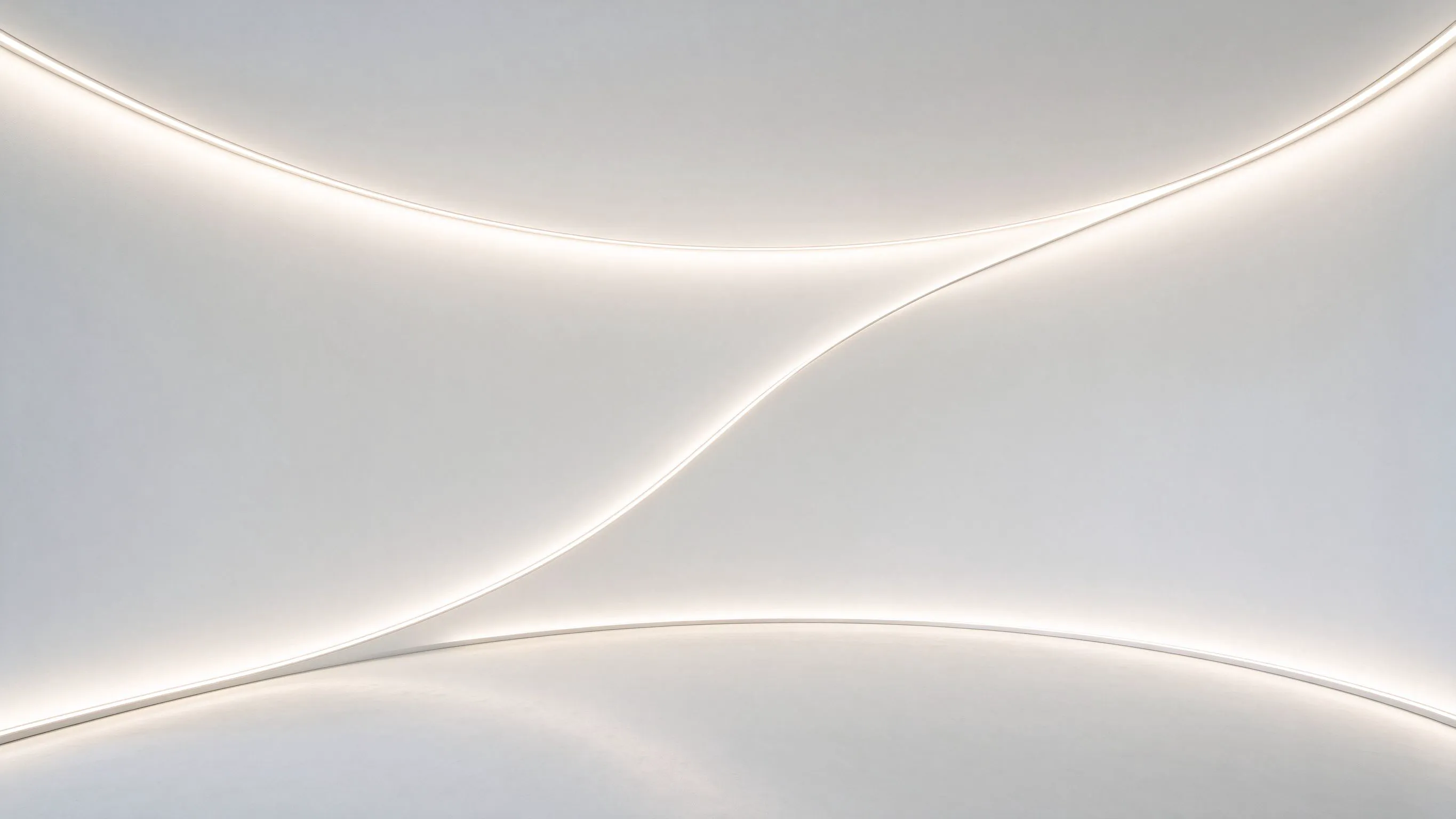
Curves Are the Hard Case for Linear Light
Modern interiors are full of curves - curved feature walls, arched doorways and niches, circular drop ceilings, barrel-vault coves, rounded reception desks. Rigid aluminum extrusions come in straight lengths and, while they can be cut into many short segments to approximate a curve, that produces faceting, visible joints and uneven diffusion that betrays the effect up close.
Flexible aluminum profiles solve this properly: the channel body is constructed (segmented or bendable) to curve smoothly in one plane while still holding the strip and diffuser. Specifying them is about three parameters - bend plane, minimum radius and profile width - and then fixing the curved channel so it holds its shape against the wall.
Matching Flexible Profiles to Curve Radius
Flexible profiles come in different widths and bend capabilities, and the tighter the curve, the smaller and more flexible the channel needs to be. A large gentle bulkhead radius can take a wider channel; a tight arch or small circular niche needs a narrow, highly bendable one. Forcing a wide channel around a tight radius kinks it and pops the diffuser.
The ART-0607 is a compact flexible profile suited to tight curves and small-radius arches where a narrow channel is essential; the ART-1212 flexible profile handles medium curves with a fuller 12x12 body and diffuser; the wider ART-5312 flexible profile suits broad, gentle curves and larger cove/drop-ceiling radii where you want a wider line of light. Select from the tightest radius in the design.
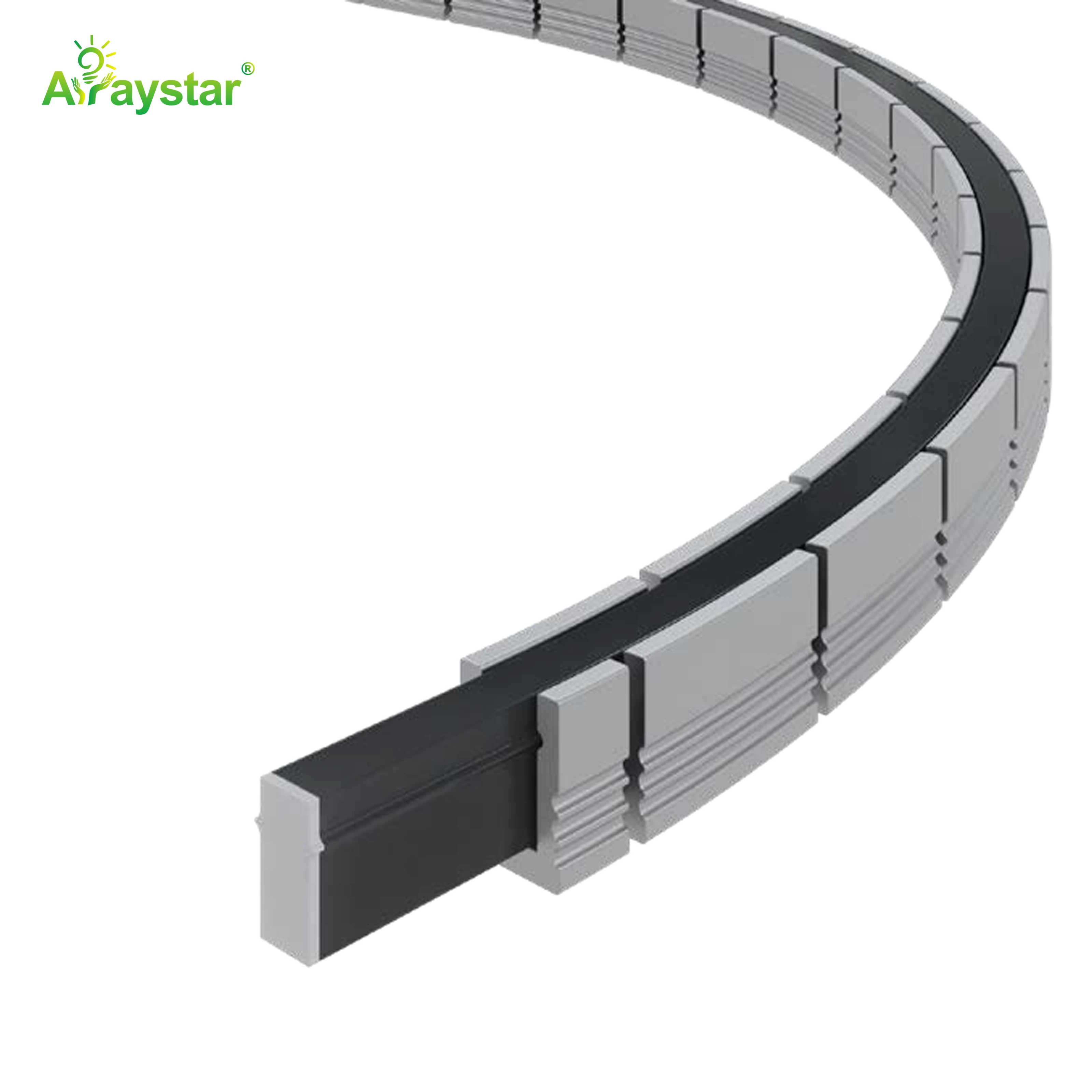
Choosing flexible profile by curve radius.
| Profile | Body | Curve it suits |
|---|---|---|
| ART-0607 flexible | Compact ~0607 | Tight arches, small niches, narrow radius |
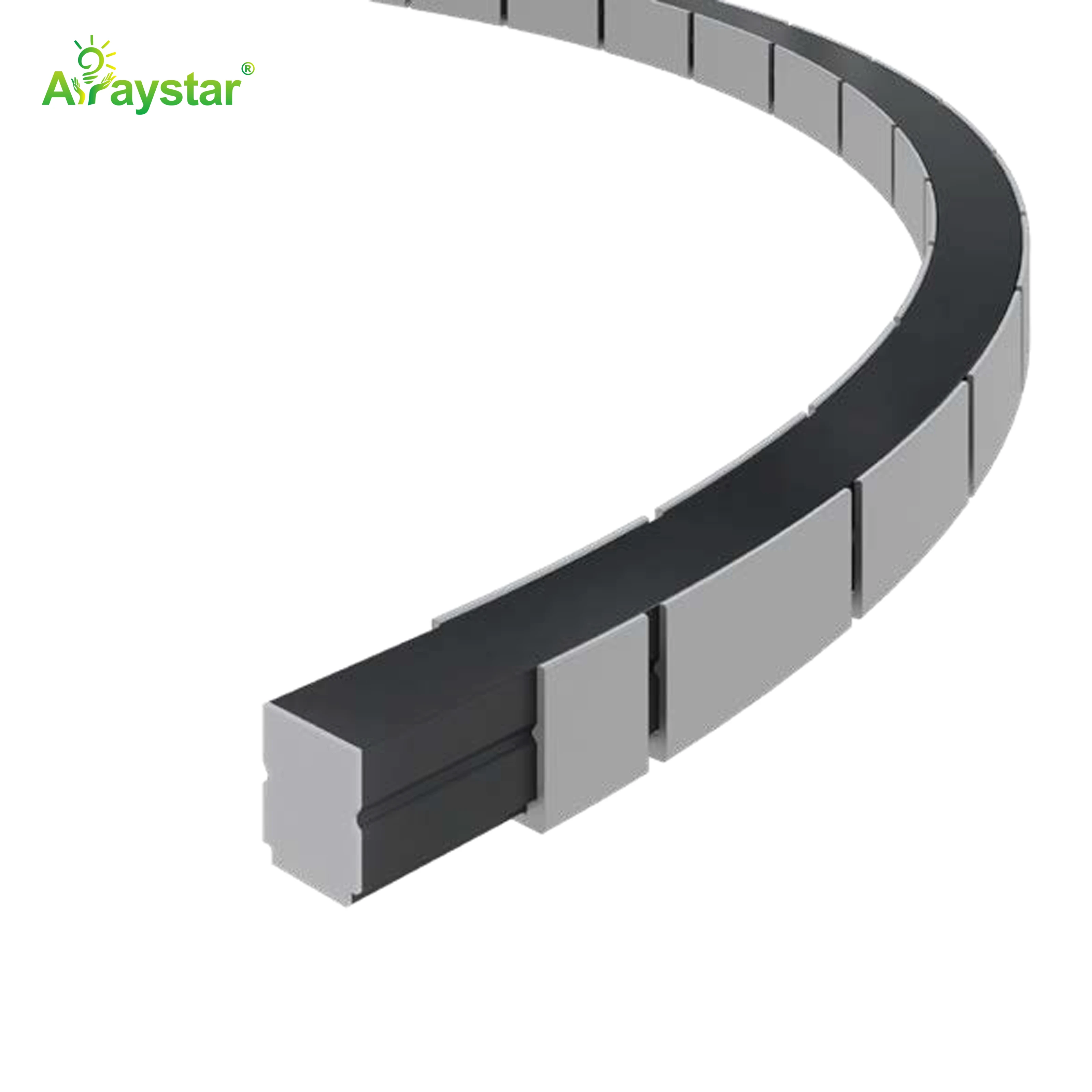
| ART-1212 flexible | 12x12 medium | Medium feature-wall and cove curves |
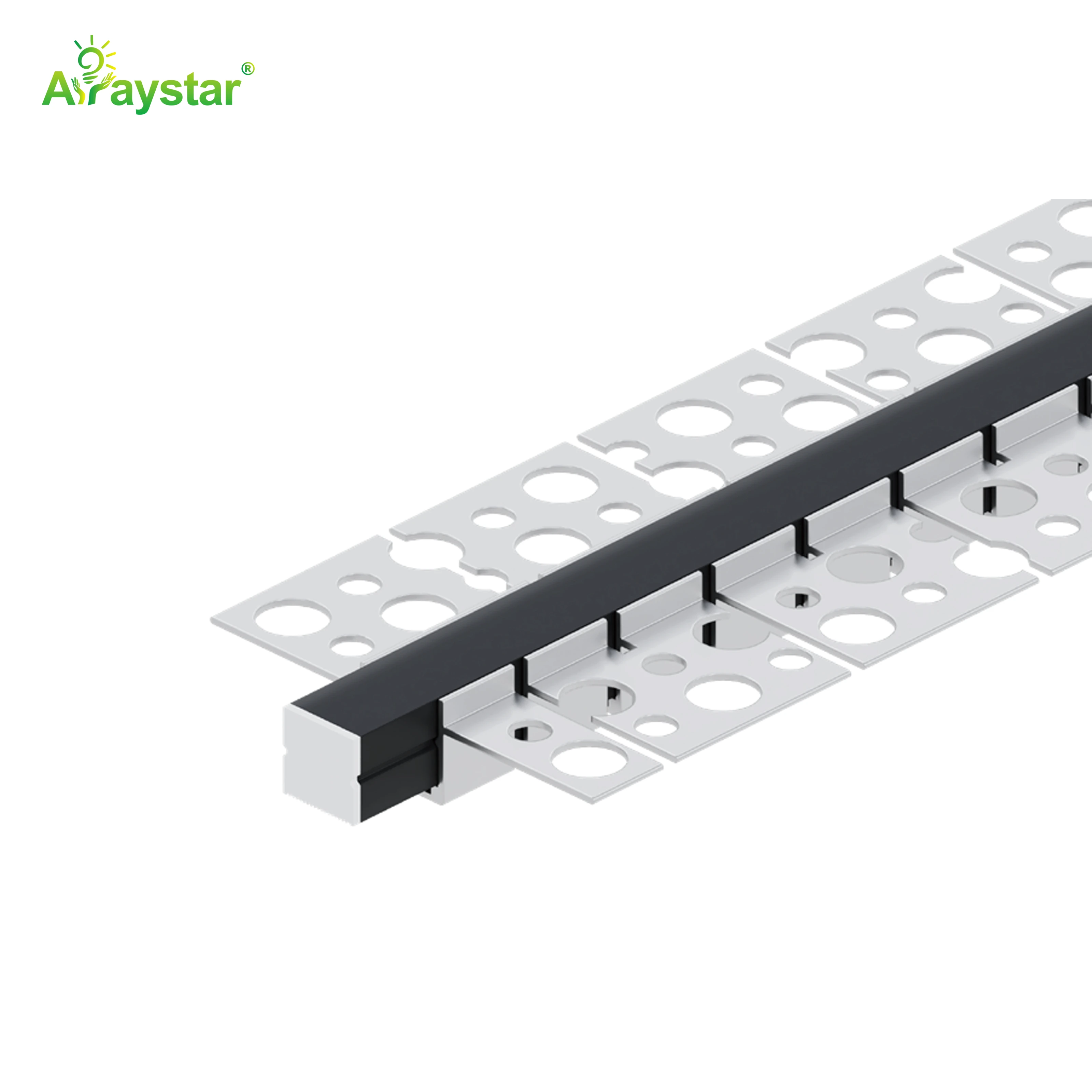
| ART-5312 flexible | Wider 5312 | Broad gentle bulkheads and large circles |
| Rigid straight channel | Fixed straight | Facets if segmented - avoid on smooth curves |
Forming and Fixing the Curve
A flexible channel holds a smooth curve only if it's fixed at enough points - under-supported flexible profile springs toward straight or develops waviness between fixings. Use the matched mounting clips/brackets at close spacing, form the channel to a template or the actual curve before fitting the diffuser, and verify the radius visually before committing.
On feature walls, fix to a curved substrate or a pre-formed batten that establishes the radius; on circular bulkheads, mark the arc and clip the channel to it at frequent intervals. The ART-1212 flexible profile is the common choice for feature-wall arcs where its medium body balances glow and bend, with clips tight enough that no straight segments appear between them.
Pairing With Flexible COB and Diffusers
The channel is only half the system - the strip inside must also follow the curve, which is why flexible COB (not rigid board) is used. COB bends with the channel and, being dot-free, stays seamless through the curved diffuser where discrete LEDs might bunch and gap on a tight radius.
- Use flexible COB inside bendable channels; rigid board fights the curve.
- Choose top-bend or side-bend strip to match the plane the profile curves in.
- Fit the diffuser after the channel is formed and fixed, not before.
- On very tight radii confirm both channel and strip minimum bend radius.
- Pre-form to a template for repeatable curves across multiple identical arches.
The wider ART-5312 flexible profile on broad curves benefits from denser COB to keep the wider diffuser evenly lit across the arc - the wider the line, the more density matters to avoid a brighter center and dim edges through the bend.
Where Flexible Profiles Win and Their Limits
Flexible profiles are the correct solution for single-plane curves - walls and ceilings where the arc bends in one direction. They are not meant for complex 3D multi-axis twisting, which requires specialized 3D-bend neon rather than a curved channel. Match the product to the geometry: flexible aluminum for smooth architectural arcs, 3D-bend neon for free-form sculpture.
Recommended Products
Frequently Asked Questions
What is a flexible aluminum LED profile?
An LED channel engineered to bend smoothly in one plane (instead of rigid straight extrusion) so it can follow curved walls, arches, circular bulkheads and organic coves while still holding the strip and diffuser. It's specified by bend plane, minimum radius and width, and fixed at close spacing to hold the curve without faceting or waviness.
Which flexible profile do I need for a curved wall or arch?
Choose by the tightest radius: a compact ART-0607 for tight arches and small niches, the medium ART-1212 for typical feature-wall and cove curves, and the wider ART-5312 for broad gentle bulkheads and large circles. Don't force a wide channel around a tight radius - it kinks and pops the diffuser.
How do you stop a flexible LED channel from looking wavy or faceted?
Fix it at close spacing with the matched clips to a curved substrate or pre-formed batten that establishes the radius, form the channel to a template before fitting the diffuser, and verify the arc visually. Under-supported flexible profile springs straight between fixings, which is what causes waviness; segmented rigid channel causes faceting.
What LED strip goes inside a curved aluminum profile?
Flexible, dot-free COB that bends with the channel - rigid board fights the curve and discrete LEDs can bunch or gap on tight radii. Match the strip's bend type (top-bend or side-bend) to the plane the profile curves in, fit it after the channel is formed, and use dense COB in wider profiles for even light through the bend.
Can flexible profiles make 3D or twisting shapes?
No - flexible aluminum profiles bend in a single plane for architectural curves like walls, arches and circular ceilings. Free-form multi-axis twisting and 3D sculpture require specialized 3D-bend neon products instead. Match the hardware to the geometry: bendable channel for smooth arcs, 3D-bend neon for organic three-dimensional forms.
Need help with your LED project?
Get factory-direct pricing, free samples and engineering support within 24 hours.
Email: info@arraystarled.com | Phone: +86-0755-2103-6746 | WhatsApp: 0086 1581 8514 077
Need to size your power supply? Use our LED Strip Power Calculator to find the right driver in seconds.







