
Stainless Steel Mounting Clips & Channels for LED Neon: Secure Long Outdoor Runs
- 2026-09-30 17:39
- /
- Arraystar LED
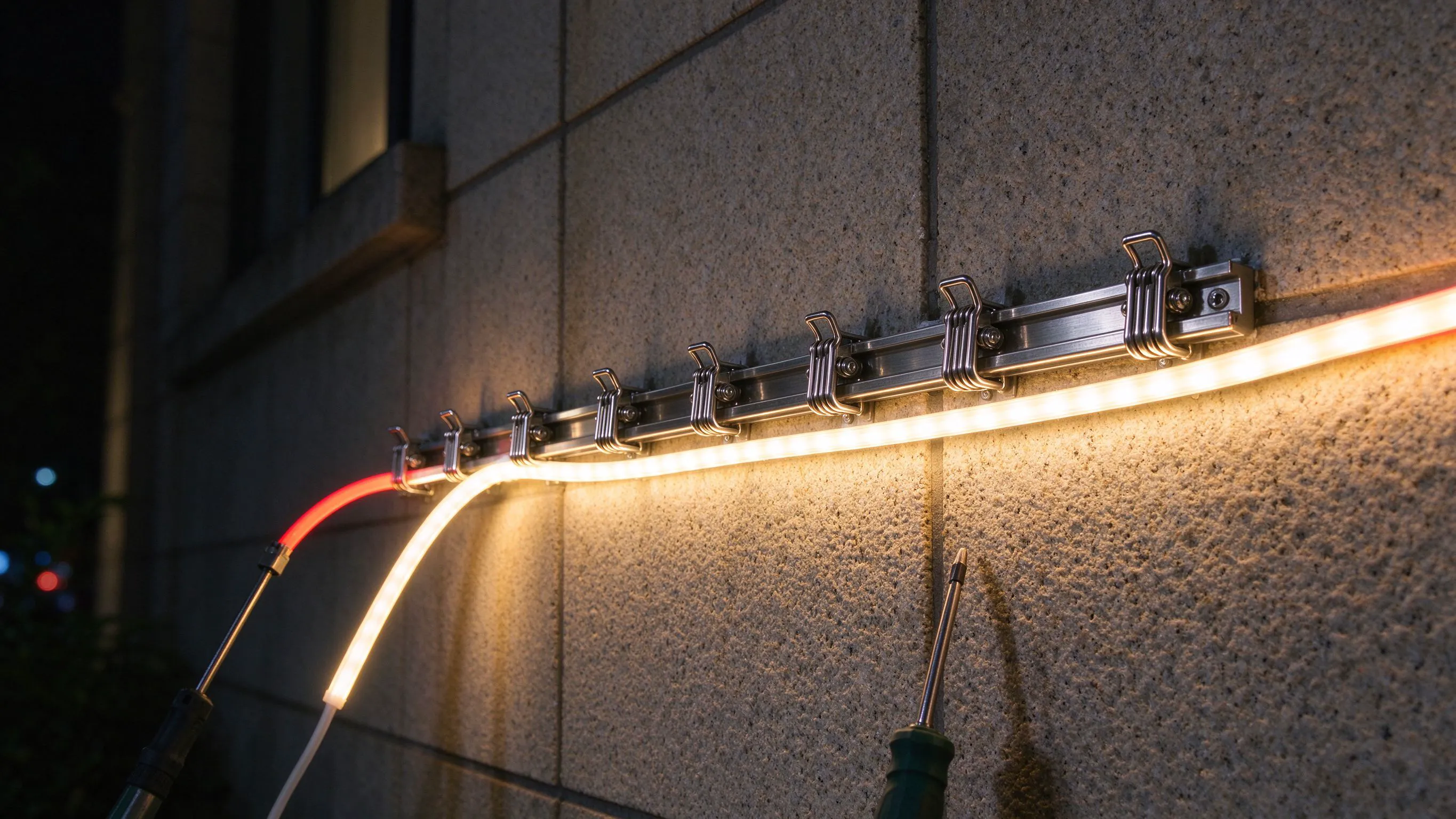
Neon flex is only as secure as its mounting, and in outdoor, marine, high-temperature and long-run installations the cheap plastic clips that come with indoor neon become the failure point - they UV-degrade, rust-stain, let the neon sag or pop off. Stainless steel mounting hardware is the small, inexpensive component that separates permanent exterior neon installations from seasonal failures. Match clip type to the neon body, spacing to the run and material to the environment, and a neon outline stays straight and secure for years.
Mounting Is Where Outdoor Neon Fails First
When neon flex pulls away from a facade, sags along a railing or hangs off a sign, it's almost never the light engine that failed - it's the mounting. Indoor installations get away with self-adhesive backing and plastic clips; exterior runs face thermal expansion and contraction, UV exposure, wind load, vibration, rain and (coastally) salt, all of which attack cheap fasteners.
Stainless steel mounting clips and rails are the permanent solution: they don't rust and stain the facade, don't become brittle from UV, and mechanically retain the neon body through years of temperature cycling. The hardware is a tiny fraction of project cost but carries the entire reliability of the install.
Matching Stainless Clips to Neon Body Size
Clips are body-specific - a clip sized for one neon cross-section won't properly retain another, and a loose clip both sags and lets water sit against the body. Match the stainless clip exactly to the neon dimensions and bend type.
The ART-1212 stainless steel flexible mounting clip secures 12x12 neon on flat and gently curving runs; the ART-1220 stainless flexible mounting handles the larger 12x20 body where that neon is specified for bolder outlines. 'Flexible' clip systems use linked or conforming mounts that follow curves while keeping continuous retention, rather than individual clips that leave gaps between them on bends.
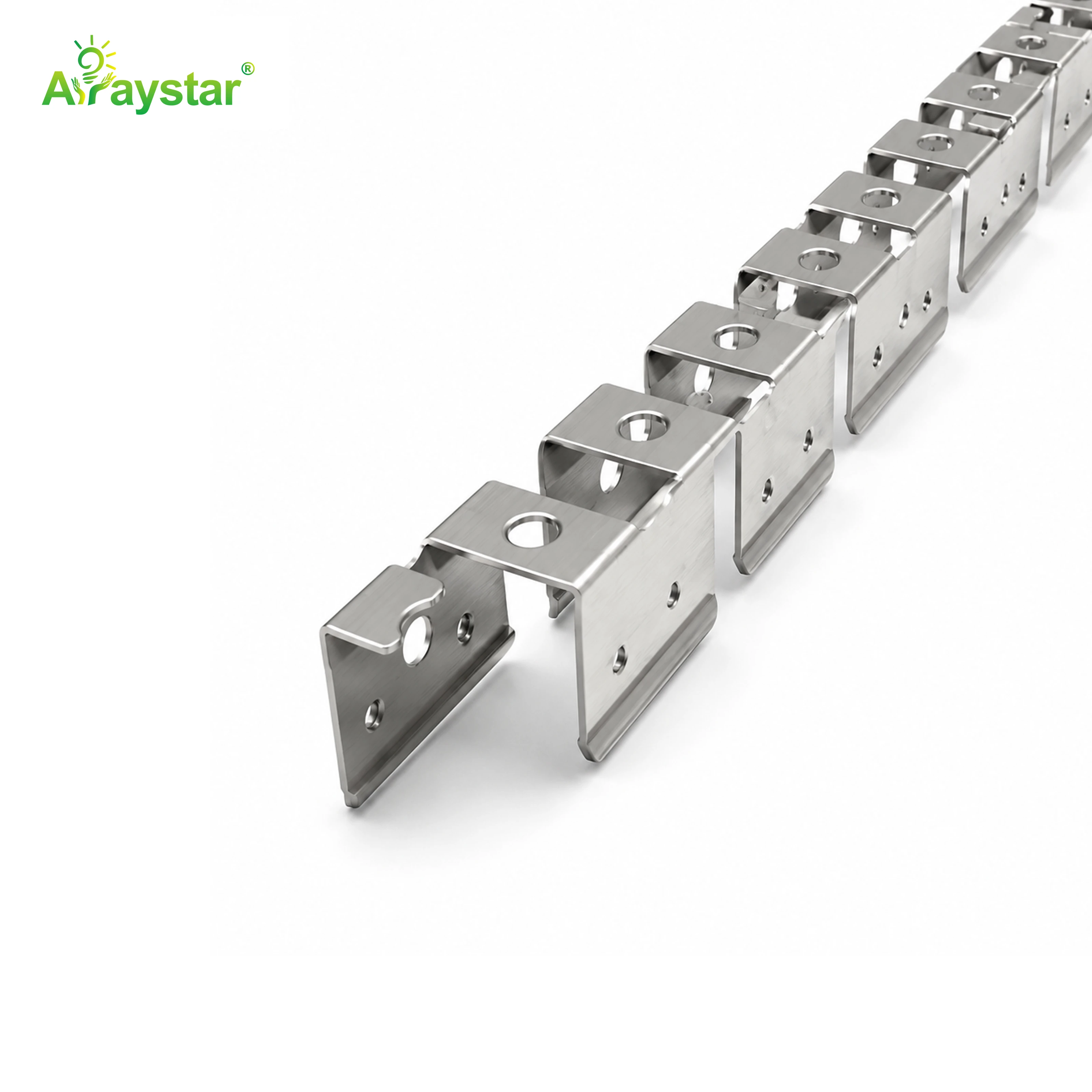
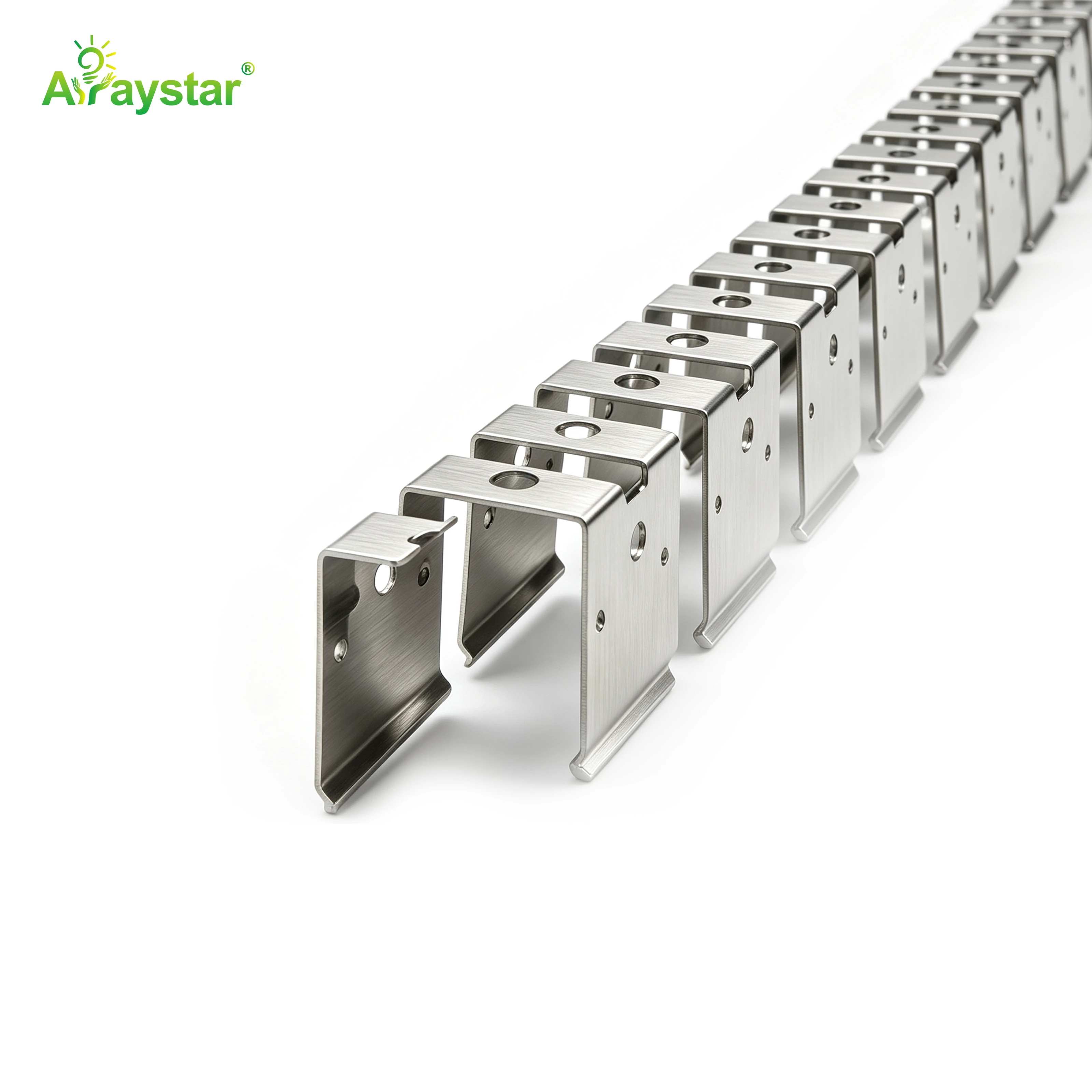
Matching stainless mounting to neon cross-section.
| Neon body | Stainless hardware | Application |
|---|---|---|
| 12x12 neon | ART-1212 stainless flexible mounting | Standard exterior outlines, curves |
| 12x20 neon | ART-1220 stainless flexible mounting | Larger bolder neon runs |
| 6025/6030 neon | ART-6025/6030 stainless flex rail | Wide neon, long architectural runs |
| Indoor plastic clip | Not for exterior | UV-degrades, becomes brittle |
Continuous Rails for Wide and Long Architectural Runs
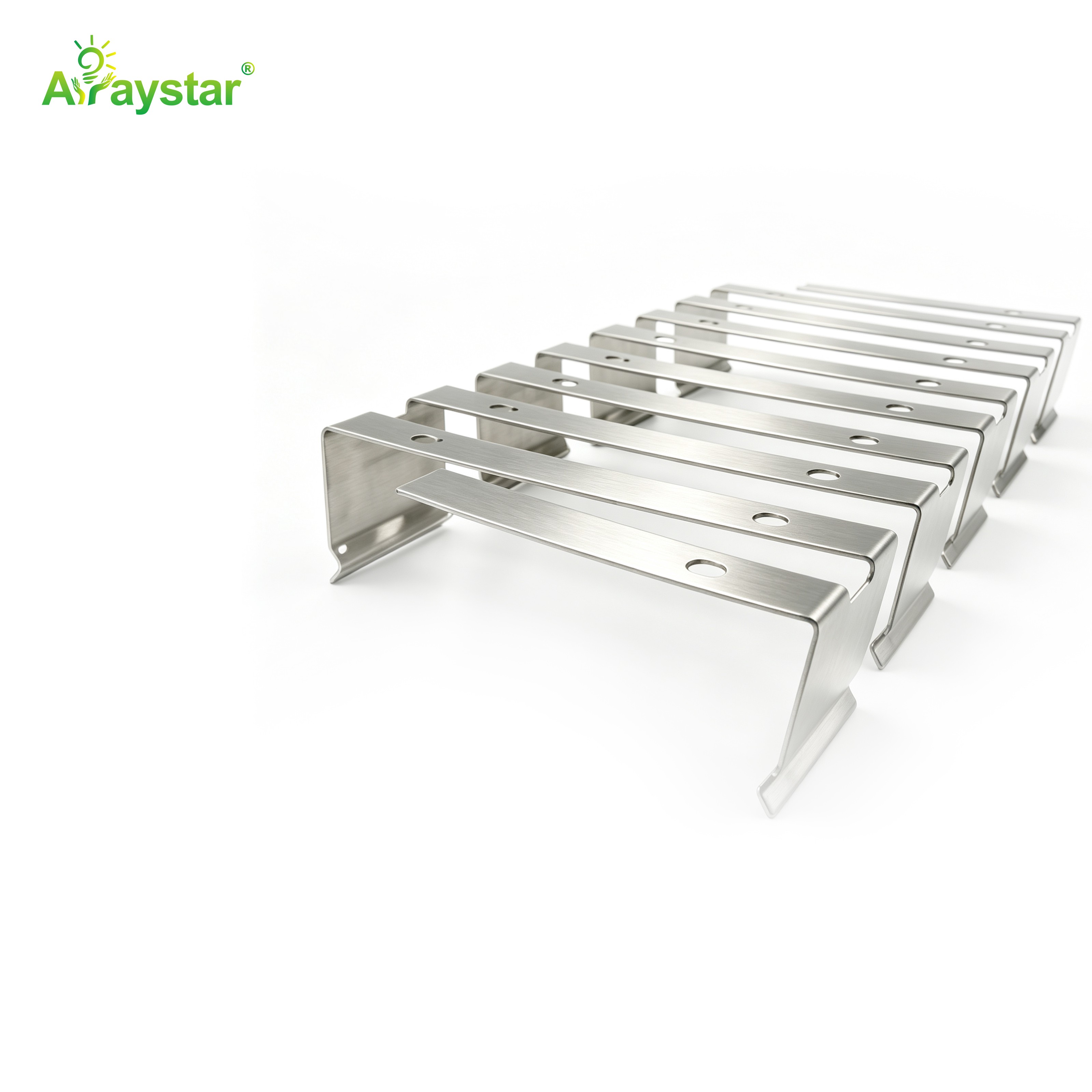
For wide neon bodies and very long architectural runs, individual clips spaced apart can allow the neon to move or sag between fixings, especially under thermal cycling. A continuous stainless flexible rail cradles the neon along its full length, giving uniform support and heat dissipation while still following curves.
The ART-6025/6030 stainless steel flexible rail is designed for the wider 6025/6030 neon used on large building outlines and architectural features, holding the body continuously so long straight runs stay pin-straight and curves stay smooth. The rail also creates a clean mechanical mounting surface that's fixed to the structure, into which the neon is pressed - faster and more reliable than dozens of individual screws on site.
Spacing, Thermal Movement and Environment
- Use stainless (not plated steel) in coastal/humid areas to avoid rust stains.
- Space clips closer on horizontal overhead runs and in high-wind locations.
- Allow for thermal expansion - don't pin neon so tightly it can't move.
- Continuous rails for wide/long neon; individual clips for small interior signs.
- Use stainless screws/anchors matched to the substrate (concrete, wood, metal).
- Add end caps/retention so neon can't slide out of the mounting horizontally.
Thermal expansion is the subtle killer: neon and its mounting expand and contract at different rates across temperature swings, so rigidly trapping a long run can buckle it. Quality clip and rail systems allow slight longitudinal movement while retaining the body laterally - install to the manufacturer's spacing and don't over-tighten.
Installation Best Practice
Fix the stainless rail or clips to the substrate first with appropriate anchors, press the neon into the mounting (adhesive backing is a secondary aid, never the primary mount outdoors), fit end caps and any corner pieces, and confirm the neon can't slide or lift at any point. Pre-fabricate straight and curved sections where possible to speed facade work and improve consistency.
Inspect the first few meters after installation and again after a season of temperature cycling - exterior neon that's been mounted in stainless hardware correctly should need no attention, while plastic-clip installs typically begin failing within the first year. The cheapest insurance in neon work is the metal you barely see.
Recommended Products
Frequently Asked Questions
What mounting clips should I use for outdoor neon flex?
Stainless steel clips or continuous flexible rails matched exactly to the neon body size - the ART-1212 for 12x12 neon, ART-1220 for 12x20, and the 6025/6030 stainless rail for wide architectural neon. Stainless won't rust-stain the facade or turn brittle from UV like plastic clips, and it retains the neon through thermal cycling and wind.
Why do plastic neon clips fail outside?
Plastic clips degrade under UV, become brittle, lose grip through repeated thermal expansion and contraction, and non-stainless alternatives rust and stain the facade. Wind and vibration then let the neon sag, lift or pop off. Stainless steel hardware resists UV, corrosion and temperature cycling, holding the run for years.
Should I use individual clips or a continuous mounting rail?
Use individual stainless clips for small signs and short runs, and a continuous stainless flexible rail for wide neon bodies and very long architectural runs - the rail cradles the neon along its full length, preventing sag between fixings, improving heat dissipation and staying pin-straight, while still following curves.
How far apart should neon mounting clips be spaced?
Follow the manufacturer's spacing for the body, and tighten the spacing on horizontal overhead runs, in high-wind locations and on curves where gravity and movement load the clips most. Use stainless anchors suited to the substrate, fit end caps to stop lateral sliding, and allow slight longitudinal movement for thermal expansion rather than pinning the run rigidly.
Does neon flex expand and contract with temperature?
Yes - the neon body and mounting move at different rates across temperature swings, so trapping a long run completely rigid can buckle it. Quality stainless clip/rail systems retain the neon laterally while allowing slight longitudinal movement; install to the specified spacing, don't over-tighten, and provide end retention so it can't slide out.
Need help with your LED project?
Get factory-direct pricing, free samples and engineering support within 24 hours.
Email: info@arraystarled.com | Phone: +86-0755-2103-6746 | WhatsApp: 0086 1581 8514 077
Need to size your power supply? Use our LED Strip Power Calculator to find the right driver in seconds.







