Flexible Profile on Curved Walls: Minimum Curve Radius
- 2026-10-28 10:04
- /
- Arraystar LED
Flexible aluminium channels bend, but every one has a minimum radius printed on the datasheet that installers ignore at their peril. I have cracked a diffuser and kinked a strip by trying to bend a straight profile around a pillar tighter than it wanted to go.
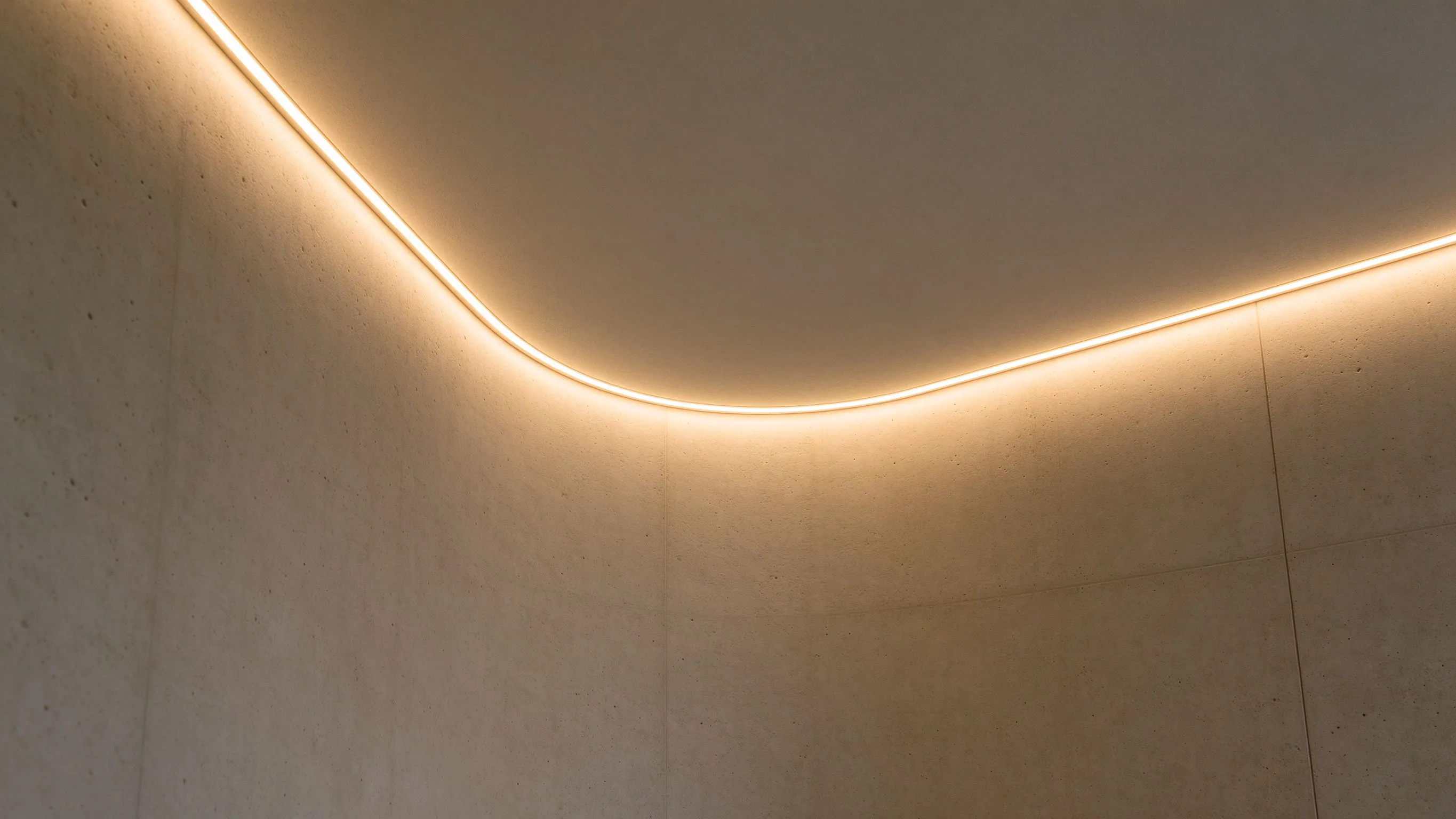
What a flexible profile actually is
A bendable or flexible LED channel has scored or slotted walls, or a thin serpentine extrusion, that lets you curve it gently along a wall. It is not a rubber hose; it is still aluminium, and it still has a minimum radius below which the walls kink and the diffuser will not seat. The datasheet number is a hard limit, not a suggestion.
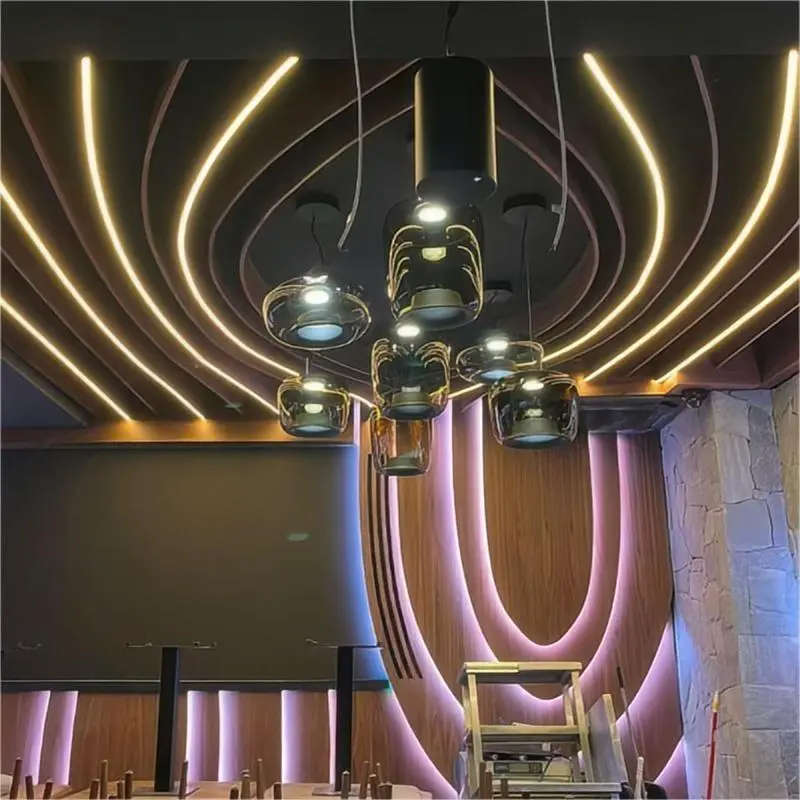
On a curved feature wall in a restaurant, I tried to bend a rigid 20 mm channel around a column to save buying a flexible one. The wall side crinkled, the diffuser popped out at the tightest point, and the strip PCB creased and died halfway round. We ended up ripping it out and starting with the correct bendable profile. Cheap lesson, visible mistake.
The limits I respect
- Minimum bend radius per datasheet, typically 50 to 150 mm depending on profile.
- Diffuser must stay seated; if it lifts at the bend, the radius is too tight.
- Strip itself needs its own radius, usually 30 to 50 mm for 8 mm SMD.

Choosing the radius for the wall
Before I order, I measure the actual wall curve with a flexible tape and calculate the radius. A wall that looks gently curved on a pillar can be tighter than it appears. If the measured radius is close to the profile minimum, I either step down to a smaller profile (which bends tighter) or break the curve into segmented straight pieces.
Smaller profiles bend tighter; match channel size to the measured wall.
| Channel size | Typical min radius | When to go segmented |
|---|---|---|
| 10-14 mm | 50-80 mm | Under 50 mm. |
| 17-20 mm | 80-120 mm | Under 80 mm. |
| 25-30 mm | 120-180 mm | Under 120 mm. |
| Any, very tight | N/A | Use corner / flex strip instead. |
Installing the bend so it stays seated
I bend the profile slowly by hand around a former, not by forcing it in place. Once it holds the curve loosely, I fix the centre clip first and work outward, easing the channel into each clip rather than levering it. Clipping the ends down first pulls a kink into the middle. The diffuser goes in last, after the channel is fixed and settled.

Clip spacing and the diffuser on a curve
On a straight run I space clips every 400 to 500 mm. On a curve I halve that, to 200 to 250 mm, because the channel wants to spring back to flat. Tighter clips hold the radius and stop the diffuser lifting at the apex. I also warm the diffuser slightly with a heat gun on low before pressing it in around a tight bend, so it flexes rather than snaps.
When to abandon the bend and segment
Some curves are simply too tight for any flexible channel, and that is fine. I build the curve from short straight pieces cut at small angles, like a polygon, and join them with a flexible strip tail on the inside. It reads as a smooth curve from a metre away and avoids fighting physics. Nobody on the client side notices the joints; they only notice the kinked, cracked mess you get by forcing it.
Before I commit a curve on site, I make a template from thin plywood or cardboard to the measured radius and bend the channel on the bench first. That lets me check the diffuser seats and the strip bends without kinking before I climb the ladder. If the bench test fails, I know to segment the run before any drilling starts. A template costs me ten minutes and saves a day of remedial patching on a feature wall the client has already photographed for social media. Measure twice, bend on the bench once.
Recommended Products
Frequently Asked Questions
What is the minimum bend radius for a flexible LED profile?
It is printed on the datasheet and ranges from about 50 mm on slim 10-14 mm channels to 150 mm on larger 25-30 mm extrusions. If the measured wall curve is tighter than that number, step down to a smaller profile or build the curve from segmented pieces.
Can I bend a rigid LED channel around a curved wall?
Not without risk. Rigid aluminium will kink, the wall side crinkles, and the diffuser will not seat. Buy a purpose-made flexible or bendable profile sized to the wall radius. Trying to force a straight extrusion saves money once and costs you the whole run.
Will the LED strip bend around a curved channel?
A standard 8 mm SMD strip needs a 30 to 50 mm minimum bend radius on its soldered side, roughly. If the channel curve is tighter than that, route the strip through a short flexible tail or COB segment rather than kinking the PCB, which kills LEDs.
How should clips be spaced on a curved channel?
Halve the normal spacing. On a straight run I use 400-500 mm centres; on a curve I drop to 200-250 mm because the aluminium wants to spring back to flat. Fix the centre clip first and work outward, easing the channel in rather than levering it.
When should I segment a curve instead of bending one channel?
When the measured radius is below even the smallest flexible profile can handle, typically under 50 mm. Build the curve from short angled straight pieces joined by a flexible strip tail on the inside. It reads smooth from a metre away and avoids cracking the diffuser.
Need help with your LED project?
Get factory-direct pricing, free samples and engineering support within 24 hours.
Email: info@arraystarled.com | Phone: +86-0755-2103-6746 | WhatsApp: 0086 1581 8514 077
Need to size your power supply? Use our LED Strip Power Calculator to find the right driver in seconds.