Wiring Out of Aluminum Profile End Caps: Grommet or Slot?
- 2026-10-28 10:04
- /
- Arraystar LED
The end of an LED channel is where water enters a run, and the wiring exit is the weakest point. I have seen perfectly good IP65 channels fail because a wire was pushed through a hole in the end cap with no grommet. The exit method decides the whole weatherproofing.
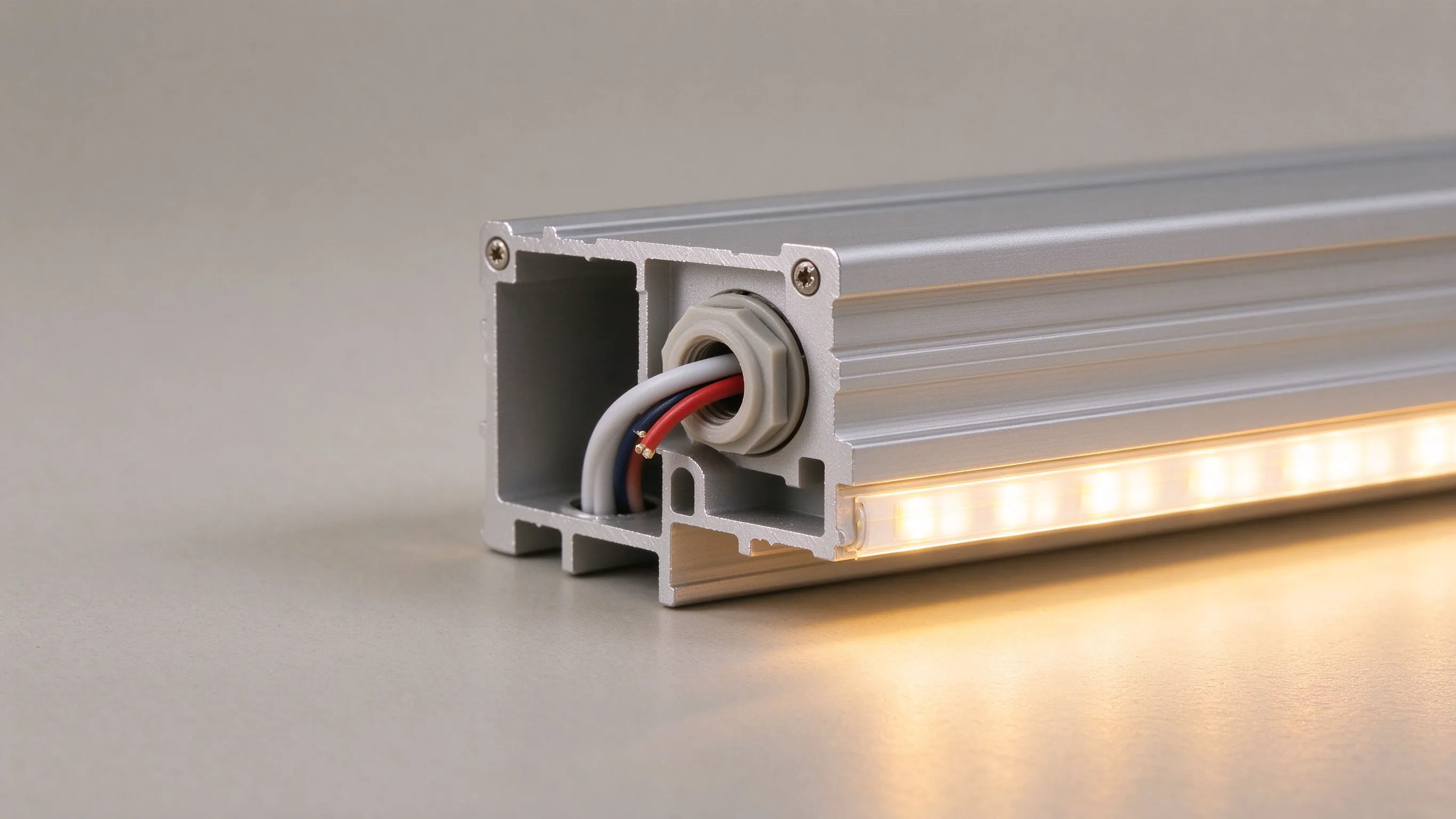
The end cap is a weatherproof joint
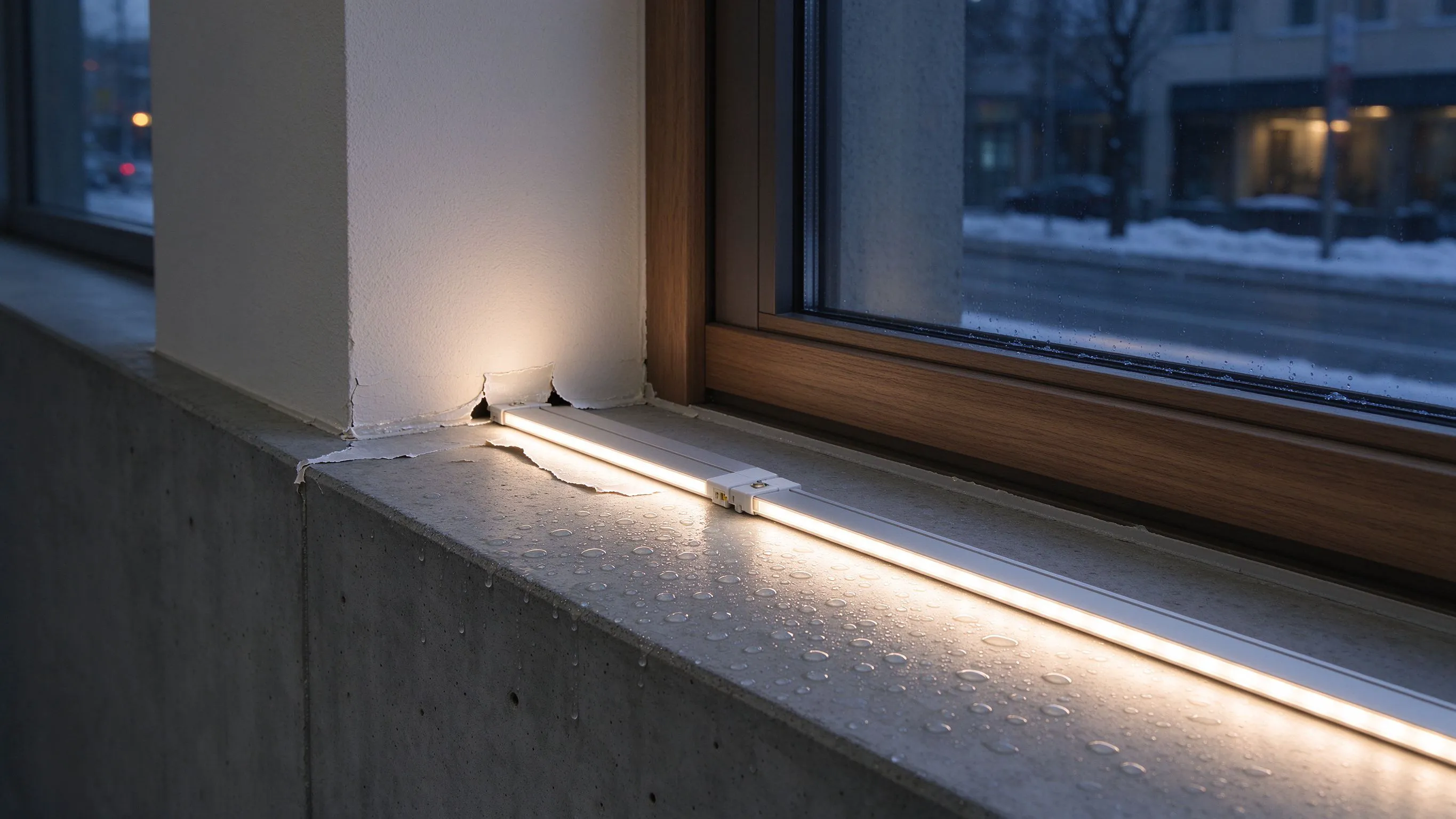
People treat end caps as a cosmetic cover that clips on. On an exterior or damp job the end cap is actually a sealed enclosure, and every wire that leaves the channel needs a rated exit. A plain hole drilled through the cap lets rain run down the wire, into the aluminium trough, and straight onto the LED contacts. That is a failure waiting for a storm.
On a covered walkway I inherited, the previous fitter had drilled a 6 mm hole in each end cap and fed the twin cable through bare. By winter water had sat in the trough, turned the strip contacts green, and one whole three-metre run failed. We re-did every exit with a proper grommet and sealed the trough ends, and it has run dry ever since.
The two exit methods
- Grommet exit: a rubber gland in the end cap, cable pushed through and sealed.
- Slotted exit: a notch in the cap or channel base, used when cable runs along the wall.

Grommet vs slotted exit: when each is right
A grommet (or small PG gland) is the weatherproof choice for any exterior run, or anywhere water can reach the channel end. It grips the cable, seals the hole, and lets the cable exit pointing downward. A slotted exit, where the wire leaves through a notch in the base or side, is fine indoors where the cable runs along the wall; it is not a weatherproof joint and water will follow the slot in.
If water can reach the end, it gets a grommet.
| Situation | Exit I use | Sealing step |
|---|---|---|
| Exterior / exposed | Rubber grommet / PG gland | Bed with neutral silicone. |
| Bathroom / kitchen damp | Grommet, IP65 cap | Silicone around gland. |
| Interior dry, cable along wall | Slotted notch | None needed. |
| Corner power feed | Grommet at end cap | Downward drip loop. |
Routing the cable so water runs away
However the wire exits, it must leave pointing downward, never upward. Water runs along the cable like a wick, and an upward exit invites rain to track straight into the channel. I leave a 50 mm drip loop below the gland so any water on the cable drops off before it reaches the entry point.
Sealing the trough and the end cap itself
Even with a good grommet, I run a thin bead of neutral-cure silicone around the outer edge of the end cap where it meets the aluminium. Acetic-cure silicone eats aluminium over time, so I am strict about neutral. On truly exposed runs I also back-fill the trough end with a small amount of clear potting compound around the wires, so there is no open cavity for water to sit in.

The end-cap checklist before switch-on
On every external or damp install I run through the end caps twice. The grommet grips the cable with no slack play, the exit points down, there is a drip loop, the cap edge is beaded with neutral silicone, and I have tipped the channel to check no water can sit against the strip. Five minutes on a ladder saves a winter call-out.
I also photograph every end cap I seal, with the cable exit and the drip loop in frame. If a client calls eighteen months later saying a run has gone dark, that photo tells me immediately whether the exit was sealed properly or whether a later decorator pulled the cap off while painting. Most water-entry faults I investigate are actually re-opened joints from another trade, not my original seal, and the record settles it without an argument. A ten-second photo is the cheapest insurance I carry on every job, and it takes no longer than the seal itself. It is that simple on every single job.
Recommended Products
Frequently Asked Questions
How do I seal wires coming out of an LED channel end cap?
Use a rubber grommet or small PG gland in the end cap, sized to the cable, and bed the joint with neutral-cure silicone. The cable must exit pointing downward with a 50 mm drip loop so water runs away rather than tracking into the trough.
Grommet or slotted exit for outdoor LED channels?
Always a grommet or gland for outdoor. A slotted notch is fine indoors where cable runs along the wall, but water follows the slot straight into the trough in rain. On any exposed or damp run the grommet is the only weatherproof option.
Why did my LED channel fill with water?
Usually the wire exit was a bare drilled hole with no grommet, and rain tracked down the cable into the trough. Check the end cap seal, the gland angle, and whether the cable leaves upward. Re-seat with a grommet, point the exit down, and leave a drip loop.
Which silicone should I use around an aluminium channel?
Neutral-cure silicone only. Acetic-cure silicone, the cheap kind that smells of vinegar, corrodes aluminium and brass over months and leaves white powdery deposits. I keep a dedicated neutral-cure tube on the van for every LED channel job.
Should the cable exit from the top or bottom of the end cap?
Bottom, pointing downward. Water wicks along a cable, so an upward exit pulls rain straight into the channel. Exit down, leave a 50 mm drip loop below the gland, and let any water drop clear of the fitting before the cable turns toward the wall.
Need help with your LED project?
Get factory-direct pricing, free samples and engineering support within 24 hours.
Email: info@arraystarled.com | Phone: +86-0755-2103-6746 | WhatsApp: 0086 1581 8514 077
Need to size your power supply? Use our LED Strip Power Calculator to find the right driver in seconds.