
Food-Grade Silicone LED Profiles for Commercial Kitchens and Servery
- 2026-10-09 18:39
- /
- Arraystar LED
Commercial kitchens, serveries and food-prep areas cannot use ordinary LED diffusers: grease, steam and daily pressure washing break them down and create unhygienic traps. A genuine food-grade silicone LED profile is non-porous, washable and certified for food contact, which keeps the light cleanable and compliant. The key is buying certified material, not a tube that merely claims to be 'safe'.
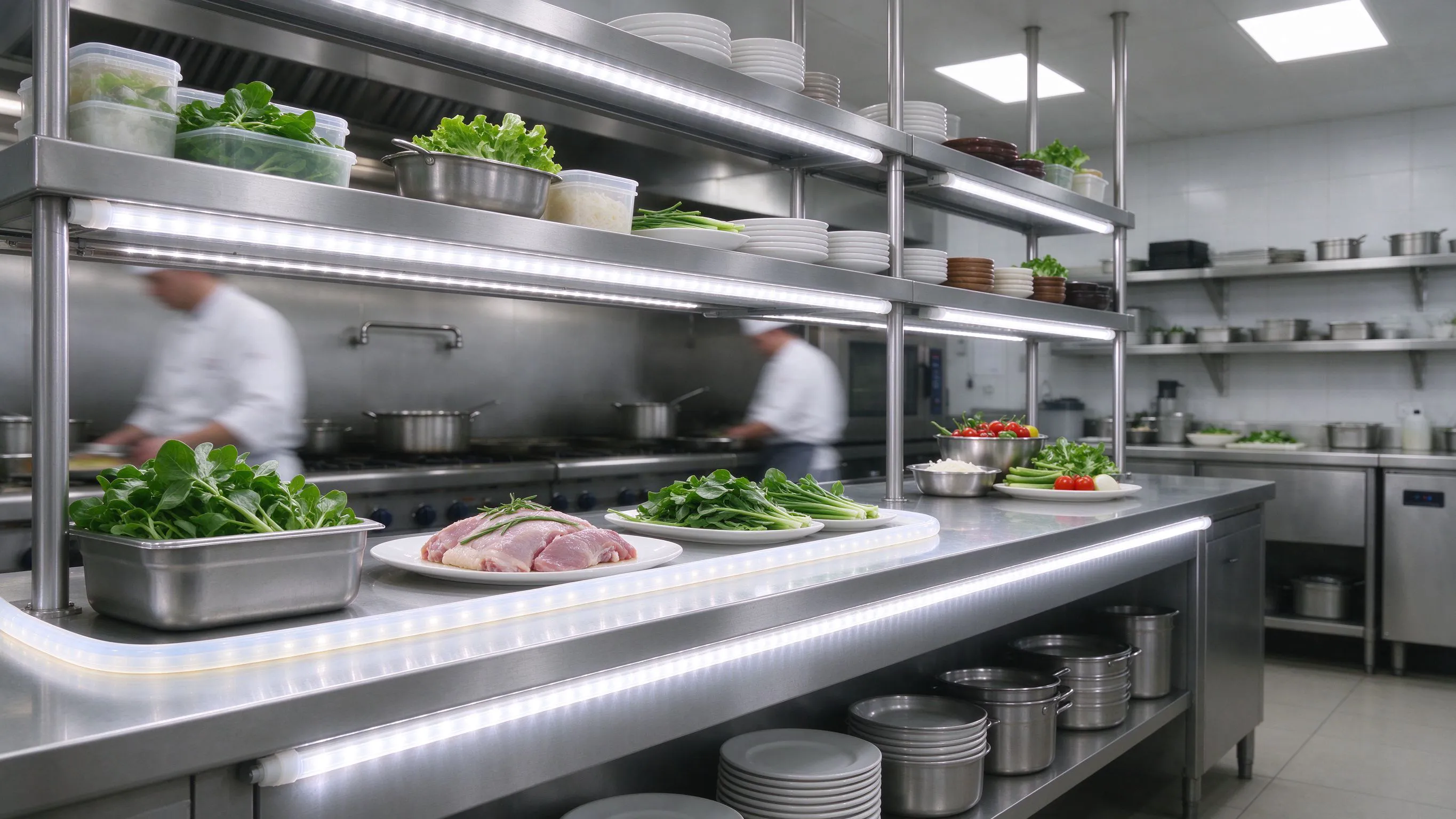
Why a Normal Diffuser Fails in a Kitchen
A standard aluminium channel with a plastic or ordinary silicone diffuser is fine in a dry office. Put it above a fryer or a servery counter and three problems start immediately: grease condenses on and inside the cover, steam-driven temperature cycling loosens joints, and the daily washdown forces water and detergent into every unsealed gap.
Beyond failing mechanically, porous or cracked diffusers become hygiene issues. Food safety inspections look at whether light fittings can be properly cleaned and whether they harbour contamination above open food. A fitting that traps grease over a prep counter is a finding waiting to happen.
What 'Food-Grade Silicone' Actually Means
- Non-porous surface. Food-grade silicone does not absorb grease, oils or flavours the way cheaper polymers can, so it wipes clean.
- Temperature and steam tolerance. It handles the heat cycling above cooking equipment without warping or going brittle.
- Chemical resistance. It survives repeated contact with the detergents and sanitisers used in professional cleaning.
- Certification. Genuine food-contact material is supplied with the appropriate food-contact compliance documentation.
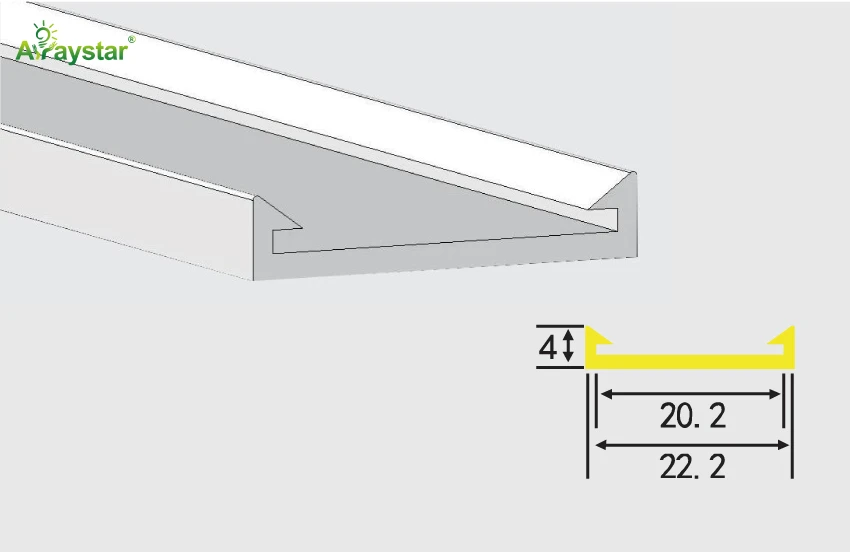
For front-lit task and wash lighting in these areas I use a 20 mm front-emitting food-grade silicone wall-washer profile. The smooth, sealed silicone face has no grooves to catch grease, and the front-emitting geometry puts usable light onto the counter rather than into the cook's eyes.
Where Food-Grade Profiles Belong (and Don't)
Match the fitting to the hygiene and wash-down regime of each zone.
| Area | Food-grade silicone profile | Reason |
|---|---|---|
| Open food prep / servery counters | Recommended | Directly above exposed food; must be cleanable |
| Dishwashing and wash-down zones | Recommended | Constant water, steam and detergent |
| Commercial kitchen cooking lines | Recommended with rated IP | Heat, grease and pressure washing |
| Dining room and front of house | Not strictly required | Standard diffusers are acceptable away from food |
| Dry storage and back corridors | Not required | No wash-down or food exposure |
The Certification Question I Always Ask
Any supplier can write 'food safe' on a quotation. What I ask for is the actual food-contact compliance documentation for the silicone compound, and I check that the certificate applies to the material being supplied rather than a generic marketing statement. Odour is a quick practical tell: genuine food-grade silicone is essentially odourless, while cheap material often smells strongly of plastic straight out of the bag.
I also keep the certification in the project file. If a health or food-safety inspector asks why a particular fitting is used above open food, the answer should be a document, not a verbal assurance from the electrician.
Designing the Light Itself
Colour temperature and rendering
Food prep needs accurate colour so staff can judge freshness and doneness. I favour neutral to cool white in the 3500K to 5000K range for back-of-house prep, with high colour rendering, and warmer light only at the customer-facing servery where appearance and ambiance matter.
Glare control
Stainless steel counters and tiled walls reflect everything, so a diffused front-emitting profile is more comfortable than exposed strip. Where staff look up at the fitting, a frosted face and a slight tilt away from the eye line reduce reflected glare.
Installation for a Wash-Down Environment
- Use the rated IP version and seal every cable entry and end cap; washdown water finds the one unsealed joint.
- Mount with corrosion-resistant stainless fixings, not raw steel clips that rust in steam.
- Slope or position runs so water does not pool on top of the profile.
- Avoid horizontal grooves and exposed channels above open food where grease can collect.
- Make the fitting accessible and removable for deep cleaning rather than sealing it permanently into a trap.
Sourcing and Sampling
I specify the profile size, front-emitting geometry, food-grade silicone, the required IP rating and the need for food-contact documentation all in one enquiry, so there is no ambiguity about what arrives on site. A physical sample lets the kitchen designer confirm the light quality and the facilities team confirm they can actually clean it.
We supply food-grade silicone profiles such as the 20 mm front-emitting washer and can provide the material documentation and a sample for your compliance file before you order the full kitchen fit-out.
Cleaning Routine and What Inspectors Look For
Specifying the right fitting is only half of the job; the kitchen has to be able to keep it clean day after day. I design the run so a member of staff can wipe the entire silicone face as part of the normal end-of-shift wipe-down without needing a tool or a ladder. That usually means continuous smooth runs with the fewest possible joints above open food.
- Wipe exposed silicone with the same sanitiser and cloth used on stainless surfaces; the non-porous face should not need abrasive cleaners.
- Inspect end caps and cable entries periodically, because repeated steam and pressure washing eventually tests every seal.
- Replace any section with torn or lifting silicone immediately rather than letting it collect grease above a prep area.
- Keep the food-contact certificate and the IP specification with the kitchen's equipment compliance records.
During health and food-safety inspections the questions are predictable: can the light fitting be cleaned, does it trap debris above exposed food, and is it sealed against the wash-down regime? A smooth, certified food-grade silicone profile with sealed entries answers all three on sight, which is considerably easier than explaining a grooved plastic diffuser that has clearly been collecting grease. Documenting the fitting at handover also protects the installer if the kitchen later modifies the lighting with non-compliant parts.
Recommended Products
Frequently Asked Questions
Can I use a regular LED diffuser in a commercial kitchen?
Not above open food or in wash-down zones. Ordinary plastic or silicone diffusers trap grease, let steam and water into unsealed joints and cannot be properly sanitised. Use a certified food-grade silicone profile with the correct IP rating in prep, servery and dishwashing areas.
How do I prove the silicone is genuinely food-grade?
Ask the supplier for the food-contact compliance certificate for the actual silicone compound and keep it in the project file. Genuine food-grade silicone is also odourless; a strong plastic smell or a verbal 'food safe' claim with no documentation is not sufficient above open food.
What IP rating do kitchen LED profiles need?
It depends on the cleaning regime. Areas that receive direct pressure washing or constant steam need a high IP rating with fully sealed cable entries and end caps; drier front-of-house areas can use less. Specify the IP rating to match how the area is actually cleaned.
What colour temperature is best for food prep lighting?
Back-of-house prep usually suits neutral to cool white around 3500K to 5000K with high colour rendering so staff can judge freshness accurately. Customer-facing serveries often use warmer light to make food look more appealing.
How should food-grade LED profiles be mounted?
Use stainless corrosion-resistant fixings, seal every cable entry and end cap, angle runs so water does not pool on top, and avoid grease-collecting grooves above open food. Keep the fitting removable so it can be deep cleaned rather than sealed into a permanent trap.
Need help with your LED project?
Get factory-direct pricing, free samples and engineering support within 24 hours.
Email: info@arraystarled.com | Phone: +86-0755-2103-6746 | WhatsApp: 0086 1581 8514 077
Need to size your power supply? Use our LED Strip Power Calculator to find the right driver in seconds.







