
Wall-Washer Neon Tubes for Facades: Beam and Setback Distances
- 2026-10-09 18:39
- /
- Arraystar LED
A wall-washer neon tube only delivers an even facade wash if you give it the right beam angle, setback distance and run spacing. Mount it flush against the wall and you get a bright band at the base with a dark top; pull it too far away and the light never reaches the upper floors. I treat setback and tilt as calculated values, not things to adjust by eye on site.
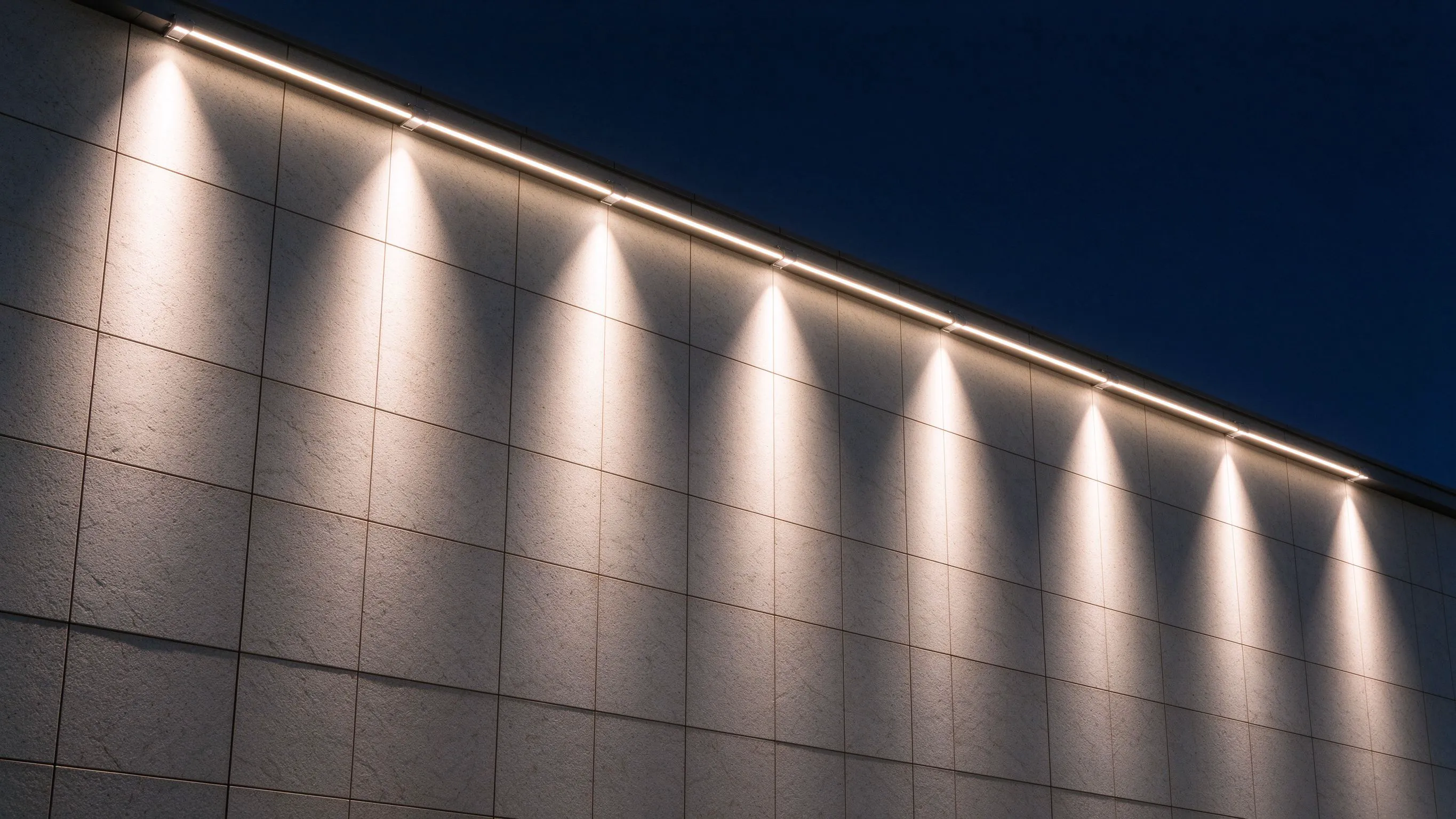
What Makes a Tube a 'Wall Washer'
A standard neon tube emits light radially, which is perfect for outlining a letter but useless for washing a wall. A wall-washer tube is shaped to direct most of its light in one direction through an asymmetric or angled emitting window, so the beam travels up or across the surface instead of spilling equally in every direction.
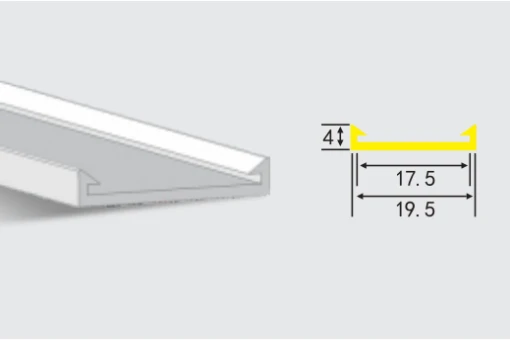
On facade work I reach for a dedicated profile rather than tilting an ordinary tube with brackets. The ART-NT17WL wall-washer tube is built around that asymmetric beam, which means the light is already aimed when the tube is mounted straight; I am not fighting the optic with makeshift angles.
The Three Numbers That Decide the Result
- Beam angle. A narrower throw reaches higher with more punch; a wider beam covers more width but runs out of height sooner. Tall, narrow facades want a tighter asymmetric throw.
- Setback (offset from the wall). This is the distance between the tube face and the surface. Too close concentrates the light at the bottom; the correct offset lets the beam open up as it climbs.
- Run spacing. For horizontal washes, the gap between parallel runs controls overlap. Underlap leaves dark stripes; excessive overlap wastes product and creates hot bands.
A Starting-Point Setback Table
Exact figures depend on the optic, wattage and surface reflectance, so treat the table below as the field starting point I begin with before fine-tuning on a night mock-up. Always confirm with the specific product's photometric data where available.
Starting offsets; verify on a night-time mock-up.
| Facade height to wash | Typical setback from wall | Notes |
|---|---|---|
| 1-2 storeys (3-6 m) | 10-20 cm | A single ground-level run often suffices |
| 3-5 storeys (9-15 m) | 20-40 cm | May need a tighter beam or intermediate runs |
| 6+ storeys (18 m+) | 40 cm+ / staged runs | Plan multiple runs at floor lines; one throw rarely reaches the top |
| Interior feature wall (2.5-4 m) | 8-15 cm | Wider beam is fine; brightness can be lower |
The mistake I see most is mounting the tube at 30 to 50 mm off the wall because it looks tidy against the cladding. At that offset even a good asymmetric optic cannot open up, and the lower metre of the facade is blown out while the third floor is dark. Pulling the run out on small stand-offs is usually the single biggest improvement.
Spacing Parallel Runs Without Stripes
When a facade needs more than one horizontal wash, I space the runs so the edge of one beam overlaps the next rather than meeting it at a hard line. A useful habit is to aim for roughly 30 to 50 percent overlap at the surface. On smooth, light cladding you can push runs further apart; dark brick or textured stone absorbs light and needs tighter spacing and higher output.
- Light, smooth surfaces reflect more and forgive wider spacing.
- Dark, rough or porous facades need closer runs and more wattage per metre.
- Always commission at night with the intended dimmer level; daytime aiming is guesswork.
Powering Long Facade Runs Evenly
Wall-washer tubes on tall buildings run long distances, which brings voltage drop straight back into the problem. A run that is bright at the feed end and dim at the far end produces a visibly sloping wash, exactly the opposite of the uniform facade the architect wants.
- Favour higher-voltage or long-run product for continuous horizontal lines.
- Feed from both ends or inject power at planned intervals on long runs.
- Keep all runs on a facade matched for product batch and wattage so brightness is consistent.
- Use dimmable, flicker-free drivers on any facade that will be dimmed for scenes.
Weather, Aiming and Maintenance Access
Facade gear lives outside for years, so I specify the correct IP rating, UV-stable silicone and corrosion-resistant clips from the start. I also think about how the tube will be re-aimed or cleaned: a perfectly aligned washer that nobody can reach to service will drift out of position and stay that way. Stand-offs and brackets should lock the tilt but allow access with a ladder or lift at ground-accessible points.
How I Commission a Facade Wash
- Install one trial run at the proposed setback and power it at night before fitting the rest.
- Photograph the wash from across the street and from the building's approach angles.
- Adjust offset and tilt until the lower band is not blown out and the top target is reached.
- Lock the bracket geometry, then replicate the identical setback on every run.
- Walk the full facade at the end to catch any dim far-end runs caused by voltage drop.
We supply the NT17WL and related wall-washer profiles along with the long-run and high-voltage options tall facades need. Send the facade height, cladding colour and a section drawing showing available setback, and we can recommend the profile, run spacing and power layout rather than you discovering it at night on site.
Wall Washing vs Wall Grazing: Pick the Effect First
Clients often ask for a wall washer when what they actually want is wall grazing, and the two effects are specified in opposite ways. Washing is about flooding a smooth surface with even light from a moderate distance so the whole wall reads at a similar brightness. Grazing is about placing the light very close to a textured surface so raking light exaggerates every bump and joint, which is how you make stone, brick or a feature panel look dramatic.
- Even wash on smooth render or large areas: greater setback, wider beam, lower contrast.
- Grazing on stone, brick or textured panels: minimal setback (often 10-30 cm), tight beam, high contrast to reveal texture.
- Signage halo or perimeter glow: controlled close offset aimed at the wall behind the letters.
I have been on sites where a grazing tube was mounted 40 cm off a smooth painted wall, which produced a weak, muddy wash with none of the texture drama the designer expected, and on others where a washer was jammed against rough stone, creating harsh shadows instead of the clean even facade they wanted. Decide which effect the surface deserves, then choose the tube geometry and setback to produce it. The NT17WL is a washer first; for deliberate grazing I reach for a tighter-beam product and mount it deliberately close.
Recommended Products
Frequently Asked Questions
How far from the wall should a wall-washer neon tube be?
As a starting point, roughly 10-20 cm for a one to two-storey wash, 20-40 cm for three to five storeys and 40 cm or more (or staged runs) for taller facades. Mounting the tube flush against the wall causes a bright base band and leaves the top dark, so always confirm offset on a night mock-up.
What beam angle is best for washing a tall building?
Tall, narrow facades benefit from a tighter asymmetric throw that carries the light upward, while shorter interior feature walls can use a wider beam at lower brightness. Match the optic to the height and confirm reach with photometric data or a trial run.
Why is my wall wash bright at the bottom and dark at the top?
That pattern almost always means the tube is mounted too close to the wall or aimed straight out instead of upward. Increase the setback with stand-offs, tilt the asymmetric beam toward the top of the facade, and check that the run is not suffering voltage drop at the far end.
How far apart should horizontal wall-washer runs be?
Space parallel runs so their beams overlap by roughly 30-50 percent at the surface. Light, smooth cladding allows wider spacing; dark brick or textured stone absorbs light and needs closer runs and higher wattage per metre.
Can one neon run wash a six-storey building?
Rarely evenly. Beyond about three to five storeys a single ground-level throw runs out of reach, so tall facades are usually washed with staged runs at floor lines, a tighter beam and greater setback. Long-run or higher-voltage product also helps keep the horizontal lines uniform.
Need help with your LED project?
Get factory-direct pricing, free samples and engineering support within 24 hours.
Email: info@arraystarled.com | Phone: +86-0755-2103-6746 | WhatsApp: 0086 1581 8514 077
Need to size your power supply? Use our LED Strip Power Calculator to find the right driver in seconds.







