
Hotel Guestroom & Corridor LED Strip Lighting: Cove, Reading, Nightlight and Control Layers
- 2026-09-29 12:07
- /
- Arraystar LED
Hotel lighting is judged on comfort at 11pm and how easy it is to find your room at midnight, not on daytime brightness. Guestrooms need layered, warm-dimmable cove and reading light with a low night mode; corridors need calm wayfinding with gentle presence response. The winners use seamless trimless details, warm dim behavior and hidden controls that guests can't mis-adjust - all specified to survive years of 24/7 operation.
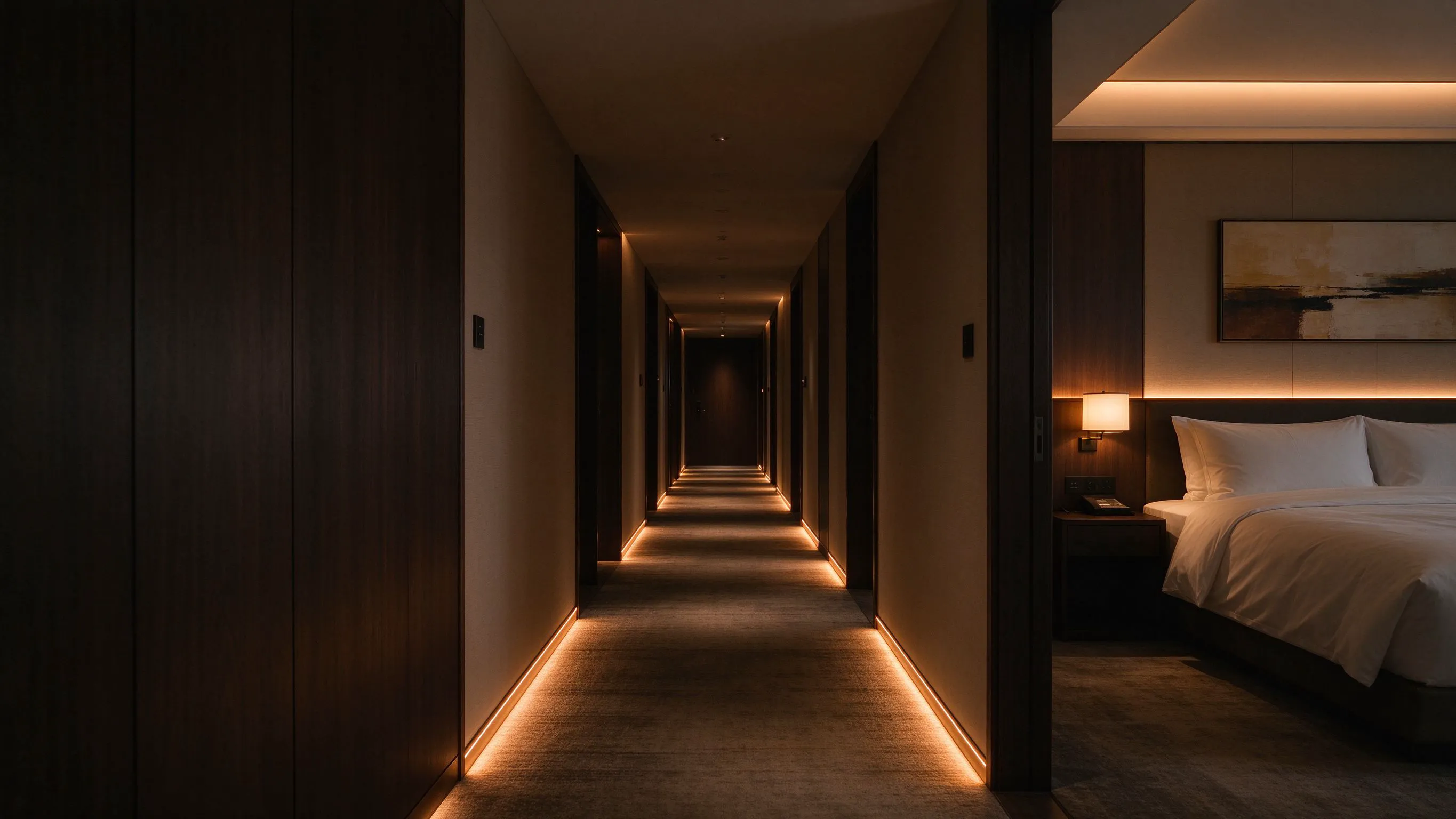
A Guestroom Has Three Lighting Moments, Not One
A guest uses the room differently through the stay: bright functional light on arrival and while working, warm relaxed light in the evening, and a tiny amount of guidance light overnight. A single ceiling fixture on one switch fails all three. The hotel approach is layered light on simple scene presets so guests get 'bright', 'cozy' and 'night' without thinking.
Guestroom scenes that map to real stays.
| Scene | CCT / level | Layers active |
|---|---|---|
| Arrival / work | 3500-4000K, 200-300 lux | General + desk + reading |
| Evening / relax | 2700K, 100-150 lux | Cove + bedside + accent |
| Bedtime reading | Warm, localized | Reading only, rest dim |
| Night mode | 2200K+, <20 lux at floor | Footlight / bathroom path |
Ceiling Cove: The Glow That Makes Rooms Feel Expensive
Perimeter cove light - a continuous strip hidden in a ceiling recess or behind a bulkhead - is the signature of upscale rooms because it produces soft, shadowless ambient with no visible fixtures. Dot-free COB in a trimless or cove profile gives a seamless line; dimmable warm-white lets housekeeping or the guest scene set the mood. Keep it indirect so a guest lying in bed never sees the source.

Bedside and Reading Light: Warm, Adjustable, No Glare
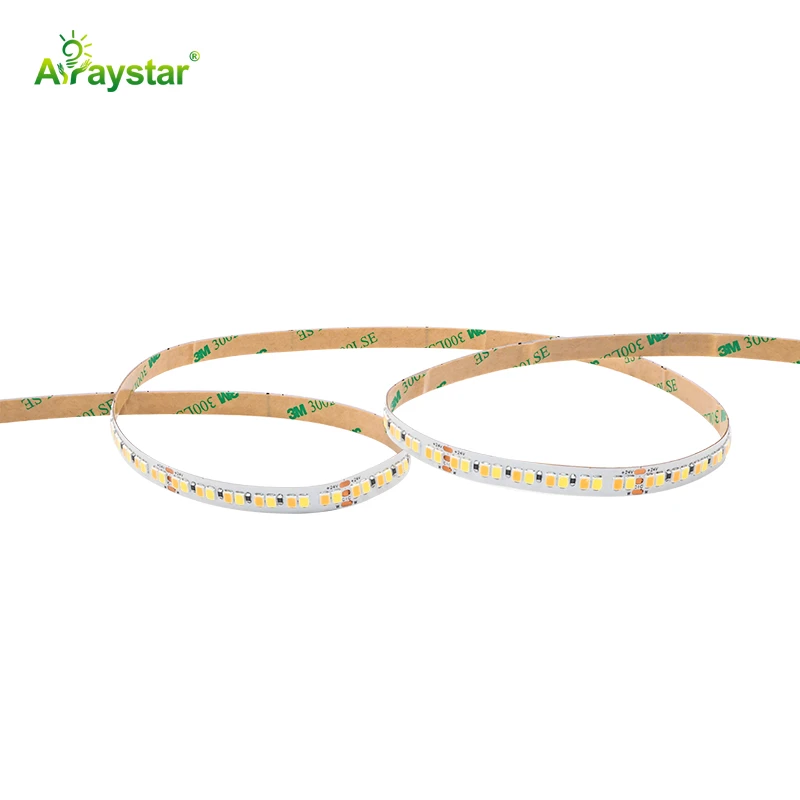
Reading in bed is the most demanding local task in the room. Guests need a warm, focused beam on the book or tablet that doesn't light up the whole bed or a sleeping partner. Headboard-mounted adjustable readers, or tunable strip behind the headboard, give each side independent control. Tunable-white strip lets the same fixture do soft warm ambient and brighter neutral reading.
- Independent control per side of the bed - non-negotiable for double rooms.
- Shield or aim readers so the beam hits the reading material, not the partner's eyes.
- Warm 2700K for reading; cooler light at night delays sleep and draws complaints.
- Put switches within easy reach of the pillow, plus a master 'all off'.
Night Mode: The Detail That Earns Five-Star Reviews
Guests wake disoriented in a dark, unfamiliar room. A very low warm night-light - under the bed frame, along the skirting, or in the bathroom corridor - lets them navigate to the bathroom without switching on a blinding main light and fully waking. It's a small detail that gets mentioned repeatedly in reviews precisely because so many hotels miss it.
- Foot-level warm (2200-2700K) strips at under 20 lux, triggered by a night scene or a low sensor.
- A faint bathroom path light that comes on at night without full bathroom brightness.
- Under-bed strips that gently illuminate the floor around the bed.
- Keep night light warm and shielded - never cool white at floor level at 2am.
Corridors: Calm Wayfinding, Not an Office Hallway
Hotel corridors are long, windowless and often over-lit to a cold office brightness that works against the guest experience. Continuous warm cove or skirting light guides the eye to room doors, with gentle presence control lifting levels as someone walks the hall. Mark each door with a soft pool of light so guests find their room number without squinting.
- Warm 2700-3000K continuous cove or baseboard line for a calm, guided feel.
- Bi-level presence control: dim standby, brighter as a guest approaches their door.
- A small accent at each door number; consistent spacing prevents a 'cave' rhythm.
- Avoid glare from exposed sources at eye height in a long repetitive corridor.
Controls Guests Can't Mis-Adjust (and Staff Can Reset)
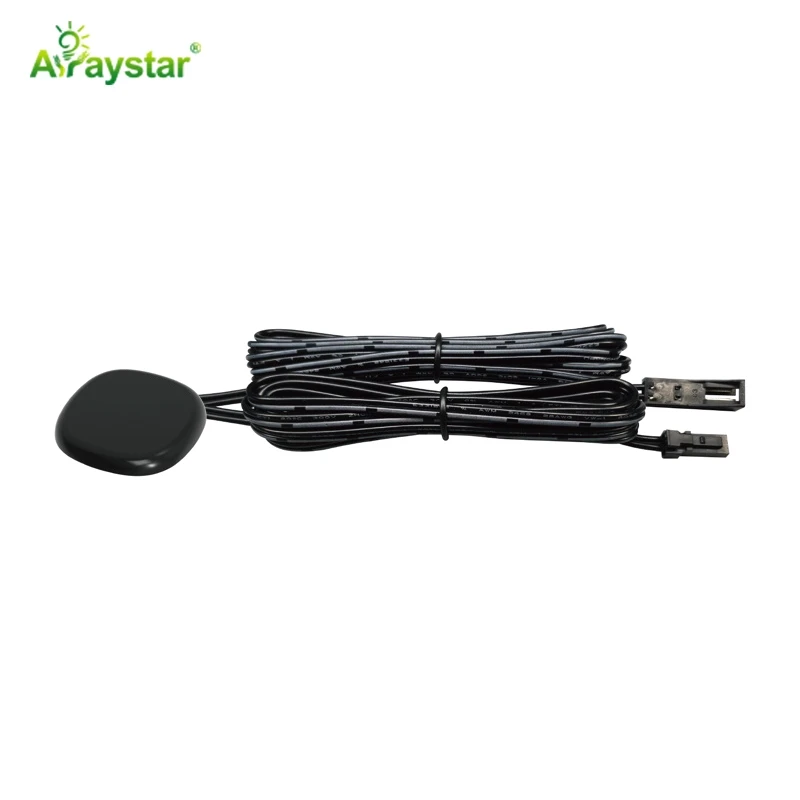
Hospitality controls have to be foolproof. Flush, tamper-resistant touch switches and scene panels replace banks of confusing toggles; behind the scenes the system should return to a default scene after checkout so housekeeping doesn't have to reset lighting in every room. Hidden through-panel touch switches keep the bedside look clean and stop controls being damaged.
- Simple labeled scenes (Welcome / Relax / Night / All Off), not raw channel control.
- Master switch at the bed and at the door; occupancy scene on entry and exit.
- Tamper-resistant, flush fixtures; nothing a guest can pry or accidentally change.
- Networked option lets engineering monitor failed fixtures floor by floor.
Durability and the 24/7 Operating Reality
Hotel lighting runs far longer than residential and is expensive to access once rooms are occupied, so spec for lifespan and serviceability. Quality drivers with thermal margin, cove strips in aluminum channels that act as heatsinks, and drivers located in corridor ceilings or service shafts (not sealed inside guestroom bulkheads) keep maintenance fast and non-disruptive.
- Flicker-free dimming down to low night levels - guests read and film in bed.
- Consistent color binning across rooms so hallways don't show shade patches.
- Serviceable driver locations and standardized spare parts across the property.
- Match the warranty and rated life to the long daily operating hours.
Recommended Products
Frequently Asked Questions
What color temperature should hotel guestroom lighting be?
Warm 2700-3000K for evening and reading, with a brighter 3500-4000K option for arrival and work scenes, and a very dim warm 2200-2700K night mode under 20 lux at floor level. Scene presets let guests move between them without technical controls.
How do I light a hotel room for reading in bed?
Provide each side of the bed an independent, shielded warm (2700K) adjustable reading light aimed at the reading material rather than the partner's eyes, with switches within easy reach of the pillow and a master all-off. Tunable strip behind the headboard can double as ambient and reading light.
Why is night lighting important in a hotel room?
Guests wake disoriented in unfamiliar dark rooms; a very dim warm foot-level light under the bed or along the bathroom path lets them navigate without switching on a harsh main light and fully waking. It's a low-cost detail that consistently improves reviews.
How should hotel corridors be lit?
Use warm 2700-3000K continuous cove or skirting light to guide guests down windowless halls, with soft accent light on each door number and optional bi-level presence control that lifts brightness as someone approaches, avoiding cold over-bright office-style lighting and glare.
What light controls work best for hotel guests?
Simple scene panels or flush tamper-resistant hidden touch switches with Welcome, Relax, Night and All Off, a master switch at bed and door, and a system that resets to a default scene after checkout so housekeeping doesn't have to reconfigure each room.
Need help with your LED project?
Get factory-direct pricing, free samples and engineering support within 24 hours.
Email: info@arraystarled.com | Phone: +86-0755-2103-6746 | WhatsApp: 0086 1581 8514 077
Need to size your power supply? Use our LED Strip Power Calculator to find the right driver in seconds.







