LED Strip CRI R9 Explained: Why Red Rendering Matters
- 2026-09-18 19:03
- /
- Arraystar
Quick Answer
R9 is the special red index inside CRI: it measures how accurately a light renders deep, saturated reds. A positive R9 (ideally > 0, better > 50 or > 90) makes skin look healthy, food look appetising and red fabrics look rich. Many cheap “CRI 80” strips actually score negative R9 — they look bright but wash out reds. For hospitality, retail and skin-facing spaces, ask for CRI Ra 90+ with R9 > 50–90, not just a Ra number.
📑 Table of Contents
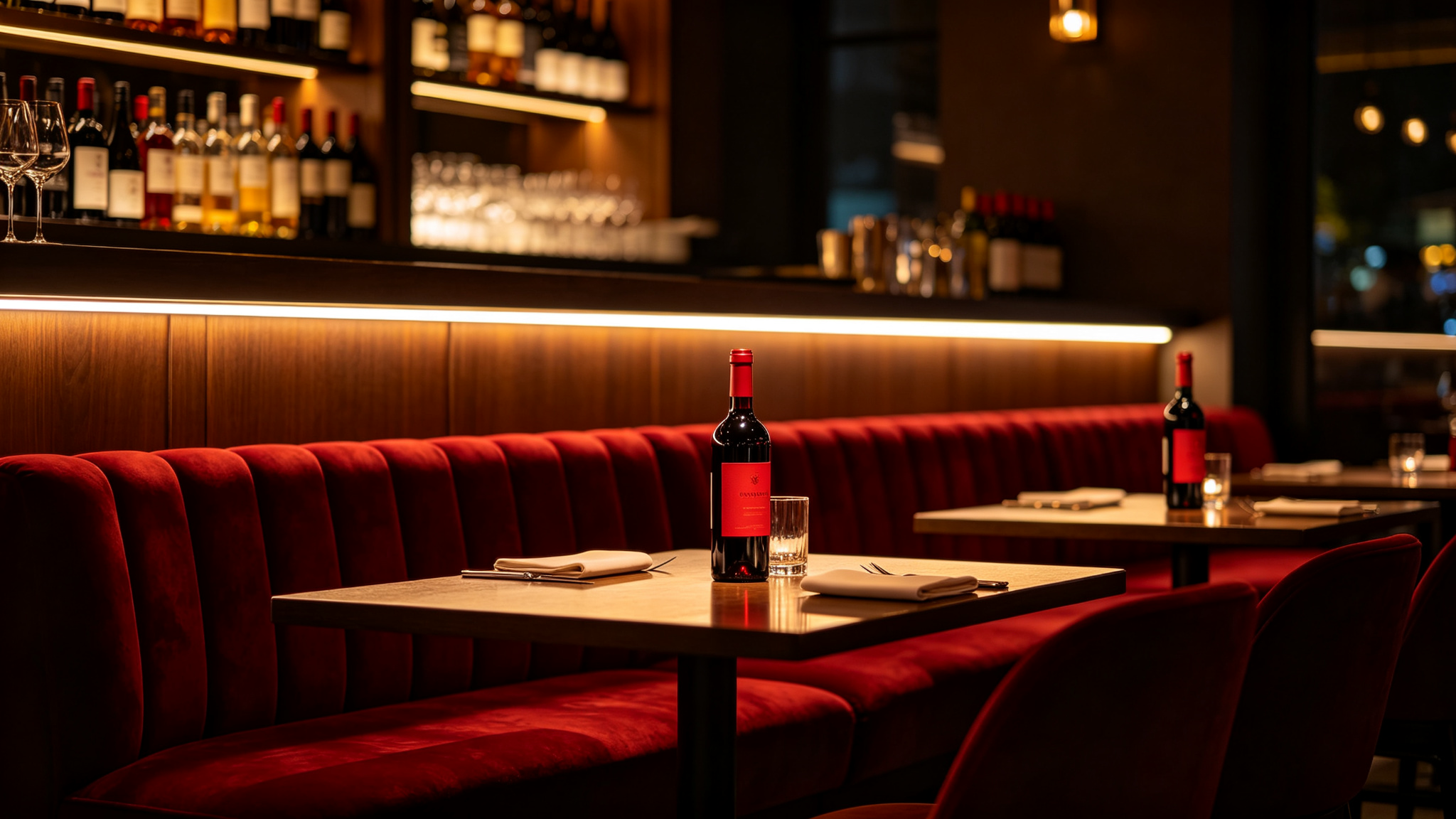
Deep reds and warm tones stay rich under a high-R9 strip — the reason hospitality specifies it.
What CRI R9 Actually Is
CRI (Colour Rendering Index) scores a light against a black-body reference using 14 standard colour samples (TCS01–TCS14). The familiar Ra is the average of the first eight pastel samples (R1–R8). But those eight samples are mostly soft, mid-tone colours — they deliberately exclude the saturated colours that people actually notice most: strong red, deep green, strong blue.
R9 is the ninth sample: a deep, saturated red. Unlike the soft pastels in R1–R8, R9 pushes the red LED phosphor hard. Cheap blue-pump-yellow phosphor strips look white and bright on paper, but their red channel is thin — so on the R9 sample they score negative. That is why two strips can both claim “Ra 80” yet look completely different on a red wall or a human face.
You will also see R13 (natural skin tone) and R12 (strong blue) called out. R9 is the one that most often fails, and the one buyers most often forget to check. For the basics, start with our CRI explainer; this guide goes deep on the red number.

R9 strongly influences how natural — or how grey and washed-out — skin looks under the light.
Why Red Rendering Matters: Skin, Food and Fabric
Red is the colour people unconsciously trust most. It appears in blood under the skin, in meat, wine, ripe fruit, lips, wood stains, burgundy upholstery and brand logos. When R9 is poor, all of these look flat, pinkish-grey or “off”, even though the light still feels bright.
- Skin and beauty: R13 and R9 together decide whether a face looks healthy or sallow. Vanity, hospitality, medical and cosmetics retail need R9 > 50–90.
- Food and retail: tomatoes, steak, cherries and wine must look fresh. A poor-R9 strip makes meat look grey and salads tired — it directly hurts sales in butcheries, restaurants and supermarkets.
- Fashion and fabric: reds, burgundies and prints must match the designer’s intent. Buyers will reject a garment that looks wrong under the store light.
- Wood and interiors: walnut, cherry and mahogany lean red-brown; weak R9 drains their warmth.
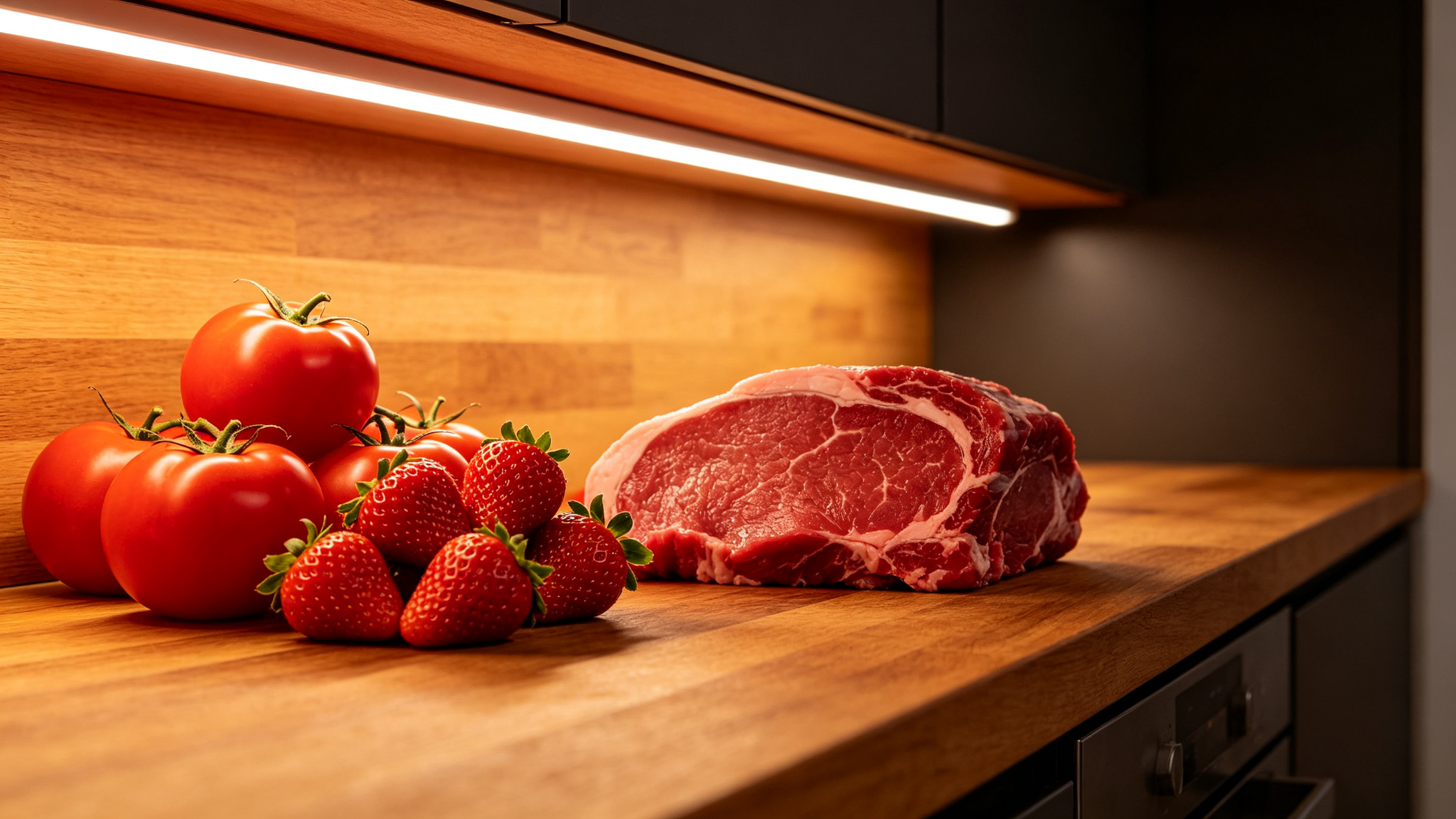
Vivid, natural reds on food are the single most visible payoff of a high-R9 strip.
R9 vs Ra: The Spec Comparison Table
The table shows what a good datasheet should disclose. “CRI” alone is not enough — always ask for the R9 figure and the test standard (usually IES TM-30 or CIE 13.3).
| Specification | Budget Strip | Mid-Range Strip | Premium / Hospitality Strip |
|---|---|---|---|
| Ra (R1–R8 average) | 80 | 85–90 | 90–97 |
| R9 (deep red) | −20 to 0 (often negative) | +30 to +50 | +50 to +90 or more |
| R13 (skin tone) | 80–85 | 88–92 | 92–97 |
| R12 (strong blue) | 70–80 | 85–90 | 90–95 |
| Phosphor approach | Blue + yellow only | Blue + red supplement | Multi-bin red phosphor, COB |
| Visible on red fabric | Washed, brownish | Acceptable | Rich, true |
| Typical use | Backs of shelves, cheap décor | Offices, corridor | Hotels, retail, vanity, food |
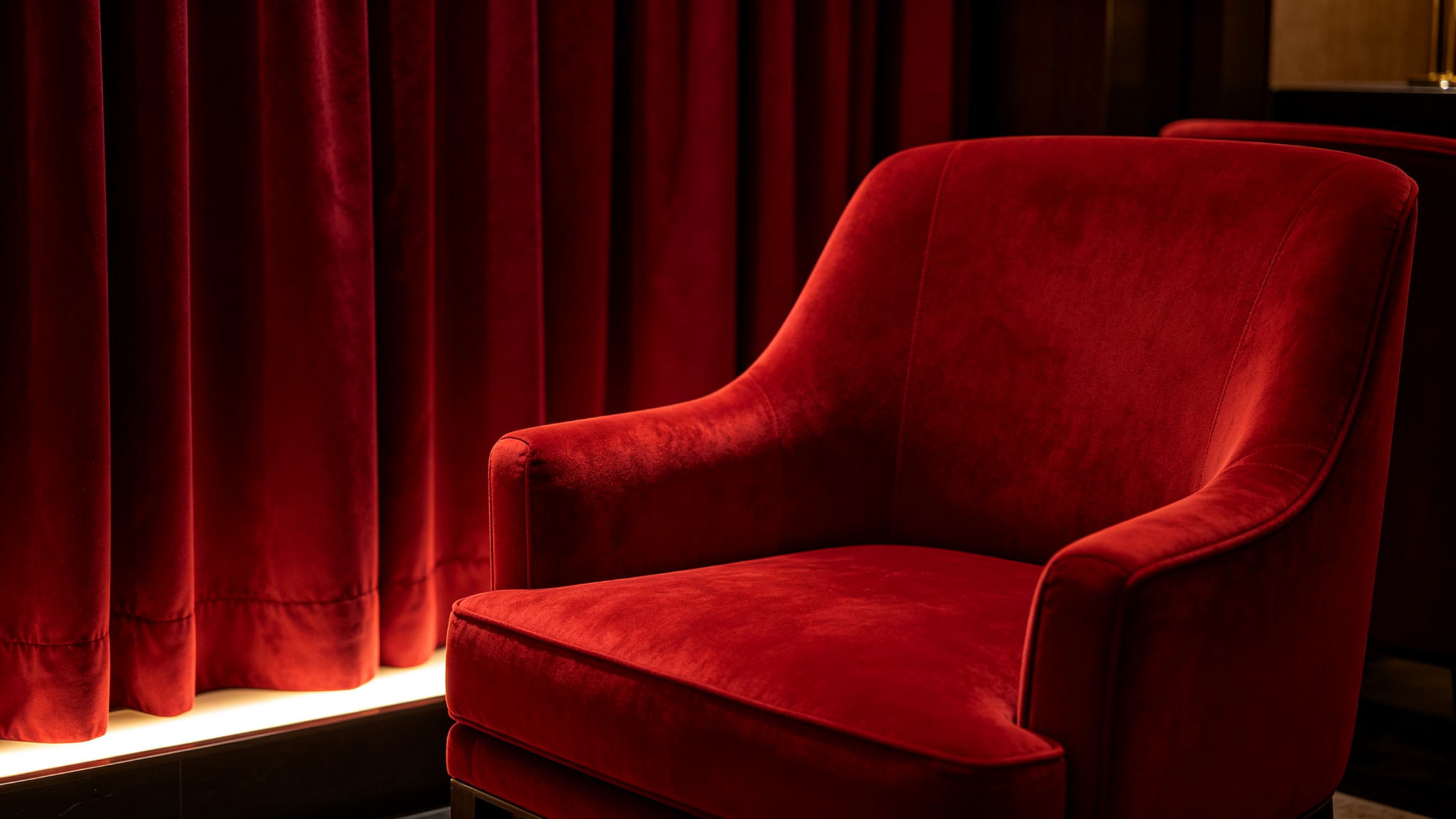
Burgundy fabric stays saturated and luxurious — not muddy — when R9 is high.
How to Read a CRI / R9 Datasheet
A trustworthy supplier lists the individual indices, not just “CRI”. Look for these on the spec sheet or request them before ordering samples:
- Ra / CRI value — the overall number (target ≥ 90 for quality spaces).
- R9 value — the deep-red score (target > 50; > 90 for beauty/food).
- Test standard and CCT — CRI is measured at a given correlated colour temperature; ask for the value at your actual 3000 K/4000 K.
- Measured vs typical — “typical” is a best-case bin; ask for the minimum guaranteed bin.
- TM-30 Rf / Rg — the newer, broader metric; R9 and TM-30 together tell the real story (see our TM-30 vs CRI guide).
Rule of thumb: if a datasheet only says “CRI 80/90” and gives no R9, treat R9 as unknown and ask for the report. In hospitality, retail and vanity work, never specify on Ra alone — specify “Ra ≥ 90, R9 ≥ 50”.
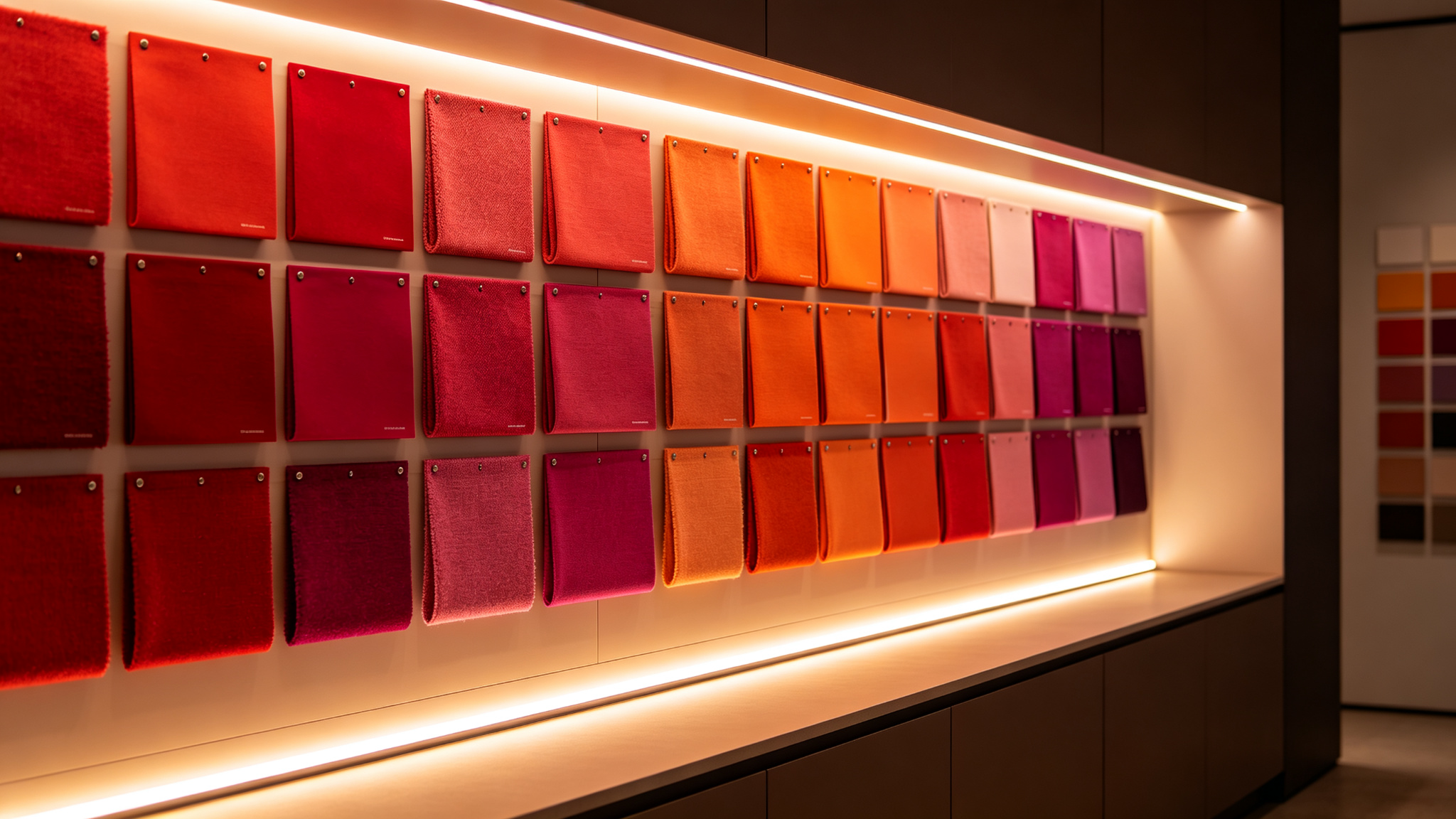
A physical red-swatch bench test beats any datasheet: hold your own red sample under the light.
When You Need High R9 (and When You Don’t)
High-R9 phosphor costs more per metre and runs slightly hotter, so it is worth spending only where colour is seen up close.
Definitely specify R9 > 50–90: restaurants, hotel rooms and lobbies, beauty and cosmetics retail, butcheries and food display, vanity and bathroom mirrors, fashion and textiles, galleries and museums, wood-rich interiors.
Ra 80 is fine: warehouse and task lighting where colour barely matters, corridor accent lighting, back-of-house, and ambient coves seen at distance where reds are not the feature. See our warm vs cool white guide for pairing CCT with CRI.
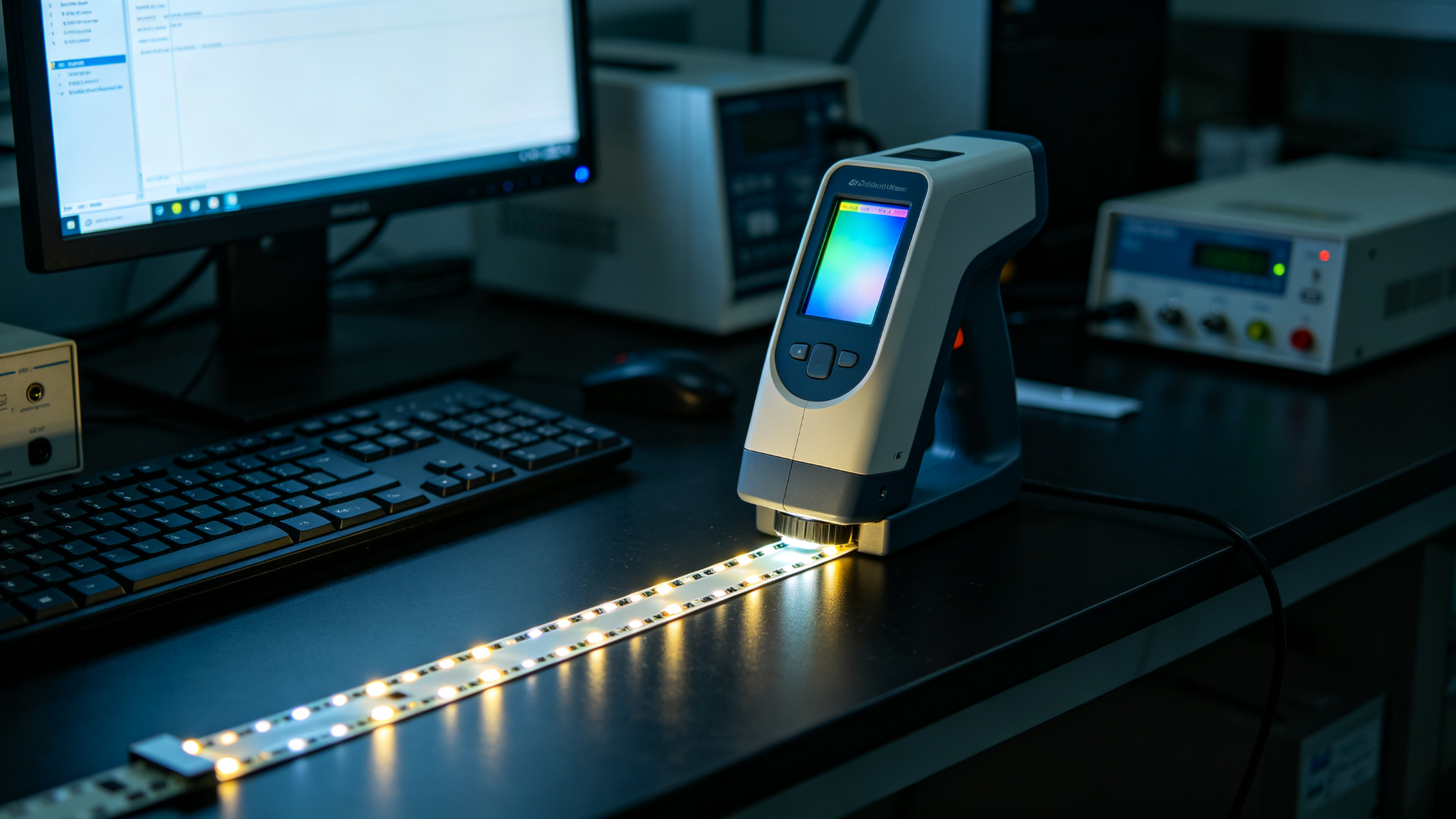
A spectrometer measures R9 directly; reputable factories test every batch and share the report.
How to Choose a High-R9 LED Strip
- Specify “Ra ≥ 90, R9 ≥ 50” (or ≥ 90 for beauty/food) in writing on the purchase order.
- Choose COB or high-bin SMD strips — COB phosphor blends usually deliver the best R9 for a given price.
- Order a sample reel and test it with your own red fabric, food or skin under the intended CCT before bulk order.
- Confirm the CCT of the sample matches the CCT you will install; R9 scores shift with colour temperature.
- Pair with a quality constant-current/constant-voltage driver — over-driving chips degrades both brightness and colour. See the power supply sizing guide.
The 30-second decision
Skin, food, red fabric or wine on show in a close-view space → ask for Ra 90+ with R9 50+. Pure utility or far-distance cove → Ra 80 is enough. When in doubt, buy one sample reel first.
Recommended Products
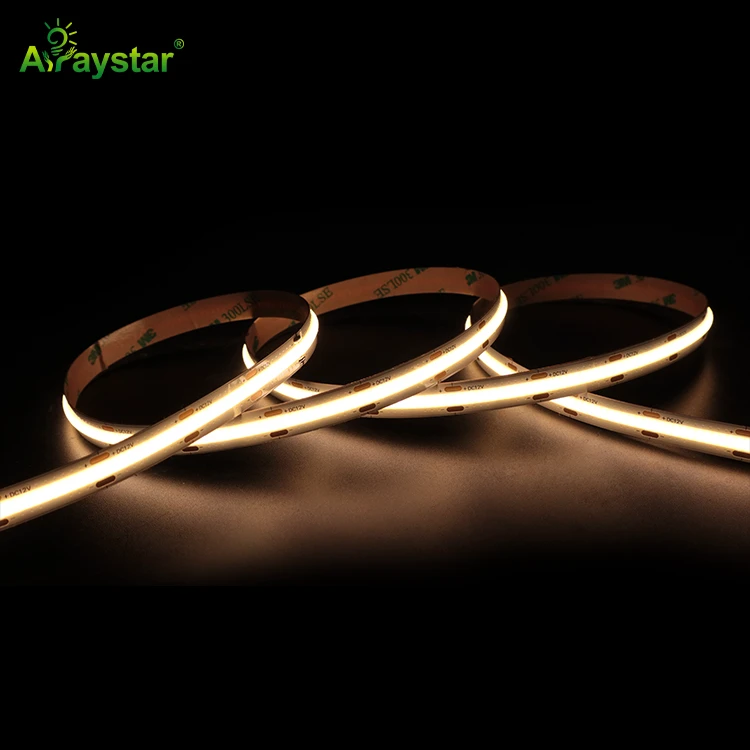
COB LED Strip Light 480 LEDs/m, 8 mm
High-density COB phosphor line with strong red rendering and a seamless, dot-free face — our default for close-view hospitality and vanity work.
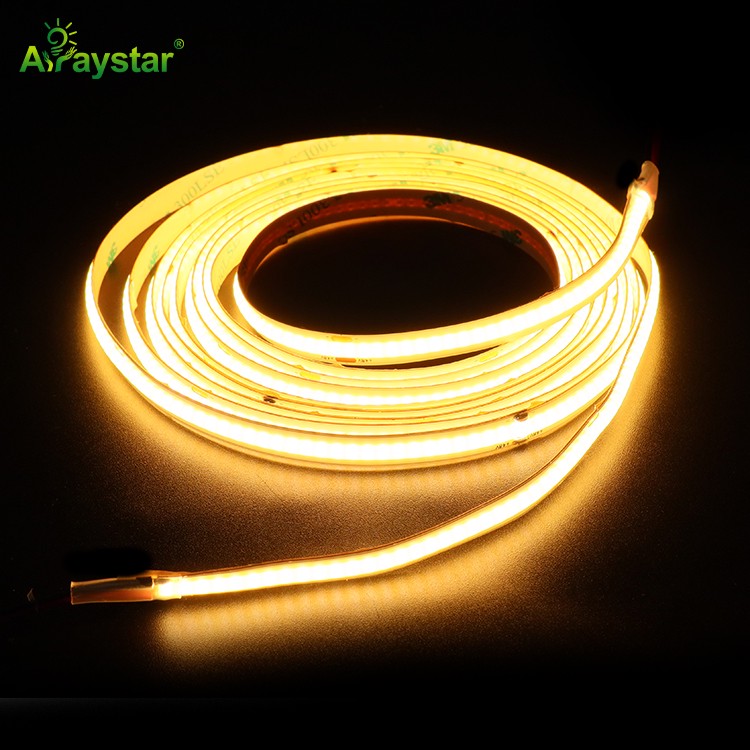
High Efficiency & Brightness COB LED Strip, 480 LEDs/m
Bright yet colour-rich COB with CRI 90+ options, ideal for retail display and food where both lux and true reds matter.
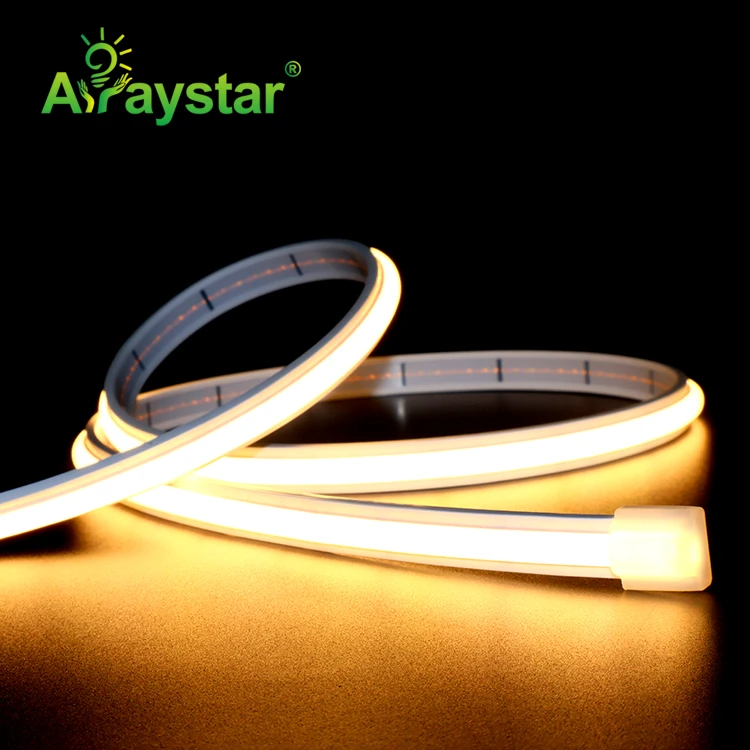
5×10 mm SOB LED Strip 240 LEDs/m, IP67
Fully sealed high-R9 SOB line for wet and outdoor hospitality settings, keeping reds accurate in bars and restaurants.
Frequently Asked Questions
What is a good R9 value for LED strips?
For most commercial interiors, aim for R9 above 50. For beauty, food, hospitality and museums where reds are critical, ask for R9 above 90. A strip with Ra 90 but negative R9 will still wash out red fabric and skin — always confirm R9 on the datasheet or with a sample test.
Is CRI 80 acceptable if the CRI number looks high?
CRI 80 (Ra 80) averages soft pastel samples and usually carries a weak, often negative R9. It is acceptable for back-of-house, warehouse and far-distance accent lighting, but it will make skin, food and red fabric look flat. For customer-facing spaces specify Ra 90 with R9 50 or higher.
Does higher CRI mean lower brightness?
Sometimes, slightly. High-R9 multi-phosphor blends are a little less efficient than cheap yellow-phosphor chips, but modern high-efficiency high-CRI COB strips close most of that gap. The trade-off is small compared with the visual difference on reds and skin.
How can I test R9 without a spectrometer?
The fastest practical test is visual: hold a saturated red fabric, a fresh tomato or your own hand under the strip at the installed colour temperature. True reds should look rich and skin healthy; if they look pink-grey, the R9 is weak. For signing off a project, ask the factory for the spectrophotometer report.
Need high-CRI, color-consistent LED strips for your project?
Get factory-direct pricing, free samples and a tailored quote within 24 hours.
Get a Quote