LED Strip Flickering: Common Causes and How to Fix Them
- 2026-09-09 15:29
- /
- Arraystar
Quick Answer
LED strip flickering is most commonly caused by: 1) Undersized or poor-quality power supply (most common), 2) Voltage drop from long runs without power injection, 3) Loose or poor connections, 4) Incompatible dimmer (TRIAC dimmers with LED loads), 5) Overloaded power supply, 6) Poor solder joints. Diagnose by testing with a known-good power supply first, then checking connections and voltage along the strip. Most flickering issues are resolved by upgrading the power supply or adding power injection.
Why LED Strips Flicker
LED flickering can range from subtle, almost imperceptible strobing to obvious on-off blinking. It is not only annoying but can also cause headaches, eye strain, and even seizures in sensitive individuals. Flickering indicates an electrical problem—either insufficient or unstable power reaching the LEDs. Understanding the root cause is essential for proper resolution. The most common causes are power-related, followed by connection and dimmer compatibility issues.
Cause 1: Power Supply Issues (Most Common)
The number one cause of LED flickering is an inadequate or poor-quality power supply. Signs: flickering increases at higher brightness levels, multiple strips flicker simultaneously, flickering worsens when other loads are added. Solutions: 1) Upgrade to a higher-wattage power supply (calculate total watts + 20% headroom). 2) Replace cheap unbranded power supplies with quality LED drivers from reputable manufacturers. 3) Ensure the power supply's voltage matches the strip exactly (12V strip needs 12V supply, not 13.8V or 24V). 4) For dimmable installations, ensure the power supply is rated for dimming (constant voltage dimmable LED driver).
Cause 2: Voltage Drop
Voltage drop occurs when LED strips are run beyond their maximum recommended length without power injection. As current flows through the copper traces, resistance causes a voltage drop, making the far end of the strip dimmer and potentially flickering. Signs: flickering or dimming only at the far end of long runs, color shift (warm/yellow) at the end, brightness inconsistency along the strip. Solutions: 1) Shorten runs to within recommended limits (5m for 12V, 10m for 24V). 2) Add power injection: connect power at both ends or at intermediate points. 3) Use higher voltage strips (24V or 48V) for longer runs. 4) Use strips with thicker copper PCB (2oz or 3oz) to reduce resistance.
Cause 3: Connection Problems
Loose, corroded, or poorly made connections can cause intermittent power flow resulting in flickering. Signs: flickering changes when you wiggle a connector, flickering only in certain sections, flickering started after a recent installation or modification. Solutions: 1) Check all connectors: ensure they are fully seated, pins are not bent, and wires are secure. 2) Re-solder any suspect joints: cold solder joints are a common cause. 3) Replace cheap connectors: low-quality strip-to-wire connectors often have poor contact. 4) For outdoor installations, ensure all connections are properly sealed—moisture can cause corrosion and intermittent contact. 5) Check power supply terminal connections: ensure wires are securely tightened.
Cause 4: Dimmer Compatibility
If your flickering only occurs when dimming (especially at low brightness levels), the dimmer is likely the culprit. TRIAC dimmers designed for incandescent bulbs often do not work well with LED loads, causing flickering at low levels. Signs: flickering only at certain dimmer levels, flickering worse at low brightness, buzzing sound from dimmer or power supply. Solutions: 1) Use dimmers specifically designed for LED loads (LED-rated TRIAC, 0-10V, DALI, or PWM dimmers). 2) Ensure your power supply is dimmable (not all LED power supplies support dimming). 3) For 0-10V dimming, use 0-10V dimmable LED drivers. 4) For smart home systems, use compatible controllers (Zigbee, Z-Wave, WiFi) designed for LED dimming. 5) If using TRIAC dimmers, ensure the load is within the dimmer's minimum and maximum wattage range.
Flickering Diagnosis Flowchart
| Factor | Option A | Option B |
|---|---|---|
| Brightness | Medium-High | High |
| Efficiency | Good | Excellent |
| Cost | Lower | Higher |
| Best For | General applications | Premium installations |
Recommended Products
Vertical Bending Neon Flex ART-NS2020
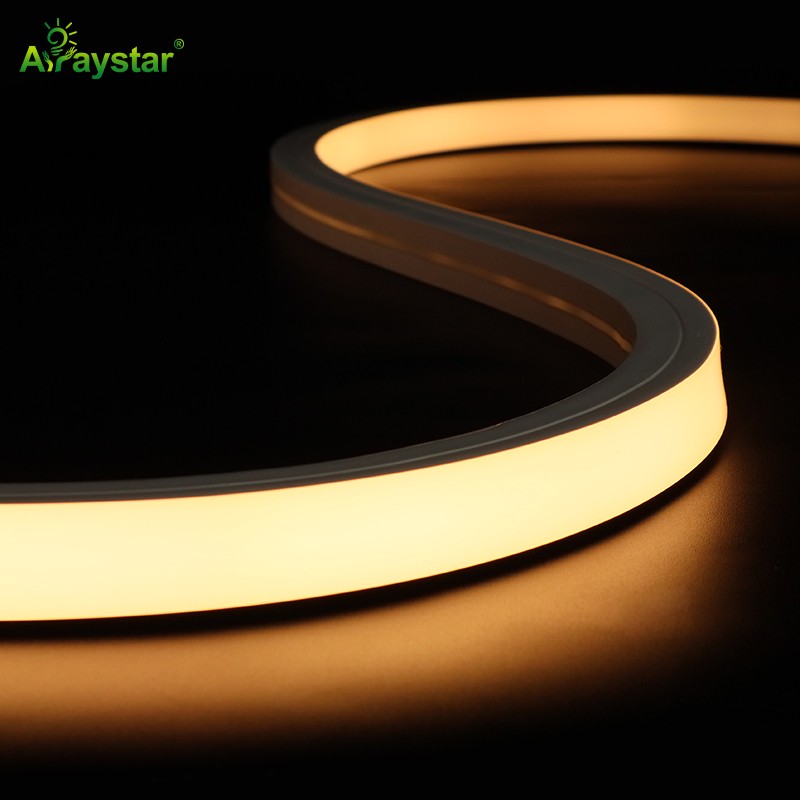
2020 Top Bend Neon Strip CCT/Color Voltage Power(W/M) LED Type LED Qty/m Cut Size Pixels/M IP Rating CRI Lumen(lm/M) ART-NS2020-120-X-12 1800K, 2700K, 3000K, 4000K, 6000K 12V DC 15 W/m 2835
ART-1506 Silver Color Aluminum Profile LED Channel with Cover, End Caps, and Mounting Clips
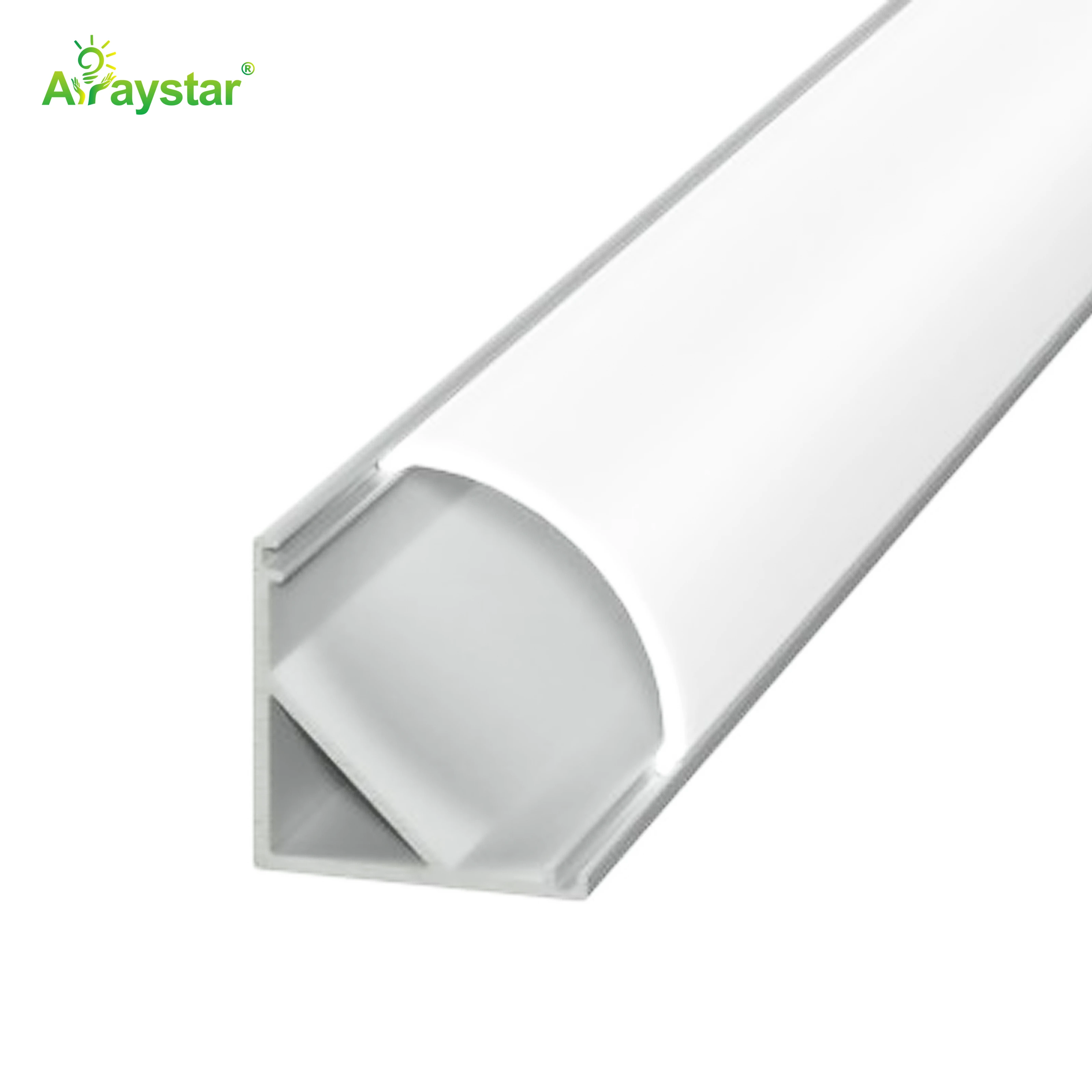
Technical Parameter Specification Details Remarks / Features Product Code ART-1506 Model Name Application / / Compatibility / / Raw Material Aluminum Profile High-quality Aluminum Profile Thickness
Frequently Asked Questions
Q: What should I consider before buying top bend led neon strip?
A: Key factors include: required brightness (lumens/m), color temperature, voltage (12V/24V/48V), IP rating for environment, LED density, CRI requirement, dimming compatibility, and total run length. Calculate total wattage to size your power supply correctly.
Q: How do I calculate the power supply size for top bend led neon strip?
A: Multiply the strip's wattage per meter by total length, then add 20% headroom. For example: 5m × 14.4W/m = 72W + 20% = 86.4W, so choose a 100W power supply. Always use a power supply rated for LED applications.
Q: How do I dim top bend led neon strip?
A: Multiple dimming options available: 0-10V, PWM, TRIAC, DALI, DMX512, and wireless (WiFi/Zigbee/Bluetooth). Ensure your dimmer is compatible with the strip's voltage and current. COB strips dim especially smoothly due to uniform light output.
Q: Can top bend led neon strip be used outdoors?
A: Only IP65 or higher rated strips are suitable for outdoor use. IP65 for covered/splash areas, IP67 for exposed outdoor, IP68 for underwater/submersion. Always use waterproof connectors and properly seal all connections for outdoor installations.
Q: What is the maximum run length for top bend led neon strip?
A: This depends on voltage and copper weight. 12V strips typically max 5m, 24V up to 10m, 48V up to 20m. For longer runs, use power injection at both ends or intermediate points to prevent voltage drop and color shift.
Conclusion
LED strip flickering is most commonly caused by: 1) Undersized or poor-quality power supply (most common), 2) Voltage drop from long runs without power injection, 3) Loose or poor connections, 4) Incompatible dimmer (TRIAC dimmers with LED loads), 5) Overloaded power supply, 6) Poor solder joints. Diagnose by testing with a known-good power supply first, then checking connections and voltage along the strip. Most flickering issues are resolved by upgrading the power supply or adding power injection. Arraystar LED offers 15+ years of LED strip manufacturing experience with full OEM/ODM capabilities, CE/RoHS/ERP certification, and 3-year warranty. Contact our team for a free consultation and custom quote for your project.
Ready to start your project? Contact us today for expert guidance and competitive pricing.
About the Manufacturer
ArrayStar LED is a professional LED strip manufacturer in Shenzhen, China since 2010, serving 80+ countries. We support custom OEM/ODM projects (custom CCT, CRI, PCB, logo, packaging) and wholesale supply for distributors and contractors worldwide.