
LED Strip Ghosting, Glow-Off and Bad Dimming Range: Causes and Fixes
- 2026-09-30 17:38
- /
- Arraystar LED
Two complaints dominate dimmable LED strip installs: the strip won't dim below a bright level before snapping off, and switched-off single-color strip still glows faintly (ghosting). Both are electrical mismatches, not defective tape - poor dimming range comes from drivers/controllers with a high minimum load or coarse low-end control, while ghosting comes from leakage current or induced voltage that keeps LEDs weakly lit when 'off'. Understand the mechanism and you fix them with the right dimmable supply, controller choice and a clean neutral/switch arrangement rather than chasing symptoms.
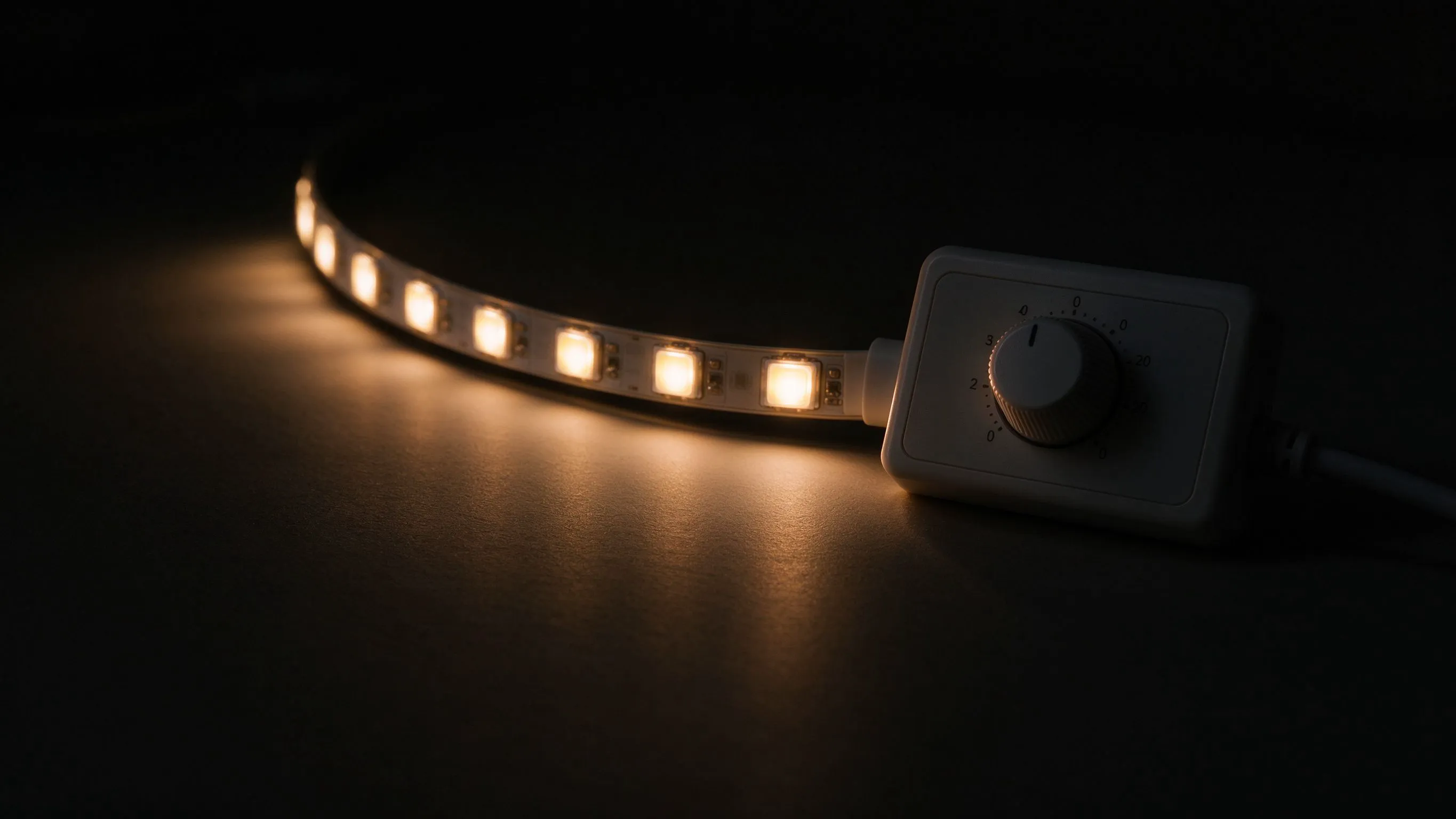
Two Different Problems With Similar Symptoms
Dimming complaints tend to get lumped together as 'the dimmer doesn't work', but there are two distinct failures. Limited dimming range means the strip only goes down to, say, 20-30% and then cuts out, so you can never get a soft night level. Ghost glow (or phantom glow) means the strip stays faintly lit even when switched fully off - an eerie dim halo that never goes dark.
They have different causes. Dimming range is about the driver/controller's minimum load and low-end resolution; ghosting is about small currents reaching the LEDs when they should see none. Treating them as one problem leads to swapping parts at random. Diagnose which you have - can't get dim enough, or won't turn fully off - and the fix is specific.
Getting True Deep Dimming Range
LED dimming works by rapidly switching the power (PWM) or reducing current, and the smoothness and depth depend on the whole chain - dimmable driver, controller and strip. Cheap dimmable power supplies have a minimum load below which they can't regulate, so a short, low-wattage strip never dims deeply: the driver simply drops out and the light cuts off.
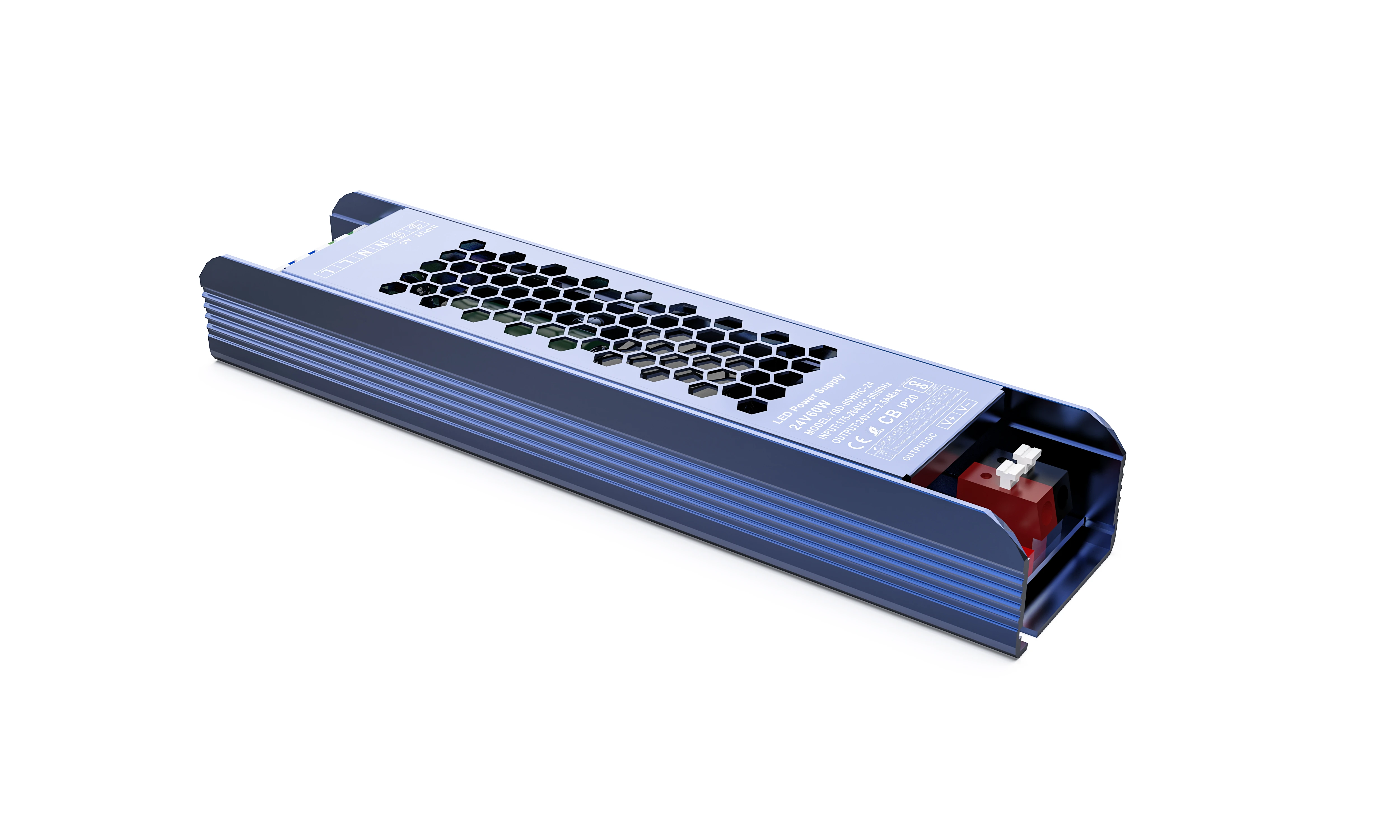
Use a dimmable power supply designed for low-load regulation across the range - a 60W dimmable supply is well matched to shorter strips where a huge driver would be under-loaded and unable to dim low. Pair it with a controller offering high PWM resolution and an adjustable minimum level so you can dial out the pop-on threshold. The combination of correctly sized (not oversized) dimmable driver and a capable controller is what gives smooth 100%-to-near-zero dimming.
Diagnosing dimming and ghosting symptoms.
| Symptom | Likely cause | Fix direction |
|---|---|---|
| Won't dim below ~20-30% | Driver minimum load / coarse low-end | Right-sized dimmable supply + high-res controller |
| Pops on at minimum | Controller min level too high | Lower adjustable minimum / better PWM |
| Faint glow when 'off' | Leakage/induced voltage | Bypass, proper neutral, no neon switch |
| Flicker mid-range | Incompatible dimmer/driver | Match dimming method and PWM frequency |
| Buzzing when dimmed | Under-load or wrong dimmer type | Load match / quality dimmable driver |
Choosing a Controller With a Real Low End
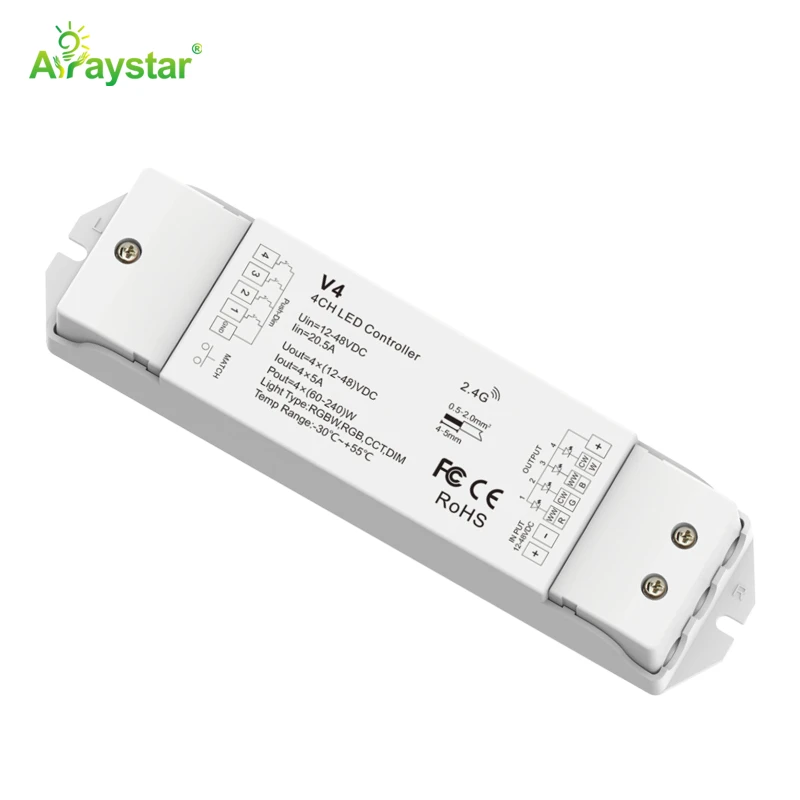
The controller is where dimming resolution lives. A multi-channel RF controller with smooth, high-frequency dimming and configurable minimum brightness will drive single-color, CCT or RGB strip down to genuinely low levels, whereas a basic controller quantizes the low end into a few chunky steps and then cuts out.
The V4 4-channel RF controller handles single-color through RGBW with smooth RF dimming and an adjustable low end, making it a solid choice for deep-dimming accent and cove circuits. Set the minimum output during install so the lowest useful level is a soft glow rather than an abrupt off, and ensure the controller and dimmable supply agree on control method so they don't fight each other in the low range.
Ghost Glow: Leakage and Induced Voltage
Ghosting on switched-off strip has three common causes. First, a neon/illuminated switch or 'smart' switch leaks a tiny current through the circuit - enough to weakly light efficient LEDs (incandescent bulbs would never show it). Second, long parallel cable runs induce a small voltage in the strip feed. Third, some dimmers/drivers never fully disconnect and leak a trickle at 'off'.
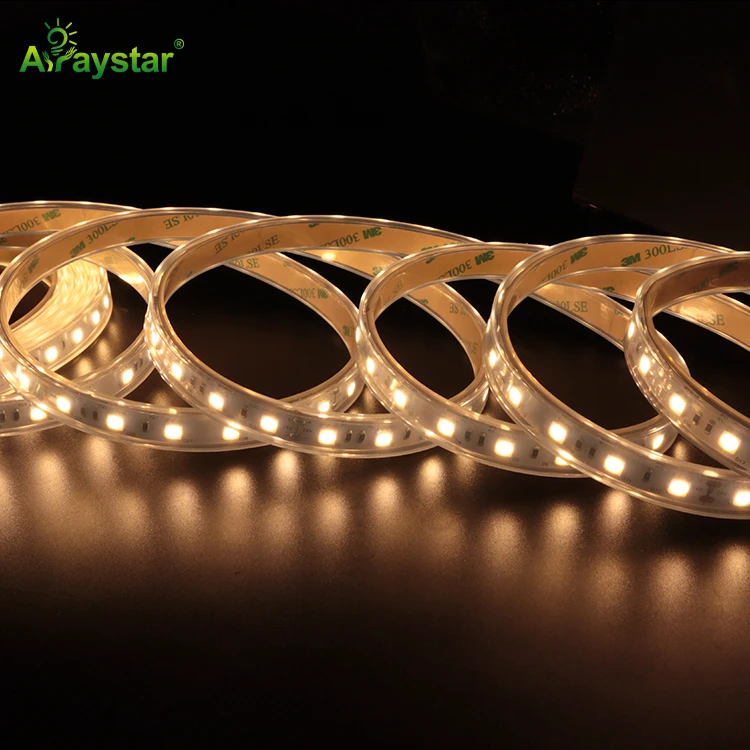
Fixes, in order of likelihood: replace illuminated/neon switches with non-illuminated (or electronic) switches; ensure the dimmer switches the active line with a proper neutral reference; fit an LED bypass/compensation module (a small RC 'bleeder' that absorbs the leakage current so it doesn't reach the LEDs); and for induced voltage on long runs, shorten/separate cables or use a controller with a true off. Single-color strip like the 5050 single-color tape shows ghosting most visibly because even micro-current lights its efficient chips faintly.
Systematic Fix Procedure
- Identify the symptom first: limited low end (range) vs faint always-on (ghost).
- For range: right-size the dimmable driver to the load and use a high-res controller.
- Set the controller's adjustable minimum to remove pop-on at the bottom.
- For ghost: remove illuminated switches, verify neutral/wiring, add an LED bypass.
- Match dimmer and driver control methods; check PWM frequency for flicker.
- Test the full range at night - problems are invisible at full brightness.
A reliable sequence: confirm the actual strip wattage, fit a dimmable supply sized close to that load (with modest headroom, not massively oversized), use a smooth multi-channel controller with an adjustable minimum, and eliminate leakage sources for ghosting. Getting the low end right is disproportionately important - it's the difference between lighting that feels high-end and lighting that feels broken every evening.
Recommended Products
Frequently Asked Questions
Why won't my LED strip dim below a bright level?
Usually the dimmable power supply can't regulate below its minimum load - common when a large driver feeds a short low-wattage strip - or the controller has coarse low-end resolution. Right-size the dimmable driver to the load (e.g. a 60W unit for a short run) and use a high-resolution controller with an adjustable minimum so it dims smoothly to near zero instead of cutting out.
Why do my LED lights still glow faintly when switched off?
Ghost/phantom glow comes from a tiny current reaching the efficient LEDs: an illuminated/neon or smart switch leaking current, induced voltage on long parallel cables, or a dimmer/driver that doesn't fully disconnect. Fix it by using a non-illuminated switch, checking the neutral and switched-active wiring, or fitting an LED bypass (RC bleeder) that absorbs the leakage.
What is an LED bypass / bleeder and do I need one?
It's a small RC compensation module wired across the load that draws the tiny leakage current from illuminated switches or long cable runs so it doesn't faintly light the LEDs. Fit one when single-color strip ghosts at 'off' despite correct switching - it's the standard fix for phantom glow caused by residual current, and it's inexpensive compared to replacing the driver.
What controller gives the smoothest dimming for LED strip?
A multi-channel controller with high PWM resolution and an adjustable minimum output, such as the V4 4-channel RF for single-color through RGBW, paired with a compatible dimmable supply. Configure the minimum level during installation to remove pop-on, match controller and driver dimming methods, and verify with a phone camera for high-frequency flicker.
Does an oversized LED driver cause dimming problems?
It can. A dimmable driver rated far above the actual strip load may fail to regulate at low levels, so the strip can't dim deeply before cutting out, and some oversized drivers buzz or misbehave when under-loaded. Size the dimmable supply close to the real wattage with modest headroom rather than spec'ing the biggest driver available.
Need help with your LED project?
Get factory-direct pricing, free samples and engineering support within 24 hours.
Email: info@arraystarled.com | Phone: +86-0755-2103-6746 | WhatsApp: 0086 1581 8514 077
Need to size your power supply? Use our LED Strip Power Calculator to find the right driver in seconds.







